Care at Guardian Recovery — Dallas Addiction Center
Guardian Recovery Dallas in Plano
Guardian Recovery Dallas provides medical detoxification and residential addiction treatment in Plano, serving the wider Dallas–Fort Worth area. The provider lists its location at 5217 Village Creek Drive, Plano, Texas, and its current residential admissions telephone as 972-433-0521. Although Dallas appears in the service name, the physical treatment location is in Plano. This profile focuses on the overnight residential program and the clinical pathway described for that service.
The current official residential page describes a program of 30 or more days, with treatment tailored to the individual’s history, goals, and progress. Patients live within a structured environment while participating in therapy, recovery education, and practical skills work. The provider also offers detox and discusses later levels of care. An admission proposal should explain which services are recommended, their sequence, and where each stage takes place.
Assessment and the start of care
Guardian Recovery describes an initial assessment covering the person’s history, current difficulties, and treatment goals. The team uses that information to build a plan that may combine individual appointments, groups, clinical support, and skill development. The process is intended to identify more than a substance-use label. It should consider previous care, medication, physical health, psychiatric concerns, and the circumstances to which the person will return after treatment.
For many patients, the provider says medical detoxification comes before fuller participation in residential therapy. Its detox service offers medical monitoring and medication when appropriate to manage withdrawal. The actual need for this stage is assessed individually. Someone who is already medically stable may begin differently, while another person may require more medical support before the residential program is appropriate. The planned sequence should be clear before arrival.
The center’s main website describes detox as generally lasting three to seven days, with timing adjusted to the individual. That estimate should not be treated as a maximum or as a substitute for clinical judgment. The residential page separately describes a 30-plus-day pathway. Keeping the two stages distinct helps an applicant understand the proposed commitment and prevents a detox estimate from being mistaken for the duration of the whole treatment course.
Individualized residential therapy
One-to-one therapy is a stated part of the Dallas residential program. The provider describes work with a licensed therapist on personal difficulties, patterns associated with substance use, and the situations that can trigger a return to use. Individual sessions offer room to discuss experiences that may be difficult to raise in a group. The treatment proposal should identify the expected appointment schedule and how the clinician’s work connects with the wider care team.
Group therapy brings a different form of participation. Guardian Recovery describes shared discussion, peer connection, and opportunities to develop coping approaches with others in treatment. The group setting can provide perspectives beyond the patient’s own experience, while a facilitator keeps the work focused. A resident should understand the expectations for attendance, the kinds of groups on offer, and how the schedule is adjusted if medical or psychiatric needs affect participation.
The published program includes cognitive behavioral therapy, dialectical behavior therapy, trauma-informed care, and motivational interviewing. These approaches are selected within an individualized plan rather than promised as an identical set of sessions for everyone. The useful question is how a proposed method relates to the person’s goals and how it will be delivered. A treatment label becomes more informative when connected to a clinician, a schedule, and an agreed focus.
Coping skills and different recovery approaches
Guardian Recovery describes CBT and DBT in relation to coping skills and emotional regulation. Within the residential program, this work is intended to help patients examine patterns and develop more workable responses to difficult situations. Skills may be discussed individually and practiced in groups or everyday interactions. The plan should show how those activities relate to the person’s own challenges, rather than rely on the presence of a therapy name alone.
The provider also lists both 12-step and non-12-step recovery options. That is relevant for someone whose preferences, earlier treatment experiences, or beliefs influence the kind of recovery community they want to build. Applicants should establish which options are actually incorporated into the residential schedule and how they can continue after discharge. The availability of more than one philosophy does not imply that every outside meeting or support group will be equally accessible from every future living situation.
Mindfulness, meditation, fitness, and nutrition-related support appear in the center’s residential description. They contribute to the routine alongside clinical therapy. Their role may include developing habits and ways of managing stress, but they should be distinguished from medical or psychotherapy appointments when comparing schedules. A resident should understand which activities are required, which are optional, and how physical or other needs are accommodated.
Substance use and mental health together
The residential program describes dual-diagnosis care for people with substance use and co-occurring mental health concerns. Anxiety, depression, and trauma-related difficulties are among the examples on the official page. The intention is to address both sets of needs within the care plan. An assessment should establish the nature and severity of those concerns, the appropriate psychiatric involvement, and whether the campus can provide the level of support needed.
Someone with an existing diagnosis should bring that history into the admission discussion, together with current prescriptions and previous treatment records when available. Earlier conclusions may need to be reviewed in light of the current presentation. The team should explain who will manage medication, how symptoms are monitored, and what happens if additional specialist care is required. Published dual-diagnosis services do not establish suitability for every psychiatric condition or level of acuity.
Family counseling and practical skill development
Family counseling is included in Guardian Recovery’s residential description. Its stated focus includes communication, trust, and a stronger support system beyond treatment. Participation should reflect the patient’s circumstances and consent. For some people, a relative can help with history and planning; others may need careful boundaries or a different support person. The program should explain the format and timing of family work rather than assume that all relatives take part in the same way.
Practical skill-building sessions address coping with cravings and triggers, communication, problem-solving, stress management, and relapse-prevention planning. These subjects connect residential treatment with the demands of daily life. The most useful plan identifies the situations the person actually expects to face and develops responses that fit those circumstances. Someone returning to a busy household, a demanding job, or an unstable living arrangement may need different preparation.
The provider says plans are reviewed as treatment progresses. This allows priorities to change when the team and patient learn more about what support is needed. A resident should know how feedback is shared, how goals are assessed, and who participates in decisions about the next stage. A personalized program involves ongoing review, not only a different written plan on the day of admission.
The residential environment
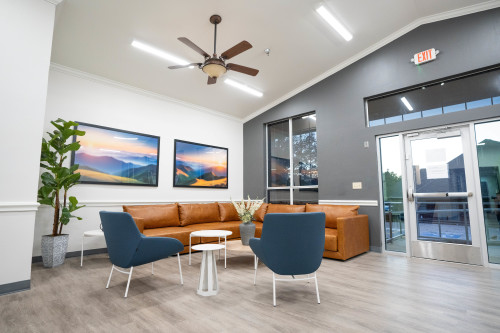
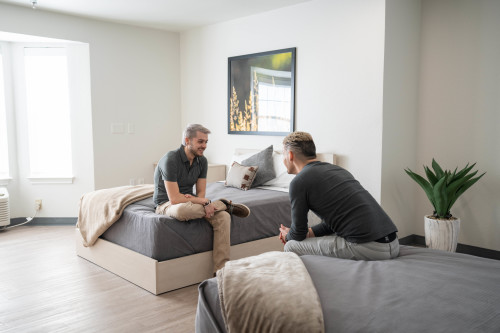
The official program describes comfortable accommodation, nutritious meals, wellness activities, and a structured daily routine. It does not give enough detail on the pages reviewed to guarantee a particular bedroom type or a specific number of residents. Applicants should confirm private or shared arrangements, bathrooms, accessibility, and any other practical requirements with the campus. The presence of overnight treatment should not be interpreted as a promise of a private suite.
Daily life includes individual and group sessions, educational programming, activities, and time for rest. That routine asks residents to step back from some ordinary responsibilities while focusing on treatment. The admissions team should provide current rules about devices, visitors, personal items, medications, and time outside the facility. People who need to coordinate work, caregiving, or travel can then make arrangements based on the actual residential expectations.
Preparing to leave residential care
Guardian Recovery describes a gradual reduction in treatment intensity as part of its continuing-care model. Published options include partial hospitalization, intensive outpatient treatment, virtual care, and ongoing recovery support. The provider’s wider network offers services at several locations, so an applicant should establish which next-stage services are local, remote, or available through another facility. A network-wide list should not be taken as proof that every service occurs within the Plano residential building.
Sober-living arrangements and alumni support are also mentioned in the residential program’s aftercare information. Housing is a separate practical decision from the intensity of clinical treatment. If it is recommended, the patient should know the address, supervision, rules, costs, and transport arrangements. Alumni contact can provide continuing connection, while any required therapy, psychiatric care, or medication follow-up needs its own confirmed appointments.
A useful transition plan names the next providers, records the agreed goals, and identifies who is responsible for each arrangement. It should also consider the patient’s actual living situation and available support. The move from residential structure to greater independence can take different forms, and the plan should reflect that. Completing a particular number of days does not by itself determine the appropriate next level of care.
Rates, insurance, and the admission decision
The third-party Recovery.com campus profile reviewed on October 20, 2026 lists an estimated residential rate of $1,000 per day. Multiplying that rate by 30 gives a comparison of $30,000, but it is not an official monthly package. The provider’s current residential page describes 30 or more days and individualized plans. The actual quotation should therefore specify the proposed duration and whether detox, medication, assessments, or later services are included.
Guardian Recovery describes insurance verification, self-pay options, and possible financial arrangements according to circumstances. These need to be confirmed for the particular patient and service. A quoted daily rate does not establish insurance coverage or final out-of-pocket cost. Compare this Plano program with other treatment centers in the United States and the Texas residential treatment guide, using the assessed pathway, actual accommodation, and written financial terms.
Official information reviewed October 20, 2026: Guardian Recovery Dallas and its residential inpatient program. The current third-party daily estimate is from the Recovery.com campus profile, checked October 20, 2026. Services and admission suitability are provider-reported and require individual confirmation.
Conditions
Levels of care
Settings
Amenities
Treatment approach
CBT, DBT, trauma-informed therapy, motivational interviewing, individual and group counseling, family work, 12-step and non-12-step options, and relapse prevention
Fees & admissions
USD 1,000 / day
Recovery.com displays an estimated USD 1,000 per residential day, checked October 20, 2026; its separate detox estimate is USD 1,200/day. Do not combine levels or represent USD 30,000 as a fixed monthly package. Confirm current written total.
Confirm the current program, duration, accommodation and included services directly with the center.
Confirm residential eligibility, detox arrangements, room type, daily-rate inclusions, insurance or self-pay terms and the plan after discharge.