Care at Guardian Recovery — Plymouth House
A clinical and 12-step program in Plymouth
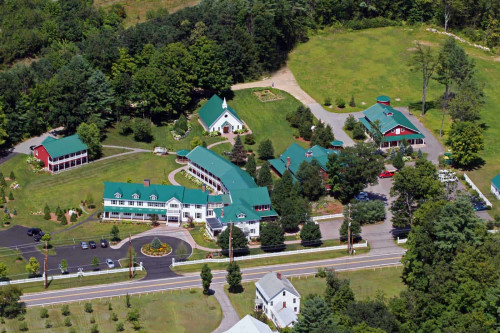
Guardian Recovery’s Plymouth House combines residential addiction treatment with a longstanding 12-step approach in Plymouth, New Hampshire. The provider describes a 60-acre setting in the foothills of the White Mountains and lists its location at 446 Main Street. Its current program includes medical detoxification, residential care, and later levels of support. The residential experience brings clinical treatment and a recovery community together, with the 12-step process playing a more explicit role than it does in many general treatment descriptions.
The Plymouth House has operated since 2002, according to its official history. Its current affiliation is with Guardian Recovery. The provider presents the program for people seeking help with substance use and related mental health concerns, including those who need a structured environment after detox. An admission assessment should establish the individual’s starting point, medical needs, and willingness to participate in the program’s particular approach.
How the Plymouth House process works
The provider organizes its core process around stages of the 12 steps. Its homepage describes work on the first three steps during residential treatment, followed by steps four through seven in partial hospitalization. People who continue into Extended Care or the Monitor Program may work on the later steps there, or continue with a sponsor after leaving. These are the provider’s descriptions of the pathway, with timing adjusted to the individual rather than a guaranteed sequence completed on fixed dates.
A notable feature is the combination of a primary therapist and a separate 12-step contact. The therapist addresses the person’s clinical goals, while the 12-step contact helps with the recovery process described in the program. This arrangement makes it useful for an applicant to understand the responsibilities of each role and the amount of contact expected. Support through a recovery fellowship and licensed clinical treatment serve related but distinct purposes.
The 12-step component includes reflection, personal inventory, relationships, service, and an ongoing connection with recovery principles. The provider also discusses prayer and meditation within that framework. Someone considering Plymouth House should understand how this material is presented and how their beliefs or preferences are respected. Its official residential information also describes clinical therapies and other recovery pathways, so the admission discussion can clarify how those fit with the program’s central 12-step identity.
Medical assessment and the residential stage
Plymouth House’s current residential page describes approximately 28 days of on-site care, with another section giving a typical range of 21 to 28 days. The actual length depends on clinical needs, response to care, and readiness for the next stage. These estimates should be discussed as the provider’s current general framework. They do not establish that every patient needs the same stay or that all later treatment is included within that initial period.
The admission process includes review of substance use, physical health, mental health, medication, and earlier treatment. The provider describes medical and psychological assessment, orientation, and introductions to a primary therapist and case manager. Someone transferring from detox also needs confirmation that they are sufficiently stable for the next phase. This preparation connects the residential schedule with the person’s actual condition rather than assuming that arrival alone means they are ready for every activity.
Medical detoxification is part of Plymouth House’s wider current service. The homepage gives a general detox estimate of three to seven days while emphasizing individualized care. Medication is selected by the medical team according to the patient’s needs. The specific withdrawal plan, clinical monitoring, and transition into residential treatment should be established through assessment. Detox timing and residential duration should remain separate when discussing the total proposed course of care.
Individual therapy and the daily groups
The residential page describes individual therapy with a primary therapist, typically one to three appointments a week lasting around 45 to 60 minutes. The actual schedule is individualized. Areas of work include trauma, grief, difficult emotions, thinking patterns, coping responses, and concrete recovery goals. Applicants should confirm the planned frequency for their stay and how individual work relates to the 12-step contact, psychiatric appointments, and group program.
Multiple group sessions form part of the described daily routine. The provider names process groups, cognitive behavioral therapy, dialectical behavior therapy, relapse prevention, trauma-focused work, life skills, and 12-step integration. Different groups have different purposes, ranging from discussion and feedback to learning and practicing specific skills. The individual plan should identify which are most relevant and how participation changes as the patient becomes more settled in treatment.
CBT-related work is described in terms of recognizing and reviewing unhelpful thinking patterns, while DBT-related work includes emotional regulation, distress tolerance, mindfulness, and relationships. The practical value for a patient is in connecting those skills to situations they actually face. A session might focus on a response to stress or a difficult interaction, with the wider schedule providing opportunities to reflect on how the approach works outside an appointment.
Mental health and medical support
Plymouth House describes integrated psychiatric care for co-occurring mental health concerns. Its published residential program includes evaluation, medication management where appropriate, monitoring, and education about mental health and prescribed treatment. Examples of concerns mentioned include depression, anxiety, trauma-related symptoms, and bipolar disorder. The assessment should establish the level of support available for the person’s specific presentation rather than treat a published condition list as an automatic admission decision.
The provider also describes attention to physical health, nutrition, sleep, and medication-related needs during residential care. An applicant with a chronic medical condition should discuss the required monitoring and any specialist involvement before admission. The program needs to distinguish what it manages on site from what requires outside appointments. Clear information about existing prescriptions, previous complications, and current clinicians can help the team make those arrangements.
Family work and preparation for everyday life
Family education and participation are part of the published program, including a family group associated with weekly visitation. Topics include communication, relationship patterns, understanding recovery, and planning for the patient’s return. The format and eligibility should be confirmed for the actual stay. Family involvement needs to fit the patient’s consent and circumstances, especially where relationships are strained or a different trusted person will provide the main support after discharge.
Life-skills groups address practical responsibilities such as money management, work readiness, relationships, communication, time management, and self-care. The case-management team also helps plan for housing, education or employment, community resources, and continuing treatment. Those areas should be connected to the person’s actual situation. A patient returning to independent living may need different preparation from someone returning to a family home or entering another structured program.
The campus and residential routine
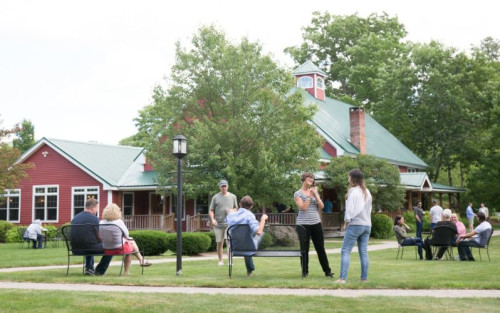
The 60-acre New Hampshire setting provides the backdrop for the residential program. The provider describes indoor communal areas, outdoor spaces, recreation, and places for quieter reflection. Its treatment materials include yoga, movement, mindfulness, creative activities, fitness, and other experiential work. The particular schedule should be confirmed with the team; a broad program description does not establish that every activity takes place every day or is appropriate for every resident.
The official residential information discusses private or semi-private rooms depending on availability, with bathroom arrangements varying by accommodation. Applicants should receive current details about the proposed room before making a commitment. A photograph or broad reference to private bedrooms should not be used to assume that a particular configuration is guaranteed. Accessibility, sleep-related needs, and any other practical requirements are best addressed as part of the admission offer.
The published routine includes personal care, meals, medication times, therapy, educational work, recreation, recovery meetings, and evening reflection. Residential treatment therefore involves more than attending a few appointments while away from home. Work, study, caregiving, and other responsibilities need appropriate arrangements. The admissions team provides a packing list and current guidance about belongings, approved contacts, and the daily expectations of the program.
Moving into less intensive care
Partial hospitalization is an important next stage in the provider’s described process. It continues structured clinical work while allowing a different degree of independence from residential care. Plymouth House connects this stage with further 12-step work, though the individual’s progress and needs determine the actual plan. The proposed location, schedule, and living arrangements should be clear before a patient moves from one level to another.
Extended Care, the Monitor Program, outpatient treatment, and alumni support are also part of the provider’s wider continuing-care description. These options have different purposes and may involve different eligibility or arrangements. A person should understand which one is recommended and why. Completion of a residential stay does not by itself establish that the same next stage is suitable for everyone, particularly when home location, clinical needs, or available support differ.
The discharge plan should identify the next therapist or prescriber, scheduled appointments, the intended living situation, and the recovery contacts the person will use. If ongoing 12-step work is part of the plan, that may include a sponsor and a local fellowship. Those community supports should sit alongside any required clinical treatment. The goal of planning is to make the transition specific enough to follow once the structure of the campus is reduced.
Costs and financial planning
The exact Plymouth House Recovery.com profile reviewed on October 20, 2026 displays an estimated residential rate of $970 per day. It lists separate estimates for detox and partial hospitalization. The residential rate should therefore be applied only to its stated context, and it is not an official provider quotation. A 30-day calculation would be $29,100, but that arithmetic comparison does not define the program’s actual duration or include other stages automatically.
The provider describes insurance verification and self-pay arrangements. Its homepage states that Medicare and Medicaid do not cover its facility, while other policy benefits require individual review. The written financial plan should identify the recommended stages, expected durations, patient responsibility, and any separate housing or clinical charges. Compare Plymouth House with other treatment programs in the United States, paying particular attention to its combination of a clinical residential service, a 12-step process, and a rural New Hampshire campus.
Sources reviewed October 20, 2026: official Plymouth House website, residential inpatient program, and the Recovery.com campus pricing profile. Treatment availability and schedules are provider-reported; daily rates are third-party estimates.
Conditions
Levels of care
Settings
Amenities
Treatment approach
Clinical therapy and 12-step work, CBT, DBT, psychiatric support, family programming, experiential activities, life skills and continuing-care planning
Fees & admissions
USD 970 / day
Recovery.com displays an estimated USD 970 per residential day, checked October 20, 2026. Detox and PHP have separate rates. A USD 29,100 comparison for 30 days is arithmetic, not a provider package or the usual length of care.
Confirm the current program, duration, accommodation and included services directly with the center.
Ask about detox requirements, medication support, room assignment, daily-rate inclusions, minimum stay and transition to outpatient or community care.