


Care at Amend — Portshead House
Portshead House in Malibu
Amend’s Portshead House is a residential mental health program at 6766 Portshead Road in Malibu, California. It is one of the provider’s two distinct Malibu residences, with Wildlife House at a separate address. The official Portshead page describes a maximum of six clients and private bedrooms in a coastal residential setting. This profile concerns Portshead House specifically. Its own room descriptions, address, and accommodation details help applicants understand the setting they would enter and distinguish it from the provider’s other property.
The residence sits within Amend’s broader mental health treatment model, which combines assessment, individualized therapy, psychiatric input, and supportive residential routines. A person considering Portshead should establish that the admission offer is for this house and understand which services take place there. The shared provider name does not make the two houses interchangeable for someone comparing rooms, accessibility, surroundings, or the practical arrangements of an overnight stay.
The people and concerns the program addresses
Amend’s current residential program information describes care for adults of different backgrounds and identities who are dealing with mental health challenges. The conditions named include depression, anxiety, post-traumatic stress, complex trauma, bipolar disorder, and personality-related difficulties. The provider also discusses co-occurring concerns. These are published areas of focus rather than an automatic admission decision. The team needs to assess the person’s current symptoms, medical needs, medications, and the level of support required.
The residential model may be considered when a person and their existing clinicians are looking for more structure than their current arrangements provide. The useful question is what additional support is needed and whether Portshead can provide it. Someone leaving hospital care, someone struggling with daily functioning, and someone seeking further trauma-related treatment may have different requirements. An individualized assessment should make those differences visible instead of treating a shared diagnosis as a complete description of the person.
Substance use history should be discussed openly during intake, including whether it is current and whether any withdrawal-management needs exist. The published mental health program should not be assumed to provide every level of medical detoxification. The receiving team should identify what it can manage at Portshead and what requires another service before admission. This helps keep the proposed residential placement aligned with the person’s actual clinical needs.
Assessment and the initial treatment plan
The official program describes an admission assessment that leads to an individualized four-week treatment plan. That is the provider’s planning framework, not a guarantee that every stay lasts exactly four weeks or that all goals will be completed within that period. The resident should understand the initial priorities, the clinicians involved, and how the plan will be reviewed. Existing treatment records and the person’s own account of earlier care can make that assessment more specific.
Amend describes daily therapy through both individual and group sessions. Individual work offers space for personal experiences and goals, while groups create a different setting for discussion, learning, and interaction. The program should explain the balance for the proposed stay. A six-client residence can provide a small community, but it should not be described as exclusively one-to-one treatment simply because bedrooms are private or the campus has limited capacity.
The provider says its care team includes therapists, counselors, support staff, and psychiatric leadership. The practical information for an applicant is who will be responsible for their care, the expected clinical contact, and how questions are addressed between appointments. If medication is part of the plan, the resident should understand prescribing arrangements and how their existing clinicians will be involved. A team description is most useful when connected to the person’s actual treatment pathway.
Trauma-related, somatic, and experiential work
Amend’s residential information emphasizes somatic and experiential approaches alongside more traditional psychotherapy. Its published material about residential mental health care also names EMDR, Internal Family Systems, mindfulness, creative expression, and trauma-informed movement. These descriptions provide an outline of the provider’s approach, but the selected methods should follow an individual assessment. The presence of a modality on the website does not establish that every resident receives it or that it is appropriate at the same stage for everyone.
The provider’s somatic emphasis concerns the relationship between emotional experiences and awareness of the body. For a prospective resident, the important detail is what the work involves in practice and how it is integrated with other therapy. The clinician should explain the purpose of the sessions, how participation is adapted to the person’s needs, and how concerns about comfort or boundaries can be raised. The term somatic covers a range of practices and should not be treated as a complete description of a treatment protocol.
Experiential work can provide another setting in which to explore patterns, practice communication, or reflect on responses to situations. Its role should be clear within the broader clinical plan. The program should distinguish therapeutic sessions from activities offered primarily for leisure or wellbeing, even when both form part of residential life. That distinction helps someone compare the actual amount and type of clinical care without treating every scheduled activity as equivalent therapy time.
When trauma-focused work such as EMDR is proposed, the assessment, preparation, and timing should be explained by the treating clinician. A person may need stabilization and a workable daily routine before more intensive work is appropriate. The program’s advertised range should therefore be understood as a set of possible approaches, not a promise that all of them will be delivered during one stay. The resident’s preferences and clinical circumstances should remain central to the decision.
Bedrooms and the Portshead setting
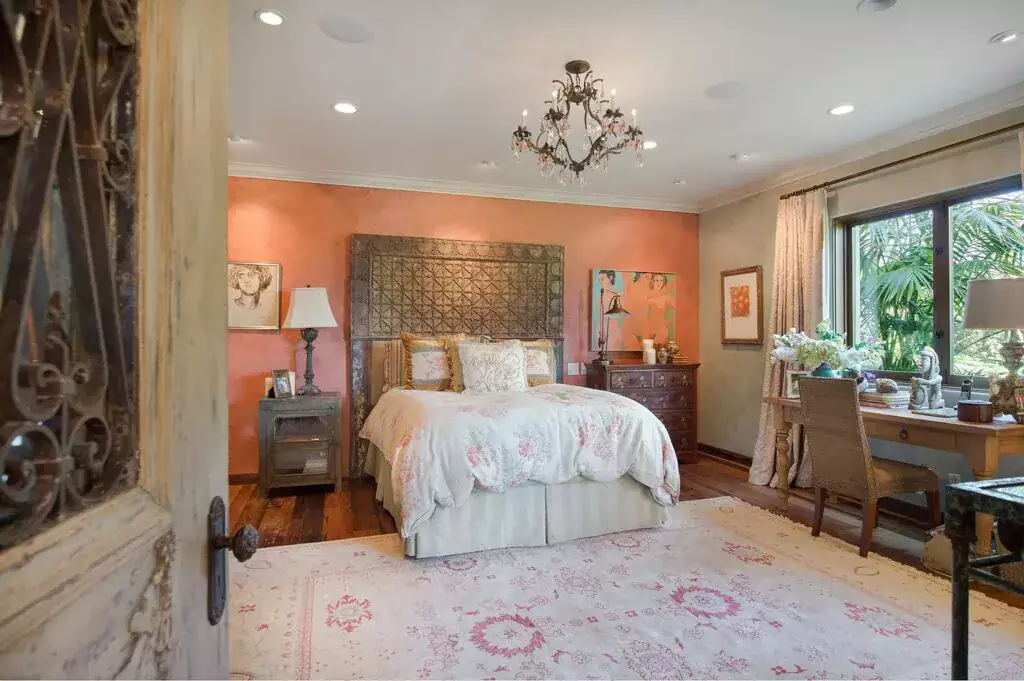
The official Portshead page describes private bedrooms with individual features such as terraces, balconies, garden access, and ocean views. Several rooms have en suite bathroom features identified in their descriptions. The actual room allocation should be confirmed for the proposed admission, including bathroom arrangements and any access requirements. A description of one named room should not be generalized to every bedroom in the house.
Portshead’s shared spaces include living and dining areas with views across the grounds and toward the ocean. The provider emphasizes the connection between indoor and outdoor spaces, with bedrooms opening toward patios or verandas. Those details help describe the character of the residence. They should be considered alongside the clinical program and daily routine, rather than used to infer a particular amount of therapy or a guaranteed treatment outcome.
A private bedroom can be valuable for rest and reflection, but the wider residential experience still involves staff contact and shared activity. Someone choosing the campus primarily for privacy should understand the group schedule, visitors, device use, and the way information is shared with people outside the program. The admission team should also address dietary, mobility, sensory, or other practical needs before arrival so that the proposed accommodation is appropriate for the individual.
Preparing for a stay and involving others
Residential treatment requires planning for responsibilities outside the program. Work, study, caregiving, transport, and communication with home should be considered alongside the admission timetable. The provider should give current guidance about personal items, medications, appointments, and visiting arrangements. A practical plan for those matters helps the person understand the commitment involved without assuming that ordinary daily obligations can continue unchanged within the residential schedule.
Family or other support people may be involved when that fits the treatment plan and the resident’s consent. The purpose of participation should be clear, whether it is sharing background information, improving communication, or preparing for the transition home. Some residents will want a close relative involved; others may need different boundaries. The program should explain how it handles those preferences rather than assume that the same family arrangement is suitable for everyone.
Continuing care after Portshead
Amend’s current information describes personalized aftercare planning and a virtual intensive outpatient program as part of its wider service offer. A virtual option can be relevant to some people leaving residential care, but eligibility and access should be confirmed for the person’s location and clinical needs. It should not be assumed that every resident can or should use the same follow-up program. The next stage may involve the provider’s service, existing clinicians, or other local care.
A useful discharge plan identifies the next therapist or prescriber, appointment dates, the intended living arrangement, and support between sessions. It also explains what information will be transferred and who is responsible for each arrangement. A person returning outside California needs a plan that fits the home community. The aim is to make the move from a structured residence to everyday life workable rather than leave continuity as a general promise.
Fees and planning for a residential stay
The exact Portshead Recovery.com profile, checked October 20, 2026, displays an estimated cash-pay amount of $88,500 alongside a stay described as 30 or more days. Its structured pricing text also uses a 30-day label. This is third-party pricing, not a fee published by Amend on the inspected official campus or program pages. The amount should remain attached to its reported program context rather than being silently converted into a guaranteed calendar-month rate.
The provider should supply a written quotation for the actual admission, including duration, room, included clinical services, and any separately charged assessments or treatments. The estimate is most useful when its scope can be compared with that proposal. A shorter or longer stay may not follow a simple daily calculation, and extensions may have separate terms. Confirming the total and the arrangements for any change in the care plan helps a family prepare for the commitment involved.
Amend’s official insurance information says it works with plans that have out-of-network PPO benefits and describes private-pay options. It also lists plan types it does not accept. The particular policy and proposed service still need verification, and insurance may cover only part of a stay. A useful financial explanation separates any approved benefits, remaining patient responsibility, and charges that could change if the recommended duration or services change.
Compare Portshead with other treatment centers in the United States and the programs in the California residential treatment guide. If considering Amend’s other residence, use the separate Wildlife House profile to compare the actual setting. The decision should rest on the individual’s care plan and confirmed campus arrangements, with the two properties kept distinct.
Sources reviewed October 20, 2026: official Portshead House page, Amend residential program, Amend’s explanation of residential mental health treatment, admissions, and the exact-campus Recovery.com profile. Provider statements and third-party pricing are distinguished throughout.
Conditions
Levels of care
Settings
Amenities
Treatment approach
Psychiatric assessment and oversight, daily individual and group therapy, somatic and experiential work, EMDR and Internal Family Systems when appropriate, mindfulness, family participation and aftercare
Fees & admissions
USD 88,500 / program
Recovery.com’s exact Portshead House profile displayed an estimated USD 88,500 for 30+ days on October 20, 2026. This is a third-party program estimate, not an Amend tariff. Discard the duplicate listing’s unsupported USD 90,000/month figure and obtain a campus-specific written quotation.
Confirm the current program, duration, accommodation and included services directly with the center.
Confirm clinical fit, whether co-occurring substance use can be treated, what the quoted fee includes, medication or specialist charges and aftercare planning.