
Care at Ritz Recovery — Los Angeles
Ritz Recovery’s residential program in Los Angeles
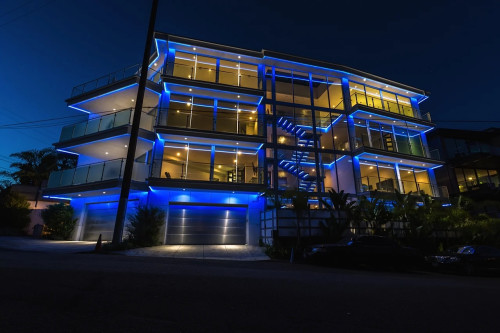
Ritz Recovery provides alcohol and drug treatment in Los Angeles, with a residential setting described by the provider as a Hollywood Hills home. Its current programs include medical detoxification, residential addiction treatment, care for co-occurring mental health concerns, and a specific couples program. The website also describes step-down services and continuing support after residential care. The central purpose is clinical treatment for substance use disorders; the private accommodation and extensive amenities are features of the environment rather than evidence that the program will produce a particular outcome for an individual.
The provider describes residential stays of 30, 60, or 90 days, with longer treatment possible when clinically appropriate. A prospective resident should understand this as a range of pathways, not a fixed requirement or an assurance that insurance will approve a particular duration. The assessment needs to establish the person’s substance use history, medical concerns, mental health symptoms, and practical circumstances. This profile focuses on the services Ritz Recovery currently advertises and distinguishes them from the general statements about luxury treatment that also appear across its website.
Detoxification and early stabilization
Ritz Recovery advertises medically supported detoxification for alcohol and drug use, with access to medical staff around the clock. The provider describes assessment, monitoring, and medication support where clinically indicated. These statements establish the advertised service but do not mean every withdrawal situation can be managed at this residence. The admitting team needs to determine whether a person can safely enter the program or first needs a different medical setting. Recent hospital care, prescribed medications, and significant physical health conditions are relevant information for that decision.
The current program distinguishes detoxification from the residential therapy that follows stabilization. A person may need both stages, but the length and sequence should be individualized. Recovery.com separately lists an estimated seven-day detox package, which should not be treated as a medical prediction of how long withdrawal care will take. The admission proposal should clarify what happens if more time is needed, whether a transfer is required, and how any separate medical charges are handled. The directory does not provide a medication schedule or advise a person to change existing treatment before assessment.
Integrated addiction and mental health care
The provider describes dual-diagnosis treatment for addiction alongside concerns such as depression, anxiety, post-traumatic stress, or bipolar symptoms. Its current inpatient page emphasizes a coordinated plan rather than separate, unrelated tracks for substance use and mental health. That is relevant to someone whose previous care has been fragmented or whose psychiatric symptoms have complicated recovery. The published scope still needs to be matched to the individual’s actual presentation; a diagnosis on a website is not confirmation that every severity level or combination of conditions is suitable for this campus.
The initial evaluation is described as medical and psychiatric, with attention to personal circumstances as well as symptoms. An individualized plan can then establish the role of therapy, medication review, and continuing medical support. For a resident already working with a psychiatrist or therapist, coordination is especially useful when planning a temporary residential admission. The relevant details include who will prescribe during the stay, how records will be obtained with consent, and who will take over afterward. The provider’s public description does not establish that every outside treatment can continue unchanged.
Therapy within the residential stay
Ritz Recovery’s published approach includes individual therapy, group work, family sessions, and methods selected for the resident’s needs. Cognitive behavioral therapy and dialectical behavior therapy are explicitly named in the current couples-program material. The inpatient description also includes trauma-informed care and wellness activities alongside the core clinical work. These methods should be understood as elements of the advertised program, not as a guaranteed checklist for every admission. A useful treatment plan explains the specific goals of each selected approach and how progress will be reviewed.
The residential schedule gives time for therapy, recovery education, and practical preparation for leaving the structured setting. Individual sessions can address concerns that a person prefers not to discuss in a group, while group work provides a shared setting for communication and recovery-related discussion. The reviewed public pages do not provide a universal number of weekly private sessions for every resident. A prospective client can ask for the expected balance of individual, group, family, and psychiatric contact, especially when comparing programs with different room arrangements or advertised amenities.
A separate couples treatment option
Ritz Recovery specifically advertises treatment for couples when both partners are dealing with substance use. Its published model combines individual care with relationship-focused sessions, group therapy, and attention to co-occurring mental health needs. The purpose of identifying this option is to make the program’s scope clear, not to assume that entering treatment together is appropriate for every relationship. Each partner still needs an individual assessment, and the clinical team should explain whether their needs can be addressed safely and effectively within the same admission period.
The couples page names behavioral couples therapy, cognitive-behavioral couple therapy, and emotion-focused work. Its described topics include communication, conflict resolution, mutual support, and relationship patterns connected with addiction. These are advertised methods rather than a promise that both partners receive an identical plan. The practical arrangements should also be explicit: whether the partners share accommodation, how private individual sessions are protected, and what happens if one person requires a different level or duration of care. Joint admission does not remove the need for separate clinical judgment and consent.
A couples program should not be interpreted as an instruction to preserve a relationship at any cost. The directory does not repeat the provider’s broad claims that joint treatment is more successful than individual care, because those statements do not establish the best choice for a particular couple. A person should be able to discuss safety, coercion, privacy, or doubts about participating with a partner during assessment. The meaningful question is whether the proposed structure supports each person’s treatment needs, including situations in which separate care would be more appropriate.
Accommodation and amenities
The current official inpatient page describes a roughly 9,200-square-foot residential property with five or more private suites. It also lists a pool and spa, a private chef, a gym, and city views. The homepage additionally describes a theater room, games space, and an elevator. These are provider descriptions of the environment; the room offered, accessibility, and current availability should be confirmed individually. The directory does not treat a photograph or a suite count as a guarantee of a particular bedroom, bathroom arrangement, or level of personal assistance.
Published wellness options include yoga, breathwork, mindfulness, sound-based activities, acupuncture, and nutrition support. They are presented as complements to clinical treatment. A resident can clarify which services are scheduled during their stay, which are optional, and whether any carry additional charges. Someone with dietary restrictions, mobility needs, or a health condition affecting exercise should discuss those details before admission. The presence of a pool, spa, or gym does not establish that every activity is appropriate at every stage of detoxification or residential treatment.
Privacy and practical arrangements
Ritz Recovery markets its program to people seeking a private setting, including professionals with concerns about discretion. Its current website also advertises travel assistance, with a request to inquire about the details. These statements should be translated into specific arrangements before travel is booked: the arrival address, who provides transport, what assistance is included, and any conditions or charges. The reviewed material does not establish a universally available complimentary travel package or a promise that every practical concern associated with admission can be handled by the center.
Privacy expectations should similarly be discussed in concrete terms. A prospective resident can ask about communication with insurers, existing clinicians, family members, or an employer when documentation is requested. The directory does not treat general confidentiality language as a guarantee that no information will ever be disclosed for a legitimate purpose. Device access, work calls, and family contact should be clarified separately from the availability of a private suite. A comfortable room does not itself establish that unrestricted professional activity will fit the clinical schedule.
Step-down treatment and continuing support
The current inpatient page describes partial hospitalization with more than 20 hours of structured therapy per week and an intensive outpatient option with approximately nine to nineteen hours. It also refers to sober living in connection with the partial hospitalization pathway. These are distinct levels of service and should not be assumed to occur in the same residential suite or to be included automatically in the initial fee. The admission team should identify the actual treatment and housing locations if a step-down plan is being proposed.
Discharge planning is described as beginning during treatment and including outpatient resources, family education, relapse prevention, and alumni connections. A useful plan identifies the providers and appointments the resident will use after leaving, rather than relying solely on a general offer of continuing support. For someone returning outside Los Angeles, local access and transfer of records may be particularly important. Couples may also need separate continuing clinicians or different schedules even when both participated in the same residential program.
Estimated cost and contacting Ritz Recovery
Recovery.com lists an estimated starting price of $45,000 alongside a 30-to-90-day residential range, plus an estimated $7,000 for a seven-day detox package. These are third-party figures, not official fixed tariffs. The residential listing does not establish how the starting amount maps to every duration or room type, and the detox estimate should not be combined with it without a written proposal. Ritz Recovery offers PPO insurance verification, but coverage and personal financial responsibility depend on the specific plan and recommended services.
The current official telephone number is +1 213-802-2202. A practical admissions conversation should establish the recommended level of care, whether a couples placement is appropriate, the room arrangement, the expected duration, and the financial estimate after benefits review. Readers comparing the region can use the directory’s United States treatment destinations and California treatment guide. The most useful comparison concerns the clinical plan and confirmed arrangements for the person seeking care, rather than the strength of a provider’s promotional language.
Sources and verification
Reviewed October 20, 2026: Ritz Recovery’s current overview; inpatient and continuing-care programs; couples program; and Recovery.com’s campus listing and estimated fees. Clinical outcomes, promotional comparisons, and accreditation claims were not independently verified for this profile.
Conditions
Levels of care
Settings
Amenities
Treatment approach
Individual and group therapy, CBT, DBT, family and couples work, psychiatric assessment, medication support where indicated, trauma-informed care, wellness activities and aftercare
Fees & admissions
USD 45,000 / program
Recovery.com estimated USD 45,000+ beside a 30–90-day residential range, checked October 20, 2026; the listing does not map the starting fee to every duration. A separate USD 7,000 seven-day detox estimate is also listed. Neither is an official tariff or a guaranteed clinical duration.
Confirm the current program, duration, accommodation and included services directly with the center.
Request a written quote tied to a specific stay length, confirm what the $45,000 starting figure covers, room choice, detox fees, couples arrangements and continuing care.