Care at Alta Loma The Lodge — Austin
The Lodge: outpatient treatment with supportive living
The Lodge is part of Alta Loma’s mental health continuum in the Georgetown and Austin area of Texas. Its current official description is specific: the program combines outpatient treatment provided by Alta Loma with supportive living provided by Casa Sana. This is an important clarification of older listings that describe The Lodge simply as residential rehabilitation. A person may live in program-related housing while receiving care, but the current published clinical level at The Lodge is outpatient. The accommodation and treatment services have different roles and should be explained separately in an admission proposal.
The Lodge is listed among Alta Loma’s men’s programs and is intended as a stage of increasing independence. The wider organization now serves both men and women through several separately named programs, but that does not mean every house has the same population or level of care. The Lodge should not be confused with The Ranch, The Villa, Casa Esperanza, or The Chalet. This profile focuses on the current Lodge description and uses information about the wider organization only to explain the treatment pathway and support available around it.
Where The Lodge fits in the continuum
Alta Loma’s current overview places The Ranch at the more intensive end of its men’s pathway, combining partial hospitalization with supportive housing. The Villa combines supportive housing with intensive outpatient programming. The Lodge is described as supportive or transitional living alongside outpatient care. These distinctions matter because living on a program-related property does not by itself establish round-the-clock clinical treatment. The appropriate starting point depends on assessment, current symptoms, daily functioning, and the level of support the person needs.
Someone leaving a hospital or a more intensive program should therefore confirm whether direct entry to The Lodge is appropriate or whether another stage is recommended first. The published pathway suggests progression toward greater independence, but it does not establish that every person must pass through all stages in exactly the same order. An individual proposal should explain the recommended service, the expected support between appointments, and how a change in symptoms would be handled. A later-stage setting should not be treated as an interchangeable substitute for a more intensive clinical admission.
Two organizations with distinct responsibilities
Alta Loma’s official explanation of its relationship with Casa Sana states that Alta Loma provides the clinical and medical treatment, while Casa Sana provides supportive living. The organizations work together to create an integrated program, but they remain separate service providers. This distinction can affect the agreement, billing, day-to-day responsibilities, and the information a resident needs before arrival. A clear proposal should identify which organization provides each service and who to contact about clinical questions, accommodation, practical support, or financial arrangements.
For families comparing programs, this structure is more informative than a single residential label. Outpatient therapy, psychiatric care, and medication management have a different purpose from housing supervision, household support, or assistance with daily routines. The current website does not provide a universal staffing schedule for every Casa Sana property or a guaranteed private-room arrangement at The Lodge. Those details should be confirmed for the actual placement. The directory does not infer that supportive living is a hospital, a licensed inpatient unit, or an accommodation package with identical services for every resident.
Primary mental health and co-occurring concerns
The Lodge page identifies primary mental health care for men. Alta Loma’s wider programs address conditions including schizophrenia, schizoaffective disorder, bipolar disorder, personality disorders, and mental health concerns occurring alongside substance use. These are advertised areas of focus across the organization, not confirmation that every individual with one of those diagnoses is suitable for The Lodge’s outpatient stage. The admission assessment needs to consider current stability, medication needs, functional abilities, and the support required outside scheduled clinical sessions.
The provider emphasizes coordinating mental health and substance use care when both are relevant. That can help make the treatment plan coherent, but it should not be interpreted as requiring every resident to have an addiction diagnosis. A man whose primary need is ongoing psychiatric treatment may have a different plan from someone also addressing substance use. The useful discussion is how the proposed services match the person’s actual concerns and what support will be provided if symptoms, medication needs, or safety considerations change during the stay.
Therapy, medication management, and coordinated care
The current Lodge page names cognitive behavioral therapy, medication management, medical support, mentoring, and a range of activities within Alta Loma’s approach. The broader program page also describes dialectical behavior therapy and the Truthought cognitive-behavioral curriculum. These are program methods rather than a guaranteed schedule at every stage. A person entering The Lodge should receive an explanation of which appointments and groups are included in the outpatient plan, how often they occur, and which clinician is responsible for reviewing progress.
Medication management is especially important to clarify when a person is moving between services. The admission plan should identify the prescriber, how existing records and prescriptions will be reviewed, and what assistance is available with the practical routine of taking medication. Those arrangements should be based on the resident’s needs and consent. The directory does not assume that a medication regimen will be changed or that supportive-living staff have the same responsibilities as medical staff. The separation between clinical care and housing makes a clear description of those roles particularly useful.
Building independence through daily routines
Alta Loma’s published approach places substantial emphasis on life skills and community integration. Examples on the Lodge page include household responsibilities, budgeting, maintaining relationships, coping with stress, and career development. The practical purpose is to connect treatment with the tasks a person will need to manage more independently. The exact activities should be adapted to the resident’s starting point; someone rebuilding routines after a prolonged illness may need different support from someone preparing to return to work or education after a shorter interruption.
These activities are not simply amenities attached to housing. They provide a way to identify where the person can act independently and where ongoing help is still needed. A useful plan can make that support concrete through agreed goals and regular review. For example, the relevant outcome may be greater confidence managing appointments, a realistic household routine, or a more sustainable schedule for work and treatment. The provider’s broad language about transformation should not be treated as a promise that every resident will reach the same level of independence within a fixed period.
Advocacy, mentoring, and goal review
The Lodge page describes advocacy as a form of practical support comparable to life coaching, with attention to obstacles that may not be addressed by therapy or psychiatry alone. Mentoring and community reintegration are also part of the published approach. These roles can help translate a clinical plan into everyday action, but they are distinct from psychotherapy and medical treatment. A prospective resident should know who will provide each form of support, what contact is included, and how concerns are communicated back to the clinical team.
Alta Loma also describes setting short-, medium-, and longer-term goals and reviewing progress. This can provide a framework for deciding when a person is ready for a different level of support. The review should take account of both the resident’s own aims and the clinical assessment, rather than rely only on elapsed time. The public Lodge page includes some material labeled for The Ranch, so the directory does not assume that every activity described there runs at the same frequency in the outpatient Lodge stage. The actual schedule should be confirmed individually.
Family involvement and preparation for life outside the program
Family collaboration and education appear in Alta Loma’s wider service description. For a resident considering a return to family housing, those conversations can help clarify practical support, communication, and expectations. Participation should reflect the resident’s consent and circumstances, including whether the family environment is suitable. The public information does not establish an automatic number of family sessions for The Lodge, so the admission agreement should explain how relatives or other chosen support people can be involved and what contact is included.
Community integration is a central theme of this stage. That may involve continuing treatment while gradually taking on more responsibilities outside scheduled sessions. A useful transition plan identifies the next living arrangement, ongoing clinicians, medication follow-up, and the support needed for work, education, or everyday tasks. The plan should also explain what happens if the resident needs more help again. Progress toward independence does not remove the possibility of continuing support, and the directory does not equate leaving a program with completing all mental health treatment.
Location, accommodation, and duration
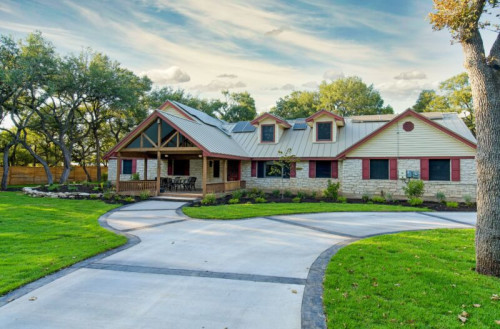
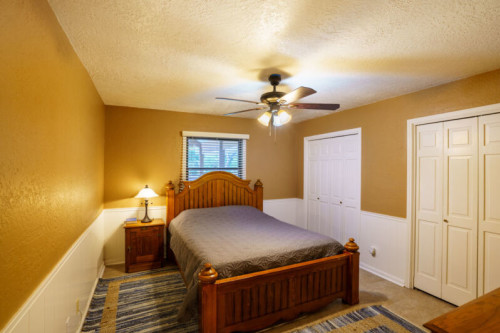
Alta Loma publishes a contact address of 103 East Eighth Street, Georgetown, Texas 78626, and describes its programs as serving the area outside Austin. That address should not automatically be used as the residential arrival point or assumed to be The Lodge’s sleeping accommodation. The admission team should identify the actual supportive-living property, clinical treatment location, transportation arrangements, and room offered. The current public pages do not establish a fixed Lodge capacity, a guaranteed private bedroom, or one uniform package of recreational facilities.
The current Lodge information does not provide a fixed 30-day course or a universal minimum stay. Its role in a longer continuum suggests that duration should be tied to the individual plan and the support required, but that is not a substitute for an explicit agreement. Residents and families should understand the review process, notice arrangements, and the financial implications of extending or changing services. A directory’s older monthly estimate cannot establish the appropriate duration or the terms of a current outpatient and housing package.
Fees and contacting the current program
Recovery.com has listed an estimated $30,000 for 30 days under a residential description of The Lodge. Because the current official service is specifically outpatient treatment combined with Casa Sana supportive living, that older classification does not verify the price of today’s combined arrangement. The directory therefore leaves the current numeric fee unconfirmed. A written quotation should separate clinical services, housing, practical support, and any additional charges, and explain which organization bills for each component and whether any insurance benefits apply.
The current official telephone number is +1 866-457-3843. When contacting the organization, ask specifically about The Lodge’s outpatient stage and the corresponding Casa Sana placement. The key decisions are the clinically appropriate level of care, the actual support available between sessions, and the arrangements for increasing independence. Readers comparing locations can explore United States treatment destinations and the directory’s Texas treatment guide, while distinguishing residential clinical treatment from outpatient care delivered alongside supportive housing.
Sources and verification
Reviewed October 20, 2026: The Lodge’s current program description; Alta Loma and Casa Sana’s distinct roles; the wider clinical continuum; current populations and program locations; and Recovery.com’s older residential classification and estimated price.
Conditions
Levels of care
Treatment approach
Outpatient clinical care, CBT, medication management, practical advocacy and mentoring, life skills, goal review, community integration and coordinated continuing care
Fees & admissions
Confirm current pricing
Current combined outpatient and Casa Sana housing price is unconfirmed. Recovery.com’s USD 30,000/30-day estimate is attached to an older residential classification and does not verify today’s service package. Request separate clinical, housing and support fees and each billing organization.
Confirm the current program, duration, accommodation and included services directly with the center.
Confirm which stage and residence the quote covers, accepted diagnoses and acuity, medication and laboratory fees, visitation, technology access and transition criteria.