Care at Seven Arrows Recovery — Elfrida
Seven Arrows Recovery’s Elfrida ranch
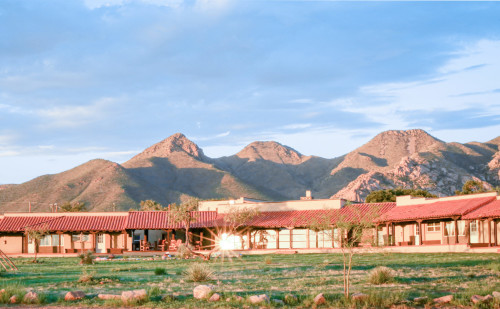
Seven Arrows Recovery is an adult residential addiction treatment program on a 160-acre ranch in Elfrida, Arizona, at the base of the Swisshelm Mountains. Its current program is designed for adults aged 18 and over with substance use and co-occurring concerns, with a particular emphasis on trauma-related care. The provider describes a deliberately small community of fewer than twenty clients, an assigned primary clinician, and staff on site around the clock. The Elfrida ranch is the treatment setting; references to Phoenix, Tucson, Mesa, and Scottsdale describe the wider areas from which people may seek admission.
The location gives the program a different daily environment from an urban clinic. Residents live on the property, attend individual and group treatment, share meals, and take part in scheduled outdoor or experiential activities. Current residential pathways generally last 30, 60, or 90 days, with longer care considered individually. The important planning questions are the appropriate clinical starting point, the level of medical support required, and the practical arrangements for living at a relatively remote Southern Arizona campus.
Trauma-focused addiction care
Seven Arrows describes an integrated approach to substance use and trauma rather than treating them as unrelated parts of a person’s history. Its published model is called Forward-Facing Accelerated Recovery, and the current clinical page emphasizes a phased process: establishing trust and resources, developing understanding and coping skills, undertaking further therapeutic work when appropriate, and reconnecting with personal goals and meaning. These are the provider’s descriptions of its approach. They help explain how treatment is organized without establishing a guaranteed outcome for a particular resident.
The program places substantial emphasis on the relationship with the primary clinician and on avoiding pressure to discuss difficult experiences before the person is ready. That may matter to someone who has found previous treatment overwhelming or impersonal. The clinical plan should identify how this approach will apply to the resident’s actual needs, including current symptoms, medications, previous treatment, and preferences. The provider’s references to nervous-system regulation are part of its treatment philosophy; they should not be used to infer a diagnosis or a measurable physiological result from a directory description.
Clinical methods and individual work
The official service lists include cognitive behavioral therapy, dialectical behavior therapy, internal family systems, EMDR, accelerated resolution therapy, motivational interviewing, and experiential work. The more detailed clinical page also describes narrative exposure, person-centered therapy, expressive arts, and mindfulness. This range allows different methods to be selected for an individual plan. It does not imply that every resident completes every approach during one stay. The assigned clinician can explain which methods are being used and how they relate to the person’s current goals.
Seven Arrows’ description of a one-to-one primary-clinician model means that a resident has an identified clinician; it should not be confused with constant private staffing or continuous individual therapy. The residential page specifies weekly individual sessions and also provides an illustrative daily schedule containing a clinician appointment. The actual weekly frequency should be confirmed in the treatment proposal. Small-group process work and education form another part of the schedule, giving residents a combination of private clinical contact and shared therapeutic activity.
Medical support and preliminary detox
The ranch advertises psychiatric medication coordination and on-call medical oversight, with trauma-trained direct-care staff on site around the clock. Its current residential page clearly states that people who need detoxification are referred for a short stay with a trusted medical detox partner before arriving at the ranch. That is a meaningful distinction: Seven Arrows’ residential program should not be presented as an independently verified on-site medical detox unit. The assessment determines whether this preliminary step is needed and which provider can deliver it.
A coordinated admission should identify the first treatment location, the handover to the ranch, and the responsibilities of each provider. Someone already taking psychiatric medication can clarify how prescriptions and medical records will be reviewed and what follow-up is available during residence. If a separate detox admission is recommended, its cost, duration, insurance authorization, and transport arrangements should be documented separately. This makes the full pathway easier to understand than treating every stage as part of a single residential label.
A structured day with outdoor and experiential work
The published example day includes a morning check-in, shared breakfast, individual or group treatment, lunch with open time, an equine session, movement or another wellness activity, and an evening meal and community activity. The schedule includes time for reflection and ordinary social contact as well as formal sessions. An illustrative day is not a guarantee that the same activities occur every day, but it provides a useful picture of the balance between clinical work, activity, meals, and quieter time.
Equine-assisted psychotherapy is an established part of the provider’s advertised program, with horses and an arena on the ranch. Residents may also encounter expressive arts, yoga, breathwork, mindfulness, and nature-based activities. Participation should reflect the person’s needs, comfort, health, and treatment plan. Someone who is unfamiliar with horses or has mobility concerns can ask how sessions are adapted. The directory does not treat horse contact as a riding program or assume that a particular experiential activity is required for every resident.
Seven Arrows also describes Indigenous-informed and culturally grounded activities, including Wellbriety, ceremony, and a medicine-wheel framework. Its recovery options include SMART Recovery and a trauma-informed twelve-step approach. These elements give prospective residents concrete questions about the program’s philosophy and how spiritual or cultural activities fit their preferences. The appropriate discussion is how participation is chosen and adapted, rather than assuming that every person shares the same beliefs or wants the same recovery-community framework.
Living arrangements and contact with home
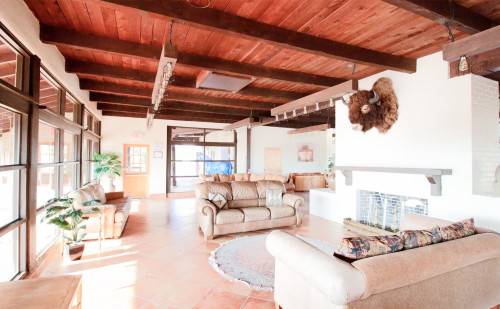
The current official residential page describes shared rooms in a home-like setting, communal gathering spaces, covered porches, and the surrounding desert grounds. It also advertises three chef-prepared meals each day with dietary accommodation. This is more specific than the older directory description of private accommodation: a private bedroom is not established by the current source. The offered room, occupancy, accessibility, and any special dietary requirements should be confirmed during admission planning, particularly for someone for whom shared accommodation could affect suitability.
The provider allows residents to keep their phones but describes designated phone windows of approximately an hour, three or four times weekly, along with access during case management. It says urgent matters can be accommodated. This supports planned contact with home while preserving the treatment schedule. People with caregiving duties, employment documentation, or essential medical communication can discuss those responsibilities before arrival. The published policy should not be interpreted as unrestricted remote-working access simply because a resident may have a phone on the property.
A detailed family program
Seven Arrows’ family program includes structured support sessions with the resident and chosen participants, education groups, in-person visits, and remote contact. The official description says family support commonly begins in the second week, while structured visits on the ranch begin after the first two weeks. Weekly virtual visits are available for relatives who cannot travel. Those timeframes provide a useful starting point for planning, with the individual clinical schedule and consent arrangements determining the actual participation.
The provider explicitly includes spouses, partners, parents, adult children, siblings, close friends, and chosen family within its definition of support people. The resident’s wishes and clinical boundaries shape who is involved. Immediate-family support is described as included without an additional charge, and the FAQ says support sessions, education, and visitation are part of the program of care. A family can confirm the current arrangements and any travel-related costs rather than assuming that all practical expenses associated with a visit are covered.
Open-enrollment family education groups are described as available even when a loved one is not currently in the program. This separates general education from access to a resident’s confidential treatment information. Relatives may be able to learn about the program and available support without being included in private clinical sessions. After discharge, the family pathway can include referrals to local professionals, an alumni-family track, periodic events, and guidance for the early period at home.
Admission, travel, and the next stage of care
The current admissions number is +1 866-718-1665. The published process includes an initial conversation, insurance review, a phone assessment, travel coordination, and orientation at the ranch. The provider advertises assistance with airport pickup from Tucson or Phoenix and other transport arrangements. Availability, the appropriate initial treatment site, and the exact travel plan should be agreed before booking independently. A rapid-admission estimate on the website does not replace clinical screening or confirmation that a suitable room is available.
Aftercare planning is included from the residential stage, with step-down referrals, alumni contact, and ongoing outreach. A person returning to a city or another state may need local appointments and a different support network from someone remaining nearby. The useful discharge plan identifies the receiving clinicians, medication arrangements, living situation, and chosen recovery supports. Family participation can help with practical arrangements when appropriate, while the resident’s own goals and consent remain central to the plan.
Price and insurance information
Recovery.com lists an estimated $38,000 for 30 days within a broader 30-to-90-day program range. This is a third-party estimate, not an official current tariff, and it should not be extended automatically to a longer stay or a separate detox admission. Seven Arrows’ official website states that it is out of network with all carriers, although single-case agreements and out-of-network billing may be possible. The exact benefits and financial responsibilities depend on the individual policy and proposed services.
A written proposal should identify the recommended length, shared-room arrangement, preliminary medical care if needed, included family services, transport, and personal financial responsibility. The provider also mentions payment plans and scholarships for qualifying applicants, whose availability must be confirmed individually. For broader geographic comparisons, see the directory’s United States treatment destinations and Arizona treatment guide. Seven Arrows’ rural setting, coordinated off-site detox pathway, and trauma-focused model are especially relevant features when assessing fit.
Sources and verification
Reviewed October 20, 2026: Seven Arrows Recovery overview and admissions; residential program; clinical approach; family services; and Recovery.com’s estimated price. The current official shared-room and off-site detox descriptions take priority over broader older directory fields.
Conditions
Levels of care
Settings
Treatment approach
Assigned primary clinician, individual and group work, CBT, DBT, IFS, EMDR, ART, motivational interviewing, equine-assisted psychotherapy, experiential work, family support and continuing-care planning
Fees & admissions
USD 38,000 / program
Recovery.com estimated USD 38,000 for 30 residential days, checked October 20, 2026; this is not an official tariff or the price of a longer stay or separate detox. Official site states all insurance relationships are out of network, with possible single-case agreements. Confirm room, transport, family inclusions and personal costs.
Confirm the current program, duration, accommodation and included services directly with the center.
Confirm which length is priced at $38,000, room assignment, detox or medical exclusions, equine participation, family-program logistics and continuing-care referrals.