Care at More Than Rehab — Bryan
More Than Rehab in Bryan: a connected treatment pathway
More Than Rehab’s Bryan program is part of a Texas treatment network organized around successive stages of addiction care. Its current location description places Bryan at the more structured beginning of that pathway, where clients can concentrate on stabilization and early recovery. College Station is described separately as supporting a greater degree of independence, while an East Texas location offers another setting. For someone comparing treatment centers in the United States, the useful distinction is the combination of early clinical care and later transitions, with the actual campus determined by the recommended stage.
The provider’s published approach combines individualized addiction treatment, attention to co-occurring mental health conditions, and a progression through medical detox, residential treatment, outpatient services, and transitional living. A person does not necessarily need every component. Someone entering after hospital stabilization may have a different starting point from someone requiring withdrawal management, and a local resident may have different housing needs from a client arriving from another state. The admissions assessment should translate this broad continuum into a specific plan showing where treatment begins and what support is available next.
Who the Bryan pathway is designed to support
More Than Rehab describes care for people whose alcohol or drug use intersects with anxiety, mood difficulties, or other psychiatric concerns. Its dual-diagnosis page emphasizes coordination between counselors, psychiatric specialists, and physicians. This is especially relevant when previous care addressed substance use while leaving another problem insufficiently assessed. The purpose of the initial review is to understand the combination of concerns, current medications, withdrawal risk, and daily functioning. A diagnosis appearing on the website should be treated as an area for an admissions discussion, rather than automatic confirmation that every severity can be managed at every location.
The program also presents holistic and faith-based elements as part of its individualized treatment menu. That combination may appeal to someone who wants spiritual reflection alongside clinical care, but the balance deserves a clear discussion before admission. A client can ask how personal beliefs are respected, which activities are optional, and how the team builds a plan for someone who prefers a secular approach. Fit depends on the actual daily program and the person’s preferences, rather than an assumption that one philosophy will suit everyone with a substance use disorder.
Medical detox and the move into residential care
The current official detox page describes continuous medical supervision, individualized care, and medication support when appropriate. This stage focuses on managing withdrawal and establishing enough stability for subsequent treatment. Detox duration is not presented as a single fixed package. The medical review should account for substances used, recent use, previous withdrawal experiences, other health conditions, and prescribed medications. Someone needing hospital-level services should have that requirement established before travel, with a clear explanation of which setting will provide the necessary monitoring and what happens if a higher level of care becomes necessary.
Once stabilization is achieved, the residential program introduces a more sustained schedule of therapy, routine, and skill development. More Than Rehab’s residential page advertises daily individual and group therapy within a supportive community, with licensed clinical staff guiding care. The practical value of this structure is the opportunity to work on patterns that are difficult to examine while managing the immediate pressures of home. Before committing, a prospective client should obtain a sample week that distinguishes scheduled private sessions, group participation, medical reviews, and other activities, because those categories represent different kinds of professional contact.
The provider’s overview refers to an initial inpatient period of approximately 30 to 60 days, while its newer stage descriptions emphasize progress and transitions rather than a universal timetable. This makes an individualized duration more appropriate than a guaranteed 30-day stay. The treatment team should explain what it looks for before recommending partial hospitalization or another step. Relevant planning questions include how symptoms and functioning are reviewed, how a client participates in decisions, and whether insurance authorization, housing availability, or personal obligations could affect the recommended sequence.
Therapy, psychiatric coordination, and everyday skills
Cognitive behavioral therapy is explicitly named in More Than Rehab’s official dual-diagnosis description. Within this approach, treatment can examine the relationship between thoughts, feelings, and actions and develop alternative responses to situations linked with substance use. The provider also describes integrated medical and psychological counseling. A useful treatment plan connects these elements to the individual’s concerns: for example, how the team will address anxious avoidance, depressed mood, or difficulty managing conflict alongside addiction. This is more informative than a long list of modalities without an explanation of how they enter the person’s actual schedule.
Individual sessions and group work offer different opportunities within the residential phase. Private appointments provide a setting for personal history, goals, and subjects a client may not initially want to discuss with peers. Groups make space for shared learning, feedback, and practice with communication. Neither format needs to replace the other. The questions that matter are who leads each component, how the plan adapts when a client is struggling to participate, and how information is coordinated between therapy and medical staff so that care remains coherent rather than a series of disconnected appointments.
Recovery.com’s campus description adds family work, dialectical behavior therapy, medication-assisted treatment, and wellness activities to its account of the program. These details are secondary descriptions rather than a guaranteed schedule for the current Bryan placement. They are useful starting points for clarification, particularly if a specific method or medication service is central to someone’s choice. The written plan should identify which services are delivered at the assigned location, which depend on clinical assessment, and which belong to a later level of care or a different part of the network.
Living arrangements and the distinction between locations
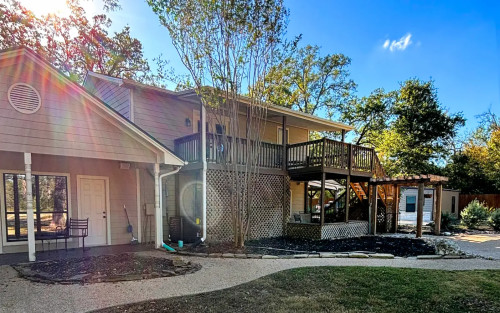
The current official locations page separates Bryan, College Station, and East Texas instead of presenting them as one interchangeable residential property. Bryan is associated with early structure; College Station is described as a setting where clients can begin reconnecting with daily life. This difference matters when reviewing photographs, room descriptions, and travel arrangements. Ask for the address of the clinical program and the address of any overnight accommodation, especially if treatment and housing are separate. A network-wide amenity should not be assumed to exist at the exact residence assigned to an individual.
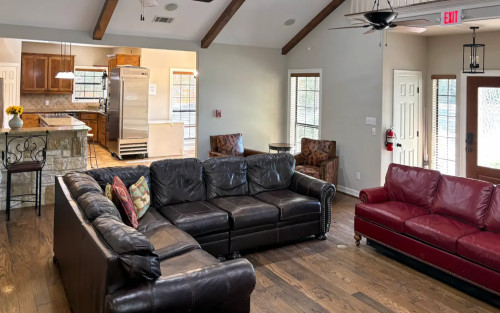
The secondary campus listing describes shared accommodation in a pathway that can include sober living. Current official material reviewed for this profile does not establish a private-bedroom entitlement at Bryan. Accordingly, a private room should be confirmed explicitly if it is essential for sleep, disability-related needs, or personal privacy. More broadly, living arrangements affect the daily experience: the number of roommates, bathroom access, transportation to sessions, medication storage, meal provision, and overnight support all deserve to be explained in relation to the actual stage of care rather than a general description of the organization.
Outpatient treatment and transitional living
More Than Rehab describes outpatient treatment as a gradual return to ordinary responsibilities with continued clinical support. Its residential page identifies partial hospitalization as a possible next step, while the wider overview describes a tiered outpatient pathway. The transition should be planned before the residential phase ends. Someone may need a schedule compatible with employment, transport between housing and treatment, or a clinician who can continue psychiatric care. These practical arrangements help determine whether the next level is workable for the person, even when the clinical recommendation itself is clear.
Transitional or sober living is described as a way to add accountability during outpatient care and the months that follow. Housing and treatment should be considered separately when comparing options. A sober residence can provide a substance-free living arrangement and community expectations, but it is not automatically equivalent to residential clinical staffing. The agreement should specify the house rules, supervision, charges, transport, and what happens if a resident needs more treatment. Clients returning to their own homes will need a different plan for support, appointments, and daily structure than those remaining in network housing.
The official alumni page describes ongoing peer connection, gatherings, mentorship opportunities, and a community clients can return to after completing a program. These are useful continuity features, particularly for people who want to stay connected with peers who understand their treatment experience. Alumni activities should be distinguished from scheduled clinical services: a social gathering or informal check-in is different from an appointment with a therapist or prescriber. Before discharge, the client should know which supports are open-ended, which require separate enrollment or payment, and who is responsible for arranging continuing treatment near home.
Family participation and practical admission planning
The provider’s integrated approach and the secondary campus description both make family and social context relevant to care. For some clients, a supportive relative can assist with transport, medication information, or a stable return home; for others, contact may need careful boundaries. The admissions conversation should establish how the client wishes family members to participate and how consent is handled. A realistic plan can address communication during treatment, participation in appropriate sessions, and preparation for the transition home without assuming that every relationship is safe, available, or ready to be involved.
For travel planning, obtain placement confirmation from the program before choosing transport to Bryan. A person may begin in medical detox and later move to another setting, so the first arrival address may not be the final residence for the full course of care. The direct number currently published by More Than Rehab is 888-249-2191. Admissions can clarify the starting location, documents and medication information required, and any transport support. The Texas treatment guide can help place this connected model alongside other programs with different residential and outpatient arrangements.
Fees and what the available estimate actually means
Recovery.com lists an estimated cash-pay cost of $20,000 beside a program duration of 30 days or longer. The source does not clearly map that amount to one exact length of stay or a complete sequence of services. It therefore should not be read as a provider-published monthly tariff or a promise that detox, residential care, outpatient treatment, and housing are all included. The estimate was reviewed on October 20, 2026, and remains a secondary comparison figure that requires a current written quotation from the program.
A useful financial agreement should identify each phase, the anticipated dates, included medical and therapy services, room arrangements, medication charges, and any separately billed housing or transport. If insurance is involved, benefits verification should be followed by an explanation of authorization requirements and the client’s likely responsibility. More Than Rehab’s strongest distinguishing feature is its planned progression through levels of care. Its suitability therefore depends on the quality and affordability of that whole proposed pathway, as well as the experience of the first residential stage in Bryan.
Sources reviewed
Reviewed October 20, 2026: official locations, program overview, medical detox, residential care, dual-diagnosis approach, alumni support, and secondary campus and estimated-price information. Provider descriptions indicate advertised services, not individual eligibility or guaranteed outcomes.
Conditions
Levels of care
Settings
Treatment approach
Individual and group therapy, CBT, coordinated psychiatric and medical care, holistic and faith-based options, family involvement, outpatient transitions, sober-living support and alumni connection
Fees & admissions
USD 20,000 / program
Recovery.com estimated USD 20,000 beside a 30+ day program duration, checked October 20, 2026. Exact duration-price mapping and inclusions are unspecified. This is a third-party program estimate, not an official monthly tariff or an all-stages package. Confirm detox, residential, medication, outpatient and housing charges.
Confirm the current program, duration, accommodation and included services directly with the center.
Confirm whether the $20,000 estimate applies to exactly 30 days or a longer stay, detox fees, room type, medication costs, insurance balance and step-down schedule.