
Care at The Manor — Kettle Moraine
The Manor’s private residential program in Wisconsin
The Manor offers residential treatment for alcohol and drug problems in Wisconsin’s Kettle Moraine forest, with a particular emphasis on trauma and the experiences that may accompany addiction. Its current official website advertises private rooms for every client and a maximum of eleven clients at one time. That small setting and focus on individualized work distinguish the program from a larger residential campus. For people comparing treatment options in the United States, The Manor is principally a private residential choice for sustained therapeutic work, with the appropriate level of medical support established before admission.
The provider describes a multidisciplinary team that includes psychiatrists, nurses, a psychologist, and master’s-level clinicians with additional trauma training. Its program combines individual, group, experiential, and family or couples work with psychiatric assessment and continuing-care planning. These components should be considered together. A comfortable bedroom may make a stay more manageable, but the more consequential question is how the proposed clinical schedule addresses the person’s specific concerns, previous treatment experiences, and ability to participate. The published program provides a framework for that discussion rather than a guarantee of identical services for every resident.
Understanding the trauma-focused approach
The Manor’s philosophy places considerable attention on relationships and past experiences that may have shaped a person’s response to stress or use of substances. Its website describes trauma broadly and invites exploration of cumulative experiences as well as more readily identified events. This is the provider’s treatment perspective; it should not be interpreted to mean that every addiction has the same cause. A careful assessment still needs to consider medical history, psychiatric symptoms, current substance use, social circumstances, and the client’s own understanding of what has brought them to treatment.
For someone who has previously found a highly standardized program difficult to engage with, the emphasis on private sessions and individualized pacing may be a relevant point of comparison. The Manor advertises a substantial amount of individual therapy but does not publish a universal numerical entitlement in the program material reviewed here. Request a proposed weekly schedule that identifies the type of clinician, appointment length, and balance between individual and group contact. This makes it possible to judge whether the intensity and style of care match the person’s expectations without relying on broad claims about personalization.
Clinical methods and how they fit together
The official program lists cognitive behavioral therapy and dialectical behavior therapy alongside approaches focused on trauma and emotional experience. CBT can provide a way to examine recurring thoughts and behavioral patterns, while DBT skills can support work on emotions, distress, and relationships. Their relevance depends on the goals established with the therapist. A useful plan would describe which problems each method is intended to address and how practice between sessions will be reviewed, rather than treating the presence of several therapy names as proof that every client receives a complete course of each.
The Manor also advertises EMDR, Somatic Experiencing, Internal Family Systems, Natural Processing, and Brainspotting. These are presented as options within its integrated clinical model. Prospective clients with a strong preference for a particular approach should discuss the clinician’s training, how suitability is assessed, and how treatment will be paced if distress increases. For someone arriving after difficult previous therapy experiences, the ability to talk about consent, stabilization, and adjustments may be as important as the availability of a named method. No specific trauma intervention should be assumed to be mandatory merely because it appears in the program menu.
Experiential work broadens the format beyond conventional conversation-based sessions. The published offering includes art therapy, psychodrama, and equine therapy, alongside other mind-body activities. These can provide different ways to engage with the treatment process, particularly for someone who finds it hard to put experiences into words immediately. The practical question is how an activity connects to the person’s goals and who facilitates it. A scheduled clinical intervention, a supervised recreational activity, and an optional wellness service may all have a place in a stay, but they are different components of care.
Psychiatric assessment and the separately assessed KAP option
Psychiatric and psychopharmacological assessments are listed among The Manor’s core services. These can help organize questions about mood, anxiety, sleep, medications, and the interaction between psychiatric symptoms and substance use. Before arrival, the team should review current prescriptions, previous responses, and any recent hospital or emergency care. A person who requires withdrawal management or a more intensive medical setting should establish where that care will occur and whether it must precede residential admission. The presence of psychiatric staff on the team does not, by itself, describe the full scope of every medical service available on the property.
The program specifically identifies ketamine-assisted psychotherapy, or KAP, as an option delivered in partnership with Integrata when clinically indicated. This is a separate assessment-dependent component, not a routine inclusion for every client or an assurance of benefit. Someone considering it should receive an explanation of the clinical rationale, medical screening, potential risks, consent process, and how the experience would be integrated into ongoing therapy. Financial and scheduling arrangements also need to be established. The published partnership is useful information about availability, while the decision to participate belongs within an individualized clinical consultation.
Mind-body activities and the residential setting
The Manor’s mind-body menu includes mindfulness, meditation, embodiment coaching, biofeedback, breathwork, yoga, massage, fitness training, sleep hygiene, and nutrition-related work. It also advertises practices such as sound healing and Reiki. These should be understood as parts of the provider’s broader offering, with different purposes and evidence bases, rather than equivalent treatments for a psychiatric diagnosis. A prospective client can ask which activities are included, optional, or separately arranged and how the schedule is adapted for physical limitations, sensory preferences, or a need for more rest during early treatment.
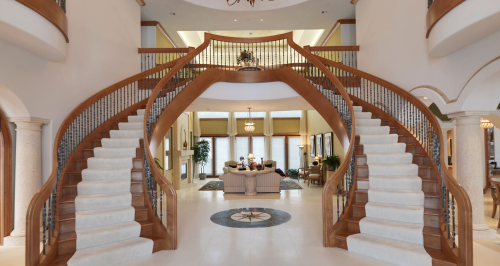
Recovery.com describes the campus as two private homes with private suites, prepared meals, and grounds within the Kettle Moraine setting. The current official website independently confirms private rooms and the eleven-client maximum. A small residence can change the social experience: clients may have more repeated contact with the same peers and staff, while also having a room to withdraw to between activities. Someone considering the program should still clarify the exact room, bathroom arrangement, accessibility, dining accommodations, and movement between buildings, because a general description of privacy does not answer every practical accommodation question.
Technology access and staying connected with ordinary life
The Manor’s current personal-device policy is more specific than a general description of flexible electronics access. It allows clients to bring phones, tablets, laptops, smartwatches, and music players, while prohibiting smart glasses. There is an initial 48-hour restriction on electronics, which the clinical team may extend. After that period, devices are stored during clinical programming and between 10 p.m. and 6 a.m. These details matter for professionals, caregivers, or anyone who needs to make arrangements before entering treatment; permission to bring a device does not mean unrestricted use throughout the day.
The provider frames clinically appropriate connection with work and family as compatible with treatment. In practice, a client may need to arrange coverage for urgent responsibilities, set expectations about availability, and agree on a limited communication schedule. A person who expects to work a full normal schedule while receiving intensive residential care should discuss that assumption explicitly. The useful feature is the possibility of planned, clinically reviewed contact with everyday life, while the protected therapy schedule and overnight restrictions establish boundaries around that access.
Family work and recovery choices
Family and couples therapy are included in The Manor’s published core model, and its website describes involving loved ones when that is appropriate and supportive. This can be especially relevant when treatment goals include communication, relationship patterns, or the conditions awaiting the client at home. Participation should reflect the client’s consent and the safety of the relationships involved. Before the stay, clarify whether sessions are remote or in person, how frequently they are proposed, and how family members can prepare without assuming that every relative needs to participate in every part of treatment.
The Manor offers a twelve-step approach alongside alternatives. This allows the continuing-care conversation to consider what kinds of peer support a person is willing and able to use after leaving Wisconsin. Prior experiences with recovery groups, spiritual beliefs, and preferences for meeting format can all inform that choice. A workable plan should identify actual options near home or online, rather than leave a client with a broad recommendation to find support later. The program’s individualized philosophy is most useful when it produces practical choices that the client understands and can continue using.
Length of stay, discharge planning, and alumni contact
The price source reviewed for this profile describes a six-week residential stay. That period provides a comparison point, but the actual recommendation and any extension should be confirmed with The Manor. Admission planning should explain the proposed starting and ending dates, how progress is reviewed, and what would lead to a change. For someone traveling from elsewhere, the end of the residential stay also requires coordination: transport, medication supply, follow-up appointments, and any transitional support need enough notice to be arranged properly rather than becoming decisions made on the final day.
The official program identifies community referrals near the client’s home, monthly alumni meetings on Zoom, and periodic clinical check-ins after discharge. These are distinct forms of continuing support. A referral helps connect someone with a new service, an alumni meeting provides peer contact, and a check-in does not necessarily replace ongoing therapy or prescribing. The written discharge plan should make those responsibilities clear. Clients who need a sober coach, a particular therapist, or another structured program should establish who will coordinate it and whether it involves an additional provider and separate cost.
Six-week pricing and making a grounded comparison
Recovery.com currently estimates $75,000 to $102,000 for six weeks at The Manor. This is third-party estimated pricing reviewed on October 20, 2026, rather than an official tariff or a provider quotation. The six-week period is retained as published and has not been converted into a monthly rate. The range should prompt a discussion about what changes the cost, including accommodation, clinical requirements, optional services, and any extension. It does not establish that every service mentioned on the website is included at either end of the range.
The Manor’s direct admissions number is 414-930-1930. A useful inquiry would bring together the proposed therapy schedule, medical needs, room assignment, device expectations, and a detailed six-week financial agreement. The Wisconsin treatment guide offers context for comparing other settings in the state. The Manor is most meaningfully evaluated on its small residential environment, trauma-focused clinical model, and planned continuation of care, with the limits and inclusions of the individual arrangement confirmed before a commitment is made.
Sources reviewed
Reviewed October 20, 2026: official program, capacity, and device policy, clinical methods, KAP partnership, and continuing care, official facility presentation, and secondary campus description and six-week price estimate. Advertised services are distinguished from individually prescribed care and optional arrangements.
Conditions
Levels of care
Settings
Amenities
Treatment approach
Individual, group, family/couples and experiential therapy; CBT, DBT, EMDR, IFS, Somatic Experiencing, Natural Processing, Brainspotting, psychiatric assessment, twelve-step alternatives and coordinated aftercare; KAP through Integrata when indicated
Fees & admissions
USD 75,000–102,000 / program
Recovery.com estimated USD 75,000–102,000 for six weeks, checked October 20, 2026. Original six-week period retained without prorating. This is a third-party estimate, not an official quotation; confirm accommodation tier, psychiatric/medical services, optional KAP or wellness costs, travel and continuing care.
Confirm the current program, duration, accommodation and included services directly with the center.
Request a detailed six-week quote, clarify which accommodation tier determines the range, confirm included medical and psychiatric services, travel arrangements and continuing-care coordination.