
Care at Lost Angels Treatment Center — Los Angeles
Lost Angels’ Sherman Oaks treatment setting
Lost Angels Treatment Center advertises medical detox and residential care for addiction and mental health concerns in Sherman Oaks, Los Angeles. The current official mental health page describes a voluntary, six-person residence with private ensuite rooms, while the broader program presents individualized therapy, psychiatric assessment, and a planned transition into continuing care. For someone researching treatment in the United States, this is a small residential option within a major city. The relevant comparison is the actual clinical program and level of supervision, alongside the privacy and practical features of the home.
The provider describes treatment for alcohol, opioids, stimulants, benzodiazepines, and other substance use problems, including situations where more than one substance is involved. It also advertises primary mental health and dual-diagnosis residential services. Those pathways may overlap, but they require individual assessment. A client seeking psychiatric treatment without a substance use disorder should make that purpose clear at the outset so admissions can explain the appropriate program, the conditions it can manage, and any medical or psychiatric stabilization required before entering the residence.
Assessment and the level of care
Lost Angels’ official residential description begins with an assessment of substance use severity, withdrawal risk, mental health needs, and treatment history. The purpose is to determine whether this residential setting is suitable, rather than assume that everyone who calls should be admitted. Someone who has recently been hospitalized, experienced serious withdrawal, or had difficulty remaining safe outside a hospital should provide that information before arranging travel. The program should explain its admission criteria, available medical support, and transfer procedures in relation to the person’s actual needs.
The mental health page distinguishes the residence from a locked psychiatric ward and describes it as voluntary. That is an important practical feature for someone comparing residential treatment with hospital care. A home-like environment and round-the-clock support do not, on their own, establish the capacity of an acute psychiatric hospital. Before admission, the treating team should clarify what level of observation is available, which services are delivered on site, and what circumstances would require a different setting. The aim is an appropriate placement with clear expectations about what the residence can provide.
Detox and medication support
The official website describes an on-site detox program with continuous medical monitoring and individualized medication support when appropriate. Detox is presented as a preliminary phase for clients who need withdrawal management, followed by residential therapeutic work as they stabilize. It is not required simply because someone is entering the program. The assessment should take account of current substances, prescription medications, recent use, previous withdrawal experiences, and other medical conditions. A precise intake plan is more useful than a fixed promise about how quickly detox will be completed.
Medication-assisted treatment is included among the advertised options, and the mental health page describes psychiatric evaluation and ongoing medication management. A prospective client should discuss whether an existing medication can be continued, who will review it, and how any changes are explained and monitored. The presence of medication services should not be interpreted as a recommendation for a particular drug. For someone transferring from another clinician, accurate records and a clear handoff are particularly useful, both at admission and when arranging follow-up prescribing after the residential stay.
Individual, group, and trauma-focused therapy
Lost Angels lists cognitive behavioral therapy, dialectical behavior therapy, motivational interviewing, EMDR, and Brainspotting within its clinical offering. CBT and DBT can provide structured ways to work on thoughts, actions, emotions, and relationships; motivational interviewing focuses the conversation on the person’s own reasons for change. The practical issue is how these approaches are selected and scheduled for the individual. A written treatment plan should connect methods with identified goals rather than simply repeat the website’s list of therapies, particularly when a client has already tried some of them elsewhere.
EMDR and Brainspotting are advertised as options for trauma-related work. Someone choosing Lost Angels because of a particular method should ask how the clinician assesses readiness, how stabilization is handled, and how sessions are adapted if the work becomes overwhelming. A listed intervention is not a guarantee that it will be used immediately or that it is suitable for every client. The therapeutic relationship, consent, and pace of work are relevant alongside the name of the technique, especially when earlier treatment experiences have been difficult.
The residential model includes both private sessions and group participation. In a six-person setting, the peer environment is likely to feel different from a large campus, but small capacity does not establish a fixed number of therapy hours or a constant one-to-one staffing arrangement. Request a sample schedule that identifies individual appointments, group sessions, medical reviews, and wellness activities. This allows a client to understand where focused clinical contact occurs and how the program responds when someone needs more support, quieter time, or a modification to group participation.
Mental health and family involvement
The official mental health program describes care for depressive and mood disorders, anxiety and panic concerns, trauma, and co-occurring substance use. Its approach combines therapy with psychiatric review rather than treating these as unrelated problems. For a client with more than one diagnosis, the assessment should clarify which symptoms are current, which may relate to substance use or withdrawal, and what goals can realistically be addressed during the stay. The availability of an advertised service is a starting point for this conversation, not a substitute for a clinical recommendation.
Family therapy is also described, with the mental health page specifying in-person or secure-video participation. This may be useful when loved ones need to understand the treatment plan, discuss communication, or prepare for a return home. Involvement should follow the client’s consent and the needs of the situation. A practical plan would explain who may attend, how sessions are scheduled, and whether additional education or support is available for relatives. It should also allow for clients whose safest or most useful support network consists of friends or other chosen people.
Rooms, meals, recreation, and pets
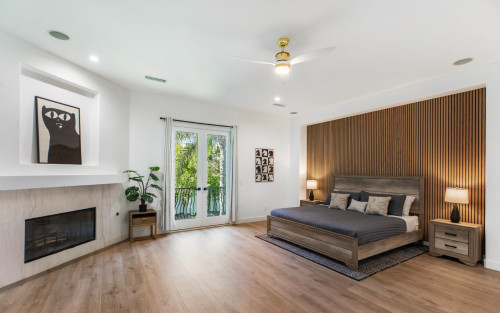
The current official facility description includes private suites with ensuite bathrooms, prepared meals, a gym, an outdoor pool, a basketball court, and entertainment spaces. These are advertised features of the Sherman Oaks setting rather than a measure of treatment effectiveness. For daily comfort, it is worth clarifying the actual room assignment, accessibility, dietary requirements, and the availability of recreation within the clinical schedule. A person arriving with pain, fatigue, or limited mobility may place more value on suitable accommodation and a manageable routine than on the number of recreational amenities.
Pet-friendly accommodation is discussed on the residential page as something that may be arranged. It should therefore be confirmed before a client makes travel plans with an animal. Approval, animal care responsibilities, room availability, and any extra charges are separate practical questions. The same placement-specific approach applies to other amenities: photographs show the environment, while the admission agreement should establish what the individual can use and under what conditions. A pet or preferred room should not be treated as secured merely because the website mentions the possibility.
Technology and the treatment routine
Lost Angels’ mental health FAQ describes an initial period of restricted electronics followed by gradually reintroduced, supervised access as the client stabilizes. The residential page also advises that device rules will be explained before arrival. This is more specific than an assumption of unrestricted phone or laptop use. People with work, caregiving, or financial responsibilities should discuss essential communication in advance and arrange coverage where needed. The expected device policy should be confirmed for the actual program, because a necessary call and ongoing remote work may be treated differently.
The program describes a day built around therapy, wellness activities, meals, and time for reflection. Its holistic elements include practices such as mindfulness, yoga, and fitness alongside clinical treatment. These can support a varied routine, but the choice and frequency should reflect the person’s health and preferences. Someone who needs a particular accommodation can ask how the team adjusts activities without disrupting access to core care. The useful detail is the balance of the week, including rest and private time, rather than a general promise that every day will contain every advertised service.
Duration and the transition out of residential care
The official website gives differing descriptions of typical duration. Its homepage refers to 30 to 90 days, while the residential treatment page describes approximately 21 to 45 days and emphasizes clinical progress. The mental health page also discusses longer residential periods. These differences make a fixed universal duration inappropriate for this profile. Admissions should explain the recommendation for the specific pathway, how the plan is reviewed, and what might lead to an extension or a transition to less intensive care. A quoted price should identify the exact period it covers.
Lost Angels describes discharge planning that begins early, including referrals for outpatient therapy, medication management, peer support, and, where appropriate, intensive outpatient care or sober living. These services should be mapped to actual providers and locations. A client returning to another state may need a different arrangement from someone remaining in Los Angeles. Before departure, establish the first follow-up appointments, the medication handoff, transportation, and the role of alumni contact. Continuing-care recommendations are most useful when they become a practical schedule rather than a general instruction to seek support after leaving.
Price estimate and direct contact
Recovery.com lists an estimated $45,000 for 30 days for Lost Angels. This is a secondary cash-pay estimate reviewed on October 20, 2026, rather than an official tariff or a quote for every program length. The estimate does not establish the cost of a longer mental health stay, additional detox services, or optional arrangements. The provider advertises work with PPO insurance and benefits verification, but the financial agreement should identify the actual program, authorization, covered services, client responsibility, and any separately billed medical or accommodation charges.
The official direct contact number is 844-358-2271. When speaking with admissions, specify the Sherman Oaks program and the main reason for seeking care, then ask for the proposed clinical schedule, expected length, room and device arrangements, and an itemized quotation. The California treatment guide offers broader context for comparing locations and care models. Lost Angels is best assessed through its small residential setting and integrated clinical offering, with individual suitability and the exact terms of admission established before travel.
Sources reviewed
Reviewed October 20, 2026: official Sherman Oaks overview and facilities, residential and detox program, mental health care, capacity, and device policy, and secondary campus and 30-day price estimate. Conflicting published duration ranges are disclosed. Marketing outcome claims and unverified licensing assertions are not adopted as findings.
Conditions
Levels of care
Settings
Amenities
Treatment approach
Individual and group care, CBT, DBT, motivational interviewing, EMDR and Brainspotting when appropriate, psychiatric evaluation, medication support, family sessions, wellness activities and discharge planning
Fees & admissions
USD 45,000 / program
Recovery.com estimated USD 45,000 for 30 days, checked October 20, 2026. This is a third-party cash-pay estimate, not an official tariff or a price for all published duration ranges. Confirm detox, medication, program length, room, optional pet arrangements and continuing-care charges.
Confirm the current program, duration, accommodation and included services directly with the center.
Confirm the services included in the 30-day estimate, room assignment, detox and medication charges, pet eligibility, technology access and the IOP or sober-living transition plan.