
Care at Aster Springs Virginia — Manakin-Sabot
Aster Springs’ Manakin-Sabot eating disorder program
Aster Springs’ Manakin-Sabot location is part of its Virginia eating disorder treatment service near Richmond. The current official location page identifies the address as 2190 Manakin Road and describes residential care for adult women and people who identify as female, ages eighteen and older. The program combines therapy, nutrition care, medical monitoring, and support with everyday eating situations. For someone exploring treatment in the United States, this is a specialist eating disorder service rather than a general addiction residence or a weight-loss program.
The Virginia service also identifies locations in Glen Allen and on Manakintown Ferry Road, along with a wider continuum that includes partial hospitalization and intensive outpatient care. Those addresses and levels should not be treated as interchangeable with the Manakin-Sabot residence. When arranging admission, specify the actual placement, clinical level, and any later transition. This is particularly useful for a client traveling from outside Virginia or a family member trying to understand where overnight care, appointments, and visits will take place.
Eligibility and the conditions addressed
The official Virginia page lists anorexia nervosa, bulimia nervosa, binge eating disorder, ARFID, purging disorder, and other specified feeding or eating disorders among the concerns treated. It also describes attention to co-occurring mental health needs, including anxiety, depression, trauma-related difficulties, and OCD. The assessment should consider the person’s full clinical picture rather than rely on a single label. A client may need support with eating, physical health, emotional regulation, and relationships at the same time, and the treatment plan should explain how those needs are prioritized and coordinated.
Residential treatment is described for people who need more structure than outpatient appointments can provide, including supported meals, daily therapeutic work, and ongoing clinical observation. Individual medical eligibility must still be established. A person with recent medical instability, hospitalization, or difficulty maintaining adequate nourishment should provide that history before making travel plans. The program should explain its monitoring capabilities, what records or assessments are needed, and whether hospital stabilization is required first. A home-like environment does not remove the need to match the level of care to the person’s medical condition.
Coordinated clinical and nutrition care
Aster Springs describes a multidisciplinary model that brings medical, nutritional, and therapeutic support into an individualized plan. That coordination matters when emotional concerns and physical needs affect one another. For example, a meal-related difficulty may need discussion with both a dietitian and therapist, while a medical concern may change the pace or structure of treatment. A prospective client should understand who will be responsible for each part of care, how the team communicates, and how the client is involved when recommendations are reviewed.
The official Virginia program names acceptance and commitment therapy, cognitive behavioral therapy, dialectical behavior therapy, experiential therapy, and exposure and response prevention. These approaches serve different purposes within treatment. CBT can help examine patterns in thinking and behavior, DBT skills can support emotional regulation and distress management, and ACT may inform work on values and flexibility. Their availability is most meaningful when the clinician explains how they relate to the person’s difficulties. A treatment plan should identify the actual sessions and goals rather than imply that every resident receives the same combination.
Exposure work is also listed as part of the service, alongside nutrition therapy. In an eating disorder program, the relevant experiences should be selected, paced, and supported by the clinical team. The aim is not to give a client a generic challenge list to attempt alone. Before admission, someone who is worried about meal-related experiences can ask how consent, preparation, support during an activity, and review afterward are handled. This helps make the process understandable without assuming that one approach or pace is appropriate for every person.
The Care Through Culinary approach
Aster Springs calls its hands-on nutrition approach Care Through Culinary. The official philosophy emphasizes a broad range of foods, less judgment around eating, and rebuilding confidence in nourishing oneself. Dietitians, nutrition staff, and culinary professionals contribute to that work. The practical distinction is that nutrition is part of daily treatment, not only a separate educational appointment. A client may need support with the experience of meals, the beliefs attached to food, and the ordinary decisions involved in shopping or preparation, alongside attention to individual medical and nutritional needs.
The provider describes practical outings and real-world experiences as part of its broader model. These can create opportunities to practice skills outside the most protected parts of the residential routine, when the team considers it appropriate. The actual activities should be confirmed for Manakin-Sabot and the client’s stage of care. A prospective resident can ask how the team chooses experiences, who accompanies clients, and how the work is connected to what will be required at home. The usefulness lies in the individualized preparation and review, not simply in the presence of outings on a schedule.
Nutrition planning should also account for allergies, medically necessary restrictions, religious practices, and other relevant needs. Aster Springs publishes a dedicated vegan-lifestyle pathway, but the current page specifically identifies that program at its Ohio residential location. It should not be assumed to be available in the same form at Manakin-Sabot. A client for whom a dietary accommodation is central should discuss it directly with the Virginia clinical and nutrition team before admission, so the proposed plan respects the person’s circumstances while addressing the eating disorder and any medical concerns.
Individual work, groups, and family participation
The program’s individualized model includes therapy directed toward the person’s own history, symptoms, and goals, alongside the shared structure of residential care. Private sessions and group work offer different opportunities: one can make space for personal concerns, while the other can support skill practice and connection with peers. Ask for a typical week identifying the expected balance, the types of clinicians involved, and how the plan is adjusted if participation is difficult. A general promise of personalized care is most useful when it becomes an understandable schedule and a clear way to raise concerns.
Family support is also part of Aster Springs’ stated approach. For adults, participation should reflect the client’s consent and the role of the people involved. Support may come from a partner, relatives, friends, or other trusted individuals, and not every relationship will be appropriate for the same level of involvement. The treatment team can explain how education, therapy, and preparation for discharge are organized. This is particularly relevant when a person will return to shared meals or a household routine that may need to change in order to support continuing recovery.
The residence and the importance of exact placement
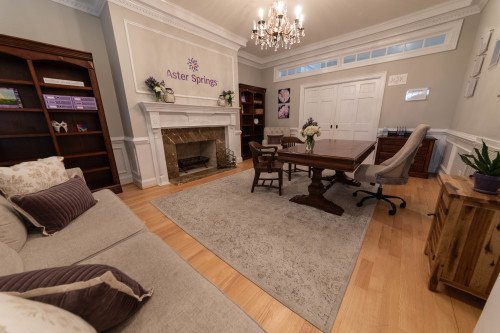
The current Virginia location material describes home-like treatment environments with residential support available around the clock. It identifies Manakin-Sabot separately from Glen Allen and Manakintown Ferry. The source does not establish a universal private-bedroom entitlement at the Manakin Road address. Before committing, confirm the room and bathroom arrangement, accessibility, quiet space, laundry, and any other accommodation that affects daily comfort. A private treatment setting and a private sleeping room are different claims, and the latter should be addressed specifically if it is important to the client.
Practical arrangements can also affect the transition into treatment. A client may need to plan time away from employment, care for dependents, manage appointments with existing clinicians, or arrange travel with a support person. Admissions should provide a clear arrival address, a list of required documents, and guidance about medications and belongings. If a stay might begin at a different level of care or another Virginia house, that should be explained before travel. The goal is to make the first day manageable and avoid confusion between the organization’s several regional locations.
Length of stay and movement through care levels
Aster Springs’ current Virginia FAQ describes residential duration as individualized, with many clients staying for several weeks before moving to a lower level of care. It does not publish one fixed thirty-day requirement. The recommendation is reviewed as needs and progress change. A prospective client should ask how those reviews occur, how they will be involved, and what factors influence the next step. Clinical needs, insurance authorization, and practical arrangements can affect planning in different ways and should be explained separately rather than collapsed into one estimated discharge date.
The Virginia continuum includes PHP and IOP for people who are medically stable and able to live off site. These levels can provide continued structure while a person practices more independence, but they involve different housing and attendance arrangements from residential treatment. Before discharge, identify the actual program location, daily schedule, transport, and where the client will live. Someone returning to another state may instead need referrals to clinicians or programs near home. The best transition plan is one that has confirmed practical details as well as an appropriate clinical recommendation.
Aster Springs also advertises alumni programming within its broader treatment approach. That can offer a way to remain connected after a more intensive period of care, but it should be distinguished from ongoing therapy, nutrition appointments, or medical monitoring. Ask what is available to Virginia clients, how participation works, and whether any services have separate costs. An adult leaving residential care should understand who is responsible for each continuing need, including medication management where relevant, rather than assume that alumni contact replaces a complete outpatient treatment team.
Daily pricing and current coverage information
Recovery.com’s exact Manakin-Sabot listing gives an estimated cash-pay rate of $950 per day, reviewed on October 20, 2026. This is a third-party figure, not an official Aster Springs tariff. The earlier $28,500 monthly amount was a calculation from that daily estimate and is replaced by the original daily basis. A current quotation should specify the recommended length, accommodation, medical and nutrition services, medication charges, and any costs associated with a later PHP or IOP phase rather than imply that one daily estimate covers the entire course of care.
The official Virginia page lists several commercial insurance relationships and out-of-network options, while stating that Medicaid, Medicare, and TRICARE are not accepted. Because coverage depends on the individual plan and recommended service, the admissions team should verify the current position and explain authorization and client responsibility. The direct Virginia number is 866-927-6992. This replaces reliance on a separate directory tracking number and provides a clearer route to discussing the actual Manakin-Sabot placement and its current financial arrangements.
Aster Springs Manakin-Sabot is most usefully evaluated through its specialist adult eating disorder focus, integrated nutrition and therapy model, and connections to continuing care in the Richmond area. The eating disorder treatment directory can help compare other programs by population and setting. Before choosing a stay, bring together the medical eligibility decision, proposed therapy and meal-support schedule, exact residence, and written financial agreement. Those details explain how the program would work for a particular person more clearly than a broad description of residential care alone.
Sources reviewed
Reviewed October 20, 2026: official Virginia population, locations, treatment, and contact, treatment model and alumni offering, Care Through Culinary nutrition philosophy, location-specific vegan pathway information, and secondary Manakin-Sabot daily price. Ohio-only program details are not transferred to Virginia; exact placement and individual eligibility require confirmation.
Conditions
Levels of care
Settings
Treatment approach
Multidisciplinary medical, nutrition and therapy care; ACT, CBT, DBT, exposure/response prevention, experiential work, supported meals, Care Through Culinary, family support and continuing-care planning
Fees & admissions
USD 950 / day
Recovery.com exact Manakin-Sabot listing estimated USD 950/day, checked October 20, 2026. This is not an official provider tariff; former USD 28,500 monthly arithmetic removed. Confirm length, room, medical/nutrition services and any separate PHP/IOP costs. Current official page says no Medicaid, Medicare or TRICARE.
Confirm the current program, duration, accommodation and included services directly with the center.
Confirm medical eligibility, the recommended length, meal and room arrangements, insurance benefits and step-down care.