
Care at The Emily Program — Anna Westin House West, Minneapolis
Anna Westin House West: the Minneapolis adult residence
Anna Westin House West is The Emily Program’s adult residential eating-disorder center in the Linden Hills neighborhood of Minneapolis. Its published address is 3012 West 44th Street, Minneapolis, Minnesota 55410. The house provides a structured setting for adults of all genders who need treatment and support throughout the day and night. The name matters: Anna Westin House West in Minneapolis is distinct from the organization’s similarly named adult and adolescent programs in St. Paul. Referrals, travel plans, insurance discussions, and admission paperwork should identify the Minneapolis residence explicitly.
The official campus contact is 888-364-5977, extension 2400. An assessment determines whether this residential program is an appropriate match, taking account of the person’s medical condition, eating-disorder symptoms, mental health needs, and previous care. A directory listing cannot reserve a bed or establish that a particular level is suitable. Adults considering a stay can use the initial conversation to explain the reasons they are seeking more support, what has been difficult in earlier treatment, and which practical responsibilities would need to be arranged before leaving home.
Who may be considered for treatment
The campus describes care for anorexia, bulimia, binge eating disorder, avoidant/restrictive food intake disorder, and other specified feeding or eating disorders. It also addresses associated concerns rather than using a single model of what an eating disorder looks like. Someone whose difficulties center on food avoidance, sensory experiences, loss of control, or persistent rules around eating can discuss those experiences during assessment. The important question is how the full presentation affects health and daily functioning, and whether the available residential support fits those needs.
Co-occurring anxiety, depression, trauma-related symptoms, and substance-use concerns appear in the provider’s clinical descriptions. Psychiatric involvement and medication management can form part of the plan when indicated. Those services should be understood in the context of an eating-disorder program: the presence of psychiatric professionals does not turn the residence into an unrestricted acute psychiatric unit or substance-withdrawal service. If several conditions need treatment at once, the referring professionals and admissions team should agree which needs can be addressed here and whether another service is required before or alongside residential care.
Medical oversight within a residential setting
Anna Westin House West advertises on-site nursing supervision and medical monitoring around the clock. The campus description also distinguishes regular appointments with physicians or physician assistants from continuous nursing observation. This is a useful distinction for families who may interpret residential care as either purely counseling or equivalent to a hospital. The actual plan should state the medical reviews, monitoring, psychiatric input, and escalation arrangements relevant to the individual. A person with complex medical needs should have those needs reviewed before travel so that the chosen setting can support them appropriately.
The Emily Program’s general explanation places residential care between inpatient medical stabilization and less intensive day or outpatient services. People live at the center while participating in a coordinated schedule of treatment, meals, and supported daily activity. The provider describes residential eligibility as needing substantial supervision while being stable enough to avoid hospitalization. Placement should therefore follow clinical judgment rather than a preference for a particular house or neighborhood. If the assessment recommends a different level, the family can ask how the referral and later transition to residential care would work.
A week combines psychological and nutritional work
The Minneapolis campus describes an individualized weekly schedule with group and individual psychotherapy, nutrition sessions, therapeutic meals and snacks, medical assessments, and psychiatric visits. That combination is central to the service: eating-disorder treatment is not confined to a therapy appointment while the rest of the day proceeds independently. Applicants can ask how a week is organized, how personal goals are reviewed, and how the team responds when the plan needs to change. A sample schedule is helpful, provided it is treated as an illustration rather than a guarantee of identical appointments for every resident.
CBT and DBT skills are named within The Emily Program’s approach. Cognitive behavioral work explores the thoughts and behaviors that maintain difficulties, while dialectical behavior skills support emotional regulation and responses to distress. Group sessions can provide opportunities to practice these skills with peers, and individual work can address concerns that require a more personal setting. The resident should understand why each intervention is included and how it relates to daily challenges. The program’s use of several approaches does not imply that one method will produce the same outcome for everyone.
The organization’s broader philosophy is trauma-informed and includes attention to sexual and gender identity. In an all-gender adult residence, applicants may want to discuss preferred language, room arrangements, privacy, cultural needs, or previous experiences that affect trust in treatment. Raising these concerns early gives the team an opportunity to explain specific accommodations and limitations. A welcoming statement is most useful when connected to practical arrangements the person can understand. The individual also needs to know how to communicate a concern during the stay and who will respond to it.
Supported eating and real-world practice
Nutrition treatment at Anna Westin House West includes dietitian-led counseling, education, meal planning, and supported meals and snacks. The Emily Program describes an inclusive food philosophy that avoids moral judgments about food and considers the individual reasons behind dietary preferences. This creates a framework for clinical work rather than a standard menu suitable for every person without assessment. Medical dietary requirements, allergies, cultural practices, and sensory concerns should be reviewed with the team. The person’s existing records can help clarify which accommodations are necessary and how they will be provided.
The Minneapolis service also describes cooking, grocery shopping, and dining experiences as part of its practical treatment work. These activities connect the residential environment with situations an adult will encounter after leaving: selecting food, preparing it, eating with others, and coping when routines change. Participation and support should reflect readiness, not a fixed expectation that every outing happens at the same stage. A resident can discuss which everyday situations are hardest and ask how those concerns will be incorporated into the plan. The neighborhood setting provides context, while the clinical purpose guides participation.
Expressive arts and movement-based activities offer additional ways to engage with emotions and body awareness. The provider mentions yoga and other forms of attuned movement, while its general activity philosophy emphasizes individual physical and emotional needs. These should be adapted when medical health or compulsive exercise makes participation unsuitable. An applicant should not infer access to unrestricted workouts from a photograph of a yoga room. The relevant discussion is how the team decides what is appropriate and how the resident can work on their relationship with movement within the broader eating-disorder plan.
Family and chosen-support involvement
Family therapy, education, and support are part of the campus’s advertised service. The Emily Program explains that family-based treatment principles can be adapted for adults, while more traditional caregiver-led approaches are used with younger patients. For an adult at Anna Westin House West, the support network should be defined in a way that respects consent and personal circumstances. A partner, friend, parent, sibling, or other trusted person may play a role. Early agreement about communication can help supporters understand what information they receive and how they can contribute without taking over treatment decisions.
The organization’s family resources include educational guides and support events that can help loved ones understand eating disorders and prepare for the return home. These resources are useful alongside individual clinical planning, particularly when the resident will return to a household with established food routines or conflicting expectations. Supporters can ask how to participate from a distance and what practical preparation is recommended. Their own support needs matter too. An educational event or group should be distinguished from the resident’s clinical appointments and from any therapy a family member may need independently.
The house, arrival, and daily logistics
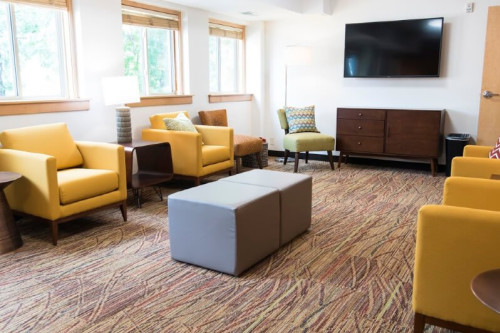
The official campus page identifies shared common space, on-site laundry, and Wi-Fi within a contemporary home-like environment. It does not establish a universal private-bedroom entitlement. Before accepting a place, clarify sleeping arrangements, bathroom access, accessibility, personal belongings, devices, visits, and expectations around time outside the building. Adults managing work or study should ask how those commitments fit the program rather than assume internet access allows a normal remote schedule. Arranging leave, caregiving, household tasks, and financial responsibilities in advance can reduce avoidable pressure during an intensive period of care.
The main entrance faces West 44th Street, and the provider states that the building is secured, with staff admitting visitors when they arrive. The published information describes an accessible entrance and limited on-site parking, with additional street options nearby. Confirm current arrival and visiting instructions directly, especially if someone needs assistance with mobility or transport. A family member’s accommodation is a separate matter from the resident’s bed. Clear practical arrangements also help when the person is arriving from another healthcare facility and records, medication information, or clinical handover must accompany the transfer.
Duration, payment, and the next level of care
The duration of a residential stay depends on the person’s medical and psychological needs and their progress with treatment. The Emily Program describes a general range of several weeks to a few months, followed by lower levels when appropriate. Recovery.com’s Minneapolis listing estimates USD 36,000 for a 30-day period. This is a third-party comparison figure, not a current official tariff or a promise that one month is the recommended course. Request a written explanation of the proposed charges, inclusions, authorization requirements, and what happens financially if the plan changes.
The official insurance information lists Minnesota arrangements with organizations including Blue Cross Blue Shield, HealthPartners, Medica-related plans, UCare, and others. Actual benefits depend on the individual policy and the service being authorized. Verify residential eating-disorder coverage for Anna Westin House West, including personal cost responsibilities and any separately billed appointments. The provider’s Client Accounts Team can help explain the process through the main number. Coverage questions should be settled with the clinical and financial plan in view, rather than assuming that network participation guarantees the full recommended stay.
Discharge planning should identify the actual next treatment setting, receiving clinicians, and support available at home. The Emily Program describes transitions to day programs, intensive outpatient care, and community professionals, but each arrangement has its own eligibility and availability. When comparing treatment providers in the United States or other eating-disorder services, consider how the Minneapolis residence fits that longer course. The key features here are adult residential care, continuous nursing supervision, practical nutrition work, and a personalized plan that can be carried into daily life after the stay.
Sources and verification
Reviewed October 20, 2026. Primary sources: Anna Westin House West campus; treatment, nutrition, and movement philosophy; residential program model; family education and resources; insurance information. Secondary fee estimate: Recovery.com Minneapolis listing. This profile concerns the Minneapolis adult house, not either similarly named St. Paul program.
Conditions
Levels of care
Settings
Treatment approach
Individual/group therapy with CBT and DBT skills, adult-adapted FBT principles, family support, dietitian-led nutrition and therapeutic meals, 24/7 nursing and medical monitoring, regular physician/PA appointments, psychiatric care, practical food activities and adapted arts/movement
Fees & admissions
USD 36,000 / program
Recovery.com Minneapolis listing estimated USD 36,000 for 30 days, checked October 20, 2026. This is a third-party estimate, not a provider tariff. Original 30-day program basis retained rather than calendar month. Confirm room, medical/psychiatric billing, authorized days, extensions and separate continuing-care costs.
Confirm the current program, duration, accommodation and included services directly with the center.
Adult all-gender residential program at 3012 West 44th Street. Call 888-364-5977, extension 2400. Confirm Anna Westin House West in Minneapolis, not either similarly named St. Paul program; assessment determines clinical eligibility and the next level of care.