Care at ClearView Communities — Frederick
ClearView Communities: psychiatric rehabilitation in Frederick
ClearView Communities is a residential mental health provider in Frederick, Maryland, focused on helping adults with serious and persistent mental illness build a more independent life. Its main campus is listed at 611 West Patrick Street, with several nearby residences and treatment activities connected to the surrounding community. The model combines psychiatric care, psychotherapy, occupational therapy, staffed housing, and support for work, education, and volunteering. It is designed as a substantial rehabilitation process rather than a short retreat. The organization also offers distinct thirty-day assessment and medication-management programs for people whose needs fit those services.
The provider generally works with younger adults but does not describe a strict upper age limit. Its FAQ gives an approximate resident age range of eighteen to thirty-five and notes that older adults have also completed the program. Potential residents must enter voluntarily and be willing to engage in psychiatric treatment. The admissions process includes records and interviews rather than immediate arrival on request. ClearView explicitly states that it cannot accommodate urgent or emergency admissions. The published admissions contact is 240-439-4900, and applicants should identify whether they are asking about residential rehabilitation or one of the short programs.
Conditions and the importance of program fit
ClearView names schizophrenia, schizoaffective and related illnesses, bipolar and other mood disorders, major depression, anxiety-related conditions, and attention-related difficulties among its areas of work. It also addresses the practical effects of mental illness on daily functioning. The organization considers co-occurring substance-use and personality disorders individually, while stating that these must not be the primary concern. This distinction matters for someone comparing psychiatric rehabilitation with addiction treatment. The program should explain how the person’s main clinical needs match its service and whether any other treatment must occur first.
Assessment looks beyond a diagnosis to the person’s goals, previous care, current symptoms, and ability to participate in a community-oriented setting. The residential homes are not locked units. Someone who needs acute inpatient treatment or another level of supervision may require a different placement. ClearView describes maintaining appropriate contact when an existing resident is hospitalized and planning for the next transition. That is different from providing hospital services within the residence. Referring professionals and the admissions team should agree on the level of support required before a move is organized.
Clinical treatment and everyday functioning
The official programming page identifies psychiatrists, nurses, psychotherapists, occupational therapists, and community-integration specialists as parts of the team. Named approaches include CBT, DBT, acceptance and commitment therapy, expressive work, and mindfulness-based activities. The program describes weekly interdisciplinary meetings to coordinate care. For the resident, that means the psychological, medication, and practical support plans should be connected rather than operating as unrelated appointments. A prospective resident can ask how goals are selected, how personal preferences are incorporated, and how the team reviews progress without assuming a uniform timetable for everyone.
Medication management is part of residential care, with directly supervised administration at the more intensive stage. As independence develops, some residents may take on more responsibility under the agreed plan. Changes should reflect clinical judgment and demonstrated skills, not a general instruction to manage medication without support. Applicants should provide an accurate medication history and explain difficulties with side effects, routines, or previous treatment. The team can then describe how psychiatric appointments, nursing support, and household staff communicate, including what happens when the person has a concern between scheduled reviews.
Occupational therapy addresses practical tasks such as daily routines, budgeting, time management, and functioning in the community. These can be meaningful treatment goals for someone whose symptoms have interrupted school, work, or independent living. The work may involve practicing an activity with support and gradually taking more responsibility, rather than discussing independence only in a therapy room. ClearView’s approach should be understood as individualized rehabilitation: the relevant goals depend on what the resident wants to do and the barriers they face, not on a single definition of success imposed on everyone.
Community participation is part of the treatment model
Supported employment, education, and volunteering are prominent parts of ClearView’s program. The provider says residents can begin exploring a community goal when they identify one, without waiting for a blanket declaration that they are ready. Employment and education specialists work with interests, experience, and personal objectives. This does not guarantee a job, admission to a course, or a particular placement. It creates a framework for practical support with opportunities in Frederick. The resident can discuss the pace, transport, disclosure preferences, and the balance between outside activity and clinical appointments.
The residential continuum gradually changes how much support a person uses. ClearView describes an initial staffed-home stage, a less intensive stage, and semi-independent living while clinical engagement continues. Some residents may gain more unsupervised community time, access to a vehicle, or responsibility for parts of their schedule when appropriate. Movement through these stages is not necessarily one-way; support can increase again if needed. The useful planning discussion concerns the individual criteria, the person’s understanding of those expectations, and how the team responds to setbacks while preserving meaningful participation in decisions.
The homes and daily routines
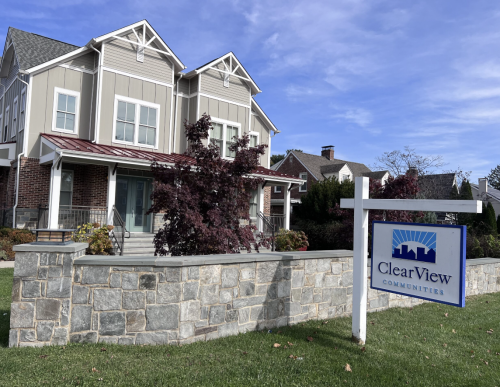
ClearView’s FAQ describes five coeducational residences with single-occupancy bedrooms. Two houses have private bathrooms, while the others have bathrooms shared between two residents. The homes are near the downtown treatment office, and the provider describes transport for appointments, work, education, and shopping. The actual house is selected according to availability, clinical needs, and the existing peer group. A private bedroom is therefore supported by the current description, but a private bathroom is not universal. Applicants should confirm accessibility, the assigned residence, and any practical needs before accepting a place.
Daily living is part of the rehabilitation work. The FAQ describes residents preparing breakfast and lunch, with a shared evening meal and each person taking a turn preparing dinner with staff assistance. That arrangement gives cooking and planning a practical place in the week. The provider also allows phones, laptops, and small electronics, with individualized limits when concerns arise, while bedroom televisions are not permitted. Applicants can discuss dietary needs and technology use in advance. The published animal policy says animals are not permitted, so any accommodation question should be addressed directly before arrival.
ClearView offers a wellness center, individual and group fitness support, nutrition consultation, expressive activities, and a therapeutic nature program. The latter includes a greenhouse and gardens, horticultural projects, and a described partnership for visits to Thorpewood in Thurmont. These are additional ways of participating in meaningful activity, rather than substitutes for psychiatric care. The plan should account for mobility, health, interests, and comfort with particular activities. A resident who enjoys gardening may find that work relevant to daily structure or community involvement, while another person may need a different form of engagement.
The thirty-day diagnostic and medication programs
The Intensive Diagnostic and Evaluation Program, or IDEP, is a separate thirty-day service for young adults who need a clearer diagnostic formulation and treatment plan. ClearView describes psychiatric assessment, review of prior testing, additional psychological testing when needed, regular psychiatric appointments, individual and group therapy, and attention to physical health. The extended observation period is intended to inform recommendations rather than guarantee a particular diagnosis. Before discharge, the provider prepares a report and continuing-treatment recommendations. Families and referring clinicians should clarify the questions they hope the evaluation will answer and which records should be supplied.
The Intensive Medication Management Program, or IMMP, is another thirty-day option. It focuses on reviewing complex medication histories and treatment needs in a closely observed setting, with two or three psychiatric meetings weekly described in the official material. The provider lists the possibility of supporting selected specialist treatments when appropriate, but a place in the program does not establish that a specific medication will be prescribed or suitable. The intended outcome is an individualized clinical plan and a clear handover to continuing care. Medication decisions remain with the treating professionals and the resident.
Neither short program automatically leads to long-term residential admission. ClearView screens for suitability and states that people requiring hospitalization or presenting certain immediate risks need another pathway. The diagnostic report may recommend residential care, another level of support, or ongoing services in the person’s home community. This distinction matters when planning finances and time away. A family should not treat a thirty-day assessment as a trial stay that guarantees acceptance into the longer program. The expected decision process and discharge arrangements should be discussed at the outset.
Duration and the limits of published pricing
For the main residential program, the official FAQ gives an average stay of twelve to eighteen months and notes that some people stay longer. That is a significant commitment, with treatment and community participation developing over time. The funding page publishes a residential reference rate of USD 22,500 per month effective December 1, 2024, while the FAQ adds an annual three-percent increase statement. Those details do not establish an unambiguous current monthly quotation. Obtain the present rate, expected duration, included services, review points, and financial terms rather than building a long-term budget from the older reference figure.
The short-program page separately publishes USD 30,000 for thirty days of IDEP and USD 22,500 for thirty days of IMMP, each with a USD 1,000 refundable security deposit. The residential funding page instead identifies a USD 1,500 deposit and excludes certain medication, laboratory, and outside-provider costs from the quoted package. These figures belong to different services and should not be combined as if they describe one admission. ClearView’s pages also contain differing statements about direct insurance billing, so the financial team should confirm the specific policy, authorization, reimbursement process, and personal responsibility in writing.
Supported living and eventual discharge
After the semi-independent stage, selected residents may enter Supported Living while occupying their own housing in the Frederick community. The provider explicitly distinguishes this from residential treatment and describes it as a transition lasting no more than approximately six months. Clinical appointments, case management, and vocational support may continue while outside providers are arranged. Housing therefore needs its own budget and practical plan. The funding and FAQ pages give different supported-living monthly amounts, USD 4,500 and USD 5,500, which makes a current individual quotation necessary before choosing this stage.
The longer-term goal is a support structure that remains useful when ClearView’s involvement decreases. That may include community clinicians, meaningful activity, medication support, housing, and relationships chosen by the resident. Compare ClearView with other United States treatment providers using the actual need for psychiatric rehabilitation and practical community support. Its most distinctive features are the long residential timeframe, private bedrooms in nearby homes, community-integration work, and separate short assessment programs. The best comparison keeps those services distinct and connects the clinical plan with a realistic financial and living arrangement.
Sources and verification
Reviewed October 20, 2026. Official sources: clinical scope; therapy and practical programs; residential continuum; residences; daily arrangements and FAQ pricing; funding and dated rates; IDEP and IMMP; admissions; eligibility; community integration. Current fees and insurance billing require direct confirmation because published pages differ.
Conditions
Levels of care
Settings
Amenities
Treatment approach
Psychiatry and medication support, CBT, DBT, ACT, individual/group and family work, occupational therapy, practical living skills, supported employment/education/volunteering, therapeutic nature and horticulture, wellness activities and gradual community independence
Fees & admissions
Confirm current pricing
Current main residential quotation unconfirmed. Official pages publish USD 22,500/month effective Dec 1, 2024, while FAQ adds 3% annual increases. Supported Living differs between USD 4,500 and 5,500/month. Separate official 30-day IDEP is USD 30,000 and IMMP USD 22,500, each with USD 1,000 deposit; residential funding page specifies USD 1,500 deposit. Do not use stale base rate or calculate an assumed current amount; confirm service, rate, insurance billing and extras.
Confirm the current program, duration, accommodation and included services directly with the center.
Voluntary adult psychiatric rehabilitation; younger adults are typical but older adults may be considered. Referrals, clinical records and interviews precede committee review. No urgent or emergency admission. Confirm Residential, IDEP or IMMP and current written funding terms.