
Care at Ashley Addiction Treatment — Havre de Grace
Ashley Addiction Treatment’s main campus is an adult inpatient addiction treatment facility at 800 Tydings Lane in Havre de Grace, Maryland. The nonprofit provider describes a 147-acre waterfront setting near the Chesapeake Bay and Susquehanna River, with medically managed withdrawal, residential clinical care, and support for co-occurring mental health concerns. Accommodation is semiprivate: residents usually share a hotel-style room and bathroom with one roommate.
This profile focuses on the Havre de Grace inpatient campus. Ashley also operates outpatient services in Bel Air, youth and recovery support through The Clubhouse in Aberdeen, and extended care in a separate residence near the main campus. Those services form part of a wider continuum, but they should not be treated as identical programs at one address. An admission proposal should name the location, level of care, clinical objectives, and expected next stage.
Adult addiction treatment with co-occurring care
The inpatient program addresses alcohol, opioids, benzodiazepines, stimulants, and other substance-use concerns. The provider also describes psychiatric support for accompanying depression, anxiety, trauma-related symptoms, and other relevant difficulties. This is an addiction-focused service with integrated mental health care, rather than an unrestricted admission promise for every primary psychiatric condition. Screening should establish what can be managed within the proposed program and what requires a different setting.
Ashley’s model combines medicine, therapy, and attention to spiritual and social wellbeing. The published patient program describes five areas of wellness: physical, mental, emotional, spiritual, and social. These categories help organize the residential experience, but the actual plan should identify concrete needs and interventions within each relevant area. Someone with established treatment elsewhere can bring prior assessments and explain which approaches have been useful, difficult, or incomplete.
Assessment and an individualized clinical plan
The clinical-care overview describes a biopsychosocial assessment, individualized goals, counseling, case management, skills workshops, and relapse-prevention planning. Medical history, substance use, mental health, relationships, and the person’s own priorities inform that process. The team may include physicians, nurses, therapists, and case managers with different responsibilities. Ask who coordinates the overall plan and how changes are explained to the resident during the stay.
The arrival information describes nursing assessment, consent and information-release forms, a clinical assessment, and a history and physical examination within twenty-four hours. It also identifies the Trac9 assessment system. Preparing accurate medication information and relevant records can make this process more useful. A family member arranging the admission should distinguish providing background information from receiving confidential updates, which depends on consent and the clinical circumstances.
Therapy methods and specific treatment groups
The admissions FAQ lists cognitive behavioral therapy, dialectical behavior therapy, cognitive processing therapy for PTSD, and schema therapy among Ashley’s methods. It also describes depression and anxiety specialty groups and gender-specific trauma groups. These approaches have different purposes: work on habits and beliefs, emotion-regulation skills, trauma-related thinking, or persistent patterns in relationships and coping. The appropriate combination depends on assessment rather than participation in every method advertised on the website.
Ask how the proposed therapy is divided between individual appointments and groups, and who will provide any specialist trauma treatment. DBT skills in a residential program should not automatically be equated with a full standalone DBT service. Similarly, a trauma-focused intervention needs a discussion of timing, preparation, and continuing support. The useful clinical explanation connects the method with the person’s goals and describes how the team decides whether to continue, adapt, or defer the work.
Medication support is part of the treatment model
Ashley explicitly includes medications for substance use disorder within its approach. The provider lists buprenorphine and naltrexone options for opioid use disorder, including relevant long-acting formulations, and naltrexone, acamprosate, and disulfiram among alcohol-treatment options. These are possible prescribed treatments, not a menu from which every patient receives the same medicine. Selection, monitoring, and continuation require the responsible medical clinician’s assessment.
The provider’s medication information also addresses stigma and participation in mutual-help communities while receiving prescribed treatment. This is a useful distinction for someone who has previously felt pressure to choose between medication and peer support. Before admission, establish whether an existing prescription can continue, who will coordinate with the current prescriber, and how follow-up will be arranged after discharge. A planned transition should avoid leaving uncertainty about the next appointment or supply of prescribed medication.
Detoxification and the transition to residential therapy
The inpatient program includes medically supervised withdrawal when indicated, with clinical support around the clock. Assessment determines the required monitoring and the sequence of medical stabilization and therapy. A resident may not be able to follow the full daily schedule immediately. Ask how clinical contact and participation change during that early period, how readiness for the next stage is assessed, and what additional care would be needed if the original plan changes.
Ashley’s FAQ describes hospital transfer for emergencies beyond the campus’s resources, with return to treatment once medically appropriate. That boundary matters even in a program with substantial medical staffing. Relevant physical conditions, prior withdrawal complications, recent hospital care, and current prescriptions should be discussed before arrival. The reviewed sources do not establish one universal inpatient length for all admissions; the actual recommendation and funding arrangement should be confirmed for the person and program.
The five-week Pain Recovery Program
The Pain Recovery Program is a defined five-week service at the Havre de Grace campus for adults with persistent pain and substance-use concerns. It includes medical and clinical assessment, an individualized plan, and weekly contact with the pain-recovery medical team. The program’s stated objectives include improving function and managing pain within the broader recovery plan, rather than promising that every pain condition will disappear.
Published components include individual and group work using CBT, mindfulness-based cognitive therapy, and schema therapy; physical therapy three times per week; selected fitness activities; weekly acupuncture and massage; and access to a TENS unit. It also describes weekly virtual pain-recovery alumni meetings and planning with a network of continuing-care specialists. These are specific to the pain program and should not be assumed to be included in every general inpatient admission.
Semiprivate rooms and life on the waterfront campus
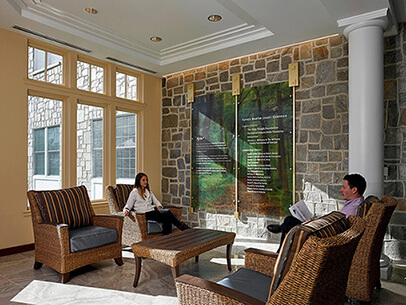
The room description in the admissions FAQ is unusually specific: two beds on opposite sides of a room, an internal bathroom shared by the two roommates, and separate closet, dresser, and sink space. Linens and towels are provided. The amenities page also lists housekeeping, laundry, a fitness center, courts, yoga rooms, walking paths, a chapel, and a meditation garden. Dry cleaning may carry an additional charge.
These features support the daily residential experience, while the clinical schedule remains the main commitment. Discuss accessibility, sleep, dietary needs, and any clinically important accommodation issue before arriving. Someone who needs a private room should obtain a direct answer rather than assume that a spacious or hotel-style room is single occupancy. The waterfront setting offers places to spend time between appointments, but access to activities depends on health, the schedule, and program guidelines.
Devices, visits, and maintaining contact
Ashley’s published FAQ says routine visitation is not currently offered, while the accommodation page refers to restricted visits in special circumstances. Confirm the applicable policy directly before relatives make plans. The FAQ describes daily access to landline phones and weekly access to a personal cellphone, which is otherwise stored securely. These arrangements differ from unrestricted device use and can affect how a resident plans work coverage, caregiving, and essential communication.
Family contact during treatment should also be distinguished from formal family services. Mail and packages are screened, and admissions provides a detailed packing list. Review that list before arrival, especially for medications, personal-care products, tobacco items, and belongings that may need to remain at home. If a particular device, accessibility aid, or communication arrangement is important for health or participation, discuss it during screening so the program can give a specific answer.
Family services have several separate formats
The family-services page describes a virtual individual coaching session with a licensed clinician to help relatives or support people understand available resources. Recovering Together is a separate two-day in-person program with education and an individualized family-therapy session. The patient-programming page identifies that additional program as optional and fee-based, so its cost should be confirmed separately from the residential quotation.
Ashley also offers free weekly one-hour virtual Parent and Family Connection meetings. The published eligibility includes people older than sixteen whose loved one may or may not have received treatment at Ashley. These meetings are a distinct source of peer connection, rather than the same service as individualized family therapy. Participation involving the patient follows consent and clinical recommendations; relatives can also seek support for their own needs independently.
Payment and insurance need program-specific review
The payment information lists several insurers and explains that benefits and authorization depend on the individual plan. Optum Maryland Medical Assistance is explicitly labeled outpatient only, so that listing should not be applied automatically to this inpatient campus. Admissions can review coverage and explain the estimated personal responsibility. No current flat inpatient package tariff was established from the official material reviewed.
For uninsured patients or those choosing self-pay, Ashley says it provides a Good Faith Estimate of expected treatment costs. Request a proposal identifying the actual program, anticipated duration, medical services, optional family work, and any later extended-care placement. A network relationship with an insurer does not guarantee payment for every recommended day. Establish how extensions, changed levels of care, and separate services would affect the amount owed.
Discharge planning, extended care, and alumni support
Patient programming assigns a Peer Recovery Coach for weekly discharge-planning work, including aftercare coordination and community resources. Ashley also describes tracking assessments during treatment and for twelve months afterward through Trac9. That measurement process is different from providing twelve months of individual clinical treatment. Ask how follow-up information is used and which actual appointments, prescriptions, and support arrangements will be in place when residential care ends.
The extended-care program describes sixty days in a separate Ashley-owned residence near the main campus, with counseling, case management, life skills, and both twelve-step and SMART Recovery education. Bel Air outpatient services and alumni connections are other potential next steps. Each requires an individual plan and clear location, eligibility, and cost information. The best comparison considers the whole pathway from admission through the support available in the person’s home community.
Official Ashley program, admissions, accommodation, and payment pages reviewed October 20, 2026. This profile separates the adult inpatient campus from other network locations and programs. Clinical duration, room needs, visits, and insurance coverage require confirmation for the individual admission.
Conditions
Levels of care
Settings
Treatment approach
Individual and group therapy, CBT, DBT skills, cognitive processing therapy, schema therapy, medications for substance use disorder, and recovery planning
Fees & admissions
Confirm current pricing
No current flat inpatient package tariff was established from the official sources reviewed. Ashley provides a Good Faith Estimate for self-pay or uninsured patients and verifies plan-specific benefits. Optum Maryland Medical Assistance is listed for outpatient care only, not this inpatient campus. Recovering Together is an optional fee-based family program; confirm any separate extended-care, outside medical, or ancillary charges.
Confirm the current program, duration, accommodation and included services directly with the center.
Confirm the main-campus track, medical suitability, insurance authorization and next-stage care.