Care at The Residence — Priory Roehampton
A private suite within Priory Hospital Roehampton
The Residence is Priory Hospital Roehampton’s private, single-client treatment service in London. It combines a self-contained apartment suite with access to the hospital’s clinical services. The official accommodation page confirms that the suite sits within a dedicated area of the hospital, rather than at an unrelated hotel or standalone villa. That distinction is central to the service: a person can receive an individually arranged program in private surroundings while remaining within a clinical hospital setting. The exact admission pathway depends on psychiatric assessment, medical needs, and the support required during the stay.
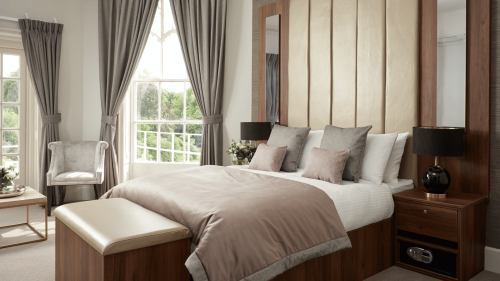
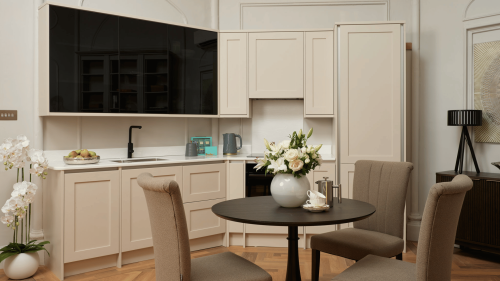
Priory describes an apartment of approximately 1,200 square feet, reserved for one treatment client. It includes a master bedroom, a companion bedroom, a living area, kitchen facilities, an office, and spaces for consultations and therapy. Both bedrooms are described as having en-suite bathrooms. The presence of a companion room is a practical option to discuss before admission, including who may stay, how their involvement fits with treatment, and whether any additional arrangements are needed. Single-client accommodation at The Residence does not mean the wider hospital has only one patient or that the person must remain isolated from all other services.
Mental health, addiction, and complex needs
The provider’s current clinical scope includes psychiatric conditions, addiction, trauma, and complex or dual-diagnosis needs. Its treatment-package page also identifies eating disorders among the concerns considered. The service explicitly describes support for people needing high-dependency care, continuous clinical supervision, acute psychiatric treatment, or care under the Mental Health Act. These are provider descriptions of its capabilities, not a determination that every referral can be accepted. The assessment must establish whether The Residence is suitable for the person’s current presentation and what resources and conditions would apply to the admission.
This clinical context matters when interpreting the promise of a highly personalized stay. Preferences about daily routine, therapy, visitors, and amenities can be discussed, but the provider states that safety and clinical needs remain central to planning. A person seeking an entirely elective retreat should understand that The Residence is a hospital-based treatment service. Conversely, someone being referred from another clinical setting should have the proposed transfer and continuity of care agreed by the relevant teams. The apartment’s comfort does not remove the need for an appropriate medical and psychiatric handover.
Assessment and the treatment team
The therapy-program page describes a comprehensive psychiatric assessment before admission, available remotely or in person according to circumstances. This provides the basis for selecting therapies and arranging the level of support. The team description includes consultant psychiatrists, psychologists or psychotherapists, a dietitian, an occupational therapist, and wellbeing practitioners. The actual team is assembled around the resident. The person should know who is responsible for the overall plan, how often consultant reviews are expected, and which professionals will deliver each part of the program.
Consultant involvement includes specialist review and medication oversight. Psychological sessions address the resident’s own goals and needs, while dietetic and occupational-therapy input can bring attention to eating, physical wellbeing, everyday activities, and independence. These roles serve different purposes and should be explained clearly. For example, a daily activity plan is not the same as a consultant review, and the availability of a dietitian does not establish one universal eating-disorder protocol. An admission proposal should connect the proposed disciplines to the concerns identified in assessment and describe how the plan will be reviewed as circumstances change.
Choosing individual and group therapy
The current treatment-package page offers a fully private one-to-one experience, participation in guided group sessions, or a combination. This is a useful distinction from assuming that a single-client suite necessarily excludes every group option. The resident and clinicians can discuss which form of work is appropriate and acceptable. Individual sessions may take place within the suite, while any group participation needs its own agreed schedule and setting. The package is described as flexible, so the number and format of sessions should be recorded for the proposed stay rather than inferred from a general service list.
Cognitive behavioral therapy and dialectical behavior therapy are among the named approaches. CBT examines relationships between thoughts, feelings, and actions, while DBT-based work may focus on emotional regulation, distress tolerance, and interpersonal skills. The clinical pages also describe acceptance and commitment therapy and exposure-based work for some presentations. These approaches are selected according to assessment, not offered as interchangeable treatments for every concern. A resident can ask how the proposed method relates to their goals, whether it is delivered individually or in a group, and what practice or follow-up will be needed between sessions.
Trauma treatment and medically supported addiction care
For trauma-related needs, Priory lists trauma-focused CBT, EMDR, somatic approaches, and other individualized support. Its description of EMDR involves guided stimulation used within therapeutic work on distressing experiences. Suitability, timing, and preparation are matters for the treating clinician, particularly when a person is also managing acute symptoms or substance use. The presence of EMDR equipment does not establish that every resident will receive the same course or reach a predetermined outcome. The plan should explain how trauma work is paced and how the person can discuss difficulty or changing needs during treatment.
The addiction page describes medically assisted detox for alcohol, prescription medications, and other substances when appropriate, followed by psychological and relapse-prevention work. Medication decisions are part of the wider clinical plan. Priory also says fellowship meetings such as Alcoholics Anonymous are optional according to the resident’s preferences and treatment plan; the Roehampton hospital hosts meetings on its grounds. This gives a concrete option for someone interested in peer support without requiring travel elsewhere. Participation should be distinguished from the private therapy program, and the exact meeting arrangements should be confirmed for the dates of the stay.
Experiential work and activities beyond the suite
Equine therapy is one of the provider’s specifically described options. Sessions involve a therapist, a horse handler, and a horse, and the therapy page places them off-site in the Richmond Park area. They should therefore not be described as an activity delivered inside the apartment or on a guaranteed hospital stable. Clinical suitability, transport, availability, and any additional arrangements need to be established. Other complementary options include art, music, drama, nutritional counseling, and somatic or sensory work, selected according to the resident’s needs and preferences.
The provider also describes optional activities such as cooking with a chef, outings, cycling, swimming, and personal training. The accommodation page specifically refers to access to a local private pool, rather than a pool within the suite. These opportunities can be discussed in relation to energy, mobility, clinical restrictions, and the schedule. The program also advertises selected technologies, including virtual-reality and neuromodulation options. The resident should receive an individualized explanation of any proposed technology, its purpose, practitioner, suitability, and cost. A broad innovation menu is not evidence that every item is needed or included in every admission.
Dining, housekeeping, and companion arrangements
Meals can be served privately in the suite and planned around dietary needs and preferences. Priory also describes the option of using the hospital dining areas or arranging food from selected outside establishments. In some circumstances a personal chef may be possible, depending on the admission and clinical requirements. This is a tailored arrangement rather than an automatic promise of a dedicated chef for every stay. The same accommodation page describes housekeeping, laundry, dry cleaning, concierge assistance, and transport coordination. The agreement should make clear which services are included and how requests are handled.
A companion or family member may have an important role in the stay, but accommodation, ordinary visiting, and therapeutic participation are separate decisions. The treatment-package page says family support can be arranged when clinically appropriate and meaningful to the resident, either during the program or as part of aftercare. That allows the plan to account for different relationships and levels of involvement. The admissions discussion should establish who may stay or visit, what information may be shared, and how companion arrangements fit with the resident’s clinical needs and the hospital’s procedures.
Weekly guidance price and planning the stay
The official treatment-package page published a guidance price of GBP 36,166 per week when checked on October 20, 2026. This is a provider-published guide, with the final plan designed individually. The reviewed current page does not establish one fixed duration or a universal all-inclusive package. A written quotation should identify the proposed clinical support, consultant reviews, therapy schedule, accommodation, companion arrangements, selected activities, and any separate costs. The weekly figure should not be converted into a supposed quoted monthly price without an agreement covering the actual dates and services.
Pre-admission planning covers treatment preferences, dining, daily routines, and practical arrival arrangements. Priory says it can coordinate travel from home or another treatment setting, including for people arriving from overseas. The relevant clinical and travel arrangements should be confirmed together, especially if the person requires support while traveling. The current official inquiry number is +44 330 056 6041. The inquiry page also asks anyone submitting another person’s information to obtain their consent. Initial contact should lead to assessment and a specific proposal before the stay is treated as agreed.
Aftercare and the transition out of hospital
Priory says it begins planning the next stage from the start of the stay. Its aftercare description includes possible outpatient therapy, wellbeing check-ins, virtual sessions, and family support. Online arrangements may be considered for residents returning overseas, but the exact clinicians, availability, local practice requirements, frequency, and cost need to be established. A useful discharge plan identifies who takes responsibility for medication follow-up, psychological work, and other ongoing needs. It should also describe how the person and their authorized support network can seek help if the transition requires additional clinical input.
For people comparing private treatment in the United Kingdom, The Residence offers a specific combination: an exclusive apartment suite, access to a psychiatric hospital, and an individually selected program that may include both private and group work. Its published acute and complex-care scope distinguishes it from a purely hospitality-led stay, while the assessment determines the appropriate use of those resources. The most useful comparison is the complete proposed clinical plan, including the level of supervision, therapy, family involvement, final cost, and support after leaving Roehampton.
Reviewed October 20, 2026 using the linked official Priory pages. The weekly amount is the provider’s guidance price. The suite is inside Priory Hospital Roehampton; equine sessions and the local private pool are off-site options. Clinical suitability, individualized restrictions, services, and final terms require assessment.
Conditions
Levels of care
Settings
Amenities
Treatment approach
Psychiatric assessment and review, medically assisted detox when appropriate, individualized CBT, DBT, ACT, exposure and trauma therapies including EMDR, optional group work and AA, family involvement, nutrition, occupational and experiential support, and planned aftercare
Fees & admissions
GBP 36,166 / week
Current official Residence treatment package gives guide pricing of GBP 36,166/week, checked October 20, 2026. The individual care plan and selected services determine the final quotation; do not assume every advertised specialist, personal chef, off-site activity or aftercare element is included.
Confirm the current program, duration, accommodation and included services directly with the center.
Confirm assessment findings, detox suitability, selected therapies, companion arrangements, dining and travel services, and the tailored aftercare plan.