Care at AKUA Mind Body – Male Detox Sacramento
AKUA Mind Body’s Sacramento detox listing refers to the program at 8086 Orange Avenue in Fair Oaks, California, within the wider Sacramento region. The current Recovery.com campus profile identifies it as a service for men, while AKUA’s official location information confirms the Orange Avenue address and detox-to-residential pathway. Its purpose is to support people who are using substances or may experience withdrawal, then help them move into an appropriate course of addiction and co-occurring mental health treatment.
The address distinguishes this listing from AKUA’s women’s program on Terra Loma Drive in Rancho Cordova, its primary mental health residence on Fair Oaks Boulevard and its Sacramento outpatient center on Folsom Boulevard. A person contacting AKUA should identify the Orange Avenue program and confirm the current population and room arrangements. The network provides several levels of care, but they should not all be assumed to operate at the same house.
Assessment before the detox phase
AKUA describes detox as an assessed starting point for people with substance use and withdrawal-related needs. The clinical conversation should establish what the person is taking, how it has been used, current medication, physical health and previous treatment or withdrawal experiences. Co-occurring mental health concerns also matter. This information helps determine the appropriate setting and sequence rather than treating detox as a standard booking with the same duration and support for everyone.
The provider’s Sacramento detox information gives a typical three-to-seven-day reference, while its network detox page emphasizes that duration depends on the substances, length of use and general health. Neither is a guaranteed endpoint. The time spent in withdrawal management is different from the longer therapeutic phase, and the admission plan should make clear whether the person is entering detox alone or an intended continuing residential course.
The men’s focus is described in the current secondary campus listing. The official regional pages use broader language covering several Sacramento services, so a prospective resident should confirm the actual Orange Avenue admission arrangement rather than infer that every AKUA program has the same population. Gender-specific housing and the clinical scope of treatment are separate questions. Both should fit the person’s circumstances before travel or payment is arranged.
Medical support and the transition into residential care
AKUA’s detox model describes physician oversight, medication when appropriate, and supervision from nursing and clinical staff throughout the withdrawal phase. Its current material refers to support for alcohol, opioids, benzodiazepines, stimulants and other substance-use presentations. Those descriptions establish the advertised service range, not an assurance that every individual’s medical needs can be managed in a residential house. The assessment must determine what monitoring and additional care are required.
Medication-assisted care is part of the provider’s approach, combined with therapeutic work rather than treated as a separate alternative to recovery planning. A proposed medication plan should identify the prescriber, purpose, review process and intended continuation after detox. The public website is not an individual prescribing plan. Someone already receiving treatment should supply accurate records so changes can be considered by the responsible clinicians.
Once the person is ready, residential care focuses on more than completing withdrawal. AKUA describes work on triggers, coping, relationships and the routines that will support life after treatment. The transition should include a clear explanation of the next schedule, clinical goals and funding arrangements. It should not be assumed that finishing a short detox phase means all psychological or practical needs have been resolved.
Therapy for addiction and overlapping mental health concerns
The current Sacramento program information includes group therapy, individual psychodynamic work, trauma-informed care and eye movement desensitization and reprocessing. AKUA’s Fair Oaks addiction and network residential pages also describe cognitive behavioral therapy, dialectical behavior therapy, family work and mindfulness-based relapse prevention. The clinical team selects methods according to the person’s needs and readiness. A campus service list does not guarantee that every resident receives every approach or that the same treatment begins immediately during detox.
Individual sessions give space to discuss personal experiences and specific obstacles to change. Groups provide a different setting for skills, communication and connection with other people in treatment. Both forms can be part of the residential week. For someone comparing a men’s program with an exclusively one-to-one service, this distinction is useful: gender-specific treatment does not mean every appointment or activity is private.
The co-occurring component addresses mental health concerns alongside substance use. That may involve psychiatric or medication review as well as psychotherapy, depending on the assessment. AKUA’s regional material names depression, anxiety, trauma and other difficulties across its services, but a diagnosis alone does not establish that this particular house is the right starting point. The team should explain whether Orange Avenue, a primary mental health program or another level of care is appropriate.
Trauma-informed care is part of the advertised model. It should include attention to how a person engages with treatment and whether a proposed method is suitable at the time. The presence of EMDR on the service menu should not be interpreted as a requirement to begin detailed trauma work during withdrawal or before the resident and therapist have agreed on its purpose. Progress reviews can help adjust the sequence as the person becomes more stable and able to participate.
Practical skills and the daily treatment rhythm
AKUA’s broader residential program describes an average of five to six hours of therapeutic programming daily, with a mix of individual, group and other planned sessions. The actual Orange Avenue schedule needs confirmation, particularly across detox and later residential phases. Programming hours are not a promise of that many hours of private psychotherapy. Rest, meals, medication review and the person’s ability to engage remain part of planning the day.
The Sacramento material identifies life-skills classes, résumé building, grief and anger management, and relapse-prevention work. These subjects connect treatment with everyday pressures and the return to work or family life. Practical preparation should be linked to realistic goals. A résumé session, for example, is useful support for employment planning but does not replace clinical work or guarantee a job after discharge.
The provider also offers music or harp-based activities, art, yoga, mindfulness, meditation, Reiki and fitness within its broader integrative approach. These are complementary elements of the program rather than substitutes for the clinical treatment plan. A prospective resident can discuss preferences, physical limitations and the expected balance of activities. The most useful schedule is the one that fits the person’s needs, not the longest possible list of advertised therapies.
The Orange Avenue residential environment
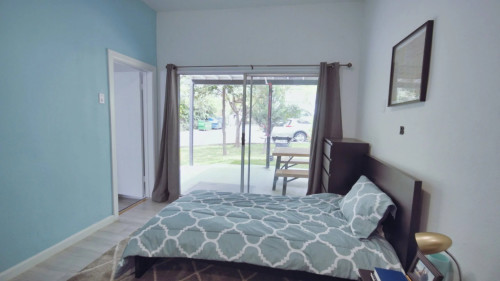
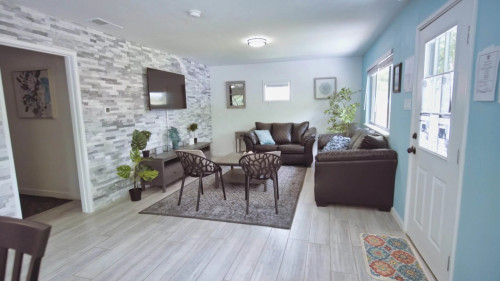
The current campus listing describes a home-based setting with outdoor space, fitness facilities, laundry, prepared meals and transportation assistance. It lists private or shared rooms, so private-bedroom availability should be confirmed rather than promised. The exact room, bathroom arrangement, accessibility and any different room rate are practical details to settle before admission. A private residential house can still involve shared bedrooms and common living areas.
AKUA’s regional descriptions include some broad amenities wording that is repeated between locations. This profile does not transfer a coastal setting or a specific beach excursion to the Fair Oaks house. The relevant information is the actual Orange Avenue property and activities available during the proposed stay. Families should ask for a current explanation of the residence instead of assuming that a photograph or amenity from another AKUA program applies here.
Meals and daily structure can reduce immediate practical demands, while shared living requires consideration of other residents. Dietary needs, allergies, device use and any essential outside responsibilities should be discussed during admission. The reviewed material does not establish a universal promise of unrestricted work access or a fixed visiting schedule for this house. Agreeing those details helps avoid disruption once treatment has started.
Family participation and continuing support
Family therapy is included in AKUA’s advertised treatment range, with participation planned around the person and their circumstances. It may support communication, understanding and preparation for the return home. The actual number, format and purpose of sessions should be explained. A relative’s involvement should also respect the resident’s consent and privacy, including how updates and treatment information are shared.
The wider Sacramento network provides PHP and IOP at 9121 Folsom Boulevard. Those are separate outpatient services, with schedules that allow the client to live outside the treatment setting. An appropriate next step may involve that program, another provider or a different support structure. The residential team should identify the proposed route, the timing of the first appointments and any new insurance authorization required.
AKUA also advertises an extended-care and alumni community with meetings, peer support, activities and an app. This is a continuing connection with the network, not a replacement for a prescriber, therapist or an agreed clinical aftercare plan. Before leaving, the resident should know which support is peer-based, which involves scheduled professional care and whom to contact when circumstances change.
Duration, daily price estimate and funding
The current official residential material and secondary Orange Avenue listing describe a usual thirty-to-ninety-day range, determined individually. That is more useful than the older suggestion of a universal thirty-day course including detox. The initial agreement should distinguish withdrawal management, the residential phase and any later outpatient treatment. Review points, extensions and the financial consequences of changing the plan should be clear.
Recovery.com estimates USD 1,000 per day for this campus. It is a third-party cash-pay estimate, not an official AKUA tariff or a confirmed all-inclusive monthly package. The former USD 30,000 monthly amount was a calculation from that daily figure. Request a quote for the actual care phases, room, medication, external services and duration rather than assuming the same rate and inclusions apply throughout.
AKUA offers insurance verification and private-payment discussions, and its current verification page explains that benefits checks do not guarantee coverage or final costs. Some broad Sacramento pages mention Medi-Cal, while the detailed current outpatient page specifies eligible Sacramento County substance-use treatment at Folsom Boulevard. That narrower statement should not be treated as confirmation that Medi-Cal pays for an Orange Avenue detox or residential admission. The payer and admissions team should verify the exact service.
The current official Fair Oaks addiction contact is +1 916 269 5117. Specify 8086 Orange Avenue and confirm the population, care plan and room before committing to a stay. The United States treatment directory provides other settings to compare. The important comparison is how the program will meet the person’s withdrawal, therapeutic and continuing-care needs across the full course.
Sources and verification
Reviewed October 20, 2026. Official sources: Fair Oaks addiction program and address, Sacramento detox information, network detox model, residential treatment, separate outpatient service, insurance verification, and provider-published location records. The current men’s identification, room options and attributed daily estimate are from Recovery.com’s Orange Avenue campus listing. Exact admission arrangements remain subject to confirmation.
Conditions
Levels of care
Settings
Amenities
Treatment approach
Physician-overseen detox and medication-assisted care, nursing/clinical supervision, individual and group therapy, CBT, DBT, EMDR as appropriate, psychodynamic and trauma-informed work, family support, mindfulness-based relapse prevention, practical skills and negotiated step-down care
Fees & admissions
USD 1,000 / day
Current exact-campus Recovery.com estimate is USD 1,000/day, checked October 20, 2026. This is not an official tariff or a USD 30,000 monthly package. Confirm each detox/residential phase, room and outside-service costs. The current thirty-to-ninety-day residential reference replaces a universal thirty-day assumption. Insurance benefits and authorization are individual; Sacramento County Medi-Cal outpatient eligibility does not establish coverage for this residence.
Confirm the current program, duration, accommodation and included services directly with the center.
Confirm withdrawal-management scope, medication needs, transition from detox into residential care, room type and aftercare.