
About More to Life Recovery – Fiddletown
More to Life Recovery is listed as a small residential addiction service in Fiddletown, California. Its published program material describes a rural setting, shared living, yoga and practical daily activities, with a separate medically managed detox component. During the October 20, 2026 review, direct requests to its official website and pricing pages returned a file-not-found response. That observation limits current verification; it does not establish that the treatment service has closed.
This profile therefore separates the program described in indexed official material and the current unclaimed Recovery.com listing from details that need direct confirmation. Current admissions, the exact medical arrangement, fees and insurance terms were not established through an accessible live provider page. Anyone considering the service should request an updated program specification and confirmation of the admitting location before making travel or payment arrangements.
The published Fiddletown model
The provider’s indexed overview describes helping working adults with substance-use problems alongside difficulties involving family, employment or legal responsibilities. Its approach emphasizes stepping away from ordinary pressures into a quiet rural environment. The stated focus is practical and participatory, combining a daily routine with counseling, peer contact and activities. It should not be interpreted as an established acute psychiatric hospital or a highly staffed private medical retreat.
Fiddletown is the location given in the provider’s material, with the program described in Amador County between the Sacramento area and Lake Tahoe. The secondary listing also identifies Fiddletown. A rural location can affect transport, outside appointments and family access, so the actual arrival address and travel plan need confirmation. A location label alone does not establish how a person reaches the admitting property.
The program description presents recovery as involving ordinary responsibilities as well as time away from substance use. Cooking, gardening, household work and preparation for employment or education appear alongside counseling and group meetings. Those details make the model distinctive. A prospective resident should consider whether they want and can participate in this level of communal routine rather than expecting an entirely appointment-based stay.
Detox is a separate part of the published pathway
The indexed official overview describes a private detox suite with medical management before participation in the main residential routine. It gives an illustrative range of several days, while its older pricing material uses a different possible duration. Those descriptions do not establish a fixed detox timetable for a new admission. The individual medical plan would need to reflect the substance involved, health history and current symptoms.
The published features page mentions medication-assisted treatment for substance use and an incidental medical-services room. The current secondary profile also describes physician oversight and medically managed detox. These are reported service claims, not confirmation of present staffing or an instruction to change medication. A person who needs withdrawal care should establish who directs the medical plan and what monitoring can actually be provided.
The detox suite should not be confused with a guarantee of private accommodation throughout the later residential stay. The provider’s program features describe the main house differently, with dual occupancy. The sequence also matters financially because the published sources distinguish detox charges from residential treatment. An updated quote should explain both the care transition and the relevant billing arrangement.
A strongly structured day
The indexed schedule describes early rising, meditation, yoga, meals, counseling or groups, study, practical tasks and evening wind-down. It says clock times can change with the seasons while the sequence remains structured. Detox follows a separate timetable. The published example should therefore be understood as a description of the residential model rather than a current guaranteed schedule for every phase of care.
Yogic study is a prominent part of that material, including sessions devoted to its principles as well as physical practice. This is more than an occasional optional fitness activity in the published model. Someone unfamiliar with the approach should ask how study, movement, rest and counseling are balanced and what adaptations are available. The information does not support a claim that yoga alone treats or resolves addiction.
The program also lists Qigong, meditation and other complementary activities. Their role is described within the wider daily routine, alongside substance-use support and practical work. A current treatment proposal should make clear which elements are clinical services, which are educational or recreational, and which are optional. A long list of activities does not establish a particular dose of licensed psychotherapy.
Counseling, groups and peer support
The provider’s published schedule includes individual or group counseling and evening meetings. Its broader program description emphasizes peer contact, a buddy arrangement and mentoring. These can offer different forms of support, but they are not interchangeable professional roles. An admission discussion should identify the counselor or clinician responsible for treatment and distinguish that work from peer mentoring or ordinary staff check-ins.
The available official material refers generally to evidence-based counseling without verifying a specific CBT, DBT or trauma-treatment curriculum at the current program. This profile does not add those named methods merely because they are common elsewhere. Someone seeking a particular therapy should obtain the clinician’s role, relevant training and proposed session schedule directly from the service.
The indexed daily routine also describes contact with the program director either in person or remotely. That is useful context for understanding the published structure, but it does not establish that a physician is physically present throughout the day or night. The current staffing and medical escalation arrangements need their own explanation, especially for someone whose needs extend beyond the ordinary residential activities.
Shared accommodation and household participation
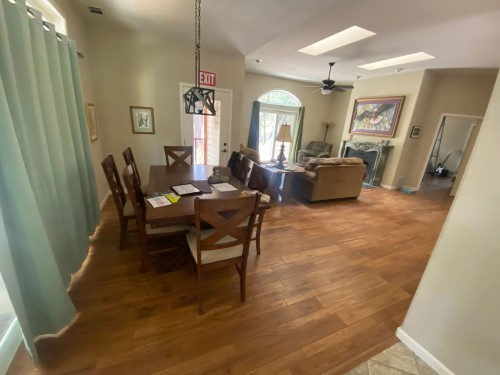
The official features page describes a three-bedroom, two-bathroom mountain home with dual occupancy. It also lists common living areas, air conditioning, a fireplace, a patio and a fitness or yoga space. These are historical published property details, not a current booking specification. The actual room and bathroom arrangement should be confirmed before a prospective resident accepts a place.
The schedule assigns alternating indoor and outdoor responsibilities, including meal preparation, laundry, cleaning, gardening and work around the grounds. Shared tasks are part of the described social environment. Someone who has physical restrictions, sleep needs or difficulty with communal living should explain those during assessment and learn what the program can accommodate. The private detox suite does not remove the shared-house character of the main course.
The published menu includes varied food and vegetarian options. The current secondary profile also describes meals as part of the residential setting. A person with allergies or a medical nutrition requirement should obtain a specific agreement rather than relying on general menu language. Cooking as a life-skill activity is different from individualized dietary treatment by a qualified professional.
Gardens, animals and practical learning
The provider’s grounds description includes garden areas, an orchard, pastures and animals such as horses, goats, chickens, cats and dogs. It also names a music studio, library, classroom and spaces for practical projects. These details explain the rural and activity-oriented character of the published program. They should not be expanded into a guarantee that every amenity or animal is currently present.
Animal husbandry and gardening are described as ordinary parts of participation. They are not automatically the same as formal equine psychotherapy or another licensed animal-assisted clinical service. A prospective resident should understand who supervises those activities and how allergies, mobility concerns or preferences are handled. Current property information is particularly relevant when an activity is central to the person’s choice of program.
Devices and staying connected
The indexed provider overview describes a residential period without television, cell phones or video games, while other program material mentions a computer lab and scheduled online meetings. These statements suggest that supervised or program-related technology can differ from unrestricted personal use. The current rules should be clarified before someone plans to maintain regular work or family communication during the stay.
That distinction is especially relevant to the working adults named in the provider’s mission. A supportive environment for work-related problems does not necessarily mean that a resident can continue ordinary remote employment. The admissions conversation should settle how outside responsibilities, necessary calls and family contact are managed alongside the daily schedule, rather than allowing those expectations to emerge only after arrival.
Price information and conflicting insurance descriptions
The current unclaimed Recovery.com profile lists separate estimates for residential care, detox and a virtual program: USD 500–1,100 per residential day, USD 1,200 per detox day and USD 3,500 for a monthly virtual program. These are different services and billing periods. Combining their lowest and highest numbers into one general program price would be misleading.
Older indexed official pricing describes a USD 1,200 detox charge per twenty-four hours and a separate USD 16,000 amount for the residential balance of an initial thirty-day course. The relationship between those components needs a current itemized explanation. The older figure should not be assumed to include all detox days, medication or outside medical services, and it does not verify the present tariff.
The insurance information is also inconsistent. The current unclaimed secondary listing says some commercial out-of-network benefits may apply, whereas older official pricing presents a direct-payment model and excludes program insurance payment. Both descriptions say Medi-Cal is not accepted, but current eligibility and billing terms still require confirmation. No guaranteed insurance coverage or numerical current tariff is asserted in this profile.
A written agreement should identify the responsible provider, current service dates, daily or package fees, detox arrangements, medications and any outside charges. If a virtual program is proposed afterward, its schedule, professional services and monthly terms should be separately described. The directory estimates remain background for the conversation while the live provider information is unavailable.
Preparing for life after the stay
The published schedule gives attention to employment preparation, job searches, education and practical plans for returning to daily life. Evening meetings may address those topics alongside recovery support. This is a concrete part of the described model, but it does not establish guaranteed employment, legal outcomes or admission to a course of study. The individual should leave with realistic next steps and relevant contacts.
The current secondary listing mentions virtual services, while the older program material focuses on practical preparation and continued support. A discharge plan should identify which clinical appointments or groups are actually arranged and who will provide them. Peer contact, mentoring and a paid virtual treatment program have different roles and should not be treated as one unspecified aftercare benefit.
Confirming the current service
The number +1 209 206 1177 appears in indexed official program pages and the current secondary listing. It is the published enquiry contact, but this review did not establish current admissions through an accessible live provider website. Ask for updated program information and a written confirmation of the operator, location, clinical responsibilities and fees before relying on the older descriptions.
The United States treatment directory provides other services for comparison. More to Life’s published model is a small, rural, participatory residential program with a separate detox component. Its shared living, yogic routine, practical work and technology rules are important fit considerations, while current clinical arrangements and availability remain matters for direct verification.
Sources and verification
Reviewed October 20, 2026: indexed official program overview, features, daily schedule and older pricing material, together with the current unclaimed secondary listing. Direct official-site requests returned file-not-found responses during this review, while indexed copies remained available. Published descriptions and secondary estimates are not treated as confirmation of current admissions, staffing, insurance coverage or tariffs.
Destinations
Conditions
Levels of care
Settings
Program approach
Indexed provider material describes counseling, peer meetings, medication-assisted treatment, yoga/yogic study, Qigong, meditation, gardening, animal care, music, cooking, shared household responsibilities, mentoring and employment/education preparation; these are published descriptions rather than guarantees of current availability
Fees & admissions
Confirm current pricing
Current official tariff could not be verified because the provider site/pricing pages returned 404 responses. The current unclaimed Recovery.com listing separately estimates USD 500–1,100 per residential day, USD 1,200 per detox day and USD 3,500 per month for virtual care. Older indexed primary pricing describes USD 1,200 per twenty-four-hour detox period and a separate USD 16,000 residential balance of an initial thirty-day course. Do not combine these services or infer a current inclusive package. Insurance statements conflict; obtain current written terms.
Confirm the current program, duration, accommodation and included services directly with the center.
Published contact: +1 209 206 1177. Before arranging travel or payment, request current operator and admitting-address confirmation, medical/detox staffing, program schedule, room allocation, device/family-contact rules and itemized fees/insurance terms. Current official-site access did not verify admissions.