Care at CooperRiis – The Farm at Mill Spring
A longer-term mental health community at the Farm
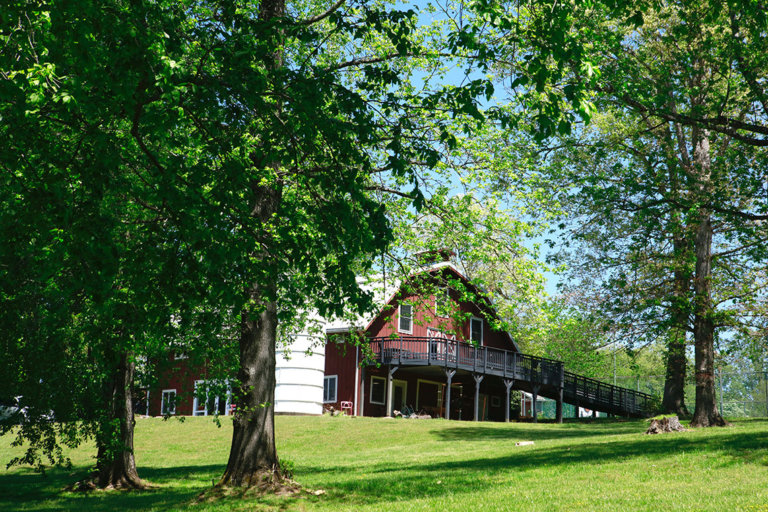
The Farm at CooperRiis is a residential mental health community at 101 Healing Farm Lane in Mill Spring, North Carolina. Its ninety-four-acre working farm provides a setting where adults combine clinical support with purposeful activity, shared daily life, and the development of greater independence. The program is designed for people who can participate in this community model and have a foundation of stability on which to build. The main Farm program commonly involves several months of residence, making it different from a brief retreat or a hospital admission focused on immediate stabilization.
The official Farm description identifies thirty-six residential places across three lodges. Most of the week is spent on campus, with outings into nearby communities generally arranged at weekends. The setting includes gardens, greenhouses, a lake, an art barn, and a woodshop. These features are part of the environment in which residents practice participation and routine. They should be understood in relation to the program’s therapeutic structure, rather than as a collection of leisure amenities available independently of treatment.
Who the Farm is designed to support
CooperRiis serves adults eighteen and older with a range of mental health difficulties, including mood, thought, personality, and trauma-related conditions. The Farm is intended for someone ready to engage in a community and work toward longer-term goals. Its admission assessment considers the person’s current functioning, ability to manage daily activities, and need for clinical support. A diagnosis alone does not determine readiness. Someone who needs more intensive medication management or nursing support may first be considered for the separate Asheville residential program or another appropriate service.
The organization’s published FAQ identifies circumstances in which another program may be more suitable, including imminent risk of harm, an eating disorder requiring constant monitoring, or current drug or alcohol abuse. Dual-diagnosis support at CooperRiis should therefore not be interpreted as an acute detoxification service. The Farm also should not be described as hospital-level inpatient care. The relevant question is whether the person can use the specific combination of clinical support, independent activity, and shared community life offered at this stage.
Purposeful work as part of the daily structure
Community Work and Service is a central part of the Farm model. Published examples include gardening, greenhouse, animal, woodworking, and campus crews. These activities give residents a practical role in the place where they live and a reason to work with other people on shared tasks. The broader CooperRiis approach describes fifteen to twenty hours of community work each week. The actual schedule should be discussed with the team in light of the resident’s abilities, treatment goals, and any physical limitations.
The value of a work crew is not limited to completing a task. Arriving at an agreed time, asking for clarification, managing frustration, and noticing when help is needed can all be relevant to daily functioning. The activity provides a setting in which these skills can be practiced and discussed. It should not be treated as a guarantee of employment or a substitute for individualized clinical care. A resident’s plan can connect participation with goals such as building a routine, becoming more confident in a group, or preparing for future study or work.
CooperRiis asks residents to develop a personal statement of what they want their lives to include. The team then uses those priorities to guide recovery planning. This helps keep the program connected to the person’s own values rather than defining success only through a list of symptoms. A broad aspiration, such as living more independently, can be translated into smaller tasks that are reviewed over time. The purpose is to create a useful direction for the work; it is not a promise that every aspiration will be achieved during a predetermined stay.
Clinical care and wellness within the community
The Farm combines community participation with psychotherapy, medication-related support, and access to psychiatric care. These services need to be understood alongside the fees and the proposed level of care, because psychiatry and some outside medical costs are separately billed under the main Farm fee description. The resident should know which clinician is responsible for ongoing assessment, who manages prescriptions, and how changes are communicated across the team. Clinical work and practical activity should support the same goals rather than operate as disconnected parts of the week.
The program also includes wellness, nutrition, movement, and creative opportunities. Lodge spaces are used for activities such as mindfulness, yoga, strength training, and cardiovascular exercise. Residents may use the gardens, art barn, or woodshop as part of their schedule. Participation should reflect the person’s interests and health needs. Someone who has difficulty maintaining a routine may benefit from a predictable structure, while another resident may be working toward choosing and organizing activities with less prompting. The balance of support and independence can change during the stay.
Support for autistic and neurodivergent adults
The Farm’s neurodiversity information describes enhancements for adults who have mental health needs alongside level-one autism or other cognitive differences, including ADHD. It explicitly states that this is not a separate autism program. The changes are intended to make the existing community and treatment more usable for those residents. That distinction is important when a family is seeking a dedicated service with a different level of developmental or daily-living support.
Examples of the enhancements include visual schedules, task lists, role play, social-skills practice, and tools for managing the sensory environment. Published goals include self-advocacy, flexibility between tasks, community participation, and skills relevant to future work. These supports should be adapted to the individual rather than applied as one standard package to everyone with the same diagnosis. The admission discussion can identify which environments or communication styles are difficult and which accommodations have previously helped the person participate more comfortably and effectively.
Private rooms and the rhythm of lodge life
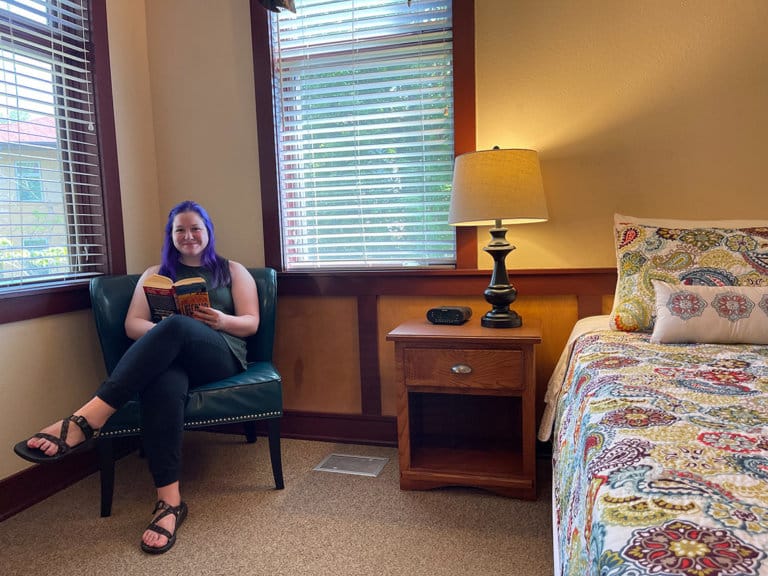
Each of the three Farm lodges houses twelve residents in private bedrooms with private bathrooms. Rooms are furnished with an extra-long twin bed, storage, seating, and a desk. Shared lodge spaces include a living area, kitchenette facilities, and laundry arrangements. This offers personal space while maintaining regular contact with others through meals, activities, and ordinary household routines. A private bedroom does not mean the program operates as an exclusive one-client residence; participation in a community remains a defining feature of the model.
The rural location and the amount of time spent on campus are practical considerations. A prospective resident should understand how transport, appointments away from the Farm, and weekend outings are arranged. The grounds and activities also require a discussion of mobility and any adaptations needed for participation. The appropriate comparison is with the person’s daily needs and treatment goals, rather than an assumption that a rural environment is automatically preferable. Those seeking a more clinically intensive urban setting can review the separate CooperRiis Asheville residential program.
Admission and the expected period of residence
The admissions process begins with a call to identify the likely starting program, followed by forms, clinical records, review, and a virtual assessment when appropriate. The main admissions number is +1 828-771-9001. The Farm page gives three to six months as an average stay, while emphasizing the individual’s readiness and goals. This is a planning reference, not a fixed discharge date. A longer residential commitment should include agreed review points and a clear discussion of how progress and ongoing support needs will be assessed.
Family members and referring professionals can contribute useful information, including recent treatment and the person’s experience in other settings. The resident’s willingness and ability to participate remain central to the assessment. Before arrival, the agreement should identify the intended Farm pathway, room, medication arrangements, additional clinical costs, and the first review period. Acceptance into the main program should not be interpreted as automatic approval for a less intensive extended-care arrangement at a lower fee.
Main Farm fees and the extended-care distinction
The current central fee page, checked October 20, 2026, lists the main Farm program at US$28,000 per month. The published inclusions are a private room and bathroom, meals, community therapeutic services, wellness, fitness, and recreation. Psychiatry, outside physicians, medication, supplements, transport, and personal expenses are additional. The page describes possible out-of-network reimbursement, which should not be treated as a reduction already secured. The Farm page also mentions a possible rate reduction from the third month; eligibility and compatibility with reimbursement arrangements require confirmation.
Farm Extended Care is a different, less clinically intensive stage. The central fee page gives US$28,000 per month for its initial assessment period and US$15,000 after a successful transition. The dedicated extended-care page still states US$26,000 for the initial period, creating a current inconsistency that needs a written quotation. The lower US$15,000 figure should not be advertised as the ordinary price of initial Farm admission. It applies only after the person has been assessed as able to use that particular level of support.
What changes in Farm Extended Care
The extended-care description requires an assessment period of at least two to four weeks at the Farm and sufficient independence with personal care, laundry, and the living space. It describes two individual therapy sessions a month, a monthly medical-provider appointment, and contact with a clinical care coordinator, alongside medication support and community activities. Those frequencies belong to the extended-care model and should not be transferred to the main Farm program. Additional contacts or a move to more intensive support may be considered when needs change.
Extended-care residents may organize their week around Farm crews, independent projects, or suitable work and volunteering outside the community. The emphasis shifts toward maintaining a workable routine with less intensive clinical input. The person still needs an agreed support plan and clarity about additional charges. A lower fee reflects a different level of service, rather than simply a discount on an unchanged clinical package. The provider describes the ability to reconsider the level of care if the resident’s needs increase.
Family participation and preparation for life beyond the Farm
CooperRiis provides a Family Education Program with live clinician-facilitated events, recorded material, and resources about communication, emotional health, problem-solving, and difficult periods. Clinical updates to relatives depend on the relevant permissions. As discharge approaches, the resident and team can connect work on the Farm with the next home, appointments, and community supports. Readers considering other locations can explore treatment providers in the United States, comparing the actual clinical intensity, independence expected, and continuing-care arrangements rather than residence length alone.
Conditions
Levels of care
Settings
Amenities
Treatment approach
Psychotherapy and psychiatric/medication-related support, community work crews, individualized goals, wellness, creative activities and family education; enhanced visual, sensory, social and organizational supports for eligible autistic or neurodivergent adults
Fees & admissions
USD 28,000 / month
Official central fee page checked October 20, 2026 lists the main Farm at USD 28,000/month, excluding psychiatry, outside physicians, medication, supplements, transport and personal spending. Extended Care later costs USD 15,000/month after eligibility and transition. Its initial assessment price conflicts between the central fee page (USD 28,000) and dedicated Extended Care page (USD 26,000); obtain a written quote. Possible rate reductions and out-of-network reimbursement have conditions and are not guaranteed.
Confirm the current program, duration, accommodation and included services directly with the center.
Review clinical records and complete the admission assessment to confirm readiness for the Farm community. Agree the exact main or Extended Care pathway, medication and psychiatry arrangements, independent-living expectations, initial assessment fee, additional charges and transition plan.