
Care at Harmony Clinic — Hout Bay
Harmony Clinic in Hout Bay
Harmony Clinic is a residential addiction and mental health treatment provider at 7 Valley Road in Hout Bay, Cape Town. Its published program brings substance use treatment, psychiatric care, and trauma work into the same service, with a specialized detoxification unit for people who need medically managed withdrawal. The setting combines a residential campus with access to the surrounding valley, beaches, and mountain trails. That location is part of the living environment; the central reason to consider Harmony is its stated ability to coordinate medical, psychological, and practical recovery support around an individual assessment.
The official website describes treatment for alcohol, opioids, stimulants, cannabis, and prescription drug problems, alongside behavioral difficulties such as gambling. It also lists mental health concerns including depression, anxiety, post-traumatic stress, and bipolar disorder. These published categories indicate the areas in which the provider offers assessment. They do not establish that every severity, medical complication, or combination of diagnoses can be managed on this campus. A prospective patient should have the admissions team consider their actual symptoms, recent substance use, current medication, and previous treatment before treating the listing as confirmation of suitability.
Medical stabilization and coordinated treatment
According to Harmony’s program description, treatment begins with a medically managed detox when that is clinically required. The homepage describes a dedicated unit with 24-hour care and a team that includes detox doctors and registered nurses. This makes withdrawal management a defined component of the service, rather than an assumption based on the residential setting. The individual plan still needs to specify the responsible prescriber, monitoring arrangements, medication review, and criteria for transfer to a general hospital if a problem exceeds the unit’s capabilities.
Not everyone entering addiction treatment needs the same withdrawal pathway. Harmony’s assessment therefore matters as much as its general description of detox. Someone with a history of severe alcohol withdrawal, seizures, complicated medication use, or other unstable medical conditions needs their records reviewed before travel. The program pages do not provide a complete public admission threshold for every substance or health condition. They also do not establish one standard detox duration for all patients. A written admission decision is more useful than assuming that the availability of a specialized unit makes every withdrawal situation appropriate.
The clinic describes an interdisciplinary team of psychiatrists, psychologists, general practitioners, occupational therapists, social workers, addiction counselors, and nurses. The intended benefit is coordinated work on issues that can affect one another: withdrawal symptoms, mood, sleep, day-to-day functioning, relationships, and patterns of substance use. In practical terms, an individualized plan should show how medical reviews connect with therapy goals and how the team communicates changes. Patients with an existing psychiatrist or therapist can ask Harmony to obtain relevant records and agree how those professionals will be involved during admission and after discharge.
Therapy methods and the Minnesota Alternative Model
Harmony names cognitive behavioral therapy, motivational interviewing, family therapy, and experiential activities such as art and music therapy among its methods. Cognitive behavioral work can help a person examine links between situations, interpretations, emotions, and behavior. Motivational interviewing provides a collaborative way to explore ambivalence about change. At this provider, these methods sit within a broader residential program that also addresses mental health and trauma. The website does not publish a fixed entitlement to a particular number of individual sessions each week, so the actual balance of one-to-one and group work should be confirmed in the treatment proposal.
The program refers to the Minnesota Alternative Model, with an emphasis on engagement, personal goals, skill development, relationships, and a broader life in recovery. Its published explanation recognizes that people differ in their response to traditional 12-step approaches and discusses multiple recovery pathways. This is a meaningful point for someone whose previous treatment felt too standardized. It is still worth asking what this philosophy means in the current timetable: which groups are required, whether mutual-aid participation is expected, and how a person’s beliefs, culture, and treatment preferences shape their plan.
The same program explanation discusses harm reduction as well as abstinence. A reader should distinguish that stated philosophy from the specific rules and clinical arrangements for an admission. It does not, by itself, establish which prescribed addiction medications Harmony supports, whether a particular maintenance regimen can continue, or what substance-related goals the team will agree with an individual. Those matters require direct clinical discussion. People taking prescribed medication should bring a complete medication list and arrange decisions with the responsible clinicians rather than interpreting general recovery language as advice to change treatment.
Trauma is a prominent part of Harmony’s approach. The provider says its team addresses substance use, mental health, and trauma together, and that an extended secondary-care phase may allow more focused work when additional needs emerge. This can be relevant for someone whose earlier treatment concentrated on stopping substance use while leaving distress, relationships, or traumatic experiences insufficiently addressed. Trauma work should nevertheless be paced to the individual. The public pages do not identify one mandatory trauma-processing technique for every resident or demonstrate that all patients need the same depth of trauma therapy.
Who oversees the program
The current team page identifies Jeané Coetzee as clinical manager, responsible for the clinical program and individualized treatment process. It names Siobhan Alford as the person running the facility, Kyle Collins as an initial admissions contact, and Nicky Liebenberg in relation to patients’ medical needs. These are provider-published roles, rather than a complete independent review of every practitioner’s credentials. The wider professional disciplines described on the website should be translated into the actual staff assigned to a patient, including who provides psychiatric reviews and who covers medical concerns outside routine hours.
Harmony also says it works with families, employers, and referring professionals. These groups can contribute different kinds of information: family members may understand patterns at home, a referring clinician may clarify a medication history, and an employer may help coordinate an appropriate return to work. Involvement should follow the patient’s consent and applicable confidentiality arrangements. Before admission, it is useful to establish who may receive updates, whether family sessions are included, and how work-related information will be handled. The description of employer involvement should not be read as permission to share private clinical information automatically.
Accommodation and life on campus
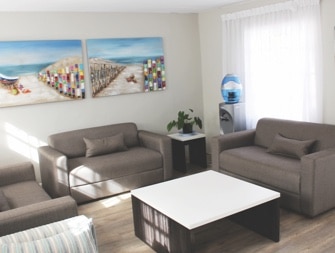
The current facilities description lists comfortable accommodation with a private-room option, meals, a swimming pool, a gym, a tennis court, and a games room with table tennis and pool. Local beach walks and nearby hikes also appear in the program description. The private-room option is distinct from a guarantee that every resident has a single room. A person who needs particular bathroom arrangements, physical accessibility, or privacy should have the proposed room confirmed in writing. Current availability and any room surcharge should be part of the accommodation discussion rather than inferred from photographs.
Hout Bay offers a different day-to-day environment from a city-center outpatient practice. Residents stay within the program while therapy, meals, rest, and supervised activities give the week a structure. Outdoor activities should be adapted to health, fitness, and the stage of treatment; the mention of mountain hikes does not mean that every patient must be able to hike. Practical questions include how mobility limitations are accommodated, which activities are optional, and when a person can participate after detox. The campus setting is best evaluated alongside the clinical schedule and staffing, not as a substitute for them.
Length of stay, fees, and medical aid
Harmony does not present one universally applicable residential duration in the reviewed program pages. It discusses initial treatment and an extended secondary-care phase, and its medical-aid explanation refers to some patients accessing substance use and psychiatric benefits across a stay of 21 to 54 days. That is a provider description of a potential funding and treatment pathway, not a promise that every patient qualifies for 54 funded days. The proposed duration should follow clinical assessment, the objectives of each phase, available benefits, and the patient’s circumstances.
No current, clearly defined self-pay tariff was verified in the official pages reviewed for this profile. A quotation should therefore identify the room category, intended number of days, detox arrangements, psychiatric consultations, medication, investigations, and any separate charges. If an extension becomes clinically useful, the process for authorizing it and its daily or program cost should be clear before the initial stay ends. International patients also need to separate the treatment bill from flights, transfers, travel insurance, and the cost of follow-up care after returning home.
The medical-aid information says Harmony can help with benefit checks, paperwork, and authorization. The homepage also advises patients to confirm their individual plan and exclusions. These details matter because a general statement that a provider works with medical aids cannot establish a particular member’s coverage. Obtain written authorization, the approved level and length of care, and a statement of any copayments or services outside the approved amount. Clinical recommendations and funding decisions may need to be reconciled if the requested stay is longer than the authorized benefit.
Continuing care and the return home
Harmony describes a continuing-care plan developed jointly by the therapist and patient, connecting them with resources both inside and outside the clinic. The homepage names group therapy, individual counseling appointments, continued family work, and an alumni community. It also describes coordination with local therapists, support groups, and sober-living services. For someone returning to another province or country, the useful question is which parts can actually continue at a distance and which require local attendance. A discharge plan should identify named appointments, the responsible clinician for medication, and agreed next steps if symptoms or substance use recur.
Some of Harmony’s public language makes broad statements about recovery outcomes and long-term support. The reviewed pages do not provide enough published methodology to independently assess a clinic-specific success rate, and no such rate is used here as a prediction. The more practical comparison is the care a person will receive: the assessment, assigned clinicians, treatment methods, family involvement, discharge arrangements, and costs. People comparing treatment providers can use those details to evaluate whether Harmony’s combined addiction and mental health program matches their needs and whether the necessary support will remain available after residential care ends.
Provider information checked October 20, 2026. This profile distinguishes published service descriptions from individual admission decisions. Official sources: Harmony Clinic homepage, program, team, medical-aid information, and contact page. Current fees, room availability, assigned clinicians, and funded treatment duration require direct confirmation.
Conditions
Levels of care
Amenities
Treatment approach
CBT, motivational interviewing, family therapy, art and music therapy, trauma work, and the Minnesota Alternative Model with individualized recovery planning
Fees & admissions
Confirm current pricing
No current self-pay tariff verified in reviewed official pages. Obtain an individualized quote and written medical-aid authorization, including room, detox, psychiatric care, medication, and extensions. Potential 21–54-day funding is not guaranteed for every patient.
Confirm the current program, duration, accommodation and included services directly with the center.
Individual medical and psychiatric assessment; confirm the appropriate detox pathway, medication arrangements, room availability, and written funding authorization before travel.