Care at South Pacific Private — Curl Curl
Hospital treatment on Sydney’s Northern Beaches
South Pacific Private is a fifty-four-bed private hospital at Curl Curl, on Sydney’s Northern Beaches. It provides inpatient treatment for addiction, trauma, and mental health concerns, with psychiatric assessment, nursing, medical care, psychotherapy, and case management. The hospital is the subject of this profile; its day programs and nearby Beachwood supported accommodation are separate services. The official provider overview describes an integrated approach in which these concerns can be addressed together, with involvement from relevant family members or other supports.
The distinction between hospital admission and subsequent care is important when comparing treatment in Australia. South Pacific Private’s usual pathway is approximately three inpatient weeks followed by two weeks of Transitions day treatment, subject to assessment. That is not a promise of thirty-five nights in a hospital bed. A person’s overall plan may span several settings and payment arrangements, so the recommended sequence, accommodation, and cost need to be understood before the first admission.
Eligibility, medical review, and withdrawal support
The hospital describes a broad adult population and an inclusive approach to people with different backgrounds and identities. It treats mental health concerns such as depression and anxiety as well as substance-related and behavioral difficulties. Admission remains an individual clinical decision. The fact that the provider lists several conditions does not mean every severity or combination can be managed in the same way. The assessment should identify the current presentation, previous treatment, relevant medical history, and the practical support needed to participate in an intensive group-based program.
The official admission process begins with a telephone assessment, generally lasting thirty to forty-five minutes, and includes discussion of health-fund benefits and personal costs. A referral from a GP or psychiatrist is required. On arrival, nursing staff assist with admission and a GP appointment; the provider says the psychiatrist overseeing care is introduced within seventy-two hours. The multidisciplinary team then reviews progress together. This is a described clinical process rather than a guarantee that a particular bed or admission date is immediately available.
The hospital FAQ says medical detox can be provided, while more complex withdrawal may require an acute medical hospital before admission. That limitation matters even though South Pacific Private is itself a hospital. Its residential location and specialist focus should not be taken to mean that every medical complication can be managed there. The team needs an accurate account of recent substance use, prescriptions, and physical health. Medication is reviewed clinically, stored by the hospital, and dispensed by nurses rather than kept in the patient’s room.
Psychiatrist-led care and a substantial group schedule
The inpatient program describes a psychiatrist-led multidisciplinary support team involving GPs, nursing staff, therapists, psychologists, counselors, and case workers. Nursing support is available around the clock. The program also advertises approximately four and a half hours of intensive interpersonal group psychotherapy per day. That is group time, not an equivalent number of private psychotherapy hours. A prospective patient should understand how individual medical and therapeutic needs are addressed within a program whose daily structure places significant emphasis on the group community.
Educational work covers addiction, feelings, grief, relationships, depression and anxiety, trauma, medication, self-esteem, and planning for life after treatment. A typical day combines community meetings, lectures, sessions with a primary therapy group, meals, and evening reflection. The intended work extends beyond listening to information: patients are expected to engage with their own reactions, relationships, and behavior within the community. Someone who finds intensive group participation difficult should discuss that openly during assessment so the team can explain the support available and whether the format is suitable.
South Pacific Private uses an abstinence-based approach and incorporates internal and external twelve-step activity. It also describes mindfulness, yoga, art, drumming, and medically cleared walks near Curl Curl Beach. These activities have different functions within the schedule, from reflection and peer connection to movement and expression. They should not all be treated as interchangeable clinical treatments. The timetable and clinical plan should make clear which components are central, which are selected for an individual, and how progress will be reviewed rather than assumed from attendance alone.
Trauma work and family participation
The Changes I program is a five-day experiential workshop addressing childhood relational experiences and their continuing effect on adult life. The provider says it uses Pia Mellody’s developmental model with education, group therapy, and process work. Themes include recognizing defensive patterns, understanding emotions, and developing boundaries. It can form part of an inpatient course when recommended and is also offered through a separately assessed inpatient workshop route. Its availability does not establish that every patient should undertake the same trauma work at the same stage.
Family involvement is another substantial feature of the model. The provider offers an in-person family program and an online alternative, with preparatory requirements for the latter. These arrangements are intended to help relatives and significant others understand relationship patterns and support recovery beyond the hospital. Participation should be based on the clinical plan and appropriate consent, rather than the assumption that every family relationship is safe or helpful in the same way. The named participants, format, timing, and any costs should be confirmed separately from the patient’s own inpatient booking.
Shared accommodation and practical hospital rules
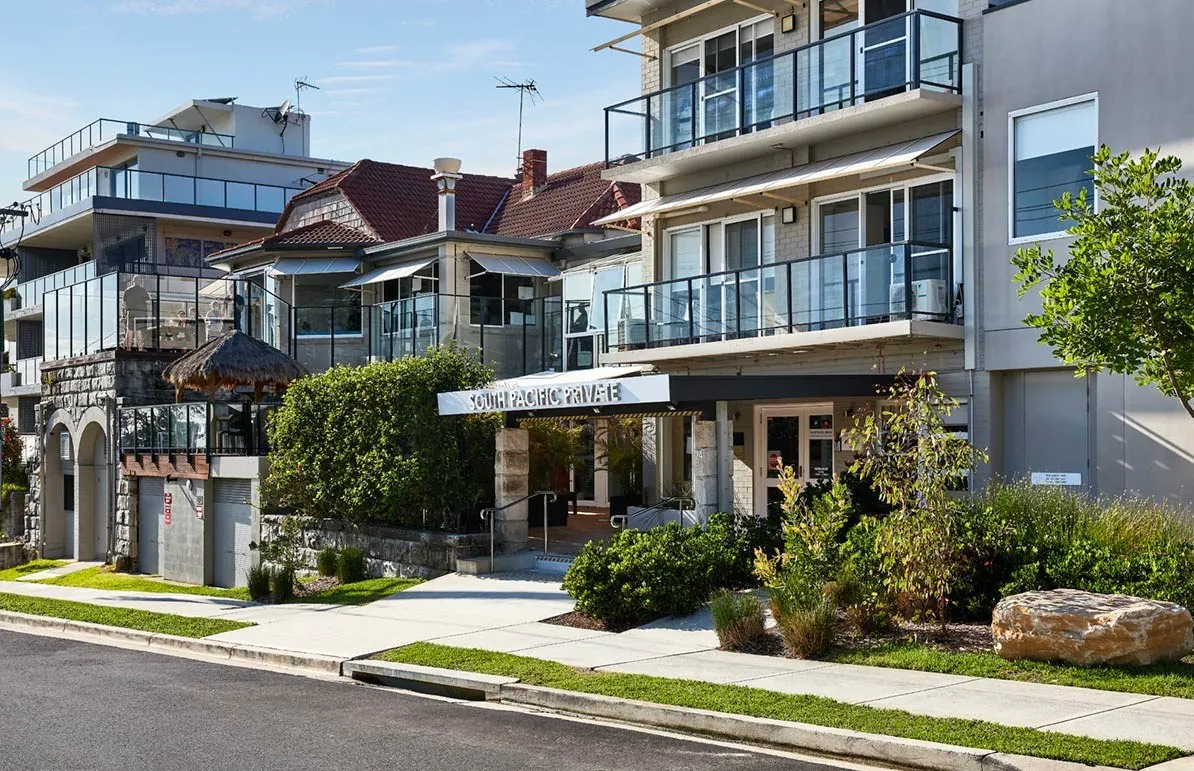
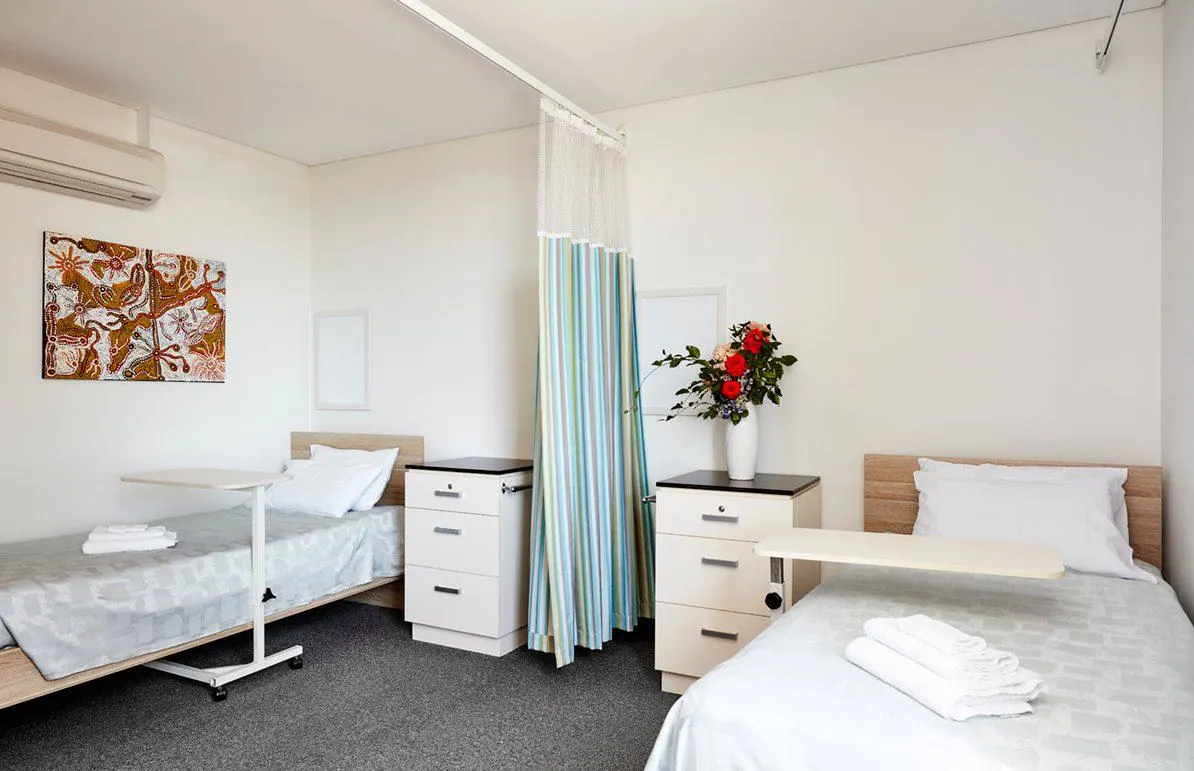
The facility description places the hospital a short walk from Curl Curl Beach, with communal interiors, gardens, and coastal views. Hospital accommodation is generally shared and supervised, with room allocation guided by therapeutic needs. Private rooms may be assigned for specific clinical or personal circumstances; they are not presented as a guaranteed upgrade that every patient can purchase. The provider also notes that room changes may be necessary during a stay. Anyone with particular privacy, accessibility, or accommodation needs should discuss them before accepting admission.
Patients are expected to remain on site unless the team permits an outside appointment or activity. The hospital is voluntary, but agreeing to admission includes agreeing to its daily boundaries. The admission information restricts television, internet, and personal mobile-phone access, and the FAQ says phones or tablets are stored until after treatment. Contact with family is arranged through the program, with provision for individual circumstances such as young children. These terms have practical implications for work, study, caring responsibilities, and personal administration and should be planned for before arrival.
The environment is smoke-free, caffeine-free, and low in sugar, with food and activity policies linked to the hospital’s treatment philosophy. Patients can discuss nicotine-replacement support with the medical team. Dietary needs should be raised in advance rather than assumed to be met through a general healthy-eating description. Exercise is structured and subject to medical clearance; the location does not mean unrestricted beach access or a personal fitness itinerary. Understanding these daily arrangements helps a prospective patient judge whether they are ready to take part in this particular hospital program.
Transitions and Beachwood are separate next steps
The Transitions program runs Monday through Saturday for two weeks, described as twelve treatment days. It supports people moving back into their communities after inpatient care and may also accept people who completed treatment elsewhere following assessment. Its work includes relapse prevention, relationships, practical structure, and support networks. Patients attend during the day and need separate accommodation. The program is therefore a different level of care from an overnight hospital stay, even when it follows immediately after discharge.
Beachwood Supported Living, next to the hospital, offers another accommodation option for people needing additional support. It is staffed by support workers around the clock and includes board, meals, community meetings, and participation in recommended day programs. Residents are expected to attend structured activities and follow house rules, including a nighttime curfew. This support-worker presence should not be confused with the hospital’s nursing provision. A Beachwood booking, available room, and fee must be confirmed independently; a hospital admission does not automatically reserve a subsequent place there.
Current fee uncertainty and financial planning
At the October 20, 2026 review, the same official FAQ contained two different self-funded daily averages: AUD 1,380.95 in one section and AUD 900 in another. The page does not explain the difference or establish that the figures are the ends of a price range. A single current hospital tariff therefore cannot be confirmed from that page. Recovery.com’s separate AUD 7,327 weekly estimate does not resolve the conflict. This profile leaves the headline numerical fee unconfirmed and directs readers to obtain a current written quote for the actual inpatient plan.
The FAQ separately lists AUD 750 for the four-day in-person family program and AUD 550 for the three-day online version, subject to confirmation. Admission also involves credit-card details or an AUD 300 cash deposit for pharmaceutical expenses; unused cash is to be collected at discharge. Health-fund and DVA arrangements depend on eligibility and policy terms. The financial assessment should distinguish hospital care, medicines, family participation, day treatment, and accommodation after discharge. It should identify any excess, gap, or excluded service instead of treating a general coverage statement as a guarantee of no personal costs.
Preparing for an informed admission
The official intake number is 1800 063 332. The team can assess suitability, review the referral, clarify accommodation and daily rules, and explain the recommended sequence of services. Before agreeing to admission, patients should have a workable plan for essential responsibilities during limited device access and for the transition after discharge. The hospital’s combination of medical care, intensive groups, family work, and continuing programs offers a defined structure. Its usefulness for an individual depends on clinical fit and a clear understanding of the time, participation, accommodation, and financial commitments involved.
Conditions
Levels of care
Settings
Treatment approach
Intensive interpersonal group psychotherapy, psychiatric and medical review, education, family work, twelve-step participation and mindfulness/experiential activities. Changes I is a separately indicated five-day trauma-focused experiential workshop that may form part of the inpatient plan
Fees & admissions
Confirm current pricing
A current numerical hospital tariff is not confirmed. On October 20, 2026 the official FAQ published two unexplained self-funded daily averages, AUD 1,380.95 and AUD 900. These are not an established price range; the older Recovery.com AUD 7,327/week estimate does not resolve the conflict. Obtain a written inpatient quote, including pharmaceutical costs and any health-fund excess or gap. Transitions day care, Beachwood accommodation and family-program fees are separate considerations.
Confirm the current program, duration, accommodation and included services directly with the center.
Complete the free telephone assessment and obtain the required GP or psychiatrist referral. Confirm hospital suitability, room allocation, device/contact rules and a written current inpatient quote. Arrange any subsequent Transitions day care and Beachwood accommodation separately.