
Care at Oasis Runcorn
Oasis Runcorn: residential addiction treatment in Cheshire
Oasis Runcorn is a UKAT residential addiction treatment service in Runcorn, Cheshire, with 34 beds and a choice of private and shared bedrooms. Its most distinctive published feature is the availability of both a 12-step pathway and a Strengths Model program. This gives prospective residents a concrete therapeutic choice to explore alongside the usual questions about detox, accommodation, and length of stay. The center is located near Runcorn town center, with accommodation arranged across self-contained flats, shared therapeutic spaces, and a communal garden. It is a residential recovery community rather than a remote country estate.
The official homepage describes treatment for alcohol, drugs, prescription medication, and behavioral addictions, with attention to the emotional and psychological difficulties that may accompany them. The published approach includes assessment, withdrawal support where appropriate, individual and group therapy, and continuing care. Specific eligibility still depends on an individual’s needs. A broad list of mental health topics on a provider’s website does not mean that this particular residential center can manage every acute psychiatric condition, medical complication, or medication regimen without additional specialist care.
Regulated service and the limits of detox care
The Care Quality Commission record for Oasis Runcorn identifies the service at Halton Goals, 38–40 Bridge Street, Runcorn, under Treatment Direct Limited. At the time of this review, the displayed overall rating was Good, with the report published May 14, 2019. That publication date matters: the rating is a regulatory finding associated with the published inspection, not a new independent assessment of every current staff member or treatment session. Readers should use the specific Runcorn record when comparing services, because the UKAT network also operates a separate Oasis facility in Bradford.
The CQC inspection summary describes Runcorn’s detoxification as medically monitored, rather than medically managed. The provider’s admissions page likewise says that more complex detoxes requiring continuous medical management may be accommodated at its Bradford detox unit. These are different locations and levels of support. A person with a complicated withdrawal history should have the intended campus and level of medical oversight confirmed before booking. The availability of doctors for assessment and prescribing does not by itself establish continuous hospital-level medical management within the Runcorn residence.
Before arrival, Oasis describes a review of medical and treatment needs. Its admissions information says a doctor assesses the patient, reviews medication, and prescribes a detox regimen when required, with the team monitoring progress and arranging additional care when needed. The same page contains some passages naming Bradford, so campus-specific arrangements deserve direct confirmation. Useful written details include who prescribes at Runcorn, which professionals are present overnight, how existing prescriptions will be handled, and what would trigger a hospital transfer. Withdrawal treatment should be individualized rather than selected solely by a preferred admission date.
A choice of recovery frameworks
Oasis Runcorn’s Strengths Model program places a person’s abilities, relationships, resources, and achievable goals at the center of therapeutic work. The provider presents it as an option for people who do not connect with the spiritual language of a traditional 12-step framework. The focus is practical: identifying what has helped a person cope or function before, understanding the difficulties surrounding substance use, and using those strengths to support change. It does not require belief in a higher power, according to the program description.
The published Strengths Model has eight components. Early work maps a person’s life story and substance use history; later work identifies strengths, desired changes, and emotional triggers. The program then considers relationships and forgiveness, reflection on progress, and relapse prevention. Oasis describes worksheets, group discussion, individualized goals, and recovery planning influenced by ITEP mapping. This sequence gives more substance to the offer than the label alone. Someone considering the pathway can ask how much is completed during their proposed stay and how the therapist adapts life-story or trauma-related exercises when sharing difficult experiences feels overwhelming.
The alternative 12-step pathway emphasizes a structured sequence of reflection, accountability, peer support, and personal change. Oasis describes spiritual growth within that framework, while offering the Strengths Model for people who prefer another approach. A person does not need to decide between the two based on a website summary alone. The admissions information says the counselor explains the benefits and helps the resident choose a program. It is useful to establish whether pathway choice changes the daily groups, assignments, or later mutual-aid recommendations, and whether the plan can be adjusted as the person engages with treatment.
Therapy, staff, and personal treatment goals
The therapy overview names cognitive behavioral therapy, dialectical behavior therapy, individual counseling, group work, and family interventions. CBT-related work examines patterns in thinking and behavior; DBT-related skills address distress, emotions, and relationships. These methods can complement either of the center’s recovery frameworks. The provider’s therapy pages include a qualification that availability depends on the individual plan and the program operating at the chosen location. The appropriate expectation is therefore an agreed treatment schedule, rather than an assumption that every therapy listed across the UKAT website is included for every Runcorn resident.
The current Runcorn team page names Binu John as center manager and describes a background in psychology, counseling, psychotherapy, and adult care. It lists counselors including Jason Baker, whose stated approach combines person-centered work and CBT; Sarah Higginson, whose profile describes trauma-informed counseling; and Alfie Gyurkovits, whose profile describes experience with mental health, addiction, CBT, and DBT. These are provider-published descriptions, not independent verification of every qualification. They help a prospective resident ask which therapist will be assigned and how specialist needs will be covered in practice.
Oasis says a resident meets a designated therapist within the first two days and develops a plan covering medical, emotional, physical, and social needs. During detox, participation may be adjusted while the person feels unwell, with more intensive work following stabilization. Regular key-worker sessions are described as an opportunity to review progress and concerns. A useful plan translates broad goals into something observable, such as practicing a response to cravings, preparing a difficult family conversation, or building a realistic weekly routine. The public pages do not establish a guaranteed number of private therapy hours for every length of stay.
Living arrangements and practical routines
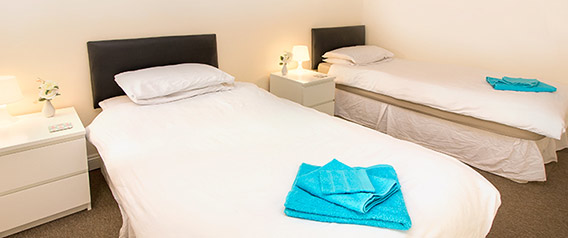
The facilities page describes seven self-contained flats. Three have their own communal living rooms; the others use a different arrangement of shared and private spaces. Bedrooms may be single or shared, and some have televisions. Residents also have access to laundry facilities, a communal dining area, and meals prepared by an in-house chef. These details make accommodation selection important: the word private should not be taken to mean a private apartment, private bathroom, or sole occupancy of an entire flat. The exact bedroom and shared facilities should be confirmed for the booking.
The garden includes a therapy pod used for therapeutic sessions and practical work, while a small gym contains equipment such as an exercise bike and weight bench. The provider also describes spaces for activities including gong therapy. These are additional features of residential life, alongside the core counseling program; they should not be represented as substitutes for medical or psychological treatment. Laundry, meals, communal spaces, and participation in the recovery community also provide opportunities to practice everyday routines. Mobility needs, access between flats, and appropriate exercise during early recovery should be discussed individually.
Family involvement and continuing support
Oasis Runcorn’s family-support page describes a Sunday session from 1 p.m. to 2 p.m., with education, counseling, and guidance for relatives. Topics include communication, boundaries, guilt, self-care, and preparing for the resident’s return home. The page also describes specialist-led conjoint sessions that bring the person in treatment and loved ones into a shared therapeutic conversation. Families should confirm the current timetable, participation arrangements, and whether an individual conjoint is included in the proposed plan. Family involvement needs to respect consent and the resident’s clinical circumstances.
The published aftercare offer is one year of free weekly group therapy by Zoom, facilitated by a professional therapist. This remote format can make participation possible after returning to another part of the country. It is a defined group service, not a promise of unlimited individual therapy or continuous emergency support. The homepage also describes access to the wider UKAT alumni network. Before discharge, the resident should know the group time, joining instructions, attendance expectations, and how any separate psychiatric or individual therapy appointments will be arranged.
Secondary care requires a particularly clear location check. Runcorn’s website links to a detailed secondary-care page, but that page explicitly describes Providence Projects in Bournemouth. Its housing arrangements, coastal activities, and daily program should not be assumed to exist at Runcorn. If a longer transition phase is recommended, establish whether it takes place locally or requires transfer, who provides it, and whether a new fee applies. That distinction allows a person to compare a longer Runcorn admission, an onward residential service, and discharge with outpatient support on an informed basis.
Admissions, length of stay, and cost
Oasis advertises direct admissions without a referral and says a place can often be arranged within 24 hours, subject to assessment and availability. No current numeric residential tariff was verified in the reviewed official pages. The quotation should specify the number of nights, room type, withdrawal support, therapy inclusions, medication charges, and extension or cancellation terms. The center also promotes a 90-day program with a conditional return offer: after successful completion, a relapse within 30 days of discharge may qualify for a complimentary 28-day stay. Obtain the full terms; this is a service commitment, not a guarantee of recovery.
For people comparing residential treatment options, the central Runcorn decision is whether its monitored detox scope, shared recovery community, and choice of therapeutic frameworks suit the individual. Current treatment plans, staff assignments, and discharge arrangements provide a stronger basis for that decision than a promotional percentage alone. The provider publishes an outcome statistic, but the reviewed pages did not establish sufficient methodology for this profile to use it as an independently verified prediction. A clear assessment and a detailed written plan remain the most useful next steps.
Checked October 20, 2026 against the official Oasis Runcorn pages and its specific CQC record. The CQC report date is May 14, 2019. Bradford medical-management arrangements and Providence Projects secondary-care details have not been represented as Runcorn campus services. Confirm current staffing, fees, room availability, and admission suitability directly.
Conditions
Levels of care
Amenities
Treatment approach
Choice of Strengths Model or 12-step pathway, with CBT, DBT-related skills, individual and group counseling, family support, and relapse prevention
Fees & admissions
Confirm current pricing
No current numeric residential tariff verified in reviewed official pages. Obtain a quote by duration and room. One year of weekly Zoom group aftercare is advertised as included. The 90-day program's conditional 28-day return offer is subject to full terms.
Confirm the current program, duration, accommodation and included services directly with the center.
Individual assessment and doctor review; confirm suitability for Runcorn's medically monitored detox. Complex detox requiring continuous medical management is described at separate Oasis Bradford, not this campus. Direct admission may be available within 24 hours, subject to assessment and a place.