Care at CALDA Clinic — Zurich
CALDA Clinic offers individually organized mental health and addiction treatment near Zurich, Switzerland, using private residences and a team assembled around one client’s needs. Its central feature is the one-client model: medical assessment, psychotherapy, practical support and the daily routine are coordinated for that person rather than delivered through a shared residential group timetable. The provider describes its service as inpatient treatment, while its accommodation information explains that care is based in selected private properties and can involve appointments at an external partner clinic.
The distinction matters when comparing CALDA with a hospital, a group rehabilitation center or a wellness retreat. Privacy and an extensive service team do not establish the same capabilities as an acute medical ward. A prospective client needs a clear account of which professionals work in the residence, which appointments take place elsewhere and how the proposed setting will meet the person’s current clinical needs. CALDA’s published weekly starting fee applies to its individualized inpatient programs; its separately advertised outpatient longevity package is a different service.
A private program for complex mental health and addiction needs
CALDA’s public treatment information covers addiction, depression and other affective difficulties, anxiety, trauma, burnout, stress, attention-related concerns and several other presentations. Its addiction page discusses both substance-related problems and behaviors such as gambling or compulsive work. The team also describes coordinating care where psychiatric concerns overlap with physical illness. That breadth should guide the admissions conversation, but it does not mean that every condition or every level of medical instability is suitable for the residential arrangement.
The provider’s approach places considerable emphasis on understanding the person’s history and the circumstances surrounding symptoms. For addiction care, that can involve reviewing substance use alongside emotional distress, past treatment, relationships and physical health. CALDA presents its model as an integrative approach that combines psychiatric and psychological work with medical, nutritional and complementary input. The useful question for an individual referral is how those parts will address the person’s identified needs, rather than how many tests or therapies can be placed on a schedule.
Someone considering the program may have received care from several clinicians or tried different approaches over time. Existing records can help the new team distinguish unanswered questions from work that has already been completed. The plan should also identify which existing clinicians remain involved. A highly individualized residential stay can still create confusion if medication decisions, external consultations and the eventual return home do not have clearly assigned responsibilities.
Assessment in the residence and at a partner clinic
CALDA describes an initial medical check-up at Bethanien, a private partner clinic in Zurich. Its current guide says this assessment may take one to three days and can occur on an outpatient basis. The examples include an electrocardiogram and abdominal ultrasound, with additional investigations considered according to the case. Psychiatric assessment is described as taking place through CALDA. These are different parts of the assessment pathway, so the existence of a hospital partner should not be presented as hospital facilities located inside every CALDA residence.
The provider also advertises nutritional, biochemical and other specialized testing within what it calls the CALDA Concept. The public descriptions include orthomolecular and epigenetic approaches. Their presence in the program does not, by itself, establish that every proposed test will answer a useful clinical question or that every reported result requires treatment. A written assessment plan should explain what is being investigated, how findings will be interpreted and whether a test is part of the fee or supplied by an outside organization.
The assessment phase can therefore be more extensive than an introductory therapy appointment. It is useful to allow for external visits, discussion of previous records and changes to the initial working plan. Medical findings may alter the sequence of care or show that another service is needed. The practical value of this process depends on how the team turns information into decisions the client can understand, including the reasons for adding, delaying or declining a proposed intervention.
Psychiatry, psychotherapy and the CALDA Concept
CALDA identifies founder and medical director Claudia M. Elsig as a specialist in psychiatry and psychotherapy. Its published team spans psychiatry, psychology, internal medicine, pain-related specialties, nutrition, coaching and complementary disciplines. These are provider-published professional descriptions, not an independent verification of every clinician’s registration or availability. The proposed care team should name the professionals expected to participate and distinguish their clinical roles from household, travel and administrative support.
The current addiction material describes intensive individual psychotherapy, work around trauma and emotional difficulties, hypnosis or hypnotherapy, coaching and nutritional support. The broader residential guide includes creative therapies, physiotherapy, mindfulness, breathing practices, yoga and equine-assisted psychotherapy among possible activities. These are examples of the provider’s service range. The actual selection, pace and frequency should follow assessment and the person’s response rather than an expectation that every advertised method will be used.
CALDA says it aims to work without psychiatric medication where possible, while also stating that medication is used under medical supervision when needed. This is a description of the provider’s philosophy, not a promise of a medication-free course or a recommendation to change existing treatment before admission. The clinical plan should set out how current prescriptions will be reviewed, who makes prescribing decisions and how any proposed changes will be monitored during and after the stay.
The program’s complementary and nutritional elements need equally clear explanation. CALDA describes personalized meals and supplements, including a micronutrient mixture that may continue for several months. The client should know the purpose, ingredients, duration and review arrangements for anything recommended. The advertised combination of conventional and complementary methods should not be interpreted as proof that every element has the same evidence base, nor as a guarantee that a biological test will identify a single cause of distress.
Detox and the limits of the residential setting
The current stay guide states that detoxification begins within the addiction program when applicable. It does not provide a universal public specification for continuous on-site medical or nursing attendance in every case. An admission involving alcohol, sedatives or other substances therefore needs a specific plan for the setting, monitoring, prescribing and response to complications. The scope of a personal coach’s availability is different from the scope of registered nursing or a doctor’s presence.
CALDA’s published references to round-the-clock personal coaching are useful for understanding everyday support. They should not be converted into an assurance of a doctor at the bedside at all times. Similarly, access to external medical specialists needs to be distinguished from immediate access to an acute service. The relevant arrangements are those agreed for the individual client, including whether assessment or stabilization somewhere else is needed before the residence becomes appropriate.
Private residences and practical daily support
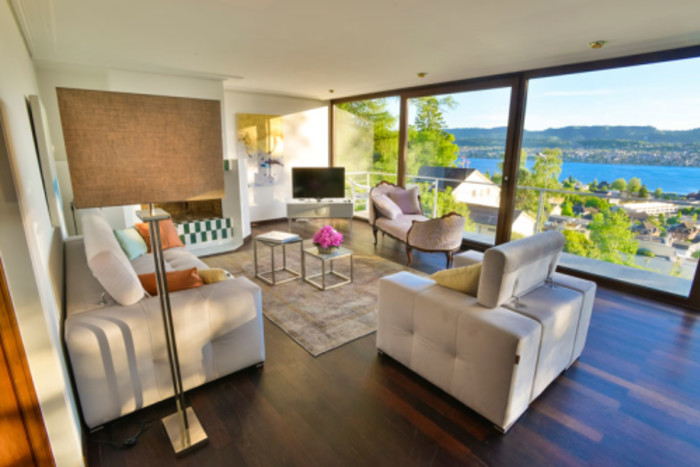
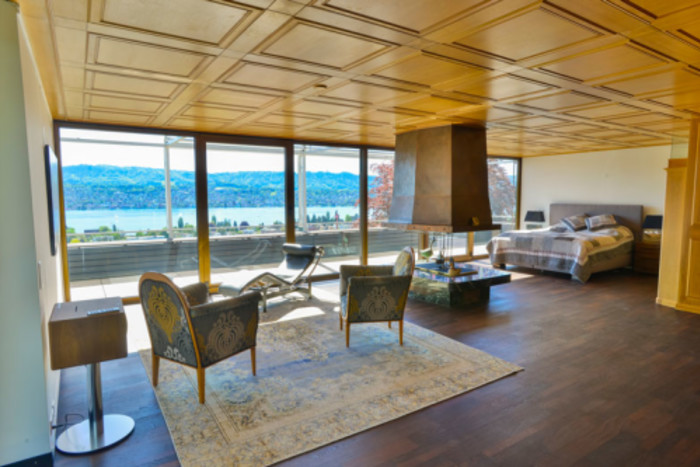
The accommodation portfolio is described as being on Zurich’s Gold Coast, with selected properties overlooking Lake Zurich and the Alps. CALDA says the photographs are representative to protect privacy. A pictured villa should therefore not be assumed to be the exact property offered for a particular stay. The residence, bedroom arrangement, accessibility and any requested facilities should be identified in the proposal before travel.
The published hospitality model includes a private chef, butler, chauffeur and interpreter, with a personal coach helping coordinate the program. These services can reduce practical demands while treatment is underway. Their exact availability and duties still need agreement, especially where a client requires assistance with mobility, a particular language, a medically necessary diet or support outside normal appointment hours. A driver or interpreter is not automatically a medical escort, and a household team does not replace clinical care.
CALDA’s sample day moves from a quiet morning routine into medical or therapeutic appointments, followed by additional activities and time for rest. Evenings emphasize a calmer pace and recovery from the day’s work. This is a description of the intended structure rather than a fixed timetable or a guaranteed number of psychotherapy hours. A useful schedule balances the client’s clinical needs with capacity to engage, recover between sessions and consider what has been discussed.
Family involvement, travel and privacy
Family members and personal assistants can be accommodated nearby through hotel arrangements. CALDA names Baur au Lac and Park Hyatt Zurich among its partners, while emphasizing that availability is arranged individually. Those hotel options are separate from the client’s private residence. Their costs, visiting arrangements and any involvement in therapy should be clarified rather than treated as automatic inclusions in the residential fee.
The administrative team can help organize arrival, including accompanied travel and airport transportation where requested. Clinical suitability and travel arrangements should be settled together, particularly if the person needs support in transit. Families can contribute helpful information with appropriate authorization, but an accompanying relative’s role is different from that of a treating professional. Privacy expectations should cover the residence, external appointments, communications and the information shared with existing clinicians.
Duration, current fees and continuing care
The current official pages describe treatment duration as individualized. Earlier directory material referred to a four-week primary phase and possible longer stays, but the reviewed current stay and addiction pages do not establish those as universal requirements. The proposed number of weeks should be confirmed directly. A weekly rate is a charging unit; it does not mean that one week is a clinically suitable or available full course for every presentation.
CALDA’s official fee page, checked October 20, 2026, lists inpatient programs from CHF 116,000 per week. It says the program is privately funded and outside health-insurance schemes, with an advance deposit required to reserve a stay. The CHF 32,000 outpatient longevity package listed on the same page is not a lower-priced version of the full residential program. The previous conversion into an approximate US-dollar monthly total should not be mistaken for a provider quote, so the current listing uses the original weekly Swiss-franc basis.
The written offer should state the duration, assigned property, expected clinical input, external services and payment terms. CALDA describes a tailored transition plan that may include remote sessions, laboratory monitoring and scheduled follow-up, whether the person remains near Zurich or returns home. That describes possible continuing care, not a universally free or unlimited package. Identify the follow-up appointments, responsible prescriber, information handover and separate charges before the residential phase ends.
The official contact number is +41 44 224 20 00, and an initial telephone or video consultation can be arranged without a doctor’s referral. For comparison with other settings, the Switzerland treatment directory provides a wider starting point. CALDA is most usefully assessed through its proposed clinical team, residence and continuity plan, alongside the substantial financial commitment required for its one-client model.
Sources and verification
Reviewed October 20, 2026: CALDA Clinic overview, official fees, CALDA Concept, addiction program, understanding the stay, residences, published team, and contact route. The phone is also present in the current official site’s contact-image alternative text. Clinical effectiveness, professional registration and exact availability have not been independently audited.
Conditions
Levels of care
Settings
Amenities
Treatment approach
Psychiatric assessment, individualized psychotherapy, addiction and trauma-related work, hypnotherapy, nutrition, personal coaching, selected physiotherapy, creative and complementary therapies, and individually planned follow-up. Specialized testing and supplements require a defined clinical purpose and written scope
Fees & admissions
CHF 116,000 / week
Official fees checked October 20, 2026 start at CHF 116,000/week for inpatient programs; self-funded and outside health-insurance schemes, with an advance reservation deposit. The CHF 32,000 outpatient longevity package is a separate service, not a cheaper residential tier. Remove the exchange-rate-based USD monthly comparison. Confirm duration, property, outside medical services, companions, transfers, supplements and aftercare in the written offer.
Confirm the current program, duration, accommodation and included services directly with the center.
Confirm clinical suitability, the minimum 4-week primary phase, assigned private residence, clinical staffing, detox suitability, personalized quote, deposit, inclusions, optional services and discharge planning.