
Care at The Dunes — Southampton
A small residential addiction program in Southampton
The Dunes serves adults seeking residential treatment for substance use and related emotional difficulties in the Hamptons. Although the organization continues to use The Dunes East Hampton as its brand, its current website places the residence on Lohan Court in Southampton, New York. It describes a gated, wooded estate of seventeen acres and a program for thirteen clients. Those details describe the provider’s advertised setting and group size; they are not an independently verified bed license or an assurance that every place is available. The service is particularly oriented toward people who value discretion and need a structured break from demanding daily responsibilities.
The residential program identifies several reasons someone might consider this setting: difficulty sustaining recovery after earlier treatment, the need to address substance use alongside anxiety or depression, and a wish to work on patterns that are difficult to interrupt at home. Its executive arrangements may interest professionals who cannot disconnect completely from work. These are potential reasons to request an assessment, rather than evidence that the program suits every diagnosis or degree of instability. A residential estate with medical and psychological input also has a different admission function from an acute hospital. The reviewed sources do not establish hospital-level admission at this address.
Assessment, clinical staff, and treatment planning
According to the official residential program description, arrival includes medical and psychiatric assessment. The team then develops an individual plan that takes account of the person’s substance use, mental health, and longer-term recovery goals. The relevant admission discussion should cover current medications, recent alcohol or drug use, physical health concerns, previous withdrawal complications, and the practical support available after discharge. It should also identify whether stabilization or detoxification is needed before entering this particular residence. The public pages reviewed do not provide a precise on-site withdrawal protocol or a continuous physician-coverage schedule.
The current team page names Dr. Douglas Kent Hoverkamp as medical director and Devon Griffin as clinical director. It also lists psychotherapists, addiction counselors, nursing personnel, and staff working in operations and recovery support. This is useful evidence of the provider’s clinical and medical organization, but job titles do not tell a prospective resident how often a particular professional will meet them. Establish the expected psychiatric appointments, individual psychotherapy sessions, medication reviews, and overnight clinical arrangements in the proposed plan. The physician or therapist appearing on a website should not be assumed to deliver every resident’s day-to-day care.
The Dunes reports a three-to-one staff-to-client ratio. That figure is a provider statement about its staffing model, not a promise of three clinicians beside each client throughout the day. The published ratio does not specify which employees, working hours, or support roles are included. A more useful comparison is the amount of direct treatment in a typical week, the qualifications of the person providing each intervention, and how clinical concerns are handled outside scheduled sessions. Private accommodation and a small group can support discretion, but they do not establish the intensity of medical supervision.
Psychotherapy, trauma work, and recovery skills
The clinical-services page describes addiction education and cognitive behavioral therapy, or CBT. The educational work focuses on understanding substance use, cravings, triggers, and recurring responses. CBT adds a structured way to examine how thinking and behavior interact with emotional distress. In an individualized program, this can mean looking closely at the moments when work pressure, conflict, isolation, or another specific situation is followed by drinking or drug use. The practical question is how those observations become an achievable plan for the situations the resident will encounter after leaving the estate.
Trauma-related options include EMDR, Internal Family Systems, relational trauma repair, sociometrics, and psychodrama. The provider explicitly says that each resident will not take part in every listed service. This matters because a long treatment menu is not a predetermined weekly schedule. The clinician should explain the reason for selecting a particular approach, whether the person is ready for that work, and how progress or distress will be monitored. Trauma care is described within the addiction program; the presence of these methods does not establish a separate hospital service for people needing acute psychiatric containment.
Some of the experiential work focuses on relationships and communication. Sociometrics and role-based exercises can form part of the provider’s exploration of interpersonal patterns, while other sessions may use art, music, or the outdoor environment. The purpose and format should be clear before participation, especially for someone uncomfortable with group disclosure or reenacting personal experiences. These activities belong within a considered treatment plan. They should not be interpreted as a requirement to share every traumatic event publicly or as a guarantee that a particular exercise will produce the same response in different people.
The equine program is described as work on the ground with horses, including grooming and guided interaction. It is not presented as a riding course. The Dunes connects this work with communication, boundaries, emotional awareness, and problem solving. Residents who have allergies, physical limitations, or fear of horses should discuss alternatives before a session is scheduled. The site also describes hypnotherapy as an optional complementary intervention and explicitly says it does not cure addiction by itself. Its availability should be considered alongside the core counseling and medical plan, rather than as a replacement for them.
Daily life, privacy, and an executive schedule
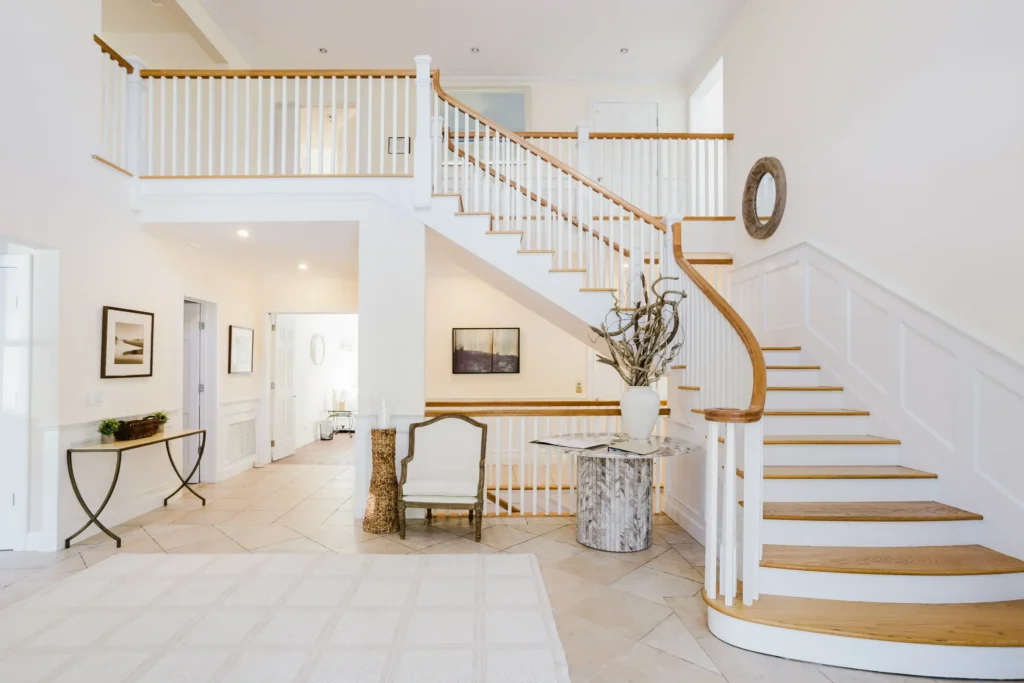
The facility description advertises private rooms on a secluded estate, with grounds, a pool, and access to outdoor activities. It also describes nearby beaches and parks, rather than an assurance that every bedroom faces the ocean or that the residence sits directly on a beach. Confirm the actual bedroom, bathroom arrangement, accessibility, and any extra accommodation charge before paying a deposit. A private room is a useful accommodation detail, but it does not mean the entire estate is reserved for one client. The program is intended to include a small residential community.
Meals, yoga, meditation, massage, spiritual counseling, and nature-based activities appear in the provider’s descriptions of residential life. The daily-life page emphasizes a balance between scheduled therapeutic work and rest. That is more informative than assuming that all amenities operate every day or are included without limits. A prospective resident with dietary requirements, mobility restrictions, or a particular spiritual preference should have those arrangements confirmed individually. The review does not establish a single menu, a fixed number of private wellness sessions, or universal access to every advertised activity.
Technology is allowed within the provider’s described model, but its daily-life page specifies a designated time for contact with the outside world. The executive page also discusses accommodating important meetings or business responsibilities, including occasional travel away from the residence. These arrangements should be agreed with the treatment team. Permission to maintain essential work contact is not a commitment to an unrestricted working day. Someone considering this option should map out which responsibilities can realistically continue without displacing assessment, therapy, sleep, and the routines that brought them to treatment in the first place.
The executive program information and daily-life guide describe staff-supported attendance at certain outside commitments. Establish when an escort is required, whether transport or staff time has an additional cost, and who approves an outing. The provider also mentions access to attorneys familiar with addiction-related matters. That is a referral or support resource, not a promise that legal representation is included in the residential fee. Treatment staff, employers, family members, and outside advisers should have clearly agreed limits on what information may be shared.
Family contact and planning beyond the residence
Family therapy is part of the advertised clinical offer, and the daily-life page describes weekend visiting opportunities. Neither statement defines a compulsory family schedule for every resident. Family involvement needs to reflect the person’s consent, treatment goals, and relationship circumstances. Before relatives book travel, clarify visit times, whether a planned meeting is a clinical session or a social visit, and whether remote attendance is possible. This is particularly relevant when work and family communications continue during treatment: regular contact can be useful, but it should be coordinated with the therapeutic work rather than assumed to be unlimited.
The residential page refers to longer-term aftercare and sober-living support, while the website separately lists an outpatient program. These references are reasons to ask for a concrete transition plan, not evidence that every subsequent service is supplied at the Southampton residence or included in its price. For someone returning to New York City or another state, that plan should identify the responsible clinician, the first appointment, prescription arrangements, and any recovery community or housing support. If a separate service is recommended, confirm its location, admission requirements, and payment agreement before the residential stay ends.
Fees and the limits of the published price reference
A provider-hosted article dated February 24, 2026 mentions a price of USD 50,000 per month. The article describes a four-acre compound and names an executive director different from the person shown on the current team page. Meanwhile, the current residential and home pages describe the seventeen-acre Southampton estate. The article therefore provides a price reference with a different operational context, rather than a sufficiently clear current tariff for this campus. This profile does not use that figure as an active numerical starting fee.
The actual quote should identify the dates covered, the selected room, the planned clinical services, and any charges for detoxification, medication, outside medical appointments, specialist testing, transport, or escorted business commitments. Ask how additional days, early departure, and any proposed outpatient or sober-living placement are billed. Insurance eligibility and the resident’s final responsibility also require direct confirmation; a discussion of insurance with admissions is not itself a coverage decision. A written estimate tied to the proposed stay is more useful than treating the price in the republished article as a complete program cost.
Deciding whether the Southampton program fits
The Dunes is most clearly documented as a small residential addiction service that combines clinical assessment, psychotherapy, trauma-related options, and an unusually flexible approach to essential professional contact. Its current official admissions number is +1 877 818 5539. When comparing it with other treatment programs in the United States, focus on the proposed care setting, direct clinical contact, room assignment, withdrawal arrangements, and realistic continuing care. The information reviewed on October 20, 2026 supports those specific program features, while leaving the current tariff and individual admission plan for written confirmation.
Conditions
Levels of care
Settings
Amenities
Treatment approach
Individual, group and family therapy; addiction education, CBT, EMDR and selected IFS, relational trauma repair, sociometrics, psychodrama and ground-based equine work. Yoga, meditation, spiritual counseling, nature activities and optional hypnotherapy complement the clinical plan
Fees & admissions
Confirm current pricing
A current numerical tariff is not confirmed. A provider-hosted article dated February 24, 2026 mentions USD 50,000 per month but describes a four-acre compound and different executive leadership from the current seventeen-acre Southampton program. This contextual reference is retained in the narrative rather than presented as an active starting fee. Request a written quote for the actual dates, room, clinical services, medication, any detox or outside care, transport, escorted commitments and later care.
Confirm the current program, duration, accommodation and included services directly with the center.
Request a current campus quote, medical and psychiatric suitability review, any detox or stabilization arrangements, the exact bedroom and bathroom, expected individual clinical contact, technology and outside-commitment rules, family involvement and a written transition plan.