Care at Linwood House — Barnsley
Adult residential addiction care in Barnsley
Linwood House is a UKAT residential drug and alcohol service on Wensley Road in Barnsley, South Yorkshire. Its official website describes a pathway through assessment, withdrawal support when needed, rehabilitation, and aftercare. The service provides a shared residential environment in which adults can work on substance use away from everyday pressures. It combines a substantial group program with individual therapeutic contact and practical support. The fit depends on the person’s clinical needs as well as their readiness to participate in a communal treatment setting.
A particularly important distinction concerns medical staffing. The latest CQC assessment, published in April 2026 after visits in November 2025, describes medically monitored detoxification with prescribing-doctor input by video call. It explicitly says there were no medical staff on site and that the service could not accept people with complex medical needs. This is more specific than general website wording about medical detox. Linwood should therefore not be presented as a facility with an on-site hospital team or continuous on-site nursing without new, verified information establishing that change.
Understanding the care level before admission
Medically monitored withdrawal support and medically managed inpatient care are not interchangeable descriptions. At Linwood, the latest independent assessment identifies a residential team of therapists and support workers with remote medical input. Someone who has experienced complicated withdrawal, has significant physical illness, or needs close medical observation should disclose that history during assessment. The admissions team needs to determine whether Linwood can provide the required care or whether another service is appropriate before a residential rehabilitation stay is considered.
It is also useful to separate detoxification from the rest of treatment. Completing withdrawal does not automatically address the routines, relationships, or emotional difficulties associated with continued substance use. An admission plan should explain how the person moves from the initial phase into therapy and what support follows discharge. The proposed duration should reflect that sequence. Published general estimates for alcohol or drug detox cannot predict one person’s course, and a longer stay should have a clear therapeutic purpose rather than simply extend accommodation.
The 12-Step and group-based program
Linwood’s 12-Step program page describes treatment as predominantly group based, with weekly individual sessions. Staff introduce the steps through discussion, relatable examples, and personal targets. The page emphasizes continuing the work after residential treatment, including fellowship meetings and finding a sponsor. This gives a more concrete picture of the program than a broad therapy list: residents are joining a therapeutic community and beginning a framework intended to continue in daily life, rather than completing every aspect of recovery before leaving the house.
The provider describes each person progressing at their own pace and developing a personal plan. For someone new to 12-Step work, understanding the language, spiritual dimension, and expected participation can make the decision more informed. For someone who has previously found that approach difficult, the admissions discussion should explore how it will be combined with other methods and how individual concerns will be addressed. The existence of different activities does not necessarily mean the central group framework is optional.
CBT, individual sessions, and practical skills
The CBT page explains that residents examine triggers and the links between thoughts, emotions, physical reactions, and behavior. It describes process groups, assignment groups, workshops, and weekly individual therapy, with journaling and daily diary sheets used to support reflection. It also discusses grounding, mindfulness, and coping strategies. These details suggest a program in which learning continues between appointments. The work is more specific than being encouraged to stay positive: the aim is to recognize a recurring pattern and practice a different response.
For example, a resident might explore how an argument, a particular interpretation of it, and the urge to use substances become linked. The useful next step is identifying a response that can realistically be tried outside treatment. This is an illustration of the approach rather than an additional promise about Linwood’s assignments. Ask how personal goals are reviewed, how individual sessions relate to group work, and what information will be included in the continuing-care plan.
Linwood’s CBT description says therapy can take place alongside a client’s prescribed medication when supporting co-occurring mental health needs. That should not be read as a guarantee that the center treats every psychiatric condition. It does, however, make it inappropriate to assume that rehabilitation automatically requires stopping prescribed treatment. Bring an accurate medication list, discuss the clinical plan with the prescribing professionals, and establish which aspects of mental health care will be provided during the stay and after discharge.
Complementary activities and treatment choice
The wider therapy directory lists mindfulness, meditation, yoga, sound-based activities, and other holistic approaches alongside counseling and the 12-Step program. These can offer different ways of participating in the day, particularly when someone is rebuilding a routine or finds verbal discussion tiring. They should be distinguished from medical treatment and specialist psychotherapy. The provider itself qualifies the menu according to the chosen program, assessment, and availability; a listed activity is not a guarantee that it will be delivered to every resident.
A useful treatment discussion therefore goes beyond selecting favorite activities. It identifies which problems the team will work on, which methods are being proposed, and who will deliver them. If a particular intervention is central to your choice, obtain confirmation that it is part of your actual admission. This is especially relevant when a network website discusses services across multiple locations or uses a general explanation of a therapy to describe what may be available.
The residential team
The published staff roster names Amanda Sellers as center manager and Julie Woolley as lead therapist. Woolley’s biography describes extensive substance misuse counseling experience and a team of six therapists. Other biographies identify senior support workers, day and night support staff, catering staff, and housekeeping roles. These are distinct responsibilities. Experience in supporting residents is valuable, but it should not be relabeled as a nursing or medical qualification. The roster is consistent with the importance of clarifying who provides clinical advice and how remote prescribing support is accessed.
For a prospective resident, continuity matters as much as the list of names. Establish who will be the main therapeutic contact, how concerns are passed between staff shifts, and how a medical review is arranged when symptoms or medication needs change. The agreed care plan should make those responsibilities understandable to the resident and, with consent, to any relative helping with admission. A named manager does not replace a clearly explained plan for individual care.
Rooms, meals, and the setting
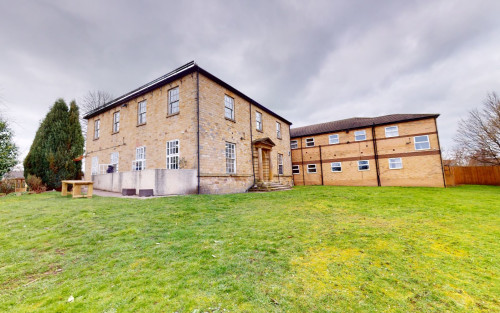
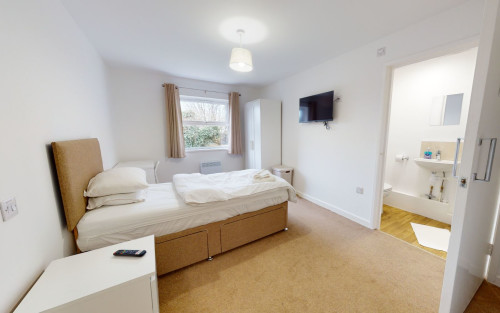
The facilities page describes both single and shared bedrooms, lounges, therapy rooms, a dining area, laundry facilities, and gardens. Meals are prepared on site, with dietary needs considered and snacks and drinks available. This is shared residential accommodation with different room options; it should not be represented as an exclusively private-bedroom service. Confirm the allocated room, whether the bathroom is shared, and any mobility or personal-care requirements before making travel arrangements.
Capacity also needs a date. The provider describes room for up to 51 clients. The November 2025 CQC assessment recorded that only 30 of the possible 51 beds were being used during refurbishment, with 25 clients present when inspectors visited. Those inspection figures do not establish today’s availability or prove that refurbishment is still underway. Ask which part of the building is currently in use and what room has been reserved. Photographs cannot answer those practical questions on their own.
Family work and support after the stay
The family recovery page describes weekly sessions addressing the effect of addiction on relatives, boundaries, communication, and preparing for the return home. It qualifies provision according to assessment and program availability. Relatives should establish how they can participate, including arrangements for those who cannot travel to Barnsley. Family involvement should respect the resident’s consent and should also recognize relatives’ own needs. It does not make family members responsible for preventing every possible difficulty after discharge.
The aftercare page offers a year of weekly group therapy without an additional charge for people completing a rehabilitation program, along with access to the UKAT alumni network. The clinical group provision lasts a year; alumni membership is described as continuing for life. Those are separate offers, and lifetime community membership should not become a claim of unlimited free individual therapy. Confirm the current group schedule, attendance format, and whether a shorter detox-only admission meets the same eligibility criteria.
Linwood’s secondary-care page specifically describes further treatment at Providence Projects in Bournemouth. Its references to coastal activities and that extended recovery setting belong to Bournemouth, not Barnsley. If this next stage is proposed, obtain a separate explanation of the location, length, admission criteria, accommodation, and price. A shared UKAT identity does not mean the onward stay is automatically included in the Linwood fee or delivered on the same campus.
Fees and the independent assessment
The official cost page offers individualized quotations rather than a clearly defined current numeric tariff. It identifies treatment type and duration as important factors and discusses different possible funding routes. Request written terms covering the room, withdrawal support, medication, therapy, and aftercare, with extension and cancellation charges explained. Any insurer or local-authority funding needs its own authorization. General UK rehab price estimates should not be presented as a confirmed Linwood admission cost.
The current CQC listing identifies Treatment Direct Limited as the provider and displays Good overall and in all five assessment areas, with a report published April 16, 2026. The inspection described individualized risk assessment, positive staff relationships, and safe care within the service’s assessed scope. Its explicit medical limits remain central to choosing Linwood appropriately. Combine the regulatory record with a current suitability assessment, confirmed room and fee terms, and a realistic plan for using the group-based program and subsequent support.
Conditions
Levels of care
Settings
Treatment approach
Predominantly group-based 12-Step work, CBT, assignments and journaling, weekly individual therapy described by the provider, family sessions, mindfulness, and aftercare; specific provision depends on assessment and availability
Fees & admissions
Confirm current pricing
No current defined numeric Linwood tariff verified. Request a written quote for the assessed program, room, medication, therapy, and aftercare. Insurer or local-authority funding needs separate authorization; onward secondary care may have a separate fee and location.
Confirm the current program, duration, accommodation and included services directly with the center.
Adults 18 and older following suitability assessment. The latest CQC assessment says complex medical needs cannot be accepted; disclose prior complicated withdrawal, physical illness, mental health needs, and prescribed medication before booking.