Care at Priory Hospital Ticehurst House
Priory Hospital Ticehurst House provides private inpatient mental health treatment in its Highlands Unit and outpatient appointments at the Lodge Therapy Centre. Highlands is a nine-bed adult unit within the hospital’s East Sussex grounds, near Wadhurst and Tunbridge Wells. The distinction between these services is central to choosing the right pathway. An adult who needs an inpatient psychiatric stay is considering a different service from someone attending weekly therapy while living at home. The current private hospital page describes both, but the accommodation and nursing support belong to the inpatient pathway.
Ticehurst’s addiction offer requires an equally clear distinction. Its private services brochure explicitly says that the site does not provide a residential addiction program or medically assisted withdrawal detoxification. It offers Anchor 1:1 outpatient addiction therapy instead. People searching for an alcohol or drug detox admission should therefore not assume that the presence of a psychiatric hospital, private bedrooms, or a Priory addiction service means detox is available at this campus. Any proposed referral elsewhere needs a separate assessment and confirmed destination.
The Highlands adult mental health pathway
Highlands is described as treating conditions including depression, anxiety, stress, and post-traumatic stress disorder. The current hospital page specifies around-the-clock nursing support, medication reviews when needed, and multidisciplinary meetings led by a consultant psychiatrist. The service is intended to provide a planned therapeutic environment for adults with mental health needs. It does not establish that every diagnosis, level of physical dependency, or acute presentation can be admitted. The receiving team must determine whether the unit has the appropriate expertise, staffing, and facilities for an individual referral.
The published structure distinguishes between different kinds of individual contact. Patients have a designated key worker and focused weekly one-to-one therapy with a member of the therapy team. The private services brochure additionally describes weekly meetings with a designated nurse, regular therapy reviews, and consultant meetings twice a week. These are useful descriptions of the care framework, but they are not interchangeable appointments. A nursing review, medical consultation, and psychotherapy session have different purposes. Before admission, establish the expected timetable and how each professional contributes to the person’s treatment goals.
This distinction is especially useful when comparing a nine-bed unit with a provider advertising intensive daily individual therapy. A small ward can offer a more contained social setting, but bed numbers do not determine the number of private appointments. Ask how the team adjusts a plan if group participation is initially difficult, how progress is discussed with the patient, and how an existing psychiatrist or therapist can contribute information. Those details turn a general promise of individualized care into an understandable plan for this particular stay.
Therapy methods and the working week
Priory describes a daily group program at Highlands that includes cognitive behavioral therapy, solution-focused therapy, and dialectical behavior therapy skills. The hospital overview and private services material also identify interpersonal work, stress management, recovery planning, and creative approaches. CBT-related sessions can examine links between thoughts, emotions, and behavior; solution-focused work concentrates on practical goals and usable strengths. DBT skills groups may address emotional regulation or coping with distress. The published description supports skills work within a wider program, rather than a guaranteed full specialist DBT course for every inpatient.
The therapy menu includes trauma-related approaches such as eye movement desensitization and reprocessing, alongside person-centered work and psychoeducation. A listed method is an option for assessment, not proof that it is appropriate at every stage of treatment. Someone seeking a specific trauma intervention should ask who delivers it, what preparation is expected, and how it fits with the rest of the admission. The important question is how the chosen method connects with the person’s current difficulties and goals, rather than how many different therapy names appear in the brochure.
The ward’s nonclinical routine is also described in concrete terms. Priory lists instructor-led fitness in an on-site gym, walks in the grounds, mindfulness, relaxation, creative writing, art activities, games, and quiz nights. These provide different ways to spend time between formal appointments and to explore habits that may be continued at home. Participation should reflect health, ability, and preference. Access to a gym or an activity calendar should not be mistaken for a prescribed exercise entitlement, and the current schedule may differ from the illustrative list on the website.
The Lodge Therapy Centre and younger patients
The Lodge outpatient service offers appointments for adults and young people. Published formats include individual therapy, groups, couples work, and family therapy. Its menu includes CBT, DBT-related approaches, EMDR, person-centered therapy, psychoeducation, and systemic or family psychotherapy. Direct access into therapy is described, although the appropriate professional and pathway depend on the referral. A person seeking outpatient support can ask whether an initial psychiatric consultation is needed or whether the proposed service begins with a therapist’s assessment.
The reference to young people applies to outpatient services in this private service description. Highlands is specifically presented as an adult inpatient unit. Parents should confirm the accepted age range, clinician’s child or adolescent experience, parental involvement, and consent arrangements for the exact appointment being offered. A hospital may have other services within its wider registration, but that does not establish that a private adult ward offers an adolescent bed. Similarly, an outpatient eating disorder appointment should not be represented as an inpatient eating disorder admission.
Couples and family sessions can address shared patterns, communication, or the practical impact of illness, while individual appointments focus on the person attending. The proposed participants and purpose should be agreed at the outset. If the outpatient service follows a Highlands admission, ask whether there will be continuity with the same clinician and when the first appointment will occur. The provider describes clinicians working across pathways, but an individual clinician’s availability and an insurer’s authorization still need to be established.
Anchor outpatient addiction therapy
Priory’s Anchor program offers individual addiction therapy online or face to face. It is described as an option for early difficulties with addictive behavior or continuing therapeutic work after more intensive treatment. The main description specifies weekly fifty-minute appointments, with flexibility discussed according to need and availability. This format may suit someone who can manage between appointments and wants scheduled therapeutic contact while maintaining everyday responsibilities. It is not a substitute for on-site withdrawal management or overnight clinical observation.
The current Anchor page contains inconsistent fee information: its headline and FAQ quote sessions from £124, while the comparison table still gives £155. It also uses approximate hour-long language elsewhere. A written booking confirmation should therefore establish the actual fee, session length, appointment frequency, cancellation terms, and whether the named Ticehurst clinician offers online or in-person sessions. No Anchor rate is used as an inpatient room price in this profile. Other Priory program names appearing in a network comparison do not prove that those programs are delivered at Ticehurst.
Bedrooms, grounds, meals, and contact with home
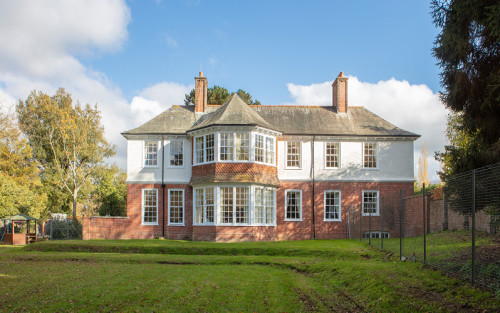
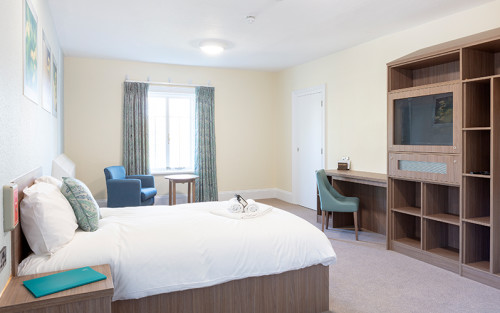
The hospital describes forty-eight acres of landscaped grounds and private en-suite inpatient bedrooms. Its room information specifies a television, a small safe, a nurse-call button, and housekeeping. Communal spaces include therapy rooms, living areas, a female-only lounge, and a dining room overlooking the grounds. These are campus-specific features of the private inpatient environment. Outpatients attending the Lodge do not receive an overnight room through a therapy appointment, and visitors should confirm access arrangements rather than assuming the grounds operate like a public leisure venue.
Meals are supplied during an inpatient stay, with set breakfast, lunch, and dinner periods and drinks and snacks available outside them. Priory says it can accommodate dietary needs and allergies; complex requirements are best discussed before arrival so the team can explain the actual arrangements. Visits are encouraged outside therapy and mealtimes, with advance notice to staff. This allows family contact to fit around treatment, but the current rules should be checked before booking travel. Room accessibility, permitted devices, and any restrictions on leaving the ward also depend on the individual plan.
Regulatory information and how to read it
The Care Quality Commission record identifies Priory Healthcare Limited as the operator. At the review date for this profile, its displayed overall rating was Good, with a report published June 16, 2021. Safe, Caring, Responsive, and Well-led were rated Good, while Effective was rated Requires improvement. Describing every category as Good would therefore be inaccurate. These are dated regulatory findings, not a real-time assessment of every individual clinician or a guarantee of a particular patient’s experience.
The CQC record covers a broader registered service than the nine-bed private unit alone, and it presents separate service-level information. People using the record should check the relevant service and inspection date rather than transferring findings between wards or assuming that an older report describes every current arrangement. The provider’s linked brochures also contain older satisfaction and outcome statistics. Those historic figures are not presented here as current results, and they should not be used to predict an individual’s recovery.
Funding and arranging the right level of care
The hospital accepts self-payment and describes relationships with several private medical insurers. A current fixed inpatient tariff was not verified. The advertised mental health assessment price from £49 is an assessment offer, not the cost of a psychiatric admission or an ongoing therapy course. Ask for a written estimate separating assessment, consultant fees, inpatient accommodation and treatment, medication, and any outpatient follow-up. Insurance approval should name the service and clinician where required, and clarify session or day limits, excesses, and costs that remain payable personally.
Ticehurst can be approached directly or through a GP referral. The useful first decision is whether the request concerns adult inpatient mental health care, Lodge outpatient treatment, or Anchor addiction therapy. Each leads to different clinical and financial arrangements. A clear referral should explain current symptoms, treatment already tried, existing prescriptions, and the support available outside hospital. Before discharge from an inpatient stay, agree who will coordinate the next appointment and medication review so that the move from Highlands back to everyday life has a defined clinical handover.
Provider material and the linked CQC record checked October 20, 2026. This profile concerns the described private services; access, clinical suitability, staffing, and fees require current confirmation.
Conditions
Levels of care
Settings
Amenities
Treatment approach
Consultant-led mental health care, medication review, weekly individual therapy, daily groups using CBT, solution-focused work and DBT skills; outpatient options include EMDR, person-centered, couples and family therapies following assessment
Fees & admissions
Confirm current pricing
No current defined inpatient tariff verified. The £49 assessment offer is not an admission price. Anchor's current page inconsistently lists £124 and £155 per session; obtain the applicable written outpatient quote and insurer authorization.
Confirm the current program, duration, accommodation and included services directly with the center.
Direct enquiry or GP referral; assess the exact pathway and accepted age range. Highlands is adult inpatient care; youth and eating disorder references concern outpatient options in the private service description. Detox requires an assessed referral elsewhere.