
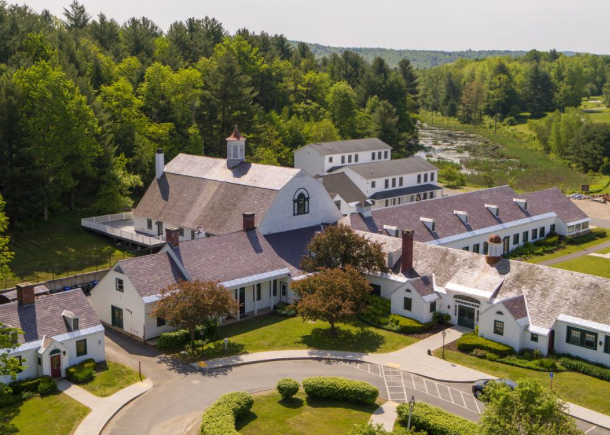
About Swift River — Cummington
Swift River in Cummington: a live-in addiction program in western Massachusetts
Swift River provides live-in addiction treatment at 151 South Street in Cummington, Massachusetts. Its official website describes detox, residential treatment, and support for substance use alongside mental health concerns. The setting and treatment format may interest someone who needs time away from their usual environment, but the first decision concerns the clinical program: which stage of care is appropriate, what medical help is available, and how the team will plan the transition home. This profile concerns the Cummington campus. Services advertised elsewhere in the wider organization should be confirmed separately rather than assumed to be available at this address.
Understanding the residential and inpatient descriptions
The provider’s inpatient program page uses inpatient and residential language for treatment that involves living at the center. It describes detox followed by therapy and structured recovery activities. That terminology does not, by itself, establish the resources of an acute hospital. Before admission, ask which licensed service will receive you, who provides medical and nursing care during each shift, and what happens if your needs exceed the campus’s capabilities. These questions are especially useful when comparing a live-in rehabilitation program with a hospital admission or a less intensive community program.
Start the conversation with a description of what you need help with today. Recent substance use, previous withdrawal experiences, current prescriptions, physical health problems, and mental health symptoms all belong in the assessment. A referral stating only “rehab” may not tell admissions enough to select a starting level. Ask the team to explain its recommendation in ordinary language, including why the proposed setting can support you and whether another service is needed first. You can use Clinical Recovery’s residential care guide to organize comparisons, while leaving the individual placement decision to the assessing clinicians.
Detox and the transition into ongoing treatment
Swift River advertises medical support during detox. Request the current Cummington arrangements rather than relying on a general description of round-the-clock care. Useful details include whether a nurse is physically present overnight, how a prescriber reviews symptoms, and how urgent transfers are arranged. Also ask whether detox and the following residential stage use the same room and team. A person who expects a short stabilization stay needs a different practical plan from someone entering a longer course, particularly when work leave, childcare, prescriptions, and insurance authorization must be coordinated before arrival.
Discuss medications before changing a prescription or traveling. Ask admissions how the clinical team reviews medications already prescribed by another practitioner, obtains relevant records, and communicates with that practitioner when permission is given. If a medication is not supported by the proposed program, request the clinical reason and the available alternatives during assessment. A treatment program’s general philosophy should not be mistaken for an individual medication plan. It is also reasonable to ask who will prescribe after discharge and whether an appointment can be arranged before the medication supply provided at departure runs out.
Individual work, groups, and co-occurring needs
The provider describes individual and group work, psychiatric services, aftercare coordination, gender-specific groups, and a weekly family therapy session. Its program material discusses depression and other mental health concerns in the context of addiction treatment. Ask which of those services will appear on your own schedule and how often you will meet the clinician responsible for your plan. A broad list of therapies is less useful than an explanation of what the team proposes to address first, how progress will be reviewed, and how the plan can change when a particular approach is not helping.
If mental health symptoms are your main reason for seeking help, establish whether Swift River is the appropriate starting service. Explain how the symptoms affect sleep, daily functioning, relationships, and safety, together with any recent hospital care. Ask what psychiatric conditions the team can manage at Cummington and what circumstances require a different setting. Support for co-occurring conditions should involve a clear plan for both needs; the presence of psychiatric language on a website does not tell you the level of observation or medical response available during a difficult period.
The veterans program
Swift River publishes a veterans-focused program under the At Your Six Recovery name. The page describes individual therapy, groups, family counseling, and cognitive behavioral therapy within a service intended to recognize military experiences. Ask which current groups are specifically for veterans, how the team handles trauma-related needs, and whether the program is available for your proposed admission dates. A military-focused name does not establish a particular staff member’s training, a guaranteed peer group, or the availability of a particular trauma treatment for every participant.
Veterans and their supporters should clarify the payment route separately from clinical eligibility. Ask whether the proposed admission requires a referral or advance authorization from the relevant benefits administrator, and obtain the current campus details before requesting that approval. The veterans page and the main campus publish different telephone numbers, so the Cummington contact on the main site is a sensible starting point for routing the inquiry. If family involvement is important, ask whether a spouse or another chosen supporter can participate remotely and how consent, scheduling, and information sharing will work.
Rooms, outdoor space, and practical accessibility
Recovery.com’s exact-campus profile describes an 80-acre wooded property, semi-private accommodation, walking trails, fishing areas, a ropes course, and gym facilities. These are third-party descriptions, not a promise that every activity or room will be available during a particular stay. Ask for the offered bedroom arrangement, bathroom access, and current activity schedule. In a rural setting, practical access also matters: explain any walking, balance, sensory, or mobility needs and request a description of the actual route between your room, therapy spaces, meals, and any required activities.
The official program page describes a pet-friendly environment for emotional support animals and an inclusive approach to gender identity. Those statements merit a practical conversation before travel. Ask what documentation and advance approval an animal requires, who provides its daily care, and whether another arrangement will be necessary during groups or medical appointments. If room placement, privacy, or gender-specific programming affects whether you would feel comfortable attending, raise those needs directly and request a clear explanation of the options. An advertised policy is most useful when admissions can explain how it applies to the accommodation being offered.
Fees: several figures describe different arrangements
The Recovery.com profile displays separate estimates of USD 900 per day, USD 28,000 for a full program, and USD 15,000 for an Embark program including detox. The full-program amounts do not establish an identical duration or set of services. This listing therefore uses the explicitly daily estimate as third-party pricing evidence; it does not turn the different figures into a single price range. These amounts were checked on October 20, 2026 and are not an official Swift River tariff. Request a current quotation identifying the exact program, anticipated duration, room, and included clinical services.
Ask the financial team to distinguish the initial deposit, anticipated total, and any charges that depend on clinical decisions. A useful estimate explains how detox is billed, whether medication, laboratory testing, transportation, and outside appointments are included, and what happens financially if the recommended length changes. It should also describe the terms for an early departure or a transfer to another service. A daily estimate is not enough to calculate a complete admission by multiplication when the provider may price different treatment stages differently. Keep the written estimate with the proposed admission and discharge arrangements.
Insurance and the admission conversation
The official insurance page lists several insurers and explicitly says network participation varies by location. It also notes that some plans require approval or limit covered days. Ask both the center and your insurer to identify the exact Cummington provider and proposed level of care, then confirm deductible, coinsurance, authorization, and any relevant limits. The presence of an insurer’s name on the website cannot establish your individual benefit. If you will self-pay, ask whether the quoted arrangement changes if insurance later approves part of the stay.
Swift River’s admissions FAQ describes an initial call, a preliminary telephone assessment, benefits verification, and an admissions coordinator who helps arrange arrival. The page also describes ground transportation assistance from airports, stations, or local addresses when needed. Confirm the particular pickup, timing, cost, and contact person before booking travel. Bring an accurate medication list and any records admissions requests, and ask for packing and device rules in advance. The current main-site number is 413-570-9698; use the clinical assessment to establish suitability before treating a proposed arrival date as confirmed.
Planning what comes after Cummington
Clarify the location of any outpatient option mentioned during admission. Swift River’s veterans material refers to outpatient programs, but that general description is not a current Cummington timetable or confirmation that you can attend a particular group from home. Ask for the service name, address or remote-access arrangement, attendance requirements, and a contact who can confirm an opening. Someone returning to another state should also establish whether the proposed clinicians can provide care where that person will be living. Resolving these details before leaving residential treatment makes the proposed next step concrete rather than simply adding “outpatient follow-up” to a discharge document.
Before choosing Swift River, ask the team to sketch a realistic next stage in the place where you will live after discharge. That could require appointments, a medication plan, community support, or a separate outpatient service, depending on assessment. Identify who will make each referral and how you will manage travel, housing, and work during the transition. Compare the resulting plan with other United States treatment options on the basis of clinical fit and continuity as well as setting. A wooded campus and a specialist track are useful features only when the actual care plan matches your needs.
Destinations
Conditions
Levels of care
Settings
Program approach
Provider-described individual/group therapy, psychiatric support, gender-specific groups, family work, recovery activities and veterans-focused At Your Six track
Fees & admissions
Estimated USD 900 / day
Recovery.com checked 2026-10-20: USD 900/day; separate USD 28,000 full-program and USD 15,000 Embark-including-detox estimates do not establish equivalent durations or services. Daily estimate is not an official tariff; do not multiply to infer package cost or combine unlike stages into a range.
Confirm the current program, duration, accommodation and included services directly with the center.
Telephone assessment, current medication/medical and psychiatric review, exact Cummington services, benefits, written quote and confirmed travel