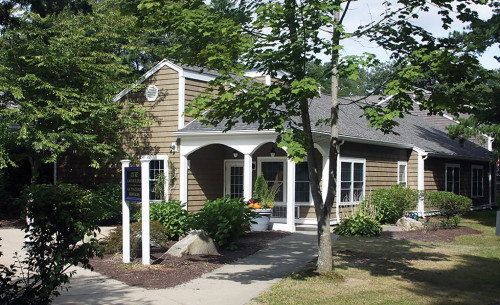

Care at AdCare Rhode Island
AdCare Rhode Island in North Kingstown
AdCare Rhode Island provides addiction treatment at 1950 Tower Hill Road in North Kingstown. Its services include medical detoxification, residential rehabilitation, treatment for psychiatric difficulties occurring alongside substance use, and outpatient care. The program belongs to American Addiction Centers, but this profile concerns the Rhode Island operation. AdCare Hospital in Worcester, Massachusetts, is a separate facility. Descriptions of that hospital, its services, or its licensing should not automatically be applied to the North Kingstown campus.
There is an important address update for people arranging ongoing appointments. The official North Kingstown outpatient page says all outpatient services moved to the main Tower Hill Road campus effective March 1, 2026. Older references to a separate outpatient address therefore need checking before travel. Sharing a campus does not mean the programs share the same timetable or admission criteria: a residential placement includes overnight care, while an outpatient appointment is arranged around a person living elsewhere.
Medical detox and the initial placement
AdCare’s detoxification information describes medical monitoring, management of withdrawal symptoms, and therapeutic support. It says clinical staff monitor patients around the clock and that participation in counseling can begin during detox when the person is well enough. The appropriate starting point depends on the substance involved, recent use, medical history, and current physical and psychiatric needs. Medical detoxification is a service within the treatment pathway; the words “inpatient” or “detox” alone do not establish an acute-hospital designation for every AdCare location.
Someone transferring from another setting should have the sending and receiving teams agree on the actual placement, relevant records, medication information, and arrival arrangements. A general admissions telephone call is different from acceptance into a particular clinical service. The plan should explain what happens after the initial stabilization period, including whether the person is expected to remain in residential care or begin outpatient appointments. This is more useful than treating detox as a complete course of recovery care or assuming every admission follows a fixed thirty-day schedule.
Integrated dual diagnosis and psychiatric support
The provider describes an Intensive Rehab / Integrated Dual Diagnosis service for people with addiction and accompanying psychiatric complications. Psychiatrists and other doctors assess symptoms and the need for medicines or other interventions. AdCare gives an average of three to seven days for this intensive phase, usually followed by residential rehabilitation. It also says the service can accept assessed transfers from emergency departments or psychiatric hospitals. This does not mean that a person can assume emergency admission or that all primary psychiatric conditions are eligible without a substance use problem.
The short duration quoted for intensive rehabilitation should be kept separate from the total treatment plan. A few days of stabilization, a subsequent residential stay, and later outpatient therapy serve different purposes and can have different funding authorizations. If an existing diagnosis or prescription is a major reason for choosing AdCare, establish how it will be reviewed and who will coordinate ongoing care. The relevant question is whether the proposed team can manage the person’s current needs, rather than whether the website lists the diagnostic label somewhere in its broader network information.
Medication options for opioid use disorder
AdCare Rhode Island publishes unusually specific information about its medication program. Options described include methadone maintenance, buprenorphine/naloxone, injectable buprenorphine, and naltrexone where appropriate. Its methadone pathway distinguishes starting and continuing maintenance from changing to another medication or undertaking a separately assessed discontinuation program. The page identifies Michael Coburn, MD, as medical director. The presence of several options is useful information, but choosing among them requires a clinician’s assessment and an informed discussion with the patient.
Continued maintenance and a plan to stop or change medication should not be treated as the same treatment goal. A person already receiving medication through an opioid treatment program should ask how AdCare will coordinate with that program and what happens after discharge. The provider describes arranging a transition to a community methadone clinic when maintenance continues. Before changing a successful existing regimen, the patient and prescriber should discuss the reasons, alternatives, and continuity arrangements. This profile does not recommend a rapid taper, a particular medicine, or a predetermined medication-free endpoint.
Therapy, daily structure, and family involvement
The Rhode Island program overview describes individual counseling, cognitive behavioral therapy, group work, family involvement, and recovery activities. These methods address different parts of the treatment plan: private sessions allow personal concerns to be discussed, while facilitated groups provide practice and feedback in a shared setting. A detailed weekly schedule is more informative than a long list of available approaches. Ask which methods are proposed for the individual and how the team reviews whether that plan needs to change.
The American Addiction Centers campus profile adds motivational interviewing and describes a day built around process groups, education, recreation, recovery work, and time for reflection. Family therapy is arranged with the clinical team, and visits require coordination. The network also advertises a virtual family education event on the last Wednesday of each month. An educational event is different from a confidential family therapy appointment; relatives should clarify which format is available and what the patient has agreed may be discussed.
For a family, practical preparation can include deciding who will attend sessions, which relationships need attention, and how information will be shared. That is particularly relevant when the patient is moving between detox, residential treatment, and outpatient care on the same campus. Familiarity with the address should not obscure a change in clinical responsibility or the amount of daily support. Before discharge, everyone involved should understand the next appointments and the boundaries of their role, rather than assuming a relative becomes responsible for managing treatment.
Veterans and first responders
AdCare’s Veteran and First Responder program is directed at substance use and co-occurring concerns in these populations. The published eligibility includes veterans and current or retired first responders, including emergency medical personnel, firefighters, dispatchers, police, and correctional or probation officers. Described elements include trauma groups, behavioral therapies, coping and emotional-regulation work, pain-related support, and recovery planning. The provider says its team includes veterans and staff trained in military culture. This is a stated program focus, not proof that every clinician shares the same background.
The same page identifies AdCare as a VA community care provider. That can be relevant to access, but an individual still needs the applicable eligibility and authorization. A veteran should establish the approved location, level of care, and duration before assuming the VA will pay for a residential stay. Similarly, a first responder can ask how job-related confidentiality and return-to-work communication will be handled. The useful distinction is the actual specialty programming and agreed information-sharing process, rather than a general claim that a facility welcomes people from these professions.
Bedrooms, campus size, and outpatient participation
The provider’s program directory describes the Rhode Island residential facility as having fifty-nine beds. Its current local service information describes semi-private rooms, fitness and recreation facilities, and access to electronic devices after detox under program rules. Semi-private accommodation means a shared bedroom. The current material reviewed does not establish a universal single-room entitlement or a particular bathroom allocation for every admission. Confirm the room, accessibility arrangements, and any required medical equipment directly.
At the relocated North Kingstown outpatient service, AdCare offers daytime and evening intensive outpatient options, individual counseling, groups, and couples or family work. Early recovery groups are also described. The schedule attached to a specific placement should be confirmed, including attendance requirements and whether work or caregiving responsibilities can be accommodated. Outpatient participation does not provide overnight accommodation simply because the sessions are held at the residential campus. Anyone needing recovery housing should ask which separate options are available and who is responsible for arranging them.
The separate DUI treatment program
AdCare also describes a Rhode Island DUI and Refusal treatment program for adults referred through DMV or court processes. The provider identifies it as state-approved and publishes two tracks: ten to twelve weeks for a first offense and fifteen to twenty weeks for a second offense. Its schedule includes Tuesday evening groups, individual counseling every two weeks, and weekly toxicology screening. These are outpatient program descriptions; they do not establish the requirements of a particular person’s case. Confirm the referral, documentation, completion criteria, and applicable deadlines with the referring authority and the program.
Fees, insurance, and care after discharge
The network’s AdCare facility introduction describes an alumni community that continues after graduation, including connection through the American Addiction Centers alumni app. This can provide contact with people who have completed treatment across the network. It is a different service from a scheduled appointment with a therapist or prescriber, and the two should be planned separately. Ask which local events and online contacts are active, how to enroll, and whom to contact if the person needs a clinical reassessment rather than peer conversation.
No current defined self-pay residential price was verified. The Rhode Island page specifically states that AdCare accepts Rhode Island Medicaid and Medicare, alongside private insurance arrangements. Acceptance does not mean every service or day is covered. Ask for the benefits and authorization relevant to North Kingstown, the proposed clinical level, and any personal balance. Information about the Massachusetts hospital should not be substituted for a Rhode Island benefits check.
AdCare’s payment information also describes a conditional return-to-treatment offer associated with completion of a qualifying ninety-day program. Eligibility rules matter; this is not a guarantee of recovery or unlimited future care. A useful discharge plan should separately identify the outpatient clinician, medication provider, first appointments, family arrangements, and local recovery contacts. For someone comparing United States treatment options, AdCare Rhode Island’s distinctive features are its integrated addiction pathway, explicit medication services, specialty support, and outpatient care now based at the same North Kingstown address.
Reviewed against official AdCare and American Addiction Centers information on October 20, 2026. Current indexed official-page text was used where direct local pages restricted automated access. Provider descriptions are attributed; specific clinical suitability, room allocation, fees, insurance, and legal-program eligibility require individual confirmation.
Conditions
Levels of care
Settings
Treatment approach
CBT, motivational interviewing, individual and group counseling, family sessions, psychiatric support, recovery education, and medications for opioid use disorder including maintenance options when appropriate
Fees & admissions
Confirm current pricing
No current official defined residential tariff verified. Rhode Island-specific provider FAQ states acceptance of Rhode Island Medicaid and Medicare; exact services, authorization, deductibles and personal charges require individual verification.
Confirm the current program, duration, accommodation and included services directly with the center.
Clinical assessment and funding verification; assessed transfers from emergency departments or psychiatric hospitals may enter the intensive dual diagnosis service. Confirm current care level, medication continuity, room and admission arrangements.