
Care at The Ranch Tennessee
The Ranch Tennessee: current location and program scope
The Ranch Tennessee provides residential and outpatient behavioral health treatment in a rural setting west of Nashville. Its current website describes addiction care, mental health services, medical detox support, and experiential work involving horses and outdoor activities. The current official site publishes 5166 State Highway 48, Dickson, Tennessee 37055, as its address and 629-758-5990 as its contact number. These are the current provider-published details used for this profile.
There is a material location discrepancy to resolve before traveling. The Promises network profile still describes The Ranch in Nunnelly, while the current local site uses Dickson. This directory retains the established profile URL, but that older URL is not evidence that a particular Nunnelly residence is the current admission destination. The available pages do not establish the history of any move, the closure of a former property, or the allocation of every program to a specific building. Obtain the actual arrival address and assigned residence in writing.
Residential care and the daily environment
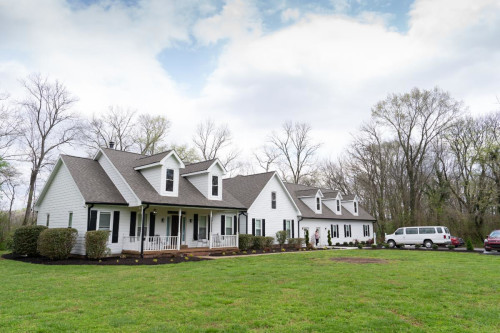
The residential program description explains that clients live on site, follow a structured day, and have access to support staff around the clock. It describes clinical and medical care, shared living areas, outdoor space, group and individual sessions, practical skills work, and community activities. The provider explicitly distinguishes this residential environment from intensive hospital care in medical units. A residential admission should therefore be understood through the support and medical capability of the assigned program rather than through the informal use of “inpatient” in marketing.
The published rhythm includes morning grounding, clinical sessions, equine exercises, skill-building workshops, and evening reflection. It does not establish a fixed number of private therapy hours for every resident. Someone seeking intensive individual psychotherapy should clarify the planned frequency, who provides it, and how group work connects with personal goals. A full daily schedule can provide structure without every hour being a clinical appointment. The useful comparison is the content and supervision of that schedule, together with the treatment plan developed for the individual.
Clinical assessment, mental health, and trauma
The current medical detox page describes round-the-clock medical monitoring, vital-sign checks, medicines when appropriate, early counseling, and preparation for the next level of care. These services relate to the detox placement rather than proving that every residential or outpatient client receives the same observation. The provider does not publish a universal detox duration on that page. Ask which withdrawal needs can be managed, how the medical team decides that someone is ready for residential participation, and how any ongoing medication plan will continue across that change.
The Ranch’s mental health information discusses the relationship between psychiatric symptoms and substance use, including anxiety, depression, trauma, and other concerns that may need coordinated attention. Current program pages also describe primary mental health care at outpatient levels. The appropriate entry point should be established through assessment, especially when mental health is the main reason for seeking help. A broad diagnostic list does not tell a prospective client whether the current severity of a condition can be managed safely in a particular residence.
The site identifies Brian Fuller, MD, as medical director and describes psychiatric involvement within the broader program. That provides a named clinical role, but it does not establish an individual appointment schedule or continuous physician presence in every building. Before admission, clarify how psychiatric review, existing prescriptions, medical concerns, and therapy will be coordinated. For someone with a trauma history, it is also useful to discuss readiness for experiential work and how participation is adapted when an activity feels overwhelming. The program should explain the options available, rather than treating all activities as prerequisites.
Equine therapy and outdoor work
The Ranch’s dedicated equine therapy page describes non-riding activities led by an equine specialist and a licensed therapist. Examples include approaching, grooming, haltering, and leading a horse, followed by reflection. Sessions are described as lasting approximately forty-five to sixty minutes. The stated themes include boundaries, communication, emotional awareness, and cooperation. Prior horse experience is not required. This is a structured therapeutic activity, rather than a promise that every client will take recreational trail rides.
A person who is unfamiliar with horses can ask how introductions and safety briefings work and what alternatives exist if participation is unsuitable. The significant part of a session is how observations are connected to the person’s goals and then discussed with the treatment team. Handling a horse is not an assessment of someone’s worth or commitment to recovery. Current partial hospitalization information mentions that riding may be introduced for some clients as they progress, which is a separate possibility from the ground-based sessions described on the equine page.
The provider’s account of the setting also describes activities such as ropes work, outdoor reflection, and community time. Participation in more physical experiences needs to fit the person’s abilities and clinical plan. Ask how weather, mobility, pain, or anxiety around heights affects the available options. The rural environment can be a meaningful preference when choosing care, but access to land and recreation should be considered alongside staffing, therapy, and medical support. A photograph of an activity does not establish that it is included in every placement.
Partial hospitalization and intensive outpatient care
The current partial hospitalization program, or PHP, provides structured daytime treatment without overnight residential supervision. The provider describes medical and psychiatric oversight, individual and group work, dialectical behavior therapy skills, acceptance and commitment therapy, and EMDR when appropriate. It explicitly includes substance use and primary mental health conditions. Clients may enter after residential treatment or begin at this level following assessment. Even though “hospitalization” appears in the program name, PHP does not mean an overnight hospital admission.
The intensive outpatient program, or IOP, is described as attending multiple days per week while living at home or in approved housing. Daytime or evening participation depends on availability and need, and the provider also mentions virtual intensive outpatient care. Its published focus includes emotional regulation, communication, managing triggers, values-based decisions, and practical recovery skills. Experiential elements may be added selectively. Confirm the actual hours, location, remote-care eligibility, and clinician arrangements instead of assuming every advertised option is available to every client.
These levels have practical differences for someone traveling from outside Tennessee. An outpatient place does not itself supply accommodation, meals, transportation, or support overnight. If approved housing is part of the proposed plan, identify its address, supervision, charges, and relationship to the clinical provider. It should also be clear who responds when symptoms increase outside program hours. Planning those details early helps avoid a gap between completing residential care and beginning a less supervised stage of treatment.
Family therapy and support for relatives
The family program describes work on communication, relationships, trust, expectations, and boundaries. Family participation is intended to connect with the client’s treatment, rather than simply provide a social visit. The current page does not confirm a fixed multi-day family intensive for every admission. If relatives will travel, obtain the planned format, dates, participants, and any additional fee first. The patient’s consent and the clinical purpose of a session should guide what is shared.
The separate family support guide describes monthly support calls and educational webinars available through a family portal, including support before, during, and after treatment. Those resources can help relatives understand the process and ask informed questions. They are different from a private therapy appointment involving the client. A family can clarify which contact is educational, which is therapeutic, and who handles practical questions about arrival or discharge. Keeping those roles clear can make involvement more useful and avoid contradictory expectations.
Accommodation and admission arrangements
The current residential information describes a home-like environment with shared living areas, but it does not confirm a universal private-bedroom or en-suite bathroom entitlement. Previous descriptions of different cottages should not be used as a guarantee of the room currently assigned. This is especially relevant while the provider’s published address differs from older network information. Confirm the exact residence, occupancy, bathroom arrangement, accessibility, and any need for medical equipment before making travel plans. Existing photographs provide context for the provider’s setting rather than proof of a current room allocation.
The admissions process considers substance use or mental health history, immediate safety and medical needs, comfort with group and equine work, and preferences around housing and structure. That conversation should lead to a named program and a clear starting level of care. Where detox or another medical placement is needed first, the transfer arrangement should be explicit. No current universal thirty-day minimum or standard residential duration was verified for this profile; the proposed length and the review process need to be established individually.
Fees, insurance, and continuing care
No defined current residential tariff was verified. The Ranch’s insurance and payment page describes benefits verification and several payment arrangements, but the individual balance depends on the services and coverage involved. Request an estimate identifying the residential or outpatient program, expected duration, professional services, medicines, and any separately charged housing. Clarify what happens if authorization changes or a different level of care is recommended. A network relationship or insurer logo is not a guarantee of coverage for every person.
The alumni network describes check-ins, groups, workshops, events, and connection through the broader Rooted Promises community. These resources can continue alongside local clinical appointments, but they do not replace a named prescriber or therapist. Before leaving, establish the next appointments and the plan for medication, housing, transport, and support near home. The Ranch’s distinctive combination is structured behavioral health care with equine and outdoor work across several treatment levels. The current program, arrival address, clinical fit, and accommodation should all be confirmed together.
Official Ranch Tennessee and Promises pages reviewed October 20, 2026. The current local site publishes Dickson contact details while an older network page retains Nunnelly. This discrepancy does not establish closure, relocation history, or legal operator continuity. Clinical services, residence allocation, fees, and admission suitability require direct confirmation.
Conditions
Levels of care
Settings
Treatment approach
Individual and group therapy, trauma-informed care, equine-assisted work, outdoor and practical skills activities; current PHP/IOP describe DBT skills, ACT and EMDR when appropriate
Fees & admissions
Confirm current pricing
No current official defined residential tariff verified. Obtain an individual clinical and insurance assessment, with program, duration, professional services and any separate housing charges specified.
Confirm the current program, duration, accommodation and included services directly with the center.
Assessment of substance use, psychiatric and immediate medical needs, group/equine suitability and housing. Current contact address is 5166 State Hwy 48, Dickson, TN 37055; older network materials say Nunnelly. Obtain actual arrival/residence details in writing.