
Care at Abbeycare Scotland
Abbeycare Scotland at Erskine Mains House
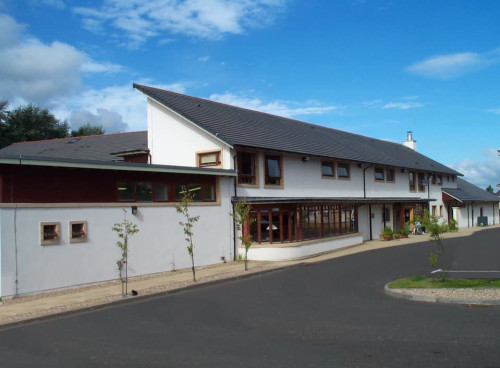
Abbeycare Scotland is an adult residential addiction service at Erskine Mains House, Meadows Drive, Erskine, west of Glasgow. The building sits within a residential area near local amenities, rather than on an isolated Highland estate. It provides a structured environment for people addressing alcohol or other substance use, including supervised withdrawal when appropriate. The Scottish service is separate from Abbeycare Gloucester, so details about the English campus, its rooms, or its inspection rating should not be transferred to Erskine.
The official Scotland profile describes assessment, individual recovery planning, detoxification, therapeutic work, and support after discharge. The program is directed at addiction and related needs. Someone whose main concern is a psychiatric condition without problematic substance use should clarify suitability before treating Abbeycare as a general mental health hospital. Medical and nursing input into a residential addiction program does not mean the service provides all forms of hospital care or can accept every medically complex presentation.
Current registration and the latest inspection
The Care Inspectorate’s current register lists the service as Abbeycare (UK), registration CS2016347332, operated by Abbeycare (UK) Limited. It is active and registered for up to thirty-four adults aged eighteen and over with alcohol or substance use difficulties, including primary care places for detoxification. The latest displayed grades are Adequate, three on a six-point scale, for leadership and the staff team. These are specific assessed areas, rather than a single overall score for every aspect of care.
The latest inspection report was completed on July 1, 2026, following a June 25 visit. It found that four earlier requirements had been met, including improvements to detox observations, staffing arrangements, and duty-of-candor procedures. Further improvement areas concerned consistent night staffing, clarity about staff responsibilities when someone is missing, and recording that clients had been informed about the escalation procedure. These are dated findings; they do not establish what has happened after that inspection.
Abbeycare’s own pages still display older, more favorable grades, including references to a November 2022 inspection. The current regulator record is the better basis for understanding the latest assessment. Before admission, ask for the service’s response to the July 2026 findings and any subsequent update. This allows the discussion to acknowledge both the improvements inspectors confirmed and the areas they wanted strengthened, without assuming either that historic problems remain unchanged or that every concern has been resolved.
Assessment and medically supported withdrawal
Abbeycare’s treatment overview describes an initial telephone assessment followed by a doctor’s assessment on arrival. Where withdrawal management is required, the medical plan is based on the person’s history, current presentation, and relevant records. The program then connects that early phase with ongoing therapeutic work. The specific monitoring and medication arrangements should be explained before admission, including who is available overnight and how the team responds if symptoms require a different level of care.
Preparing for assessment is particularly important when previous attempts to stop drinking or using drugs have involved complications. Provide an accurate account of current use, prescribed medicines, relevant diagnoses, and recent treatment. A personal plan should identify the appropriate starting point rather than assume that every resident needs the same detox course. The regulator’s recent emphasis on observation and staffing makes it reasonable to ask how the current care plan records the required checks and how changes are communicated between shifts.
Therapy, individual support, and the recovery model
The provider describes a combination of cognitive behavioral therapy, motivational approaches, Twelve Step work, group sessions, and individual support from an allocated case manager. The case manager helps the resident develop a recovery plan and prepare for the return home. These elements serve different purposes: the therapy program addresses patterns and coping strategies, while case management also helps organize practical next steps. A named key worker is not automatically the same as a fixed daily appointment with a psychologist or psychiatrist.
When comparing Abbeycare with another residential service, ask how the proposed treatment plan translates into a typical week. The relevant details include the number and duration of individual appointments, who delivers them, the group topics, and how progress is reviewed. A person with difficult family circumstances or a trauma history may need to discuss how those concerns will be handled within an addiction-focused program. The presence of a therapy name on a website should lead to a specific conversation about suitability and delivery.
Twelve Step concepts and peer participation are established features of Abbeycare’s published approach. For someone familiar with mutual-help meetings, that may provide continuity with existing recovery support. Someone less familiar with the model can ask how the service explains its principles, how participation works, and how it accommodates different beliefs. Understanding the program’s expectations before arrival can help a prospective resident decide whether its group culture and recovery framework are a comfortable match.
The Scottish team and the daily schedule
The Scotland page names Douglas MacFarlane as registered manager and describes his responsibility for the clinical and therapeutic teams and post-treatment support. It identifies Marie McGuire as a therapist with a background in addiction services and cognitive behavioral therapy, and Dr. Stephen Conroy as clinical lead. These are provider-published roles and biographies. They help distinguish management, medical oversight, and therapy, but they do not establish that each named person will personally see every resident or be on site at every hour.
The downloadable Scottish daily agendas show examples of group work, individual key-work appointments, reflection, meals, and recovery meetings. However, the document is dated March 2021 and includes pandemic-era arrangements. It should be treated as a historical illustration, not a current timetable or a promise about today’s visiting or isolation rules. Request the present schedule and the rules applying to the actual admission, particularly if work contact, family calls, or an accessibility requirement will affect participation.
Single rooms and the Erskine setting
Abbeycare describes thirty-four individual bedrooms with en-suite facilities across two floors. The latest regulator report also confirms single-occupancy bedrooms with en-suite showers, communal dining and lounge areas, and access to outdoor space. This supports a specific private-bedroom description for Erskine. It does not turn the service into a detached private villa or imply that every person receives an individually staffed program. Shared therapeutic and living spaces remain central to the experience.
The provider’s location information gives the clinic telephone as 0141 737 3200 and distinguishes clinic contact from its general admissions service. For someone visiting beforehand, a look at the actual building can help resolve questions that photographs do not answer. Ask about the allocated floor, bathroom access, mobility needs, storage of belongings, and the spaces used for quieter time. Any room-specific arrangement should be confirmed as part of the admission rather than assumed from the availability of individual bedrooms.
Duration, fees, and what the quote covers
Abbeycare’s pricing page describes twenty-eight days as a standard treatment duration, with shorter or longer arrangements based on individual circumstances. It does not publish a defined current numerical tariff for the Scottish program in the material reviewed. The appropriate quote depends on the expected stay, withdrawal needs, and therapeutic plan. A standard twenty-eight-day description is therefore a starting point for discussion, rather than evidence that every person is clinically ready to leave on that date.
Ask for a written estimate that separates the residential stay, medical services, medicines, transportation, and any optional continuing therapy. If insurance is being considered, establish the specific policy authorization before relying on an insurer logo or a general statement that Abbeycare works with insurers. The financial agreement should explain extensions, early departure, and any change in clinical placement. A clear agreement is especially useful when someone else is paying, because the patient’s clinical consent and a relative’s financial responsibility are different matters.
Aftercare and the return home
The dedicated aftercare page describes a plan developed during the stay, peer review of that plan, facilitated groups in person or remotely, and structured outreach after discharge. Its published contact pattern begins with daily calls in the first week and becomes less frequent over time. The page says included aftercare lasts one year, while the older treatment overview says eighteen months. Obtain the duration and actual services in the current agreement rather than choosing whichever figure sounds more generous.
Optional Continued Therapeutic Intervention is described as a separate, additional-cost service subject to availability. It should not be confused with every form of included aftercare or with an unlimited entitlement to individual psychotherapy. Before leaving Erskine, clarify the groups available, how remote participation works, who makes follow-up calls, and how additional therapy is arranged. For someone returning outside the Glasgow area, the plan also needs to identify local prescribing and clinical appointments where required.
Family involvement is most useful when it connects to a realistic discharge plan. Decide who the patient wants involved, what information may be shared, and which practical arrangements need to be made before returning home. That may include transport, a stable place to stay, support around work, and a named professional for ongoing medical care. The purpose of planning is to translate the structure of residential treatment into manageable next steps, with responsibilities clearly assigned rather than left to relatives to improvise. Ask for a copy of those arrangements that can be shared with the receiving clinician.
For people comparing United Kingdom residential treatment, Abbeycare Scotland offers a defined adult addiction program, individual en-suite rooms, medical assessment, and continuing support. Its current regulatory findings and the discrepancies in older provider materials deserve careful attention alongside those features. A useful admissions conversation should produce a current clinical plan, an accurate account of staffing and monitoring, a written fee agreement, and a concrete aftercare arrangement for the person’s circumstances.
Official provider information and the exact Care Inspectorate record reviewed October 20, 2026. The latest inspection was completed July 1, 2026; older ratings and the March 2021 timetable are identified as historical. Clinical suitability, current staffing arrangements, fees, and aftercare terms require confirmation for the individual admission.
Conditions
Levels of care
Settings
Amenities
Treatment approach
CBT, motivational approaches, Twelve Step work, therapeutic groups, individual key-work and case management, recovery planning, and aftercare
Fees & admissions
Confirm current pricing
No current defined public numerical tariff verified. Standard stay is twenty-eight days but individualized. Confirm medical care, medication, transport, extensions, included aftercare and any separately charged Continued Therapeutic Intervention.
Confirm the current program, duration, accommodation and included services directly with the center.
Telephone and clinical assessment, medical review and individualized monitoring plan. Confirm current staffing/observation arrangements, room accessibility, fees and response to the July 2026 inspection findings.