About Hazelden Betty Ford Plymouth
Hazelden Betty Ford’s Plymouth youth campus
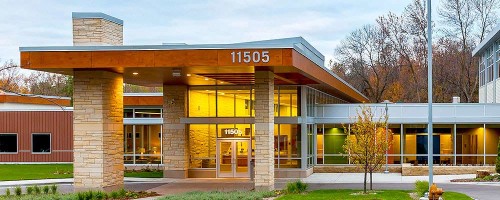
Hazelden Betty Ford’s Plymouth location serves teenagers, emerging adults and their families at 11505 36th Avenue North, Plymouth, Minnesota. The current official campus page separates programs for ages twelve to eighteen and eighteen to twenty-five. Its treatment options include residential care, day treatment, intensive outpatient programming and outpatient mental health services. The appropriate starting service depends on assessment; the presence of several levels does not mean every young person needs an overnight stay.
The campus is part of the provider’s services in the United States and is specifically presented as a center for teens and young adults. Its published general enquiry number is 866-831-5700. Families and prospective patients should discuss the exact age group, current symptoms and practical needs when calling. Because the published bands overlap at eighteen, ask how placement is decided at that boundary instead of assuming that a birthday alone determines the appropriate peer group or residence.
Choosing the appropriate level of care
The Plymouth page describes residential treatment with medical detoxification and support around the clock, separate age-specific programs and dormitories, and a daily clinical and educational schedule. This directory describes that live-in service as residential care; the provider’s use of inpatient language does not independently establish hospital admission. Ask what medical and psychiatric resources are available within the actual program and which needs would require another service. A familiar organization name should not replace that exact-campus discussion.
The same page describes day treatment at approximately twenty to thirty hours a week, with an optional campus living arrangement. Its IOP starts at about three hours a day on four days a week, with separate teen and emerging-adult groups and in-person or virtual options. These provider schedules differ from a third-party description of full weekday programming. Confirm the current timetable, whether housing is involved and what support exists outside appointments. Day treatment, optional lodging and residential clinical care are distinct arrangements.
Outpatient mental health services include assessments, individual and family therapy, and medication management, according to the primary campus page. For someone comparing outpatient care, ask which service addresses their present needs, where appointments take place and whether a virtual option is available to them. An online appointment may reduce travel, but it still requires confirmed eligibility, an appropriate environment and a clear plan for support between sessions.
Assessment, medication and individual goals
The provider describes coordinated care for substance use and mental health concerns such as anxiety, depression and trauma. A useful assessment should explore both areas, alongside physical health, medications, school or work, relationships and previous treatment. Ask who reviews relevant records and who communicates the recommendation. The young person’s own concerns and goals should be heard, including what they find difficult, what has helped before and what support they want from family or other trusted people.
The campus page identifies counselors, nurses, doctors and psychiatrists within its care model and describes medication management as part of an individualized plan. It does not promise that every professional is physically present at all hours or that every patient receives the same frequency of appointments. Ask about the actual prescribing and nursing arrangements for the recommended service, how existing treatment is reviewed, and who handles refills or communication with a clinician at home. Any detoxification need should be determined through the clinical assessment.
When co-occurring conditions are part of the presentation, ask how the team coordinates treatment rather than dividing concerns into unrelated plans. Clarify how progress is reviewed, what changes might lead to a different care level and how the patient participates in those decisions. A list of symptoms or diagnoses on the website does not establish acceptance for every severity. Describe current needs accurately so the team can explain the resources and limits relevant to that person.
Age-specific therapy and growing independence
The current program description combines individual therapy, peer groups, medication support, education and skills for emotional regulation and daily life. Its emerging-adult section specifically emphasizes relationships, self-care and increasing independence. Ask how these aims translate into the actual weekly plan. A nineteen-year-old attending college, a younger teenager in school and a twenty-four-year-old working full time may need different practical goals even where some therapeutic approaches overlap.
Discuss the amount and purpose of group work, usual individual appointment frequency and how concerns about treatment are raised. Ask whether the plan includes school, work or family responsibilities and how staff help prepare for those demands after discharge. Peer connection can be an important preference, but it should not be treated as a guarantee that every group will suit every participant. The relevant question is how the program responds when someone needs a different approach, additional support or a change in care.
School during treatment
The campus FAQ says Hazelden Betty Ford works with a local school district to provide virtual classes in core high-school subjects such as mathematics, science and language arts. This is more specific than the secondary listing’s general description of onsite schooling. Ask the placement counselor about enrollment, communication with the home school, assignments, credits and the time available around treatment. Availability of classes does not automatically guarantee progress in every subject or acceptance of credits by a particular school.
For college students or young adults in employment, request a separate discussion about deadlines, leave, financial responsibilities and a realistic return plan. Do not assume the high-school arrangement extends to university coursework or that devices can be used freely for work. The treatment schedule may require adjustments to outside commitments. Establish who will help coordinate practical communications and what the patient wants shared, while keeping the clinical plan and the person’s own preferences at the center of the discussion.
Rooms, meals and the campus environment
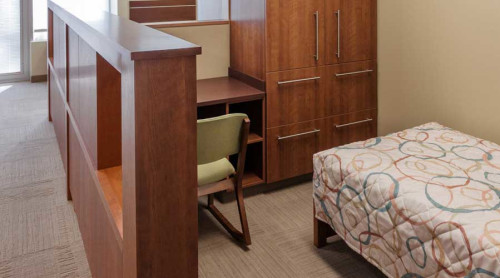
The primary page describes separate dormitory arrangements for teens and emerging adults. The current Recovery.com listing includes private-or-shared rooms, which supports a room option rather than a guaranteed private bedroom for every admission. Ask about the specific residence, room occupancy, bathroom use and availability for the relevant age group. Confirm how placement considers individual needs and how a room change is handled if circumstances change during treatment.
The provider describes a fourteen-acre wooded lakeshore campus with a gym, climbing wall, art and music spaces, a meditation room and outdoor areas. These are activity and environment descriptions, not assurances that every amenity is available on demand. Ask which activities fit the current schedule, how participation is supervised and what alternatives exist for someone with different physical or sensory needs. Accessibility, walking distances, storage and quiet space are worth discussing alongside the recreation photographs.
Meals are described as cafeteria-style, with multiple options and specific dietary accommodations arranged before admission. Explain allergies, dietary restrictions and any eating-related concerns to the clinical and admissions teams. Ask who reviews the requirements and how they are communicated to food-service staff. Also request the current packing and device policies for the exact age group. Rules that apply to an adult participant should not be assumed to apply unchanged to a younger teenager.
Family participation and privacy
The Plymouth page describes counselor-led family communication, coaching, education and support, including weekly meetings in its teen program overview. Ask what that means for the proposed service: who attends, whether meetings are remote or onsite, and how the young person’s voice is included. Discuss consent, confidentiality and how practical updates will be handled. Family involvement should have a clear purpose and agreed boundaries, especially when the patient is an emerging adult and relatives are helping arrange or pay for care.
The organization’s family services page also describes educational workshops, virtual support groups and coaching, with many programs offered at no cost. Some resources are available beyond families with a current patient. Ask which options are relevant, how to register and whether any service has a separate fee. A family education group is different from the patient’s clinical therapy or a scheduled family session within residential treatment, even where the same organization offers all three.
Duration, pricing and the Medicaid notice
Recovery.com checked October 20, 2026 lists an estimated USD 45,000 for thirty days. This is a third-party program reference, not a provider-published monthly tariff or an individualized offer. The campus page does not establish a universal thirty-day residential commitment. Ask for the recommended duration, the review schedule and what happens if the clinical plan changes. The quoted period, the clinically recommended course and the period an insurer authorizes may require separate clarification.
A written financial estimate should identify the actual care level, room or optional housing, detoxification, professional appointments, medication, tests, school arrangements and any transport or other charges. Ask about deposits, cancellation, early departure and extensions. Where a plan includes more than one stage, obtain the cost and inclusion details for each. Optional living during day treatment should not be assumed to carry the same service package or price as an overnight residential clinical admission.
The current Plymouth page has a specific notice accepting eligible HealthPartners Medicaid-enrolled patients for selected services: IOP, medication management and mental health therapy. It directs those enquiries to Patient Access at 800-257-7800. That notice does not establish Medicaid coverage for residential treatment or detoxification. Ask about the exact Minnesota plan, age and service eligibility, delivery format and authorization requirements. Other insurance arrangements also need policy-specific review rather than reliance on a carrier’s name alone.
Planning for life after the program
Before leaving or changing levels, request a concrete plan for appointments, prescriptions, family support, school or employment and the living environment. If care will continue virtually or in another state, confirm the receiving clinician and eligibility before assuming continuity. A useful transition plan should name responsibilities and dates, not simply list general resources. The choice of Plymouth should rest on an appropriate age-specific program, the young person’s assessed needs, understood family arrangements and a workable clinical and financial plan.
Sources checked October 20, 2026: Hazelden Betty Ford’s current Plymouth campus and family services pages, with its general program FAQ reviewed for context; Recovery.com for attributed room options and the thirty-day estimated price. No ranking or outcome claim is adopted as a guarantee.
Destinations
Conditions
Levels of care
Settings
Amenities
Program approach
Coordinated individual/group therapy, mental health and substance use assessment, medication management, age-appropriate emotional and practical skills, school coordination, family involvement and continuing care
Fees & admissions
Estimated USD 45,000 / program
Recovery.com checked October 20, 2026 lists an estimated USD 45,000 for thirty days. This is a third-party program reference, not an official monthly tariff. Confirm the actual care level, room or optional housing, detoxification, appointments, medication, tests, school arrangements, transport, extensions and insurance responsibility in a written offer.
Confirm the current program, duration, accommodation and included services directly with the center.
Confirm age-group placement, clinical fit, residential versus day/IOP/mental-health service, detoxification need, medical/prescribing support, actual room or optional housing, school arrangements, diet/accessibility, family consent and communication, written costs and exact policy/service eligibility.