
About Starbridge Recovery — Woodland Hills
Starbridge Recovery in Woodland Hills
Starbridge Recovery provides adult residential addiction treatment and detoxification in Woodland Hills, Los Angeles. The current provider website identifies 23104 Mariano Street as its contact and facility address. Its approach combines substance use treatment with attention to co-occurring mental health concerns in a small residential environment. The offer should identify the receiving building, room, clinical plan, and care phase; a list of surrounding Los Angeles service areas does not mean that the organization has a residential campus in each place.
The current California Department of Health Care Services record identifies Starbridge Recovery, LLC under application 191021BP. It lists 23104 Mariano Street and the additional location at 23104½ Mariano Street, with twelve licensed treatment places, residential and detox services, and incidental medical services. The listed expiration is May 31, 2027. These details establish the scope of that public record; they do not show current vacancies or guarantee that every requested medical service is available for an individual admission.
Program size and the residential setting
Published descriptions of program size need to be read carefully. Recovery.com’s narrative describes a maximum of six adults, while the current state record covers twelve places across the two listed addresses. The provider’s facility page separately displays a clinical ratio, which is not a bed count. Ask how many people will share the proposed house and treatment groups, and which building the agreement covers. This is more useful than treating a single promotional number as a description of the whole licensed operation.
Starbridge uses inpatient terminology on some pages, but the verified public facility record is for residential treatment and detoxification. The home should not be represented as an acute psychiatric hospital. Before arrival, ask how the program manages changes in clinical needs, which professionals can assess the resident, and when another medical setting is used. A private room and continuous residential support address different needs from hospital admission, so the receiving team must determine which setting is appropriate.
Detoxification and medical arrangements
The provider describes medically supervised detoxification, monitoring, and medication support when clinically indicated. Its substance-specific information also discusses treatment for opioid-related needs and ongoing recovery work after withdrawal. These descriptions are starting points for an assessment, not instructions to begin, stop, or change medication independently. Share the relevant substance use history, previous withdrawal experiences, current prescriptions, and physical health concerns with the receiving team before agreeing to an admission date.
The current team page identifies a nurse manager alongside therapists, counselors, operational staff, and case-management roles. Other official material describes psychiatric and medical involvement. Ask who is physically present on each shift, who can prescribe, how medical review is arranged, and what requires an outside appointment. Distinguish medication used during withdrawal from longer-term prescribing and follow-up. The admission plan should explain any separate medical charges and the process for transferring care if the residence cannot support a developing need.
Co-occurring mental health and trauma work
Starbridge presents its mental health services within a dual-diagnosis approach to addiction. Its current PTSD page describes EMDR, Somatic Experiencing, and trauma-focused cognitive behavioral work. The anxiety page also discusses cognitive behavioral and acceptance-based approaches. Availability of a method does not establish that every resident receives it or that trauma processing begins immediately. Ask which clinician will assess the relevant concerns, what preparation is needed, and how the work fits the person’s broader substance use treatment.
A person seeking treatment primarily for a mental health condition should obtain a specific admission decision rather than relying on the presence of that condition in website navigation. The appropriate support depends on current symptoms, functioning, medical needs, and the level of observation required. Request a clear explanation of the program’s scope, including circumstances that require a different service. Published testimonials and broad success claims do not establish individual suitability or predict how someone will respond to treatment.
Therapy, practical skills, and daily structure
The residential model combines individual and group work with recovery education, practical skills, and selected complementary activities. The provider describes individualized planning and regular collaboration among its clinical staff. Recovery.com adds examples such as narrative therapy, motivational interviewing, breathwork, and educational sessions. Confirm which approaches are actually included in the proposed schedule, their frequency, and the professionals delivering them. Different kinds of clinical contact should be identified separately rather than presented as an undifferentiated total of therapy hours.
Ask for a sample weekday and weekend, including individual appointments, groups, meals, exercise, recreation, and time for reflection. The secondary program description emphasizes coping skills, interests, work, and practical life planning. These topics can make the timetable relevant to the person’s circumstances, but they do not establish vocational certification or a guaranteed return-to-work service. Clarify how progress is reviewed and how the schedule is adjusted when someone is initially unable to participate fully in the group program.
Private-room options and everyday comfort
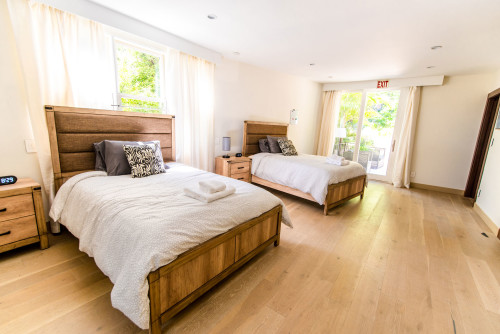
The official facility page offers private rooms and suites, while the main site describes a pool, hot tub, outdoor areas, an onsite gym, yoga, prepared meals, in-room entertainment, and laundry services. These are advertised features of the residential setting, not confirmation of the room available for a particular arrival. Ask for the exact bedroom, bathroom arrangement, room supplement, accessibility, and any restrictions on amenity use during detoxification or another care phase.
Comfort arrangements deserve the same specificity as the treatment schedule. Discuss dietary needs, allergies, mobility, sleep, personal belongings, and any sensory or environmental concerns before booking. Confirm the rules for phones, computers, visitors, outside appointments, and supervised outings rather than assuming that an executive-oriented description permits unlimited work or travel. If a companion or relative plans to stay nearby, ask which arrangements are provided by the program and which must be organized and funded independently.
Family involvement and personal privacy
Family education and involvement appear in the secondary program description, and the provider’s admission process considers the people important to the client. The exact format should be discussed directly: a general educational session, a private family-therapy appointment, and routine practical updates are different services. Ask whether family work is included, how often it takes place, who can participate, and whether remote attendance is available. The resident and team should agree on the purpose of any family involvement.
Clarify what information can be shared and with whom, particularly when relatives, employers, or professional advisers help organize the stay. Practical arrangements may require communication without giving others unrestricted access to therapeutic discussions. Establish a named contact for scheduling and ordinary questions, along with a separate process for urgent concerns. If work responsibilities must continue, agree on a realistic plan with the clinical team before admission and include any relevant device or appointment limitations in the written arrangements.
Duration and the admission process
The provider’s current facility page advertises programs lasting ninety days or more, while Recovery.com gives thirty days as a typical program length. These figures describe different published reference points and should not be blended into a guaranteed course. Ask what duration is initially recommended, whether detox days are included, when reviews occur, and how a shorter or longer stay would be handled. The clinical plan and insurer’s authorization may cover different periods, so both need explicit confirmation.
Starbridge’s admissions page describes an initial conversation, financial review, clinical assessment, and coordinated arrival. The current official number is 866-468-5358. The website says same-day admission may be possible, but a place should be treated as confirmed only after suitability, accommodation, and financial arrangements are agreed. Request the receiving address, arrival time, packing guidance, medication instructions, transport details, and the person to contact if travel changes. A travel arrangement should also specify who pays for it.
Fee evidence and insurance
The reviewed Recovery.com page contains conflicting daily prices: its cash-pay panel lists US$1,500 per day, while its narrative says US$2,500 per day. Neither is an official Starbridge tariff, and the difference is not explained as a room category, treatment phase, or dated price change. The lower number should therefore not be presented as a verified starting rate. Ask the provider for a current written quote covering the actual residence, care level, duration, and services.
The official website offers benefits verification and states that Medicare and Medicaid are not accepted. Confirm the exact commercial policy, network relationship, authorization, deductible, coinsurance, and separately billed services. The financial agreement should distinguish accommodation, detoxification, therapy, psychiatric appointments, medication, testing, transport, optional activities, and continuing care. Obtain the rules for deposits, cancellation, extensions, early departure, and refunds. A benefits check or insurer logo cannot establish the amount the resident will ultimately owe.
Continuing care after the residence
Starbridge describes aftercare as part of its broader approach, but the reviewed primary pages do not establish a single universal schedule or price for every graduate. Ask what is actually included in the proposed agreement: discharge planning, referrals, alumni contact, scheduled therapy, medication appointments, or a separate outpatient placement. The licensed residential and detox record does not itself establish that each subsequent outpatient service operates at Mariano Street or includes continued accommodation.
Before discharge, the plan should identify the next clinicians, appointment dates, prescription follow-up, records to be transferred, and any practical support for housing or transport. Someone returning outside California should confirm which services are available locally and which remote contact, if any, can continue. Starbridge’s private-room options, small residential environment, assessed medical support, and dual-diagnosis approach are useful comparison points. The decisive details remain the actual offer and the continuity arranged for the individual.
Sources and further comparison
Source review: October 20, 2026. Official provider overview and amenities; Current facility and room options; Admissions and insurance policy; Clinical team; Treatment philosophy; Trauma and co-occurring treatment; Anxiety and co-occurring treatment; Substance-use medical and residential service description; DHCS public facility record; Recovery.com conflicting daily fee references. Provider statements describe the advertised service; they do not establish an individual admission decision, current availability, or treatment outcome. Price evidence is identified separately from the provider’s own fee policy.
For a broader comparison, explore treatment options in the United States and read questions to ask a treatment center. Use the answers from the actual receiving team to compare the clinical plan, practical arrangements, and written financial terms.
Destinations
Conditions
Levels of care
Settings
Amenities
Program approach
Individual/group care, medical and psychiatric involvement, selected CBT/ACT, EMDR and somatic trauma approaches, practical recovery skills, family involvement and continuing-care planning
Fees & admissions
Confirm current pricing
Recovery.com checked October 20, 2026 conflicts: cash-pay panel USD 1,500/day versus narrative USD 2,500/day, with no explanation of different phases or rooms. No official numerical tariff was verified. Obtain a current written quote for the exact residence, duration, medical care, room, extras and continuing care; the lower reference is not a confirmed starting price.
Confirm the current program, duration, accommodation and included services directly with the center.
Clinical and financial assessment; confirm exact building, withdrawal and psychiatric suitability, current staffing/prescribers, medications, room, schedule, family participation, financial terms and next-stage care.