About Clinique La Métairie — Nyon
Clinique La Métairie is a private mental health clinic in Nyon, in the Swiss canton of Vaud. Its dedicated addiction program combines a 28-day residential stay delivered in French with an 11-month continuing-care plan. This is a structured clinical program within a wider psychiatric clinic, rather than an open-ended wellness holiday. People considering it should establish whether the program’s language, abstinence-oriented approach, medical scope, and follow-up arrangements fit their circumstances. This profile covers the clinic at Avenue de Bois-Bougy 8 and distinguishes the addiction unit from other inpatient and outpatient services offered by the same organization.
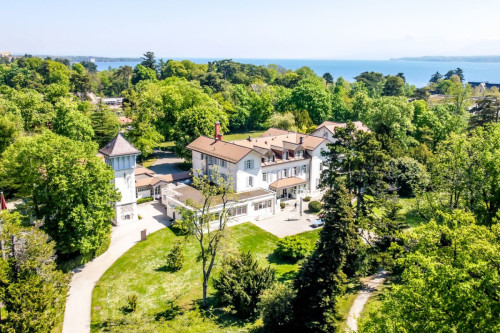
The Nyon clinic and its clinical setting
The official contact page gives the address as Avenue de Bois-Bougy 8, CH-1260 Nyon. It publishes +41 22 363 20 20 for the main switchboard and +41 22 363 28 89 for admissions. The clinic describes itself as near Lake Geneva and the town of Nyon. Confirm the receiving unit, arrival instructions, and appointment time before arranging travel. Someone arriving from another country should also establish who will receive the referral and how medical records will be transferred before the admission decision.
The Swiss Infodrog addiction-services directory identifies La Métairie as a private mental health and addiction clinic offering residential therapeutic care, inpatient withdrawal, and aftercare. It describes the addiction service as available to adults from age 18 and to voluntary clients, including people with psychiatric difficulties or substitution treatment. This supports its clinical identity but does not guarantee acceptance of an individual referral. Ask which withdrawal or psychiatric needs the unit can manage and which would require stabilization or treatment elsewhere.
What the 28-day addiction program means
The official addiction program describes a 28-day residential phase followed by continuing care. Its approach draws on the Minnesota Model, with psychiatric care, addiction counseling, groups, individual conversations, and mutual-help participation. The orientation toward abstinence should be discussed before admission, especially by someone who has tried a different model or has concerns about group participation. Ask the addiction specialist how the program’s expectations are explained and how personal goals, previous treatment experiences, and ongoing prescribed medication will be considered.
The published 28-day duration is useful for initial planning, but it should not be taken as proof that every medical, family, or practical issue will be settled in four weeks. Ask what is assessed before admission, what happens during the first days, and how progress is reviewed. Clarify whether withdrawal occupies part of the residential period, whether an extension can be recommended, and how a change in the treatment plan affects the financial agreement. A defined program structure still requires an individualized clinical decision.
The clinic explicitly says this residential addiction program is delivered in French. Infodrog also lists English among the service’s languages, which may reflect communication capacity rather than an English version of every group session. An English-speaking prospective resident should ask what language is used in assessments, individual therapy, written materials, family meetings, and the full group timetable. Being able to speak to an admissions representative in English is different from being able to participate fully in a French-language therapeutic program for several weeks.
Medical assessment and the wider psychiatric clinic
La Métairie’s general treatment page describes adult and older-adult psychiatry, hospital admissions following a physician’s request, and several therapeutic activities. Those wider services are relevant context, but they should not be assumed to be routine components of the addiction package. Ask which psychiatrist is responsible for the proposed admission, what nursing support is available, and how physical health needs are addressed. If another specialist remains involved, agree on how information and prescribing responsibilities will be coordinated.
The general psychiatric clinic describes both voluntary entry and entry under medical constraint, while the addiction directory describes voluntary clients for the addiction offering. Those statements concern different aspects of the service. Families should confirm the exact admission pathway being discussed rather than assume that the 28-day program accepts involuntary placements. The treating professionals should explain the applicable clinical arrangements and consent process. An inquiry about a relative’s treatment does not replace the person’s assessment or establish that a particular admission can proceed.
Someone using substitution medication or other prescribed treatment should raise this during the pre-admission discussion and provide the current prescription and relevant records. The directory’s acknowledgment of substitution treatment does not specify the medication policy for every applicant or every treatment goal. Ask who makes those decisions, how any proposed changes are explained, and how continuity is arranged after discharge. This profile does not recommend stopping medication to qualify for an abstinence-oriented program; that issue belongs in an individualized conversation with the responsible clinicians.
Groups, individual work, and family participation
The program’s emphasis on a structured day and group participation makes it useful to request a sample timetable. Ask about the frequency of individual sessions, the role of the psychiatrist and addiction counselor, group size, and the balance between therapy and other activities. If concentration, hearing, mobility, or language creates a barrier, explain it before arrival and ask what adjustments are available. The relevant question is how this person will participate in the actual program, rather than how many therapies appear in the clinic’s general description.
The addiction program invites relatives or other close contacts to meetings and an immersion day during the stay. Confirm how invitations are arranged, whose consent is required, and whether a remote conversation is possible when travel is impractical. A family member can ask how the session prepares everyone for the return home and how difficult topics are handled. The purpose should be clear: education, joint therapeutic work, or practical discharge planning can have different expectations, and attendance should not be treated as a guarantee that a relationship will improve.
Following the program after discharge
The published continuing-care plan spans 11 months. People living near the clinic may attend weekly meetings; those farther away may return for four periods of three days. This is an important commitment to examine before admission. Ask for the expected calendar, how dates are agreed, whether participation requires overnight accommodation, and what happens if work, health, or travel makes a return difficult. The availability of a planned follow-up structure does not establish that transport, accommodation, or all later clinical services are included in the initial price.
A resident returning abroad should also arrange care where they will actually live. Ask who will send the discharge summary, how the first appointment with a local professional is confirmed, and who will manage prescriptions between contacts. Clarify the role of mutual-help groups and whether they supplement clinical follow-up rather than replace it. An eleven-month plan is more useful when responsibilities, contact methods, and costs are clear, particularly if a person cannot easily return to Nyon at short notice.
Rooms, meals, and access to amenities
The clinic’s official accommodation information describes single and double rooms, each with a bathroom, within a property that includes a four-hectare park. It says meals use fresh products and a dietitian oversees menus and specific dietary needs. Ask which room category is offered for the addiction program, whether a single room is available for the requested dates, and how dietary requirements are confirmed. Someone needing particular bathroom access or assistance moving around the grounds should request details for the assigned room and treatment areas.
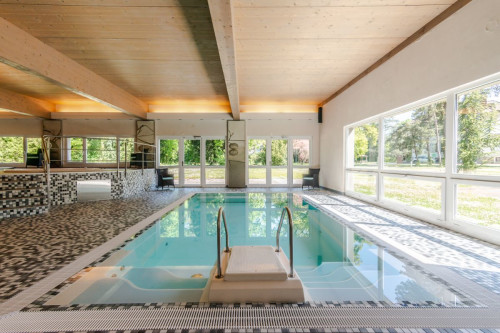
The same page makes an important qualification about the spa: the pool, sauna, and hammam are described as available to patients with supplementary insurance. They should not be advertised as automatically included for every resident or every private-pay package. Ask whether the proposed financial agreement includes access, whether additional charges apply, and whether clinical restrictions affect participation. Appointments or paid extras such as personal grooming should likewise be distinguished from treatment. These details help prevent a comparison of accommodation photographs from becoming an assumption about included services.
Admission documents, visits, and financial arrangements
The general admission page requests identification, insurance documentation, medical reports, test results, and current treatment information. It also provides a psychiatric admission form for the referring physician. The addiction program calls for a pre-admission conversation with an addiction specialist, including discussion of telephone and visiting rules. The general clinic publishes visits from 11 a.m. to 8 p.m., but confirm the addiction unit’s rules before relatives plan a visit. Program-specific arrangements may be more structured than the general visiting hours suggest.
La Métairie says it has agreements with many major insurers for private or semi-private stays, depending on the policy. It also accepts inquiries from people without Swiss insurance, with an individual quotation for each request. Ask which insurance class, care setting, and room category apply to the proposed admission. If only part of the stay is covered, obtain the remaining charges and any required deposit in writing. These statements do not establish that an overseas insurance policy or travel policy will reimburse the program.
On October 20, 2026, Recovery.com still displayed an estimated CHF 995 per day. This is a third-party daily estimate, not a verified provider tariff. Multiplying that figure by 28 gives CHF 27,860 as an arithmetic illustration only; it does not establish a quoted total or confirm that each day and service is billed identically. Ask the clinic for the actual cost of the residential phase, the eleven-month follow-up, room category, medicines, outside consultations, and any separately charged amenities.
The clinic’s broader services include a weekday day hospital, described separately from the residential addiction stay. That may matter when discussing continuing psychiatric care, but it is not automatically the same as the addiction program’s weekly aftercare meetings. Confirm which service is proposed, whether a fresh referral is required, where it takes place, and how it is funded. Avoid assuming that a statement about basic insurance covering the day hospital applies unchanged to a private residential room or the full addiction package.
Deciding whether the program fits
La Métairie offers a clearly described French-language addiction pathway within a psychiatric clinic, with published family and follow-up arrangements. Compare it with other Swiss treatment options using the same questions about language, clinical eligibility, medical resources, and total costs. The addiction treatment guide and residential care guide can help organize that comparison. Before committing, seek a clinical recommendation for the specific unit and a written plan that covers both the initial stay and the practical obligations after returning home.
Sources and verification
Reviewed October 20, 2026. Linked official program, care, accommodation, contact, and admission pages were checked alongside the Swiss Infodrog addiction-services directory and the current Recovery.com estimate. General psychiatric services, the residential addiction program, and aftercare are distinguished. Fees, coverage, room allocation, clinical eligibility, and language arrangements require individual confirmation.
Destinations
Conditions
Levels of care
Settings
Amenities
Program approach
Minnesota Model and abstinence-oriented addiction program with psychiatric care, addiction counseling, individual and group work, mutual-help participation, family involvement, and continuing care
Fees & admissions
Estimated CHF 995 / day
Recovery.com checked 2026-10-20 estimates CHF 995/day. No official numeric tariff verified. CHF 27,860 for 28 days is arithmetic only, not a quoted program total; follow-up, room, medicines, outside care, amenities and billing consistency require a current written provider quote. Remove stale USD conversion and do not label as monthly package.
Confirm the current program, duration, accommodation and included services directly with the center.
Pre-admission discussion with addiction specialist; general psychiatric referral form completed by physician. Confirm voluntary addiction-program eligibility, medication/substitution arrangements, French-language participation, medical needs, room, insurance and complete follow-up quotation. Admissions +41 22 363 28 89; main switchboard +41 22 363 20 20.