Care at Smarmore Castle Private Clinic
About Smarmore Castle Private Clinic
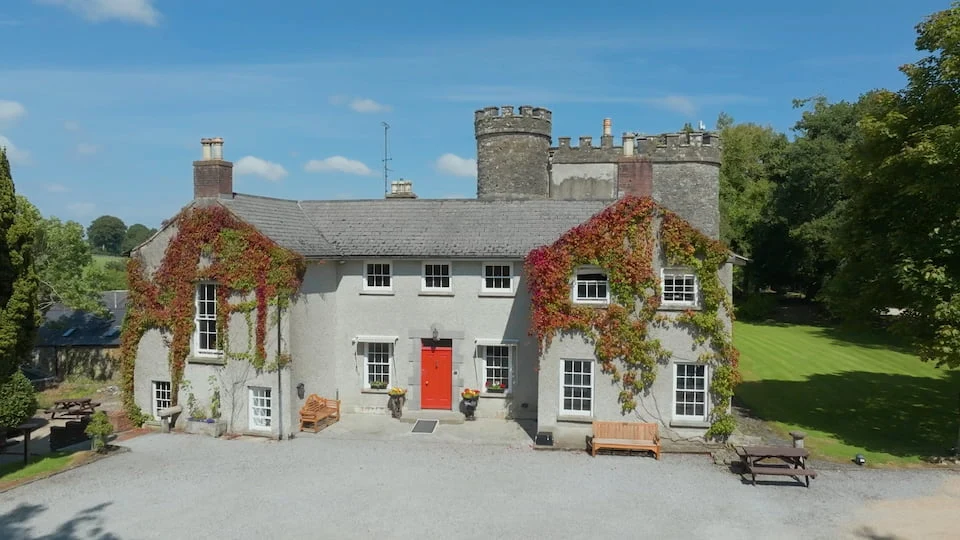
Smarmore Castle Private Clinic is a residential addiction treatment center near Ardee in County Louth, Ireland. The clinic occupies a historic castle within fifteen acres of woodland and gardens. Its offer combines medically managed withdrawal where needed, individual and group therapy, an abstinence-based twelve-step framework, and continuing support after discharge. The setting provides distance from everyday routines while residents take part in a treatment community. It should be evaluated as an addiction program with a defined clinical pathway, rather than as a hotel stay or a general wellness retreat.
The provider accepts inquiries from Ireland, the United Kingdom, and other countries. Its current program description gives a typical residential stay of four to six weeks, with an Advanced Programme continuing beyond six weeks for people needing further work. Length is intended to reflect clinical need and progress. Someone whose insurance initially authorizes twenty-eight days should establish whether that is expected to cover the recommended treatment and how an extension would be considered. An approved funding period and a clinically recommended duration are separate decisions.
Medical assessment and withdrawal care
On arrival, the published pathway includes nursing and resident-doctor assessment, with a consultant psychiatrist reviewing patient files shortly afterward. Medication-assisted withdrawal is prescribed and adjusted when indicated, and the therapeutic program begins as medical stability allows. The important distinction is between a review of every file and a promise of daily individual psychiatrist appointments: the public description establishes the former, not the latter. Applicants should ask how often they can expect direct medical contact and who will explain changes to medication or observation.
The detox page, updated in October 2026, describes assessment, withdrawal management, stabilization, and preparation for ongoing treatment. It identifies continuous nursing monitoring and review by a doctor. The details of care need to match the substance, recent pattern of use, previous withdrawal complications, and other physical or psychiatric conditions. A person with several prescribed medicines should provide a complete list before admission so that the medical team can explain what will be continued, reassessed, or coordinated with an existing prescriber.
Smarmore Castle describes medically managed residential care, but the reviewed sources do not establish admission to an acute general or psychiatric hospital. Applicants with significant medical complexity should ask which conditions the clinic can manage and when transfer to another facility would be necessary. This is particularly relevant for international travel: an acceptance should be based on the current clinical situation, and a change in symptoms may require reassessment before departure. The availability of medical staff at a residence does not remove the need to define its limits.
Medical leadership and the wider team
The provider’s biography of Dr. Orlagh McCambridge identifies her as Medical Director and a consultant psychiatrist specializing in addictions. It describes previous clinical-director and consultant work in Northern Ireland and specialist psychiatry registration in Ireland and the United Kingdom. Those professional details are attributed to the clinic’s current biography. Applicants who need a particular form of psychiatric assessment should ask how that service is arranged during their stay and whether it is included in their proposed program.
The team roster lists addiction therapists, nurses, recovery workers, healthcare assistants, admissions staff, fitness support, and catering personnel. It names Philip Grant as Lead Therapist and Niamh Mullen as an addiction and equine therapist. These roles show how different parts of the stay are staffed without implying that each resident receives sessions with every named professional. A useful admission discussion identifies the focal therapist, the nursing contact, and the process for raising a concern when the usual clinician is unavailable.
Smarmore Castle’s clinical governance page describes CHKS and ISO 9001 accreditation, quarterly governance meetings, review of incidents and feedback, and staff development. These are provider statements about quality systems; they should not be read as independent proof of a particular recovery rate. A prospective patient can request current accreditation details and ask how complaints or concerns are handled. Quality oversight, professional qualifications, and an individual treatment plan provide different information and are most useful when considered together.
How therapy is organized
Each resident is assigned a focal therapist who coordinates the overall treatment picture and adapts the individual plan as needs change. The program brings together CBT, individual therapy, group work, and twelve-step principles rather than treating medical withdrawal as the entire intervention. For a person with previous treatment experience, this is an opportunity to explain what helped, what did not, and what needs a different emphasis. The plan should show how the team intends to work on the specific difficulties that have continued alongside substance use.
The individual therapy information discusses work on emotional difficulties, relationships, grief, trauma, and patterns that may contribute to relapse. It also distinguishes individual work from the experience of sharing and learning in a group. Its general discussion of a weekly outpatient session is not a fixed residential therapy entitlement. Applicants should ask for the expected individual-session frequency in their own program and how it changes during detox, the Foundation Programme, or a longer stay.
Therapy can be easier to evaluate when the goals are concrete. A resident might want to understand a recurring conflict, develop a response to a particular trigger, or work through a loss that has remained difficult to discuss. These are examples of questions to bring to assessment, rather than claims that every issue can be resolved within one admission. The focal therapist can explain which goals are realistic during the stay and which need continuing work afterward. This is also a way to distinguish a personalized plan from a standard activity timetable.
Complementary activities and current facilities
The complementary program includes equine-facilitated psychotherapy, drumming, mindfulness, and water-based activities. These are described as additions to the main addiction treatment program. The current page specifically says the twenty-two-meter swimming pool is under renovation, and the accommodation page also states that it is under refurbishment. Applicants should therefore confirm whether the pool and any water-based sessions will actually be available for their dates. Historical photographs or a general amenities list do not establish current access.
Other described facilities include a gym, sauna, steam room, sensory garden, and woodland paths. Participation should be matched to the resident’s medical condition and readiness, especially early in withdrawal care. Someone who cannot use an exercise facility can ask which alternatives are available and how the treatment team adapts the day. Complementary activities may offer different ways to engage with the program, but they do not replace psychiatric review, medication decisions, or the individual and group work that forms its clinical core.
Bedrooms, food, and practical comfort
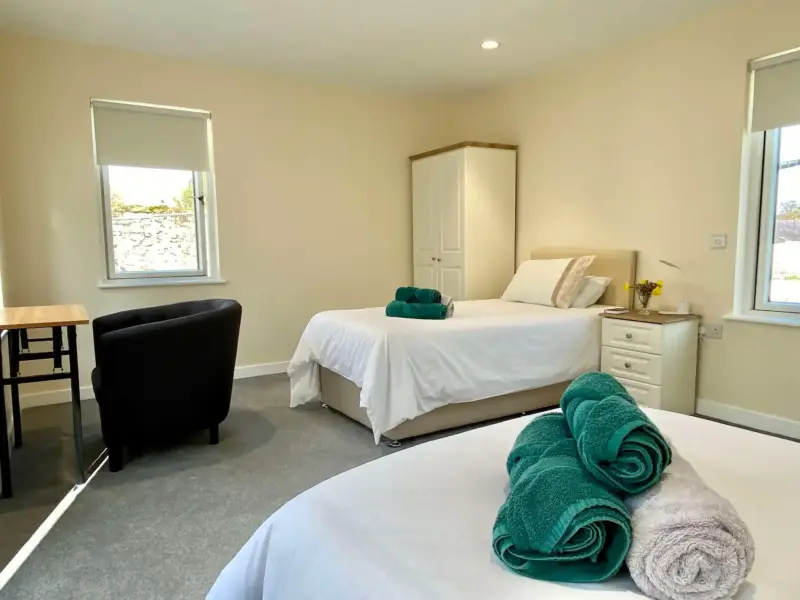
The current accommodation description offers both shared and private rooms. Bedrooms are single-sex and have en-suite bathroom facilities. The provider also describes housekeeping, on-site laundry, and a safe for valuables. Private accommodation is therefore an available option, not a guarantee that every admission includes a single room. Ask which room is being quoted, whether a supplement applies, and what happens if the preferred type is unavailable. Accessibility should be discussed using the actual room and route through the historic building.
Three meals a day and snacks are described, with dietary needs considered for medical, religious, or personal reasons. A nutritional assessment can be arranged when required. Anyone with a significant allergy or an eating-related concern should explain it during screening so the team can clarify the support available. This is different from assuming that a general catering service constitutes specialist eating-disorder treatment. Sleep, food, and personal space are relevant to participation, but they need to be considered alongside the suitability of the clinical service.
Costs and insurance
The clinic’s current cost page does not publish a fixed Smarmore Castle residential tariff. It provides general Irish rehab price ranges, then says the clinic’s own price depends on the stay and room. Those national ranges should not be presented as this provider’s verified starting fee. Request a dated estimate specifying the recommended duration, bedroom, medical detox, clinical appointments, complementary services, and follow-up. The provider advertises payment-plan options, but the arrangement and cancellation terms need to be agreed individually.
The insurance page names Irish and international insurers with which the clinic works and emphasizes that approval depends on the policy. It describes an initial twenty-eight-day authorization as common, with longer treatment requiring review. A listed insurer does not mean every plan covers every element of the stay. Confirm the facility, level of care, authorized days, room restrictions, and personal liability directly with the payer. Any public-funding route should likewise be confirmed before treating it as available for the applicant.
Continuing care and family participation
The updated continuing-care page makes a useful distinction. It describes a free, therapist-led Saturday morning relapse-prevention group that can be attended on an ongoing basis. It separately offers a structured twelve-month small-group program, with payment-plan options and sessions at Smarmore Castle, in Dublin, or through Zoom. Individual therapy is available through Castle Health outpatient services. A general promise of a year of support should therefore be clarified into the actual service, eligibility, location, schedule, and charges.
The same page describes a Relapse Re-entry Group lasting at least six weeks for people needing to re-engage, as well as coordination with a GP or previous clinicians and local peer support when appropriate. Family workshops are described in the residential program, with family participation tailored to readiness and consent. Before leaving, residents should know which appointments are booked and who is responsible for prescriptions and urgent care at home. Current inquiries can be made on +353 41 986 5080; the admission decision should rest on a specific plan that connects the residential stay with those next steps.
Information checked October 20, 2026. Provider pages are linked throughout. Staff credentials, accreditation, program and funding statements are attributed to Smarmore Castle unless otherwise stated. The current public pages still describe the pool as under refurbishment; no reopening date is established here.
Conditions
Levels of care
Settings
Amenities
Treatment approach
Abstinence-based twelve-step framework, focal-therapist coordination, CBT and individual/group work, trauma and grief work when appropriate, family participation, relapse planning and complementary activities
Fees & admissions
Confirm current pricing
No clinic-specific numeric residential tariff on current official cost page; the Irish market ranges shown there are not Smarmore Castle prices. Quote depends on length, clinical needs and room. Confirm insurance authorization and payment terms. Continuing care distinguishes a free ongoing Saturday relapse-prevention group from a structured twelve-month program with payment options and separate individual therapy.
Confirm the current program, duration, accommodation and included services directly with the center.
Free initial assessment followed by clinical and funding review; confirm detox suitability, medical coverage, hospital-transfer criteria, room, duration, payer authorization and detailed aftercare terms.