
About Mountainside Canaan
About Mountainside Canaan
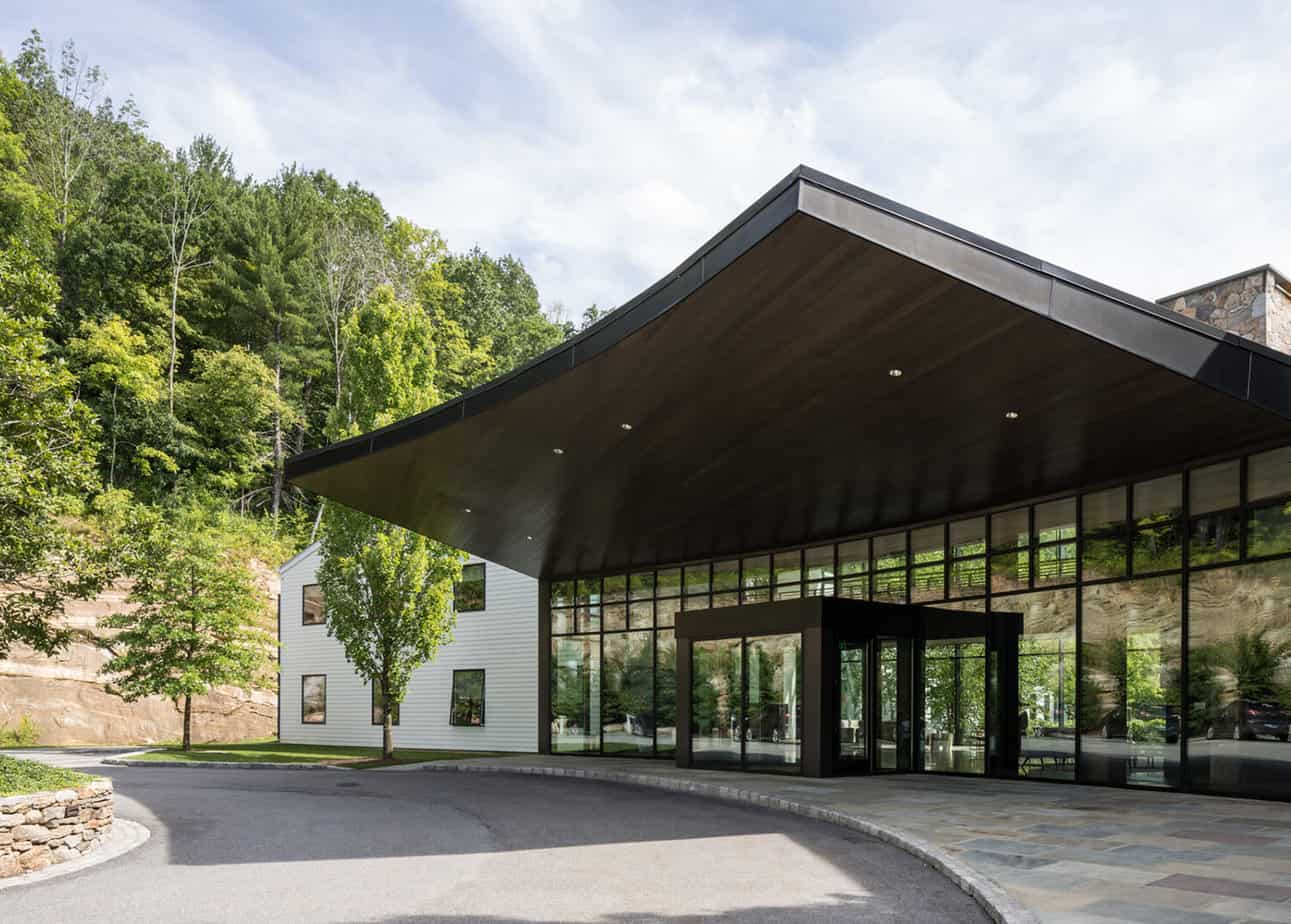
Mountainside Canaan is the organization’s main treatment campus in northwestern Connecticut, on more than 150 acres of fields and woodland. The location brings together detoxification, residential treatment, partial hospitalization, outpatient services, and recovery support. It is a substantial campus with several distinct programs, rather than a single residential package containing every service. A prospective client should begin by identifying the recommended starting level of care and then ask which later services are likely to be appropriate. Each transition may involve a different schedule, living arrangement, authorization, and cost.
The current Canaan overview describes care for addiction and co-occurring mental health needs, with medical, psychiatric, clinical, family, and wellness input. Its references to adults, adolescents, and families concern different services. In particular, the adolescent offer is outpatient care; it should not be understood as a promise that teenagers can enter the adult residential program. Someone seeking treatment primarily for an acute psychiatric condition should also clarify whether the addiction-focused service is the appropriate setting.
Medical detoxification
Mountainside’s detox program is available at Canaan and describes twenty-four-hour medical support, withdrawal assessment, physical examination, nutritional assessment, and individual planning. It also includes counseling and recovery education as the person is able to participate. Medical monitoring and a comfortable room are different parts of that offer. Applicants should explain recent substance use, previous withdrawal, other illnesses, and current prescriptions so the team can determine the necessary observations and the safest point at which to begin further treatment.
The published detox schedule shows repeated vital-sign checks, medication times, groups, individual counseling, meals, and rest. It is an example of how care may be organized, rather than an individualized prescription or a guarantee that every activity happens on every day. A person with a history of complications should ask which needs can be managed on campus and when transfer to a hospital would be required. The reviewed sources establish medically supported detox and residential care, not an acute-hospital admission at Mountainside.
The thirty-five-night residential program
The current residential page describes an intensive thirty-five-night program combining addiction education, twelve-step principles, counseling, medical and psychiatric services, and wellness activities. Applicants should confirm whether detox days are separate from the proposed residential period and whether the full recommended stay is authorized by their insurer. The program’s advertised length is a useful starting point for planning, while a person’s clinical needs and discharge arrangements may require a different total course of care.
Residential offerings include daily clinician-led groups, individual counseling, gender-focused discussion groups, recovery education, anger-management work, and preparation for life after treatment. Seeking Safety is described as a group that addresses trauma-related symptoms during early recovery through coping and containment skills. This gives more detail than a general claim of trauma-informed care. It does not mean every person will receive intensive trauma processing during early withdrawal or that a particular specialist method is included without assessment. The clinical team should explain the priorities and timing for the individual.
How the clinical methods fit together
The clinical services overview identifies CBT, DBT, motivational interviewing, solution-focused work, mindfulness and grounding, trauma-informed care, and EMDR among its approaches. These methods serve different purposes and are chosen according to the treatment plan. Applicants can ask which approach will address their main goals, whether the relevant clinician works with their program, and what frequency of individual contact is expected. The presence of a method in the organization-wide list does not establish a fixed residential entitlement.
A useful example is the relationship between skills work and individual counseling. A resident may practice ways to manage distress or communicate in a group, then discuss a difficult personal situation with their clinician and consider how to use those skills. Someone unsure about changing a substance-use pattern may need space to explore that ambivalence as part of the plan. These are practical ways to assess whether the published methods are being connected to an individual’s needs, rather than treated as a checklist of sessions to complete.
The program also includes family dynamics, medication education, and building a recovery network. The value of these components depends on the problems a resident expects to encounter outside treatment. For example, continuing a prescription requires a responsible clinician and a follow-up appointment, while rebuilding contact with supportive people may require a different set of goals. Ask how the case manager and clinical team coordinate these tasks and how the resident can review the plan before leaving. A full timetable is most useful when its activities lead to concrete next steps. For residents who use tobacco, the listed nicotine-cessation group is a specific service to discuss alongside the campus’s current smoking and vaping rules.
Partial hospitalization and outpatient care
The current PHP description specifies twenty-five hours of programming each week over a minimum of four weeks. It includes twice-weekly individual therapy, clinical groups, family work, psychiatric and medication services, and case management. Canaan is one of the in-person locations. This is day treatment, not continuous hospital admission despite the term partial hospitalization. On-campus housing is described as available for those needing it, so the therapeutic schedule and any accommodation should be priced and confirmed separately.
For people who need less intensive care, the Canaan page describes an eight-week intensive outpatient program with groups three times a week and individual counseling once a week. Its standard outpatient program is described as ten weeks. Those schedules are different from the residential and PHP offers. A person stepping down should confirm which service is recommended, where it takes place, and how it fits with work, travel, and home responsibilities. The existence of several levels on campus makes coordination possible, but does not automatically enroll a resident in every later program.
Extended care and sober living
Mountainside’s Extended Care program combines community living, outpatient services, a work program, and recreational activities. The provider describes men’s and women’s houses and opportunities to practice routines, manage time and money, and develop greater independence while maintaining clinical contact. This is a different environment from the initial residential unit. People considering it should ask about expectations for work, transport to appointments, supervision, and how progress is reviewed as responsibilities increase.
The provider explicitly states that the sober-living Extended Care house itself is not licensed or certified to provide substance use disorder treatment on site. Clinical services are delivered elsewhere at the main treatment campus. That distinction prevents the housing offer from being confused with the licensed clinical setting. The website’s pages also describe the program’s phases differently, so a current individual schedule is more reliable than assuming a particular phase count. Confirm the house, clinical appointments, housing charges, and support arrangements in the proposed transition plan.
Rooms and optional private suites
Standard residential accommodation should be confirmed directly, because the general campus material does not establish that every bedroom is private. Mountainside separately advertises a private residential suite at Canaan. Its described features include a full-size bed, private bathroom, lounge, dedicated workspace, phone, and laptop. Additional flexibility for communication with family or work is arranged with clinical guidance. This is an optional accommodation offer and should not be assumed to be included in an ordinary residential quote.
A separate private detox suite has a king-size bed, private bathroom, lounge, workstation, and in-suite clinical services. The provider describes private dining and access to a phone and laptop. Because the detox and residential suites are separate offerings, ask whether moving between programs means changing rooms and whether an upgrade is available throughout the intended stay. A work-friendly suite still needs to be compatible with the clinical plan; it is not a promise that treatment can be fitted around every outside commitment.
Family and adolescent services
The family services include individual, group, and family therapy, coaching, and free virtual educational workshops. Some are open to family members even when their loved one is not receiving treatment at Mountainside. The provider also describes a ten-week family recovery therapy group. These options should be distinguished from any family sessions included in a resident’s plan. A family can ask which service meets its needs, whether separate registration or payment is required, and what information can be shared with the resident’s consent.
The adolescent outpatient program is described for ages fourteen to seventeen and runs for eight weeks. It combines individual, group, and family work with education, monitoring, and flexible delivery options. This age-specific outpatient offer should not be used to imply teen eligibility for the thirty-five-night adult residence. Families should confirm the appropriate location, format, clinical assessment, and schedule for their child. Early-intervention outpatient care and medically supervised adult detox are different services with different admission requirements.
Costs and planning the next step
The payment information describes insurance verification, private payment, and financial-assistance options, but the reviewed pages do not publish a numeric residential tariff. Request an estimate for the exact program and room, including any separate detox, suite, housing, medication, or outpatient charges. A network relationship with an insurer does not establish an individual’s coverage or authorized duration. It is also useful to ask how costs change if the clinical team recommends a longer stay or a different level of care.
Before discharge, the plan should identify actual follow-up appointments, the responsible prescriber, the location of any housing, and the role of recovery coaching or alumni support. Coaching is practical recovery support and should not be confused with psychiatric prescribing or emergency care. Mountainside Canaan’s range of services provides several possible routes forward when each is clearly specified. Current campus inquiries can be directed to 860-824-1397. The decision is best grounded in the proposed clinical pathway and its practical arrangements, alongside the appeal of the campus setting.
Information checked October 20, 2026 against the official Mountainside pages linked above. Program lengths, schedules, suites and coverage relationships are provider statements. No independent outcome rate or acute-hospital classification is inferred; sober-living housing and campus clinical treatment are distinguished.
Destinations
Conditions
Levels of care
Settings
Amenities
Program approach
Individual/group counseling, CBT, DBT, motivational interviewing, Seeking Safety and other trauma approaches when indicated, recovery education, twelve-step principles, psychiatric/medication input, family work and wellness activities
Fees & admissions
Confirm current pricing
No numeric current residential tariff verified on reviewed official pages. Obtain program-specific insurance/self-pay estimate, with detox, optional suite, housing, medication and later outpatient services identified separately. Payer participation does not guarantee individual coverage or the full recommended duration.
Confirm the current program, duration, accommodation and included services directly with the center.
Clinical and insurance assessment of starting level, withdrawal and psychiatric needs. Confirm exact program, age eligibility, duration, room, clinical schedule, hospital-transfer arrangements, insurer authorization and separately priced transitions.