
Care at The Recovery Village Ridgefield — Washington
Two locations within the Ridgefield pathway
The Recovery Village Ridgefield operates a residential addiction campus at 888 Hillhurst Road in Ridgefield, Washington, and a separate detox center in Vancouver. The distinction matters when arranging an admission: medical withdrawal management may begin in Vancouver before a transfer to Ridgefield for rehabilitation. Both locations serve the wider southwest Washington and Portland area, but they are not the same building. Confirm the correct arrival address and the plan for travel between them before making transport arrangements.
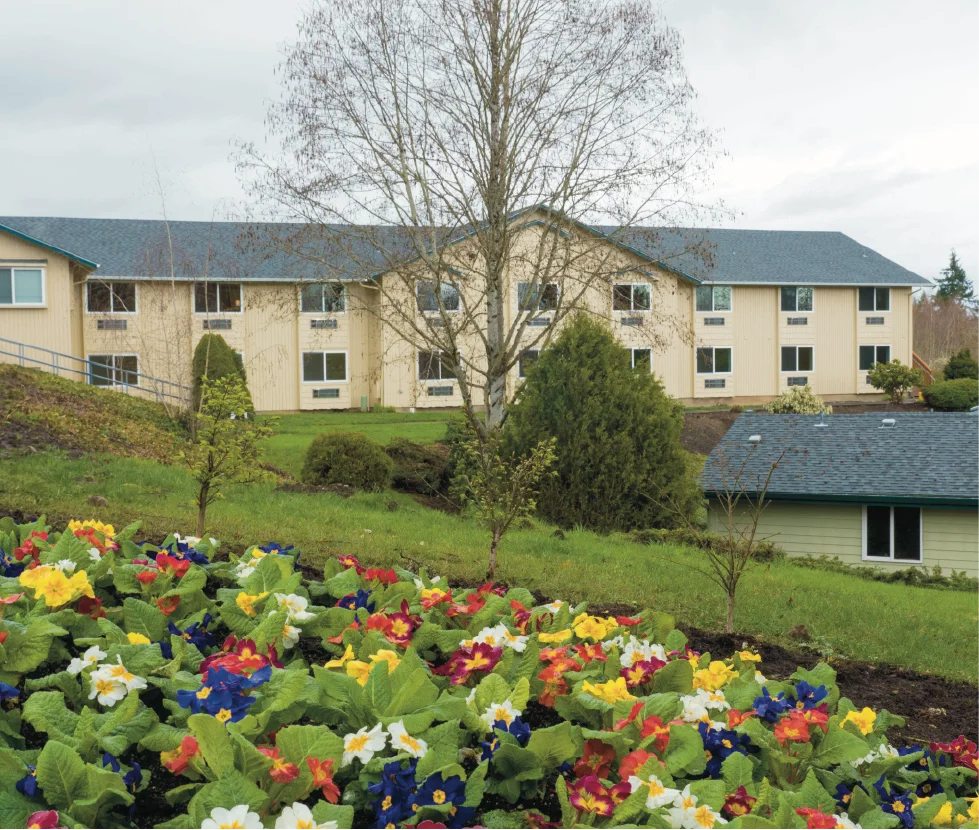
The Ridgefield campus page describes a 22,000-square-foot facility on 5.6 acres, with residential living, treatment rooms, fitness space, and outdoor recreation. The provider’s focus is substance use and accompanying mental health conditions. Its use of the terms inpatient and physician-led describes the program model; the reviewed pages do not independently establish a hospital classification. Someone requiring acute hospital services needs an assessment of that requirement rather than assuming it follows from the rehabilitation terminology.
Medical detox in Vancouver
The dedicated detox center page identifies sixteen beds at 5114 NE 94th Avenue, Vancouver, Washington 98662. It describes adult admissions, an initial medical and mental health evaluation, twenty-four-hour monitoring, withdrawal-symptom treatment, and medication when prescribed by the team. Its stated role is detoxification, followed by continuing treatment at Ridgefield when medically appropriate. It should therefore be considered as one stage of a pathway, rather than the location of the whole residential rehabilitation program.
The provider says many detox stays last several days to around a week, while noting that duration depends on the person’s circumstances. Applicants should explain any previous complicated withdrawal, current prescriptions, and other health conditions so the team can assess suitability. Ask what will happen if a higher medical level is needed and how the receiving residential team gets the discharge information. The Vancouver detox number is 360-719-1480; the main Ridgefield admissions line is different.
Residential addiction treatment
At Ridgefield, the residential treatment description combines a structured daily schedule with individual and group therapy, medical monitoring, meals, and recovery activities. The model is intended to give patients sustained time away from their usual substance-use environment while they work on recovery. That can involve changes to routines, relationships, and practical coping strategies as well as discussion of substance use itself. The appropriate level is decided through assessment, rather than by accommodation preference alone.
The provider’s program overview names cognitive behavioral therapy, dialectical behavior therapy, motivational interviewing, individual counseling, and group work. It also lists twelve-step and SMART Recovery groups. These are concrete elements to discuss when evaluating the program. A person who has found a particular approach useful or difficult previously can explain that experience and ask how it would affect their plan. The public list does not guarantee equal access to every method or a fixed individual-session schedule for every patient.
Ridgefield also describes addiction-focused healthcare, case management, and a chef-led nutrition program. Ask how responsibilities are divided between the prescribing clinician, therapist, nursing staff, and case manager during a stay. A coordinated plan should make it clear whom to approach about symptoms, medication questions, therapy goals, or practical discharge arrangements. Continuous staffing is different from having every professional available for an individual appointment at any hour, so the proposed clinical contact schedule is worth establishing.
Co-occurring mental health needs
The co-occurring-disorders page identifies anxiety, depression, post-traumatic stress disorder, bipolar disorder, and stress-related concerns alongside substance use. The provider describes treating the two areas together rather than leaving psychiatric symptoms outside the addiction plan. This is useful for someone whose prior treatment focused narrowly on stopping substances. It does not establish that Ridgefield accepts every standalone primary mental health presentation, and applicants should explain their current symptoms and psychiatric history during the assessment.
Medication-assisted treatment is included in the provider’s broader program description when medically appropriate. A current prescription, however, should be discussed specifically: ask about continuation, review, availability, and the clinician who will take responsibility after discharge. Similarly, someone wanting focused trauma work can ask which clinician and method are proposed and how readiness is assessed. These questions connect the provider’s published approaches to an individual care plan without assuming that a named therapy or medicine is suitable for everyone.
Partial hospitalization and the daily schedule
Ridgefield’s partial hospitalization program is described as a transition from residential treatment toward greater independence. The page lists individual and group therapy, medical care, medication management, and support for co-occurring disorders. It currently describes around eighteen to twenty treatment hours per week over five to seven days. Confirm the actual schedule offered, because the label PHP alone does not tell an applicant the number of daily sessions, the amount of individual contact, or the living arrangement.
The provider’s living guide says PHP patients may stay in cottages around the facility with shared bedrooms and bathrooms; some cottages have kitchen space. The PHP page also mentions an online option for people cleared to begin at that level. These are different arrangements. Ask which is being recommended, whether housing is included, and where online participants must be located. A residential cottage place and a teletherapy program should not be treated as interchangeable offers.
How long the pathway may take
Current source pages use different estimates for the combined detox and residential phase. The residential page gives thirty-five to sixty days for many patients, while the arrival guide describes twenty-one to twenty-eight days including detox, followed by a possible three to four weeks of PHP. Rather than choosing one figure as a universal promise, this profile treats length as individualized. Ask for a written sequence showing the proposed Vancouver stay, Ridgefield residential period, and any later PHP or outpatient care.
This distinction also helps with planning time away from home. A clinical recommendation may change with progress, and it can differ from the number of days initially approved by an insurer. Someone arranging childcare, employment leave, or a return flight should ask when the team expects to review the plan and how extensions are discussed. The published ranges are planning context; they are not a guarantee of discharge on a specific date or completion of every stage.
Shared rooms, cottages, and accessibility
The current arrival guide says residential rooms are generally shared with one other patient. PHP accommodation also involves shared rooms and bathrooms, with room occupancy affected by the stage of treatment and care needs. The provider mentions two bariatric beds, but this does not establish that every room meets every mobility or equipment requirement. There is no verified blanket private-bedroom offer in the reviewed material. Ask about the exact bed, bathroom, stairs, and route to treatment rooms where those details affect suitability.
The campus amenities include fitness facilities, a basketball hoop, table games, a putting green, disc golf, yoga, and seasonal walking trails. Shared recreation is part of the setting rather than a substitute for clinical treatment. The word pool in the current amenities list refers to a pool table; the reviewed campus page does not establish a swimming pool. Outdoor participation can also vary with season and clinical needs, so photographs should be considered alongside the current schedule and access arrangements.
Meals are prepared by an on-site chef, and the provider describes vegetarian and vegan choices as well as snacks. Food allergies should be discussed before arrival; outside meals and snacks are not permitted under the published policy. Patients look after their rooms and laundry, with some housekeeping support during detox and residential care. Applicants who need help with those tasks can ask how that need would be assessed, rather than assuming hotel-style services or complete independence are the only possibilities.
Phones, family involvement, and practical preparation
Ridgefield’s current guide describes an initial seventy-two-hour stabilization period without routine facility-phone use. During residential treatment, scheduled calls use approved contacts, and personal phone access may be earned after five days of full participation, with a camera security strip. PHP and IOP access is subject to approval and programming hours. These details differ from some other Recovery Village locations, so families should obtain the Ridgefield rules directly and agree how urgent practical messages can reach the patient or staff.
The provider encourages family engagement and describes a virtual family support group on Saturdays from 1 to 3 p.m. Confirm the current schedule, time zone, eligibility, and whether participation is separate from individual family therapy. The patient’s consent determines clinical information sharing. Admissions can also discuss travel assistance and the current packing list. Those conversations are particularly useful when a person first arrives at Vancouver detox and later changes location, because belongings and contact arrangements need to follow the actual pathway.
Payment and continuing care
The pricing page offers individualized cost discussions and insurance verification without a current numerical tariff. Obtain a written estimate for the recommended levels and any housing component. The admission guide says personal costs may include a deductible, coinsurance, and uncovered services. A network’s relationship with an insurer is not enough to establish coverage for a particular policy, admission length, or transfer between locations. Confirm those points with both the provider and the insurer before relying on an estimate.
Ridgefield also publishes an intensive outpatient program overview and describes individual and group work at a lower intensity while patients live outside residential care. Its discussion of approximately nine hours weekly is general IOP information; ask for the actual local timetable and eligibility. A lower level should fit the person’s living situation, transport, and clinical needs. Do not assume residential room charges, meals, or transport remain included after moving to outpatient appointments.
The aftercare page says planning begins during admission and can include relapse-prevention work, medical and therapy referrals, local recovery resources, and online support. Before discharge, establish which appointments are booked, who will manage prescriptions, and how the plan works if the patient returns to Oregon or another state. To discuss the Ridgefield campus and overall treatment sequence, contact 360-857-0007, with the Vancouver detox address and number kept separate when planning the first arrival.
Information checked October 20, 2026 against current Ridgefield and Vancouver provider pages. Published program ranges, policies, and network options are attributed; precise eligibility, location, duration, accommodation, and cost require individual confirmation.
Conditions
Levels of care
Settings
Treatment approach
Individual and group therapy, CBT, DBT, motivational interviewing, twelve-step and SMART Recovery groups, co-occurring care, medical monitoring and medication-assisted treatment when appropriate
Fees & admissions
Confirm current pricing
No current numerical tariff verified on official pricing pages. Request a quote covering separate Vancouver detox, residential care, PHP/cottage housing and IOP as applicable, with insurer authorization, deductibles, coinsurance and uncovered costs confirmed.
Confirm the current program, duration, accommodation and included services directly with the center.
Clinical and insurance assessment; verify first arrival at Ridgefield or Vancouver, transfer arrangements, medical/psychiatric suitability, actual stage durations, shared room or PHP cottage, phone rules, and continuing-care location.