Care at The Recovery Village Atlanta — Roswell
The Recovery Village Atlanta in Roswell
The Recovery Village Atlanta is an adult addiction treatment campus at 11725 Pointe Place in Roswell, Georgia. It serves north Atlanta and the surrounding area through medical detoxification, residential rehabilitation, partial hospitalization, and planning for continuing care. This location is distinct from The Recovery Village South Atlanta in Stockbridge and the network’s outpatient office in Sandy Springs. When comparing services, identify the exact campus before assuming that a program shown in the website’s wider menu is delivered in Roswell.
The current Roswell facility page describes a 31,000-square-foot setting with around-the-clock staff, communal living areas, therapy space, and recreation. Its clinical focus includes substance use and co-occurring conditions. The more specific campus information is useful because a regional brand name such as Atlanta can otherwise obscure substantial differences in location, admission criteria, and treatment purpose. The telephone number published for Roswell is 470-990-9483; Stockbridge now has a separate number.
Addiction care and the mental health distinction
Roswell’s residential program page describes care for adults with alcohol, opioid, stimulant, benzodiazepine, cannabis, or multiple-substance problems. Co-occurring psychiatric concerns may be addressed alongside addiction. An assessment should include the pattern of substance use, previous withdrawal experience, prescriptions, and the symptoms affecting daily functioning. A person does not need to translate those difficulties into a diagnosis before asking for an assessment, but the information helps the team determine the appropriate starting service.
A linked standalone residential mental health page specifically identifies the South Atlanta facility in Stockbridge. This profile therefore does not present Roswell as a verified interchangeable location for that primary psychiatric program. Someone whose main need is mental health treatment without a substance use disorder should confirm the actual receiving campus and its admission criteria. Roswell’s support for co-occurring conditions and Stockbridge’s primary mental health pathway are related network offerings with different location details.
Detox and the move into rehabilitation
The Roswell campus page describes physician-supervised withdrawal management with nursing coverage throughout the day and night. Medical detox may precede residential treatment if the clinical assessment recommends it. The provider’s terminology establishes a supervised treatment pathway but does not independently demonstrate that the campus is a licensed hospital or has an emergency department. Applicants with substantial medical complexity should discuss whether Roswell can provide the necessary care and what circumstances would require transfer to another setting.
Detoxification and residential therapy also have different purposes within the program. The first stage addresses withdrawal and stabilization; later rehabilitation provides time for therapy, recovery skills, and planning. Ask how the team decides when a patient is ready to move between those stages and whether the same clinicians remain involved. If the person is transferring from another provider, clarify what medical information, prescriptions, and discharge documents Roswell needs before confirming the admission date.
The published residential treatment day
The current residential description gives more detail than a simple list of therapies. It describes morning medical check-ins, individual work with a licensed therapist several times per week, structured groups during the day, skills and wellness activities, and an evening period of reflection. Those statements are the provider’s published model, not a guarantee of an identical timetable for every resident. A prospective patient can request the current schedule and ask how appointments change during detox, residential rehabilitation, and later care.
Cognitive behavioral therapy, dialectical behavior therapy, and motivational interviewing are named approaches. The provider describes individual sessions addressing patterns associated with substance use, co-occurring symptoms, and difficult experiences. Group topics include coping, grief, relapse prevention, relationships, and practical life skills. These components should connect to the person’s own goals. Someone returning after earlier treatment can ask how this plan would address the obstacles that remained unresolved, rather than assuming a repeat of a familiar group schedule will be sufficient.
Nutrition, movement, and sleep routines are also included in the published residential model. Their practical role is to create a manageable daily structure around the clinical work. Residents with limitations should discuss suitable participation rather than assume all recreation is mandatory or unrestricted. Likewise, a trauma-informed description does not establish that every person receives a full course of a particular trauma therapy. Ask which intervention is proposed, who delivers it, and how readiness and progress are assessed.
Clinical leadership and medication support
The campus team listing names Ajibola Babatunde, MD, as medical director, Jenna Moran, LPC, LPCC-S, as clinical director, Elsa Anderson, RN, as director of nursing, and Estella Matheu as site CEO. These roles were published when checked in October 2026. They identify the local leadership structure, while an individual’s actual treating team may be different. Ask who coordinates the care plan and how residents raise questions about treatment or practical concerns during the stay.
The program overview includes medication-assisted treatment when medically appropriate, particularly within alcohol or opioid recovery care. It also describes simultaneous support for substance use and psychiatric symptoms. An applicant should provide a complete medication list and ask how continuation, prescribing review, and discharge supply are handled. A broad program statement does not establish that every medication is available at every stage, and it should not be used to make changes without the treating clinician.
Partial hospitalization in Roswell
The Roswell PHP page describes a lower-intensity stage that can follow detox or residential care when suitable. It includes individual and group therapy, medical care, medication management, and attention to co-occurring conditions. The current page refers to approximately eighteen to twenty hours of programming over five to seven days each week, while directing patients to obtain their actual schedule. Those hours are a provider description, not a personalized attendance instruction or a standard imposed on every participant.
Roswell’s current facility page describes PHP without an overnight residential stay. Confirm the precise living arrangement and any separately proposed housing before accepting that stage of care. A person who traveled to Georgia for residential treatment may need a different practical plan from someone living nearby. The same conversation should establish transport, meals, current medical needs, and the next review point. Partial hospitalization does not include medical detox within the PHP service itself.
Length of stay and room arrangements
The arrival guide gives example ranges of seven to ten days for detox, fifteen to twenty-four days for the inpatient substance-use stage, and forty-five to seventy-five days for a total stay including PHP. Elsewhere it describes the longer range more broadly, so this profile does not label all of that time residential. Obtain a written estimate separating each stage, with the planned review dates and the services an insurer has actually authorized.
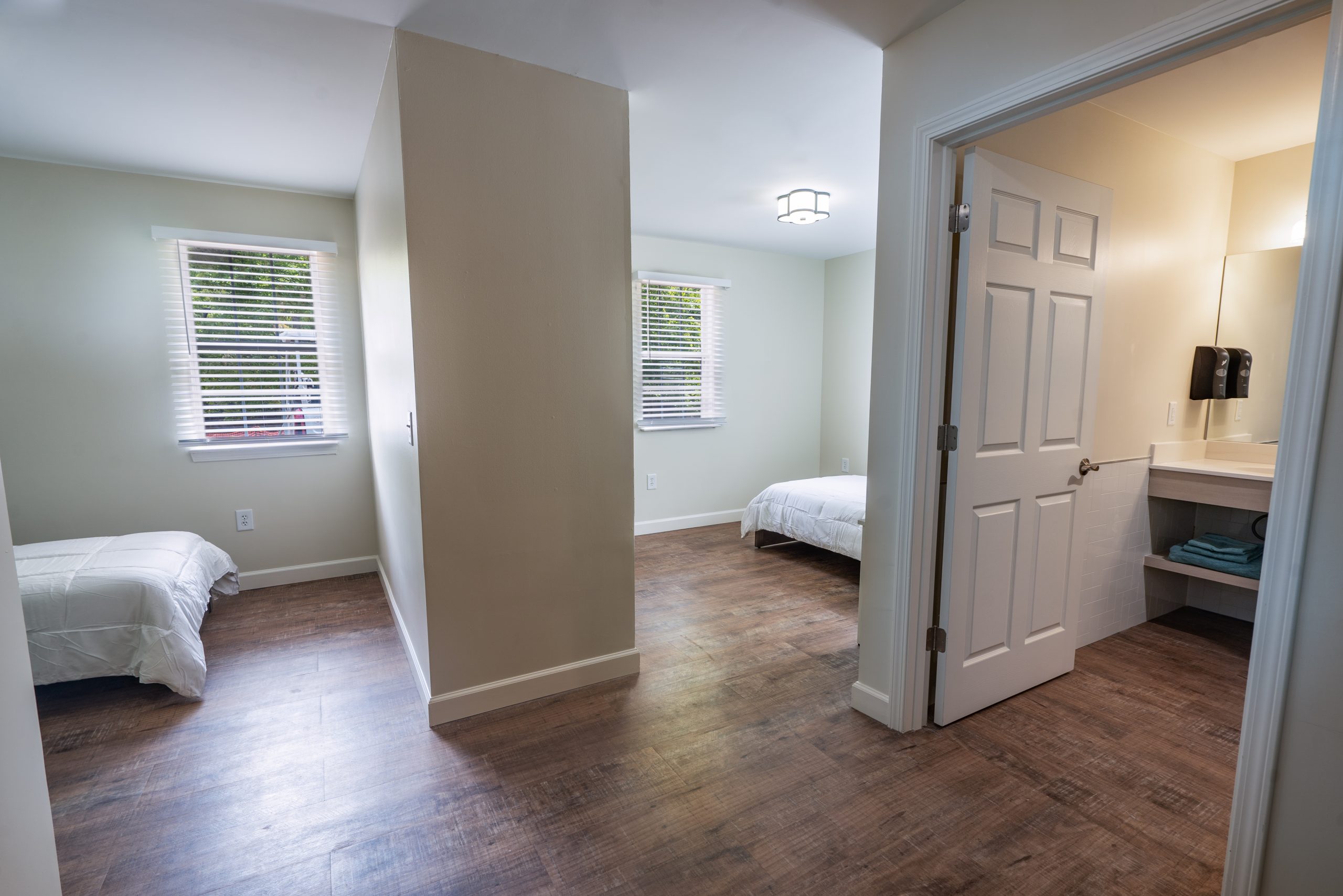
Bedrooms are generally shared with one other patient, according to the same guide, although occupancy can vary with care needs and treatment stage. The reviewed Roswell sources do not establish a guaranteed private-room category. Ask about the offered bed and bathroom arrangement if privacy, sleep, mobility, or equipment use will affect the stay. A modern campus or a comfortable room photograph should not be interpreted as proof of single occupancy or complete accessibility.
Recreational facilities listed at Roswell include a fitness center, half-court basketball, volleyball, lounge areas, table games, and art or music activities. A cafeteria provides meals and snacks, and the provider asks residents to discuss food allergies before arrival. Patients manage their laundry and help keep rooms clean, with some housekeeping support. These are features of communal treatment living rather than an unrestricted resort schedule; participation and access depend on the current program and individual circumstances.
Contact, visits, and preparation
Current policy describes phones being stored on arrival, followed by a seventy-two-hour period without routine phone access. Patients then use facility phones at designated times, with personal phones available again at the PHP level outside groups. That is more restrictive than simply saying the facility allows devices. Someone with essential family or practical responsibilities should explain them before admission and ask how approved contact is arranged, including messages that may need to reach staff promptly.
The provider lists Sunday visits from 3:45 to 5 p.m. for residential and PHP participants, with therapist approval and typically after a family session. This is a published schedule to reconfirm, not an automatic invitation for every visitor. Family involvement should have the patient’s consent and a clear purpose, such as understanding the recovery plan or preparing for return home. Ask separately about virtual contact when relatives live far away or cannot attend at the scheduled time.
The packing guidance limits luggage and requests medical information, identification, and relevant prescribed supplies. It also sets restrictions on tobacco products and other belongings. Obtain the current Roswell instructions and discuss necessary medical devices or medicines specifically, rather than copying the packing list from a sister campus. The admissions team describes assistance with travel planning and some pickups; confirm timing, destination, and any charge before arranging transport to the facility.
Fees and the next stage of recovery
The insurance page offers benefits checks and lists insurer relationships, while noting that deductibles or other personal costs may apply. No current numerical Roswell tariff was verified in the reviewed official material. Ask for an estimate covering the actual detox, residential, and PHP plan, including separately billed services. Confirm the precise policy, network status, and authorization directly; a carrier name on a website does not establish that a particular admission will be fully covered.
The aftercare page explicitly points to the sister outpatient service in Sandy Springs for continuing IOP. That office is separate from Roswell and Stockbridge. Discharge planning can also include medical and therapy referrals, recovery groups, and a relapse-prevention plan. Ask which appointments are actually booked, who will manage medication, and how travel or housing will work. A network referral is most useful when it results in a specific accessible next appointment rather than an unconfirmed list of options.
Information checked October 20, 2026 against current Roswell facility, treatment, admissions, insurance, and aftercare pages. The separate Stockbridge primary mental health program and Sandy Springs outpatient service are identified explicitly; individual suitability, room, duration, and costs require confirmation.
Conditions
Levels of care
Treatment approach
Medical monitoring, individual therapy described several times weekly, CBT, DBT, motivational interviewing, structured groups, dual-diagnosis support, medication-assisted treatment when indicated, and relapse-prevention planning
Fees & admissions
Confirm current pricing
No current numerical Roswell tariff verified. Obtain an individualized quote and confirm exact insurer network status, authorized stages, deductibles, coinsurance and separately billed services. Sandy Springs outpatient care is a separate location and may require separate arrangements.
Confirm the current program, duration, accommodation and included services directly with the center.
Assessment of substance use, withdrawal, medical and psychiatric needs; confirm Roswell rather than Stockbridge, room, medication plan, treatment stages, PHP living arrangements, phone/visit rules and insurance responsibility.