Care at The Recovery Village Columbus — Groveport
The Groveport location
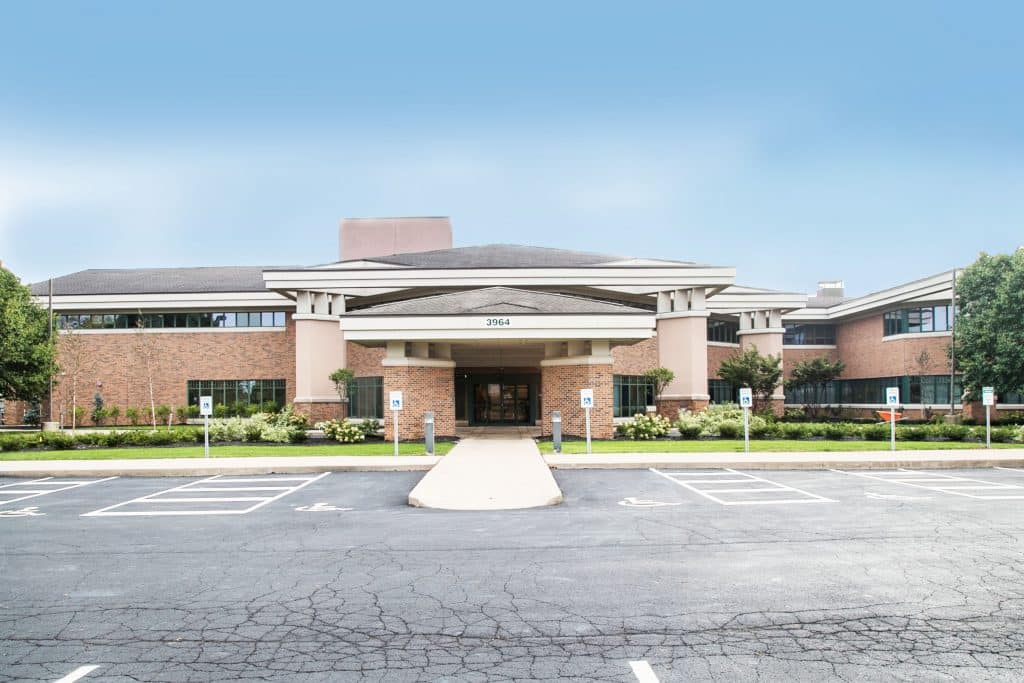
The Recovery Village Columbus is an adult treatment campus at 3964 Hamilton Square Boulevard in Groveport, southeast of central Columbus, Ohio. It offers addiction care, primary mental health treatment, and support for co-occurring conditions through several levels of care. The exact suburb and address matter when arranging admission or later appointments: this is the Groveport campus, not a generic listing for any Recovery Village service in Ohio or a treatment office in downtown Columbus.
The facility page describes 6.5 acres with treatment and living spaces, a gym, sports areas, art facilities, and outdoor recreation. The more detailed residential page identifies a 52,400-square-foot, mixed-gender facility serving adults eighteen and older. Those facts help establish the setting, but the important first decision is the clinical track and level being offered. A room inquiry alone does not establish suitability for withdrawal management or psychiatric treatment.
Separate addiction and mental health tracks
The addiction pathway includes medical detoxification, residential rehabilitation, partial hospitalization, and intensive outpatient care. The provider also has a primary mental health program at this location. It describes voluntary, subacute residential care for people who need more support than routine outpatient appointments but do not require immediate acute stabilization. Examples in the provider’s material include depression, anxiety, trauma-related disorders, bipolar disorder, and schizophrenia, subject to individual assessment rather than automatic acceptance based on a diagnosis.
The mental health page specifically identifies circumstances that may exceed its scope, including immediate risk of harm and physical conditions requiring active hospital-level supervision. Its use of the word inpatient does not, by itself, establish a hospital admission at Groveport. Someone leaving an acute psychiatric facility may be considered for continued residential support once appropriate. The admission team needs current information about symptoms, safety, medical needs, and the discharge plan to determine whether this is the right next setting.
When substance use and psychiatric symptoms are both present, the provider says the medical assessment determines which track best fits the primary need. The mental health pathway can include detox and additional addiction groups where required, while the addiction track also addresses co-occurring symptoms. Ask which unit and schedule are proposed, who will manage prescribing, and how the two areas of treatment are coordinated. A dual-diagnosis label is most useful when it leads to a clear individual plan.
Detoxification and the residential program
Medical detox is described as a supervised stage with twenty-four-hour monitoring before the ongoing rehabilitation work. The provider’s current residential information gives a typical detox range of seven to ten days, while emphasizing individual needs. That estimate is not a prediction for every patient. Tell admissions about current medicines and previous withdrawal problems, and ask how the team determines readiness for therapy participation or transfer between levels. Complex medical requirements need explicit acceptance rather than an assumption based on continuous staffing.
Residential care combines individual therapy, daily groups, medical and psychiatric support, medication management, family involvement, and recovery activities. Patients live on the campus, with a schedule designed around treatment rather than normal work or household demands. The published model includes meals, therapy, exercise, recreation, and recovery meetings during the week. Ask for the current timetable and the expected amount of individual contact, since the overall program description does not provide a single appointment frequency that applies to every resident.
Specific therapies described by the provider
The residential page names cognitive behavioral therapy, dialectical behavior therapy, cognitive processing therapy, and EMDR when clinically appropriate. Group subjects include managing cravings, coping skills, relapse prevention, and developing a recovery plan. The provider also lists twelve-step and SMART Recovery groups and art therapy. These are meaningful program details, but the presence of several approaches should not be read as a guarantee that everyone completes a full course of every method during one admission.
An applicant can ask how the therapist selects methods for the difficulties they are experiencing. For example, a person concerned about trauma work may want to understand readiness, pacing, privacy, and coordination with psychiatric care. Someone returning after earlier rehabilitation may want to focus on the situations in which previous coping plans broke down. These are ways to discuss the provider’s published model in practical terms, rather than treating the therapy list as a standard package that is identical for all patients.
Medication-assisted treatment for alcohol or opioid use disorders is also described when medically appropriate. This should be integrated with the wider plan and with prescribing arrangements after the stay. Confirm how a current medication will be assessed and continued, and whether any proposed change requires coordination with an outside clinician. The directory does not recommend a particular medicine or dosage, and a provider’s general medication statement does not establish availability of every formulation at each care level.
Team roles and clinical communication
The current Groveport team page names Jordan Koegle, LISW-S, as clinical director, Amber Hunt, RN, as director of nursing, and Judy McGlone, MA, BSN, as site CEO. These are the provider’s published leadership roles as checked in October 2026. The page is not a complete roster of every clinician. Ask who will be responsible for the person’s medical and psychiatric review, individual therapy, and case management during the proposed admission.
A useful communication plan also makes it clear how the resident can request a review if symptoms, medication effects, or treatment goals change. Family members may have information that helps, but the patient should understand how consent and information sharing work. The aim is a coordinated plan with named responsibilities rather than several disconnected services. Leadership credentials on a website do not establish that every resident has direct appointments with each person listed.
PHP and daytime intensive outpatient care
The Groveport PHP page describes approximately eighteen to twenty treatment hours weekly over five to seven days. It includes groups, individual sessions, psychiatric support, medication management, and planning for a lower level of care. PHP is delivered on the Groveport campus and is described without an overnight hospital stay. Ask separately about actual housing arrangements, attendance times, meals, and transport; the care-level name does not establish that a residential bed remains included.
The specific IOP page describes at least nine weekly treatment hours, generally on weekdays during the daytime between 9 a.m. and 5 p.m. Patients may attend on campus or through telehealth when the team considers that appropriate. This is not an evening-program promise. Someone balancing employment, education, or caregiving should request the exact session schedule before assuming it will fit around a conventional working day.
The provider describes IOP as commonly lasting two to six weeks, with the final duration based on needs and progress. It can follow residential treatment or PHP, or sometimes be an initial level after assessment. Transport is not provided for outpatient appointments. The broader outpatient page also describes continuing individual, group, and medication support. Clarify the precise program offered and where longer-term appointments take place, especially if the patient will return outside the Columbus area.
Duration and the accommodation actually offered
For addiction care, the residential page describes approximately twenty-eight to thirty days after detox, with many combined pathways through PHP and IOP totaling around fifty to sixty days. These figures concern different stages and should not be added or substituted without discussing the individual plan. The mental health page gives a usual residential range of two to four weeks. Clinical progress and insurance can affect the proposal, so obtain a written sequence and expected review dates for the actual track.
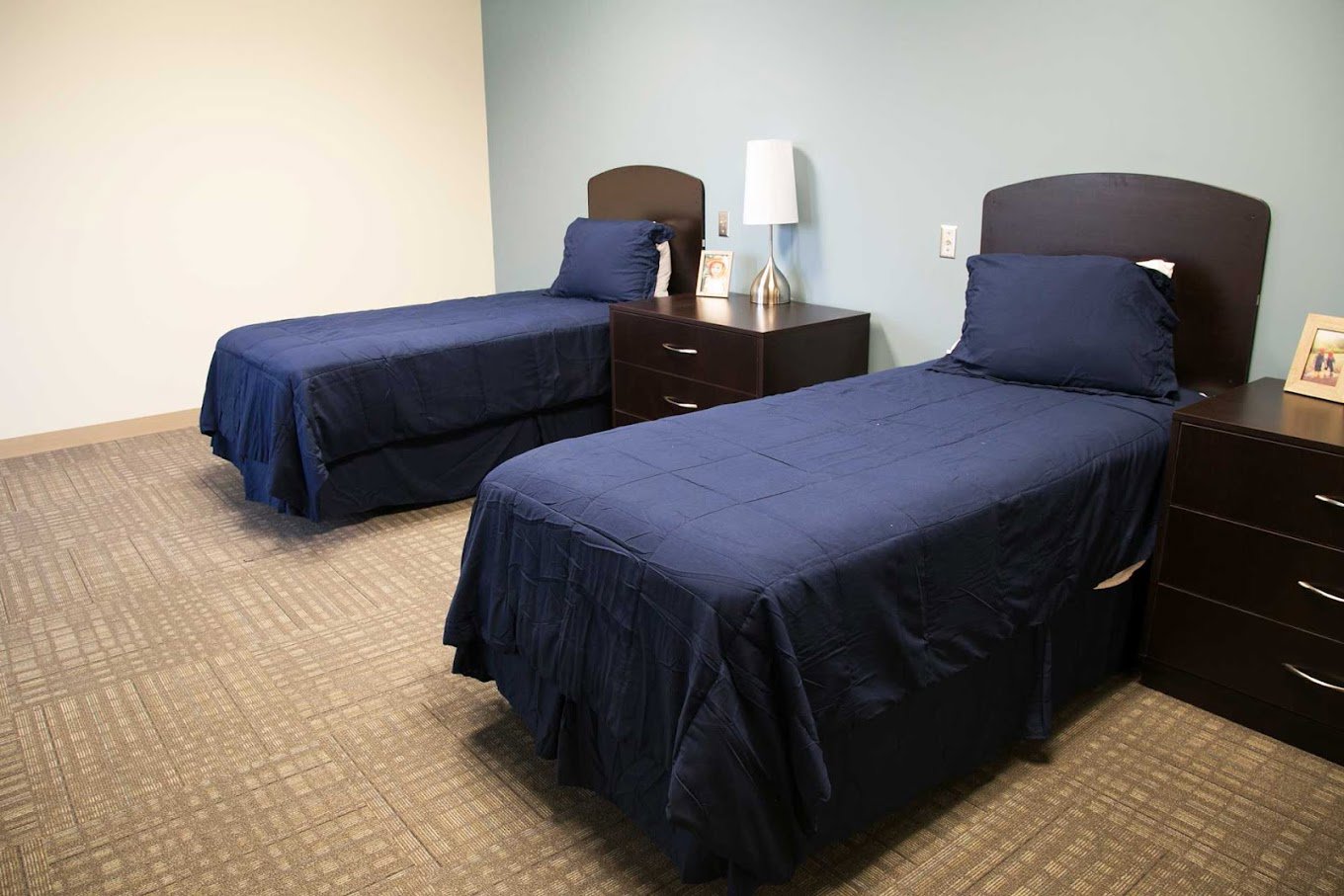
The arrival guide says bedrooms are usually shared with one other client, with a sink and adjoining bathroom. The residential page also expressly mentions private rooms. Together, those sources support a mixed inventory with sharing as the usual arrangement, not a guarantee of a private room. Confirm current availability, any supplement, bathroom arrangements, and whether the room changes with the level of care before making privacy a deciding factor.
The campus offers a gym, paved sports areas, an art studio, recreation space, a weather-dependent outdoor fire pit, and laundry facilities. Meals and snacks are prepared on site, and relevant dietary needs should be discussed in advance. Exact access to recreation depends on the current program and the person’s care plan. A prospective resident with mobility or equipment requirements should check the offered room and treatment areas specifically rather than infer accessibility from the overall size or appearance of the campus.
Devices, family support, and arrival
Current device policy allows an initial safety call with family, followed by seventy-two hours without personal devices. After that, phones, tablets, and laptops receive a security strip over the camera; they are not taken into group therapy. These rules differ from some sister facilities. Confirm any essential contact or equipment arrangement before admission, and use the Groveport packing list rather than a generic network checklist. The provider asks people to limit baggage and bring identification, medical information, and relevant contact details.
Weekly family recovery support is described both in person and through telehealth. Residential visits require therapist approval and a completed family session, with dates arranged for the appropriate level of care. Off-site family visits are described only for approved PHP or IOP participants. Ask whether the proposed family contact is education, a support group, individual family therapy, or visiting time, because those serve different purposes. Participation and clinical information sharing depend on the patient’s consent and treatment plan.
Fees and continuing support
The current pricing page offers individual estimates and financial counseling without a numerical tariff. It lists insurer relationships, including a qualification that Humana is listed for addiction treatment. That should not be generalized to every mental health admission or policy. Obtain the actual quote and authorization for the recommended track, stages, room, and separately billed services. Ask about deductibles, coinsurance, and the financial effect of extending care beyond the initial authorization.
The aftercare page says planning is included, while later services such as ongoing therapy may have additional costs. Possible components include medication follow-up, recovery groups, local referrals, sober-living recommendations, and alumni activities. Before discharge, distinguish confirmed appointments from suggestions and identify who will manage prescriptions. Call 614-362-1686 to discuss the Groveport program, the exact track, and a practical sequence that continues beyond the residential stay.
Information checked October 20, 2026 against current Groveport program, facility, living guide, team, pricing, and aftercare pages. Provider descriptions do not guarantee a specific outcome; eligibility, room, duration, schedule, and personal costs require individual confirmation.
Conditions
Levels of care
Settings
Amenities
Treatment approach
Individual and daily group therapy; CBT, DBT, CPT and EMDR when indicated; medical/psychiatric care, medication-assisted treatment as appropriate, twelve-step and SMART Recovery groups, family support and aftercare planning
Fees & admissions
Confirm current pricing
No numerical current tariff verified. Obtain a track- and stage-specific estimate with room, medication, authorization, deductibles and coinsurance. The current pricing page qualifies Humana as addiction treatment; do not infer mental-health or every-policy coverage. Later therapy can cost extra even when aftercare planning is included.
Confirm the current program, duration, accommodation and included services directly with the center.
Adults eighteen and older; track selected by medical/psychiatric assessment. Confirm medical capability, current safety, prescriptions, room, stage sequence, daytime IOP schedule, phone rules, family involvement and exact benefits. Subacute mental health care is not acute hospital stabilization.