
Care at Summit Malibu — Sea Vista Drive
Residential treatment on Sea Vista Drive
Summit Malibu provides residential substance-use and co-occurring mental health treatment at 27026 Sea Vista Drive in Malibu, California. Its official residence page describes a gated property of nearly three acres with canyon and ocean views. Treatment and accommodation form one residential program at this location. The hilltop setting should be distinguished from a beachfront property, and photographs should not be taken as evidence of private beach access.
The relevant starting point is the person’s treatment needs and the service proposed after assessment. A residential address, a room category, and a list of therapies answer different questions. Ask Summit to explain how they come together for the intended stay, including the responsible clinical team, any withdrawal-management requirements, the actual timetable, and the arrangements that follow departure. An attractive setting cannot establish clinical suitability on its own.
Addiction and co-occurring mental health needs
Summit describes a program that considers substance use alongside related psychological and psychiatric concerns. Its residential information includes medical and psychiatric assessment and individualized treatment planning. A co-occurring-care description does not mean that every psychiatric presentation can be managed at the property. The admissions team should review the actual concerns and explain the scope and limits of the proposed residential service.
If the person has several diagnoses or previous episodes of treatment, ask which issues the team would prioritize and how it would coordinate them. Provide relevant records through the provider’s agreed process and discuss communication with current clinicians. It is useful to describe what worked previously, what was difficult, and what support was missing afterward. Those details can make the assessment more informative than a broad request for a particular type of rehab.
The initial assessment and medical pathway
The official program description includes detoxification when needed, medical and psychiatric evaluation, and ongoing review during the stay. These are advertised elements of the model; their application depends on assessment. Ask where any withdrawal-management stage takes place, which professionals provide the medical support, and how overnight concerns are handled. The term residential does not itself establish the resources of an acute hospital.
Before travel, clarify which physical-health or psychiatric needs would require a different setting and how a transfer would be arranged. If preliminary care is recommended, confirm that the receiving service has accepted the referral and how Summit will receive the necessary information afterward. The financial proposal should identify separately billed medical services or transportation so that a clinical change does not create an unexplained change in the quoted package.
Individual therapy and the treatment plan
Summit’s program information describes individual treatment, group work, CBT, DBT, strengths-oriented approaches, and trauma-focused options such as EMDR. Those methods serve different purposes and should be selected for the person’s needs. Ask which interventions are recommended, who will deliver them, and what the expected weekly contact looks like. An extensive therapy list does not establish a particular appointment frequency for every resident.
A useful plan explains what the person will work on, how progress will be reviewed, and how concerns about an intervention can be raised. Ask how the therapist coordinates with psychiatric and medical staff when several aspects of care overlap. If additional assessment is proposed, clarify what question it is intended to answer and how it may change treatment. These discussions help connect the professional roles into an understandable course of care.
Groups and different recovery-support approaches
The provider advertises both twelve-step and non-twelve-step options within its approach. Its residential description also includes group therapy and practical recovery work. Ask how those components are chosen and how much of the timetable involves contact with other residents. A preference for one type of peer support should be discussed directly, rather than assumed from the program’s broad use of several recovery models.
Someone who has previously found a group setting difficult may want to know how participation is introduced and what individual support is available. Conversely, someone seeking a recovery community may want to understand which connections can continue after the residential stay. The important distinction is between clinician-led therapy, peer meetings, and informal shared time. They can each be part of the experience, but they are not interchangeable services.
Private rooms and the shared Yin and Yang option
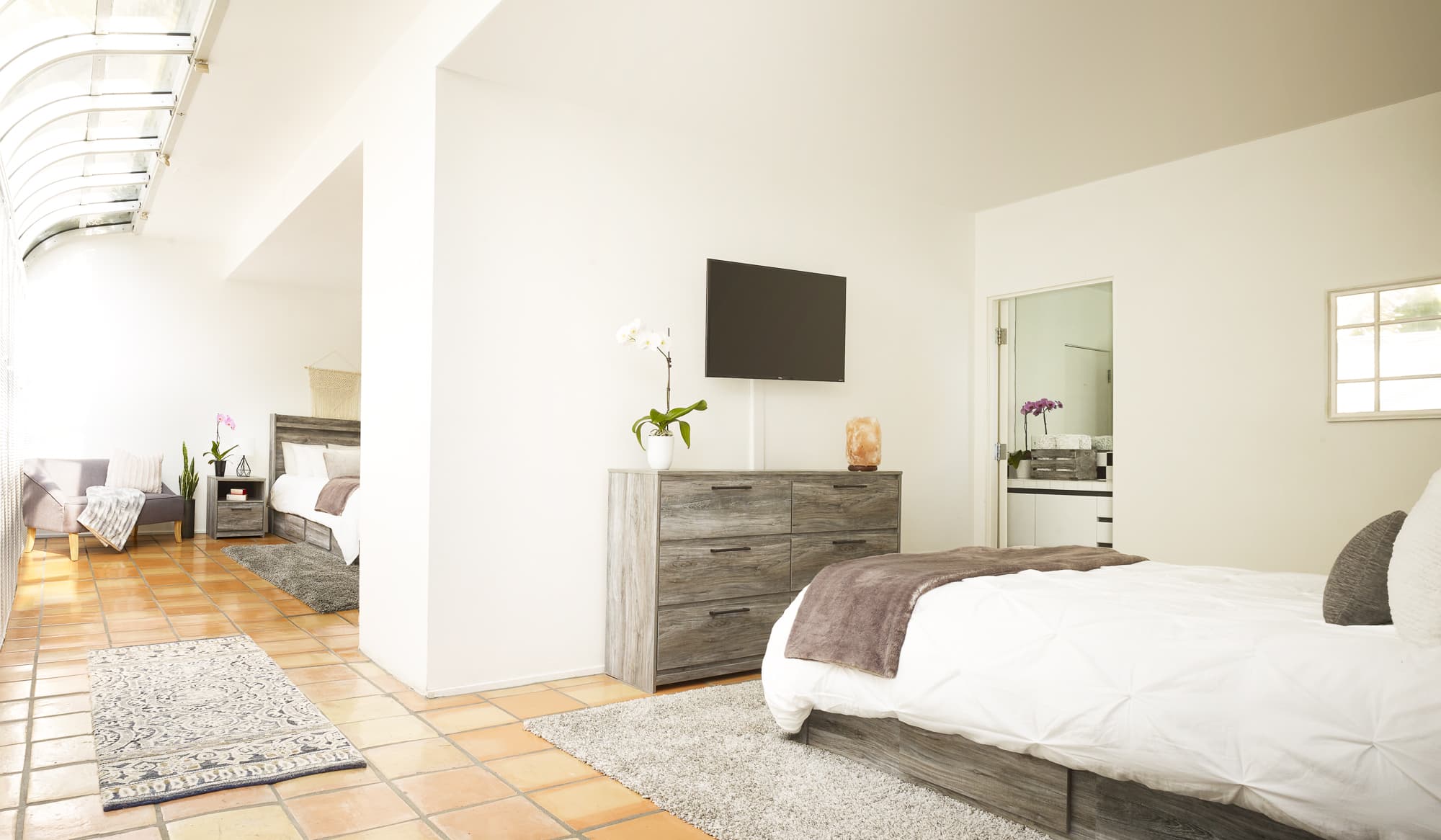
Summit’s official residence page presents several private room choices, including New Moon, Sun, Horizon, and Sage. It also describes Yin and Yang as a shared room with two full-size beds separated by a dividing wall. That configuration should not be represented as two completely private bedrooms. Ask which room is actually offered, how the bathroom is used, and which features are included in the written price.
A private-room estimate does not guarantee that every named suite is available at the same rate. Confirm the assignment before treating a photograph or room name as part of the booking. Explain any mobility, sleep, sensory, or bathroom needs and ask whether the offered layout meets them. If a room change becomes necessary during treatment, the provider should explain the alternative arrangement and any effect on the fee.
The residence, outdoor space, and activities
The property description includes a pool, outdoor areas, and spaces for relaxation within the gated campus. The program also advertises activities such as equine work, horticulture, art, music, and yoga. These examples describe possible elements of the experience, not a guarantee that every activity will be suitable or available during every stay. Ask which activities are in the proposed timetable and which involve separate providers or charges.
The purpose of an activity should be clear when it is presented as part of treatment. Ask who leads it, how it connects to the person’s goals, and what alternatives are available if participation is unsuitable. Also discuss ordinary daily arrangements: meals, quiet time, laundry, personal belongings, and necessary communication. Understanding the practical routine can help the person assess whether they can participate comfortably in the residential setting.
Family contact and participation
Family involvement appears in Summit’s residential treatment description. Ask what form it would take for the particular admission, who the resident wants included, and whether participation is offered in person or remotely. A visit, a joint therapy appointment, and a logistical conversation with admissions are different forms of contact. Each should have a clear purpose and an agreed approach to confidentiality.
Supporters may need to coordinate travel or responsibilities at home while the resident focuses on treatment. Discuss the practical information that can be shared and the person’s preferences about clinical updates. Before departure, consider what assistance the resident actually wants and what support relatives can reasonably provide. Family participation should fit with the continuing-care plan, including any work that is better addressed through separate ongoing professional appointments.
A twenty-eight-day price reference
Recovery.com displayed two room-specific estimates when reviewed on October 20, 2026: USD 48,000 for twenty-eight days with shared accommodation and USD 58,000 for twenty-eight days with a private room. These are third-party program estimates. They should not be relabeled as thirty-day or calendar-month prices, and they do not establish that every room, intervention, or extra service is covered.
Ask Summit for a current quotation stating the recommended duration, exact room category, clinical services, medical arrangements, and any additional charges. Clarify medication, outside consultations, assessments, transportation, and optional activities. If comparing against another program’s thirty-day estimate, keep the different periods visible rather than silently prorating either package. A price comparison is useful only when the actual duration and included services are understood.
Payment, insurance, and changes during the stay
Summit’s website discusses insurance arrangements, including PPO plans, while a directory cash-pay listing describes a separate way to fund treatment. Neither statement confirms the benefits available under a particular policy. Ask the provider and insurer to establish the relevant service, authorization requirements, network position, and remaining financial responsibility. A preliminary benefits conversation is different from confirmation that the proposed stay will be paid for.
The written terms should explain deposits, cancellation, early departure, extra days, and changes in room or clinical services. If the plan is revised after assessment or during treatment, ask how the revised recommendation and its cost will be communicated. Keep the accepted quotation and any later amendments. Clear financial information helps the person evaluate a proposed change without relying on a broad directory range or an earlier telephone estimate.
Admission timing and travel to Malibu
The provider’s residential materials support an individualized course of care; the secondary twenty-eight-day price is not a universal clinical recommendation. Ask about the current minimum stay, expected review points, and what determines readiness for the next stage. A projected date can help with planning, but the actual recommendation may change as the team learns more about the person’s needs and response to treatment.
Confirm the accepted arrival date, the Sea Vista Drive receiving address, and the current preparation instructions before booking travel. If transport is arranged, establish who supplies it and whether it is included. Explain essential responsibilities that may affect scheduling and discuss the current policy for phones and outside contact. If an admission depends on preliminary treatment elsewhere, agree the handover and arrival arrangements with both receiving teams.
Leaving with a usable continuing-care plan
Summit’s program description includes relapse-prevention work and attention to practical recovery skills. Ask how those elements translate into the plan after residence, including which appointments, referrals, or follow-up contacts are actually offered. Do not assume that alumni contact, informal support, and ongoing clinical treatment have the same purpose or cost. Clarify the service, provider, frequency, and location of each proposed next step.
Before departure, confirm which clinicians have accepted the referral, how information will be shared with consent, and who handles arrangements that remain incomplete. If care continues in another state or country, discuss the receiving service’s ability to provide the planned support. A useful transition connects the work completed at Summit with everyday routines and available professional help, while leaving the person clear about whom to contact when an agreed appointment or service does not happen.
Sources and further comparison
Source review: October 20, 2026. Summit Malibu overview and contact; residential treatment description; residence and room configurations; secondary room-specific twenty-eight-day estimates. Provider statements describe the advertised service; they do not establish an individual admission decision, current availability, or treatment outcome. Price evidence is identified separately from the provider’s own fee policy.
For a broader comparison, explore treatment options in the United States and read questions to ask a treatment center. Use the answers from the actual receiving team to compare the clinical plan, practical arrangements, and written financial terms.
Conditions
Levels of care
Settings
Amenities
Treatment approach
Individual and group treatment, CBT, DBT, selected EMDR, medical and psychiatric review, family involvement, relapse prevention, and twelve-step or non-twelve-step recovery options
Fees & admissions
USD 48,000–58,000 / program
Recovery.com estimates checked October 20, 2026: USD 48,000 shared accommodation or USD 58,000 private room for 28 days. Not a provider quote, 30-day price or calendar-month rate. Confirm actual room, all clinical and medical inclusions, extras and additional-day terms.
Confirm the current program, duration, accommodation and included services directly with the center.
Confirm the 27026 Sea Vista Drive campus, clinical and detox suitability, overnight support and transfer pathway, exact room, current duration-specific quotation, insurance responsibility and continuing-care handover.