Care at The Lighthouse Bali — Sanur
Individual treatment in a private Sanur villa
The Lighthouse Bali provides individualized addiction and trauma programs in private villas in Sanur, Bali. Its substance-use program page describes a model in which clinicians and other practitioners work with the client at their accommodation, supported by a personal recovery schedule. This Sanur listing covers the service and its villa options together. A villa shown in photographs is an example of offered accommodation, not confirmation that it will be assigned for a particular program or price.
One-to-one treatment describes the delivery model rather than necessarily meaning the entire organization has only one client. The provider’s FAQ says it accepts up to three inpatient clients at a time, each in a separate villa with their own support and program. Its intensive trauma offering is separately described as one client at a time. Confirm which program is proposed, the assigned villa, and the staffing arrangement instead of assuming every service has the same capacity and coverage.
The primary addiction program and clinical contact
The twenty-eight-day primary addiction program includes pre-arrival assessment, a physician visit in Bali, detox-related medication when needed, villa accommodation, local transport, recovery support, and exit planning. It combines core clinical and recovery work with selected wellness activities. The published description treats twenty-eight days as a shorter program option and encourages individualized discussion of longer care. An extension should be agreed through clinical review and a clear additional quotation, rather than assumed to be included.
The core-modules page specifies three weekly hours with a clinical psychologist, two educational sessions, and recovery-tools work with coaches or peer support staff. The primary package separately lists six weekly hours of peer counseling and two personal-development sessions. These are different forms of contact. Recovery coaching, education, massage, and professional psychotherapy should not be added together and presented as an equivalent number of psychologist hours. Ask for a personal timetable showing the clinician and duration for each component.
Published psychological approaches include CBT, schema therapy, EMDR, acceptance and commitment therapy, and mindfulness-related work. The therapist selects methods following assessment, while educational sessions address subjects such as cravings, triggers, self-esteem, and patterns of thinking. The practical question is how these elements connect: individual therapy can explore a particular difficulty, while recovery support helps the client apply an agreed strategy during daily life. The provider does not establish that every client completes a full course of each named therapy.
The team page describes selecting the consulting therapist and support team around the client’s needs and offers an opportunity to speak with a practitioner before arrival. The distinction between a psychologist, physician, recovery coach, and wellness practitioner matters when comparing plans. Ask who will provide assessment, prescribe medication, deliver psychotherapy, and remain available between sessions. Overseas qualifications described by a provider should not be assumed to establish every professional authorization relevant to care in Bali.
The separate intensive trauma pathway
The trauma page describes an intensive program associated with psychologist Julia A. Andre, using schema therapy and EMDR-related work. It distinguishes focused work on a single incident from a broader approach to repeated or earlier experiences. The proposed focus and pace should be established during assessment. An intensive format does not guarantee that all trauma-related difficulties resolve within a fixed number of appointments, and longer-term support may still form part of the plan.
The current package specifies forty fifty-minute therapy sessions over twenty-eight days, or ten sessions weekly. Ten fifty-minute sessions equal eight hours and twenty minutes of direct session time. A later section of the same page describes forty hours in total, so obtain the exact contact-time commitment in writing. The trauma package also differs in staffing: its current list includes weekend-day staff and says night staff can be arranged at additional cost. It should not inherit the addiction program’s blanket twenty-four-hour support description.
Medical assessment, detox, and care boundaries
The medical detox page describes coordination with local specialist physicians and hospitals, with detox usually managed in the client’s villa when suitable. It gives a typical period of ten days or less for many substances, while noting that benzodiazepine withdrawal and more severe cases may need longer. Those general descriptions do not determine an individual’s treatment. The prescribing clinician should assess the substances, recent use, withdrawal history, physical condition, and current medication before agreeing a plan.
The addiction program describes round-the-clock recovery coaches and support staff. It does not establish continuous on-site physician or registered-nurse presence in every villa. Confirm exactly who remains overnight, how medical observations are performed, when a clinician is contacted, and when hospital transfer would be required. The provider’s exclusions also mention additional charges for extended hospital detox. A private villa and an individually organized treatment plan should not be represented as a hospital admission simply because the program uses inpatient terminology.
Eligibility and outpatient counseling
The admission criteria describe voluntary participation for adults aged eighteen or older, private medical or travel insurance, and the ability to manage basic self-care and ordinary facilities such as stairs. Discuss any mobility, personal-care, or medical-support requirement before booking a villa. The same page uses older wording that says the service is not a primary treatment center, while current program pages market primary addiction treatment. The useful clarification is the actual care model and capability being contracted for.
The therapy page also describes private counseling at the Sanur office and online, including individual adult and adolescent work, couples counseling, and family therapy. That outpatient availability does not establish an adolescent residential addiction program; the residential admission criteria remain eighteen and over. Someone living in Bali and seeking appointments without accommodation should ask specifically about the outpatient service, therapist availability, language, session fee, and whether the intended method can be delivered remotely when needed.
Rooms, meals, and personal routines
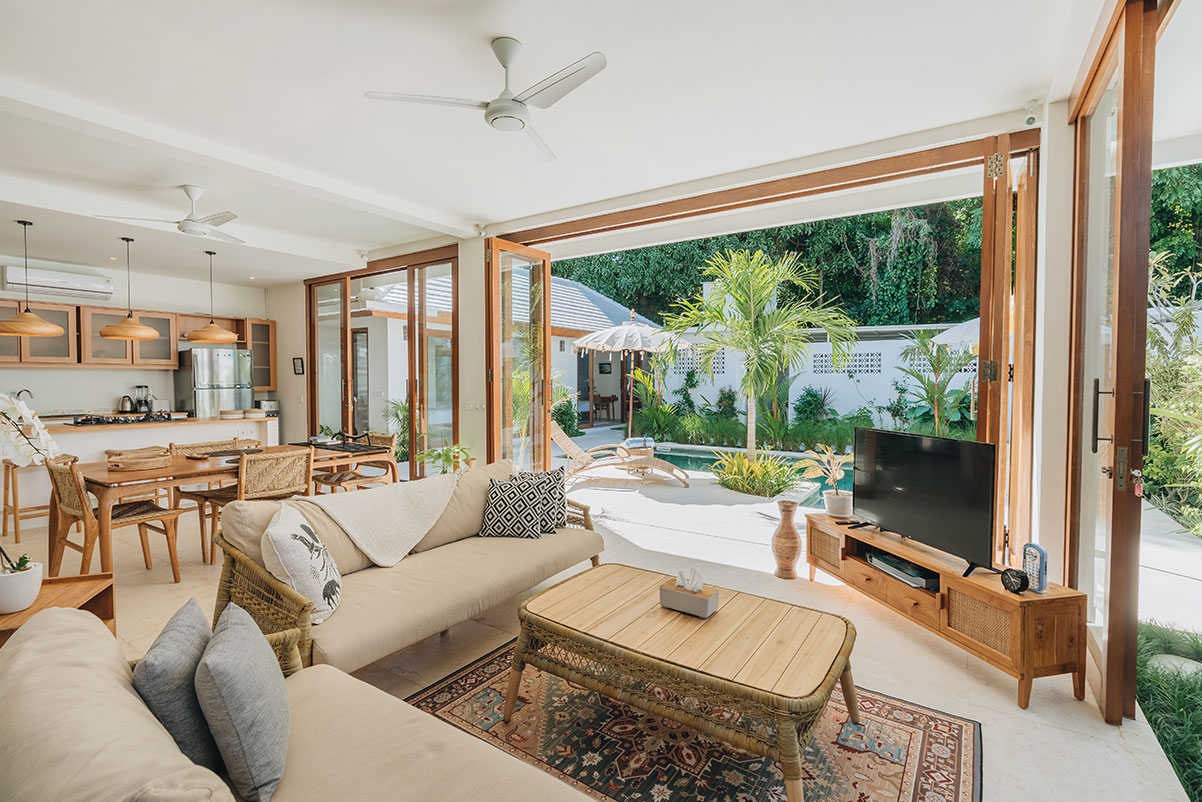
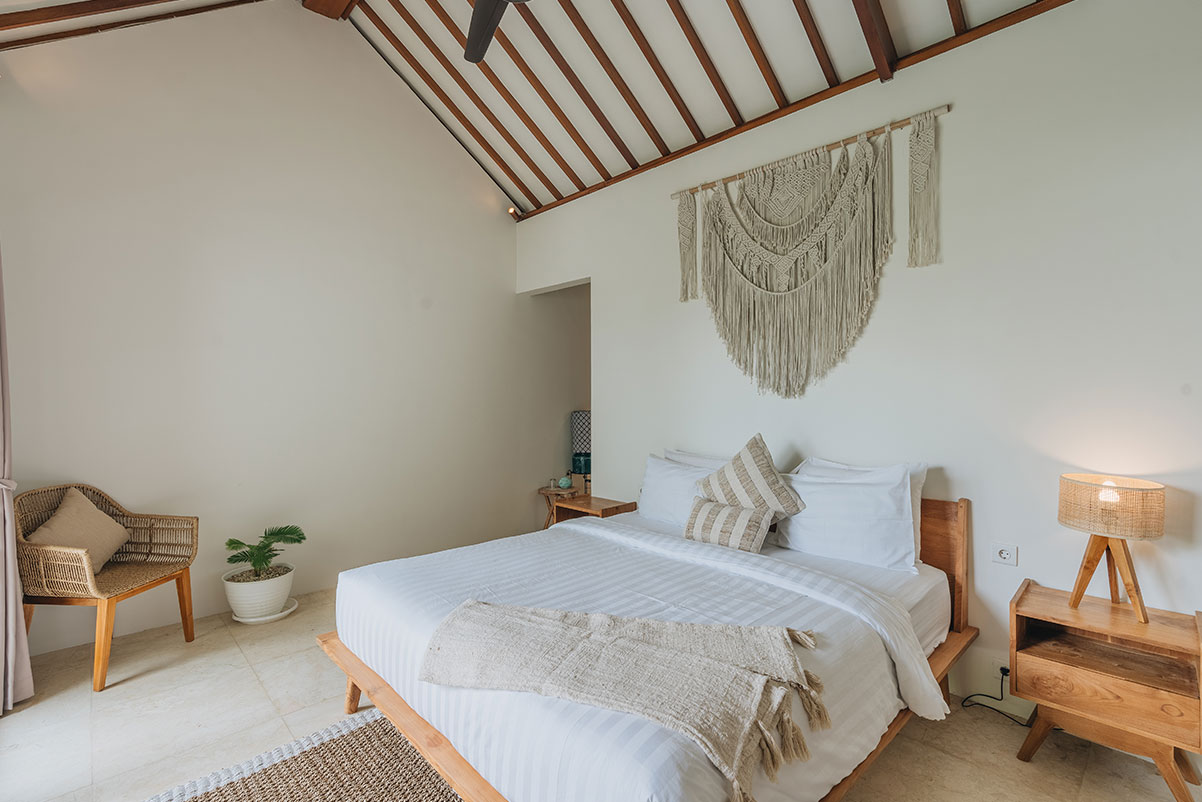
Villas are described as private, serviced accommodation in Sanur with features such as air conditioning, Wi-Fi, and a pool. The photographs currently associated with this listing show Villa Marco as an example of the provider’s accommodation. Confirm the actual address, bedroom and bathroom arrangement, stairs, pool access, and staffing spaces for the booked stay. The clinical and support team will need access to the villa, so private accommodation should not be confused with being entirely alone or free of the treatment schedule.
The primary program describes weekday lunch and dinner prepared by a private chef, with breakfast foods, drinks, and snacks stocked at the villa. Weekend meals may be ordered in or taken outside according to the arrangement. Discuss allergies and dietary needs during assessment and confirm what the quote includes for weekends. That detail matters when comparing an inclusive-looking package with another program, because a chef preparing selected meals is not necessarily the same as every restaurant meal or personal food request being covered.
Clients can help choose wellness and activity modules, with options such as yoga, personal training, art-related work, or surfing. Recovery meetings are optional under the published model. The program also allows planned device use and time for essential family or business contact, while prioritizing treatment. Agree those times and any limits in advance. Flexibility is most useful when it forms part of a clear schedule; it does not establish unlimited work time or availability of every activity regardless of medical readiness.
Program-specific prices and exclusions
The exact Recovery.com listing, rechecked on October 20, 2026, estimates US$32,500 for a twenty-eight-day addiction program and US$44,900 for a separate twenty-eight-day trauma program. These are third-party estimates, not official provider tariffs or a range of room upgrades for one addiction package. This listing’s numeric price refers only to the addiction estimate. A precise thirty-day charge has not been established, and no daily prorating or named-villa assignment is assumed.
The provider’s current descriptions differ on some inclusions. One primary-program list includes an entry visa and extension during treatment, while the trauma page’s exclusions list visas separately. Flights, unrelated medical care, extended hospital detox, extra clinical sessions, and unusually extensive activities can also create additional charges. Ask for a written list attached to the particular package. The fee should identify the villa, professional session time, overnight staffing, meals, transport, and the rate for extra days or services.
The FAQ describes a fifty-percent deposit to secure a place, with the remaining balance due before treatment begins. Confirm the current payment, cancellation, refund, and extension terms before paying. The requirement to hold medical or travel insurance does not itself mean that the program fee is reimbursable. Entry requirements, medication transport, and insurance conditions should be checked for the person’s circumstances and travel dates; broad travel statements on a treatment website do not replace that individual preparation.
Aftercare and the return home
The primary addiction program advertises six months of aftercare. Published descriptions include relapse-prevention and exit planning before departure, continuing counselor contact by video, and contact with the recovery coach. Obtain the actual schedule, included appointments, and communication arrangements. Six months of availability is not necessarily six months of unlimited therapy. A client returning to another country should establish which professionals can continue care there and how medication or medical follow-up will be transferred to an appropriate local clinician.
The Lighthouse Bali may be considered by someone seeking an individual villa-based treatment model with a clearly defined clinical schedule. The key differences between its addiction, trauma, and outpatient services are clinical hours, support coverage, eligibility, accommodation, and price. The published English-language contact is +62 858 5731 3512. Sources were checked on October 20, 2026. Confirm the exact proposed service, named practitioners, medical contingency plan, villa, and written financial terms before making the commitment to travel.
Conditions
Levels of care
Settings
Amenities
Treatment approach
Individually selected CBT, schema therapy, EMDR, ACT and mindfulness-related work, clinical counseling, education, peer recovery coaching, optional fellowship meetings, wellness modules and relapse-prevention planning
Fees & admissions
USD 32,500 / program
Recovery.com estimate, rechecked October 20, 2026: US$32,500 for twenty-eight-day addiction treatment. Separate US$44,900 trauma estimate is not an addiction room-price range. No exact thirty-day price or daily prorating assumed. Obtain official villa/program quote with therapy time, overnight staff, visa, flights, hospital detox, extra medical care, meals, activities and extension exclusions.
Confirm the current program, duration, accommodation and included services directly with the center.
Residential eligibility eighteen or older, voluntary participation, medical/travel insurance and basic self-care/mobility capacity. Assess medical and psychiatric fit before travel. Confirm exact program, clinicians, villa, overnight staff and hospital-transfer arrangements. Adolescent counseling availability refers to outpatient work, not established residential eligibility.