
Care at Hawaii Island Recovery — Kailua-Kona
An eight-person addiction program in Kailua-Kona
Hawaii Island Recovery provides addiction treatment on the western side of Hawaii’s Big Island. Its residential service accommodates no more than eight patients at a time, according to current program information. The provider’s overview describes medical detox, residential treatment, outpatient care, and support for mental-health conditions that accompany substance use. This profile represents that Kailua-Kona service. The administrative contact address should not be assumed to be the residential arrival point; admissions should supply the actual transfer and check-in arrangements for an accepted patient.
What residential treatment is designed to address
The residential program describes a minimum thirty-day stay, with treatment extending to ninety days or longer when medically necessary. It combines individual and group work with recovery education, medical input, and activities outside the therapy room. The purpose is to provide a structured environment in which substance use and associated difficulties can be assessed together. A planned length of stay should reflect the person’s needs and progress, rather than assume that everyone requires either the shortest or the longest published option.
Hawaii Island Recovery describes itself as a primary substance-use rehabilitation facility. Co-occurring conditions may include depression, anxiety, or post-traumatic stress symptoms. The medical and therapy team considers how these concerns interact with substance use and what can be managed within the program. This does not establish a separate stand-alone residential psychiatric service for every condition mentioned on the website. Someone whose main need is acute psychiatric treatment, or who has significant medical instability, should have that need assessed before planning admission to the house.
Assessment, detox, and medical support
The facility information states that patients are assessed by the medical director at admission. From there, the team develops an individual plan, considering symptoms, medications, and the appropriate level of care. It also says that when a person’s needs exceed the facility’s capabilities, the team helps identify another treatment option. That is a useful boundary: accepting inquiries about many conditions is different from being able to manage every presentation safely in a residential environment.
Medically supervised detox is part of the service. The provider describes withdrawal assessment, monitoring, and attention to hydration and nutritional needs, with medication when clinically indicated. The facility page identifies medical professionals managing the detox protocol and nursing support during the day and night. Before admission, clarify the exact on-site staffing, frequency of medical review, and circumstances requiring transfer. The reviewed evidence supports medically supervised residential addiction care; it does not establish that Hawaii Island Recovery is a hospital.
The current team directory identifies Stephen H. Denzer, MD, FACP, as medical director, describing board certification in addiction and internal medicine. His published role includes oversight of medication-assisted treatment for appropriate patients. Ask how an existing prescription will be handled, which clinician will make medication changes, and who will provide follow-up after discharge. A medical-director listing establishes an oversight role, but does not by itself mean that the physician is physically present in the residence at every hour.
Clinical methods and how they fit together
Hawaii Island Recovery names cognitive behavioral therapy and dialectical behavior therapy among the approaches used within individual and group treatment. CBT-related work can examine how thoughts, behavior, and particular situations contribute to substance use. DBT-related skills may address distress, emotions, communication, and difficult interpersonal situations. The practical issue is how these methods connect with an individual’s treatment goals. The provider does not publish a single universal weekly dose of individual psychotherapy in the reviewed program pages, so request an example schedule that distinguishes clinician sessions from education, group activities, and wellness services.
Trauma treatment is a specific part of the offering. The staff directory identifies Frank Capatch, LCSW, as clinical director and lead therapist, with an EMDR background, and describes Fernando Mañon’s experience in trauma-focused counseling. The provider’s FAQ also identifies EMDR as an available approach. A prospective patient can ask whether trauma work is appropriate during the proposed stage of treatment, who would provide it, and how it will be paced alongside addiction care. A method’s availability does not mean every patient needs it or will receive an identical sequence of sessions.
Individual and group contacts have complementary roles in this setting. Individual sessions can focus on private concerns and personal goals, while groups provide opportunities to practice communication, hear other perspectives, and work on coping strategies. The provider also describes participation in recovery-community activities and fellowship meetings. Someone with a preference about spiritual language, peer support, or meeting format should discuss the actual options. The presence of community meetings should not be mistaken for a promise that the whole clinical program follows one uniform recovery philosophy.
Veterans and service-related experiences
The current veteran program addresses substance use alongside concerns that may include trauma, anxiety, depression, sleep difficulties, and adjustment after military service. It describes individualized care within the same small treatment environment, using assessment, detox when necessary, residential support, and outpatient pathways. The published description does not establish a separate veterans-only residence or an entirely separate clinical staff. Ask how the team adapts treatment to the person’s service experiences and whether particular groups or individual appointments are available during the intended dates.
The veteran page describes family services, relapse prevention, and methods including CBT, DBT, and EMDR when relevant. It gives an approximate average stay of sixty to seventy-five days, which should be distinguished from the general residential program’s thirty-day minimum. That average is not a required package or a guarantee of coverage. The same page discusses potential VA, TRICARE, and other benefits in general terms. It does not establish automatic authorization for a particular individual, so referral requirements, the receiving provider, and the specific approved services need confirmation before treatment begins.
Experiential and cultural activities
Experiential and cultural programming uses the island environment alongside the main clinical work. The provider describes nature-based activities, ocean settings, and opportunities to learn about local traditions. Its explanation of nature-based work includes noticing thoughts and emotions during an experience and discussing them with a professional afterward. This gives the activity a purpose beyond an outing: the person can connect what happened with patterns being addressed in treatment. It does not establish that scenery or an excursion alone treats a substance-use disorder.
The provider also describes yoga, meditation, and other supportive wellness activities. Participation should be adapted to physical health, mobility, comfort in water, and personal preference. Weather, clinical readiness, and local arrangements can affect what is available during a particular stay. This profile does not promise specific wildlife encounters or an identical excursion schedule for every patient. Ask which activities are currently offered, who supervises them, and what alternatives exist when a person cannot or does not want to participate.
The residence and everyday living
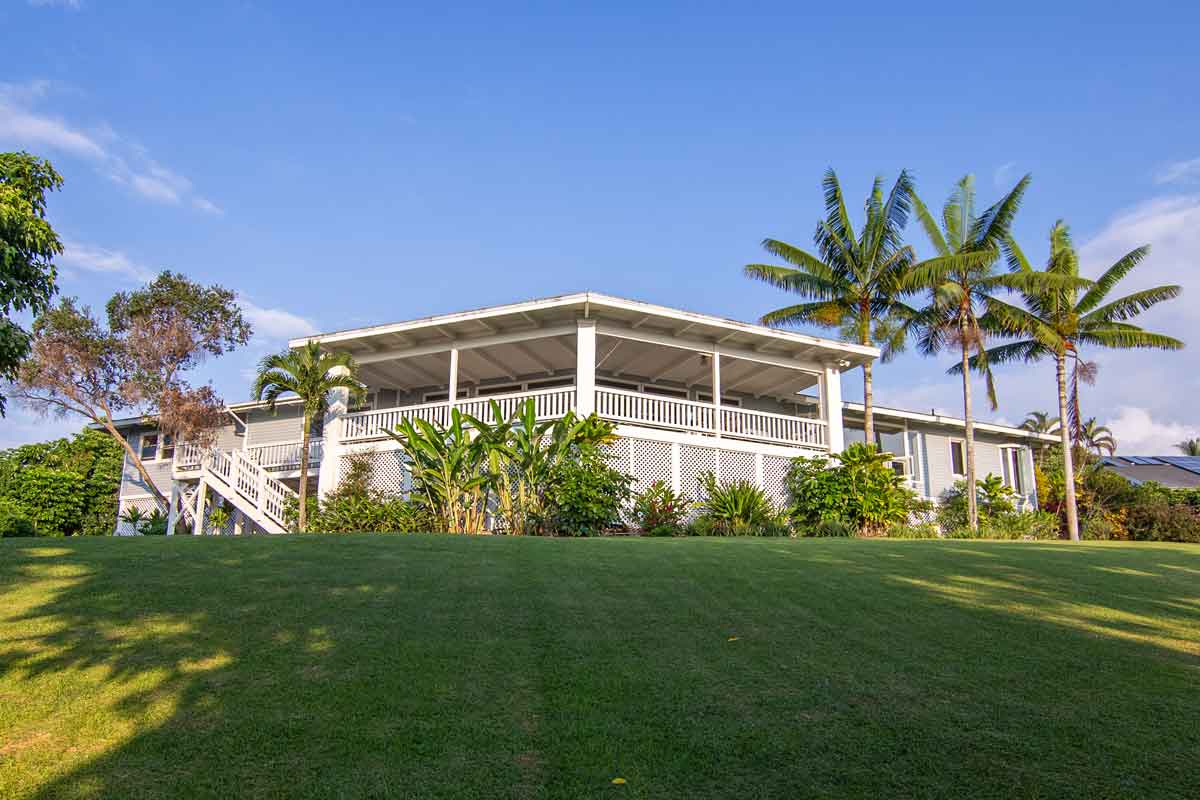
The residence is described as an island-style home with a spacious lanai, communal living areas, tropical planting, and ocean views. Private and shared bedrooms are offered according to the provider’s current homepage. A private room should be reserved explicitly rather than assumed from a photograph or an overall price estimate. Confirm bathroom sharing, stairs, accessibility, and any practical needs before arrival. The retained images illustrate the residence and a bedroom, but do not identify the room that will be assigned to a future patient.
The facility page describes chef-prepared meals using local ingredients where possible and accommodation of dietary restrictions. Shared meals, time on the porch, and use of the grounds are part of the home environment between structured sessions. Those daily arrangements can matter when comparing a small residence with a larger campus. A patient with a food allergy, specialized diet, mobility limitation, or need for additional personal support should confirm how the requirement will be met, including whether it falls within the program’s normal staffing and services.
Outpatient treatment and continuing care
The outpatient service includes intensive outpatient programming for people who are medically stable and do not require continuous residential supervision. It describes individual and group therapy, recovery education, and medication management where appropriate. Outpatient care can follow residential treatment or be considered from the outset after assessment. The published page does not provide one fixed attendance schedule for all patients. Confirm the location, number of treatment days, clinical hours, transport needs, and what support is available between sessions.
Planning beyond the residential stay should begin before departure. Hawaii Island Recovery describes continuing care and help maintaining connections with recovery support, but local outpatient attendance is different from receiving care after returning to the mainland or another country. The discharge plan should identify the next clinician, any medication handover, community support, and a response plan for renewed difficulties. Ask which follow-up contacts Hawaii Island Recovery supplies directly and which depend on another provider. The duration and cost of those services should be stated separately from the residential booking.
Current price evidence and admission planning
Recovery.com lists an estimated cash-pay price of US$34,500 for thirty days, rechecked on October 20, 2026. This is a third-party estimate, not a tariff published by Hawaii Island Recovery. The official information directs applicants to an individual cost and insurance discussion. Obtain a written quote identifying treatment, room category, meals, detox, prescriptions, outside consultations, transport, and any activity supplements. A thirty-day estimate should not be silently extended to sixty or ninety days, or applied to outpatient care.
The current official contact number is +1 866-390-5070. Admissions can discuss clinical suitability and insurance verification, but an insurer’s name alone does not establish the benefits or personal liability under a specific plan. Confirm the authorized level of care, dates, any review requirements, and how extra days would be funded. Travel should follow acceptance and a clear arrival plan, with the residential location, transfer arrangements, and necessary medical information agreed in advance.
Conditions
Levels of care
Settings
Amenities
Treatment approach
Individual and group counseling, CBT, DBT skills, assessed EMDR, medication treatment where appropriate, family services, recovery education, experiential/cultural programming and continuing-care planning
Fees & admissions
USD 34,500 / program
Recovery.com estimated cash-pay rate, rechecked October 20, 2026: US$34,500 for thirty days. This is not an official provider tariff or guaranteed private-room package. No prorating. Confirm treatment, room, board, detox, prescriptions, outside care, transport, activities, extensions and continuing-care costs in a written offer. Do not apply this residential estimate to outpatient care.
Confirm the current program, duration, accommodation and included services directly with the center.
Confirm primary addiction needs and co-occurring clinical fit, detox risk, physician and nursing arrangements, medication continuation, exact residential arrival address, private/shared room, itemized costs, insurance authorization and the follow-up plan. Veteran benefits require individual verification; no automatic VA or TRICARE approval asserted.