
Care at InHarmoni Rehab — El Paraíso
A small residential clinic in El Paraíso
InHarmoni Rehab provides residential addiction and mental-health treatment in El Paraíso, west of Marbella on Spain’s Costa del Sol. Its current facility description identifies ten private en-suite rooms and a maximum of ten clients. The program is delivered primarily in English and combines medical assessment, psychological treatment, and supportive daily activities. This profile covers that residence. The outpatient service is a separate continuing-care option for eligible former residents, rather than an alternative way for any new applicant to attend the main program.
Who the mental-health program is intended for
The mental-health program is offered to people with concerns including mild-to-moderate depression or anxiety, burnout, grief, and trauma. Addiction does not have to be present for every admission. The provider is equally explicit about the setting’s limits: it is not an acute psychiatric unit, an involuntary-care service, or a suitable setting for severe psychosis or an immediate crisis. These boundaries help distinguish a planned residential stay from care that requires a different level of supervision or medical capability.
InHarmoni says it assesses each inquiry before recommending a duration or accepting the person. Someone may arrive with a previous diagnosis or with symptoms that still need clarification. The important issue is whether the residence can meet the actual needs identified during that assessment. A broad label such as anxiety, trauma, or burnout does not settle the appropriate level of care. Clarify the expected clinical objectives, what support will be available between sessions, and what would lead the team to recommend another service.
Eating-disorder care has an explicit admission boundary
The eating-disorder program describes assessment of eating patterns, physical health, weight history, medications, and previous treatment. It includes supported eating, psychological work, family involvement where appropriate, and medical monitoring coordinated with local services when needed. The provider states that it accepts anorexia admissions with a body mass index of seventeen or above and directs lower-BMI cases to hospital-level care first. This is InHarmoni’s published intake criterion, not a stand-alone measure of an individual’s medical safety or a universal rule for choosing care.
Before considering this program, confirm the full medical criteria, the qualifications of those directing nutritional care, and the practical support around meals. Ask how the team responds to physical deterioration and coordinates with external medical services. InHarmoni also describes addressing alcohol or medication use alongside eating-related difficulties. That integrated intention should be translated into a written plan that identifies who is responsible for each part of treatment. A standard twenty-eight-day booking does not establish that all eating-disorder needs can be resolved within four weeks.
Assessment and withdrawal management
The program page describes an initial conversation followed by an admission interview and a preliminary treatment plan. The clinical work includes a physical check-up and psychosocial assessment. Applicants should provide accurate information about current treatment, prescriptions, substance use, and relevant medical history. This allows the team to consider suitability before travel and to decide whether detox or another intervention is needed first. The first consultation is described as free; it is an assessment conversation rather than a guaranteed residential reservation.
The alcohol program describes medically supervised withdrawal with medication where appropriate, followed by psychological treatment and return-home planning. Its published estimate for the acute detox phase is commonly three to seven days, with individual assessment determining the actual course. The wider program remains a residential rehabilitation service. The source does not establish an acute hospital on site or continuous physician attendance. Discuss exact nursing and medical cover, monitoring, and transfer arrangements before assuming that every withdrawal risk can be managed within the residence.
How the psychological methods are used
The therapy menu includes cognitive behavioral therapy, acceptance and commitment therapy, psychodynamic therapy, and schema work. These approaches have different emphases. The provider describes CBT around present-day thoughts and behavior, ACT around responding to difficult internal experiences while working toward meaningful goals, and other methods around established patterns or earlier relationships. An individualized plan should explain why particular methods were selected and how they relate to the person’s concerns. A long menu does not mean every method is delivered to every client during one stay.
InHarmoni’s mental-health information also names EMDR and somatic work for appropriate trauma-related presentations. The site describes daily individual sessions alongside group and creative activities, but does not publish one universal duration for those appointments. Request the actual weekly timetable, with the clinician’s role and session length identified. This allows a prospective client to distinguish individual psychotherapy from counseling, coaching, facilitated activities, and complementary services. The relevant comparison is the treatment proposed for that person, rather than an assumed total built from every service mentioned online.
Additional published components include motivational interviewing, social-skills work, psychoeducation, relapse prevention, and Twelve Step recovery coaching. The latter is part of the menu, so InHarmoni should not be described as exclusively non-Twelve-Step care. Ask how peer meetings and recovery coaching are incorporated and whether participation is adapted to the individual’s goals. Group work offers another format for practicing communication and examining patterns with others, while individual sessions can address more private concerns. The balance between these formats should be clear before admission.
The team, language, and family involvement
The team page identifies Frida Fagerdahl as a general practitioner heading medical resources, Ann-Christine Godawszky as a mental-health counselor leading the psychosocial team, and psychologists with trauma or EMDR roles. Those are the provider’s descriptions of staff responsibilities. They do not independently establish current professional registration or daily attendance at the residence. Ask who would lead the proposed treatment, which psychiatrist or physician would review medication, and how the team communicates when several professionals are involved.
The FAQ states that the main program is in English, with some individual work available in Swedish, Spanish, Arabic, or Albanian. Language availability should be confirmed for the actual treating professional and dates. It also welcomes family visits and family therapy when this supports the client’s plan. Relatives staying in the room is not the default arrangement; the provider generally recommends that clients stay independently. Agree on visit timing, consent, and what relatives may be told rather than assuming that paying for treatment grants access to confidential clinical details.
Accommodation and complementary activities
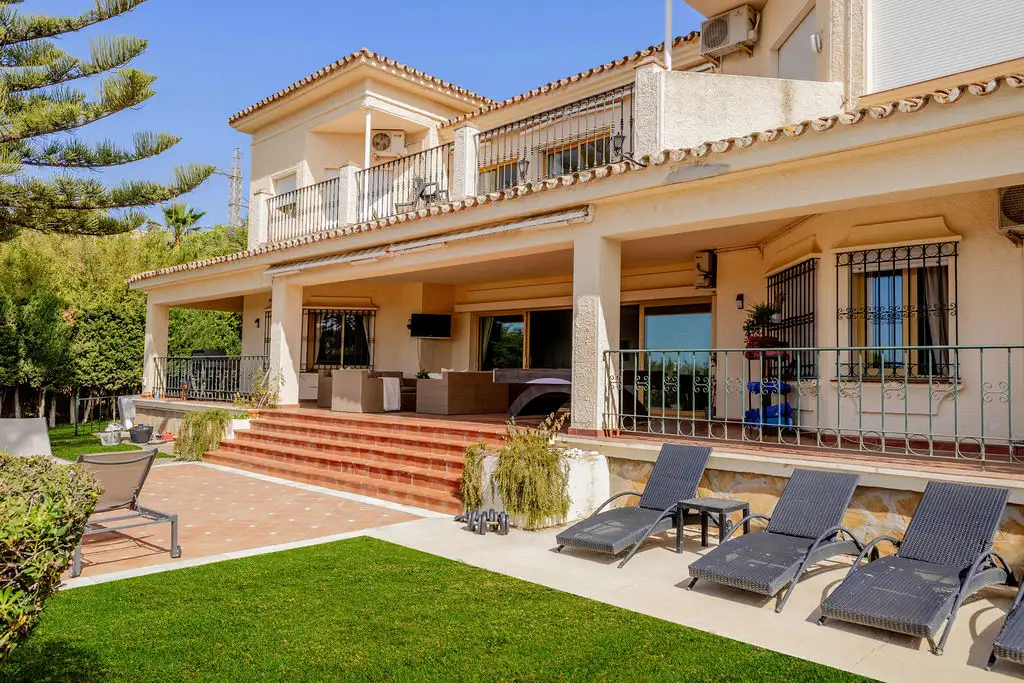
The property has ten private rooms, Mediterranean gardens, a heated swimming pool, indoor and outdoor dining areas, and meals prepared on site. Its official gallery illustrates the residence and communal environment. A private bedroom with an en-suite bathroom is included in the current detailed program descriptions, but the exact room and accessibility still need confirmation. Someone who has difficulty with stairs, requires a particular bathroom arrangement, or needs additional assistance should discuss those requirements before a room is assigned.
The provider lists yoga, meditation, personal training, art, therapeutic gardening, massage, and other complementary activities. These sit around the main clinical work and daily routine. Ask which are included in the selected package, who leads them, and what alternatives are offered if an activity is unsuitable. This profile does not treat energy-work claims or a leisure amenity as evidence of treatment effectiveness. The practical value of the setting depends on whether the person can participate comfortably while receiving the assessment and therapy their plan requires.
Published fees and inconsistencies to resolve
The detailed program tables, rechecked on October 20, 2026, list the twenty-eight-day Core Recovery program from €22,500. That is the provider-published starting figure used in this profile. The same tables list a fourteen-day option from €14,000. These are different program lengths, so the shorter fee should not be treated as a discounted monthly price. The twenty-eight-day descriptions include private accommodation, full-board meals, a personalized therapy program, and four months of individual aftercare. The final contract should identify the exact services and dates.
There are unresolved price differences on the provider’s website. Some page banners advertise twenty-eight-day treatment from €12,000, while another uses £12,000, without explaining the package difference. The main program page gives a fifty-six-day starting figure of €36,500, whereas newer mental-health and luxury-program tables give €40,000. The detailed twenty-eight-day tables consistently show €22,500, but the banners and longer-stay differences make a dated written quote essential. This profile does not merge the figures into one range, convert them to dollars, or prorate any package.
The current FAQ says the program must be paid privately and that InHarmoni does not directly work with insurance companies. It offers documentation that may assist an individual reimbursement request, which is different from accepting an insurance plan. Confirm payment currency, deposit, cancellation terms, extensions, and any fees for medication, outside medical care, or additional services. The luxury-program page says clinically needed detox is included, while the general program page says costs can vary with detox needs; the actual quote should resolve that difference.
Included aftercare and the separate outpatient plan
Completing a twenty-eight-day program includes four months of individual aftercare with a case manager, according to the provider’s program information. Contact is described as more intensive during the early weeks after discharge. Ask for the actual frequency, appointment format, time-zone arrangements, and the distinction between case-management support and ongoing specialist psychotherapy. The plan should also identify any local doctor or therapist needed after returning home. Included aftercare does not mean every form of continuing treatment or medication management is supplied indefinitely.
The separate outpatient day program starts from €6,500 per month and is restricted to people who have already spent at least three months in InHarmoni’s care. It is not the four-month aftercare entitlement or an open-access alternative for a first-time applicant. Confirm its attendance schedule, housing arrangements, transport, and clinical content before choosing that transition. Admission to the residence begins with assessment; the provider then arranges a date and can organize Málaga airport transfers. The published contact number is +34 658 656 011.
Conditions
Levels of care
Settings
Amenities
Treatment approach
Assessment-led CBT, ACT, psychodynamic and schema work, assessed EMDR and trauma-focused approaches, motivational interviewing, group and family work, Twelve Step recovery coaching, relapse prevention and complementary activities
Fees & admissions
EUR 22,500 / program
Detailed official tables rechecked October 20, 2026: twenty-eight-day Core Recovery from €22,500, including private accommodation, meals, therapy and four months of individual aftercare. Some site banners instead show €12,000 or £12,000 without explaining package differences. Fifty-six-day pages conflict at €36,500 versus €40,000. Obtain a dated quote resolving these differences, detox inclusions, medications, outside care, transfers and extras. No currency conversion or prorating. Separate €6,500/month outpatient day plan is for clients with at least three months previously in care.
Confirm the current program, duration, accommodation and included services directly with the center.
Pre-arrival interview and preliminary plan. Main language English; other individual-session languages depend on clinician availability. Mental-health program specifies mild-to-moderate depression/anxiety and excludes acute crisis, involuntary care and severe psychosis. Anorexia intake criterion is BMI seventeen or above plus full medical assessment. Confirm staffing, detox suitability, room, itemized quote, family arrangements and aftercare.