
Care at Avalon Malibu
Two adjacent Malibu residences with different clinical focuses
Avalon Malibu provides adult residential treatment for mental health conditions, substance use, and co-occurring concerns in two adjacent coastal homes. Grand House is its primary mental health residence, while The Villa is the substance use and dual-diagnosis property. The distinction matters when asking about admission: a program for a primary mental health condition is different from a residential addiction program that also supports related symptoms. Request a recommendation for the specific house and clinical track after the team reviews the person’s needs.
The published general contact address is 32420 Pacific Coast Highway, Malibu, California, and the current admissions number is 888-958-7511. The California substance use facility register separately places Avalon Integrated Wellness at 32430 Pacific Coast Highway. Adjacent addresses should not be treated as interchangeable admission instructions. Ask the receiving team to identify the building, arrival arrangements, and responsible clinical service. This also helps an existing therapist, prescriber, or family member understand where care will actually take place.
Primary mental health care at Grand House
Avalon describes Grand House as a six-suite residence for people seeking treatment of primary mental health concerns. Its current information includes depression, anxiety, trauma-related symptoms, and other assessed presentations; an addiction diagnosis is not described as a universal entry requirement for this house. The provider identifies psychiatric involvement within the residential program. The published list of conditions is an invitation to an assessment, rather than a guarantee that the residence can manage every severity or combination of symptoms.
For someone considering Grand House, ask what clinical information is needed before acceptance, how medication management is organized, and which circumstances require a different setting. Clarify the psychiatrist’s contact schedule and how the treatment plan is reviewed. If there have been recent hospital stays or changes in functioning, the team needs to explain how those affect eligibility. A small residential program can have substantial psychiatric input while still having different resources and admission criteria from an acute psychiatric hospital.
Substance use treatment and the separate detox phase
The Villa’s current page describes five private suites for substance use and co-occurring treatment. Avalon also advertises on-site medically supervised detox, which its detox information characterizes as subacute care. An initial assessment should establish whether that setting is appropriate and whether stabilization elsewhere is needed first. Detox and the later residential program have different immediate purposes, so the proposed care sequence, expected reviews, and financial terms should be explained separately rather than compressed into a single promise of recovery.
The public California Department of Health Care Services register lists Avalon Integrated Wellness under number 191407AP for residential and detox services, with incidental medical services and a licensed capacity of six at the adjacent 32430 address. The record reviewed shows expiration January 31, 2027. That licensed capacity differs from the five suites described on The Villa page and does not establish current occupancy. It also does not establish a hospital admission or independently verify the separate Grand House mental health program.
Psychiatric oversight and an individualized treatment plan
Avalon’s residential information describes a psychiatrist-led model, ongoing clinical review, and coordination among therapeutic and medical professionals. Ask who will be responsible for the individual plan and which appointments are included in the quoted program. Relevant details include the frequency and length of psychiatric reviews, individual therapy, group work, and case-management meetings. A broad claim about staff availability or the size of the overall team should not be interpreted as the number of clinicians continuously assigned to one resident.
Bring an accurate account of previous treatment, current prescriptions, relevant medical history, and the goals of admission. The assessment can then connect those needs to particular services and identify any limits. Someone who has already tried several programs may want a clear explanation of what would differ this time: the formulation, therapeutic method, frequency of review, family involvement, or transition plan. That discussion is more informative than a comparison based only on the residence’s size or level of hospitality.
Individual therapy, groups, and complementary activities
The provider’s treatment information includes cognitive and dialectical behavioral approaches, EMDR, Gestalt work, individual and group therapy, and family or couples sessions. Not every method is appropriate for every person or automatically included at the same intensity. If a particular approach is important, ask about the clinician providing it, the assessment used to select it, and its place in the weekly schedule. The agreed plan should distinguish psychotherapy from assessment, medication review, recovery meetings, and other professional contact.
Avalon also describes art, movement, mindfulness, nutritional support, and other complementary activities. These can make the daily program more varied, but their purpose should be clear when comparing the amount of clinical treatment. Ask which activities are optional, how they are adapted to physical limitations, and whether any involve outside practitioners or separate charges. Group participation and shared activities also mean that private accommodation does not turn the whole program into an exclusively individual treatment arrangement.
Private suites and the oceanfront setting
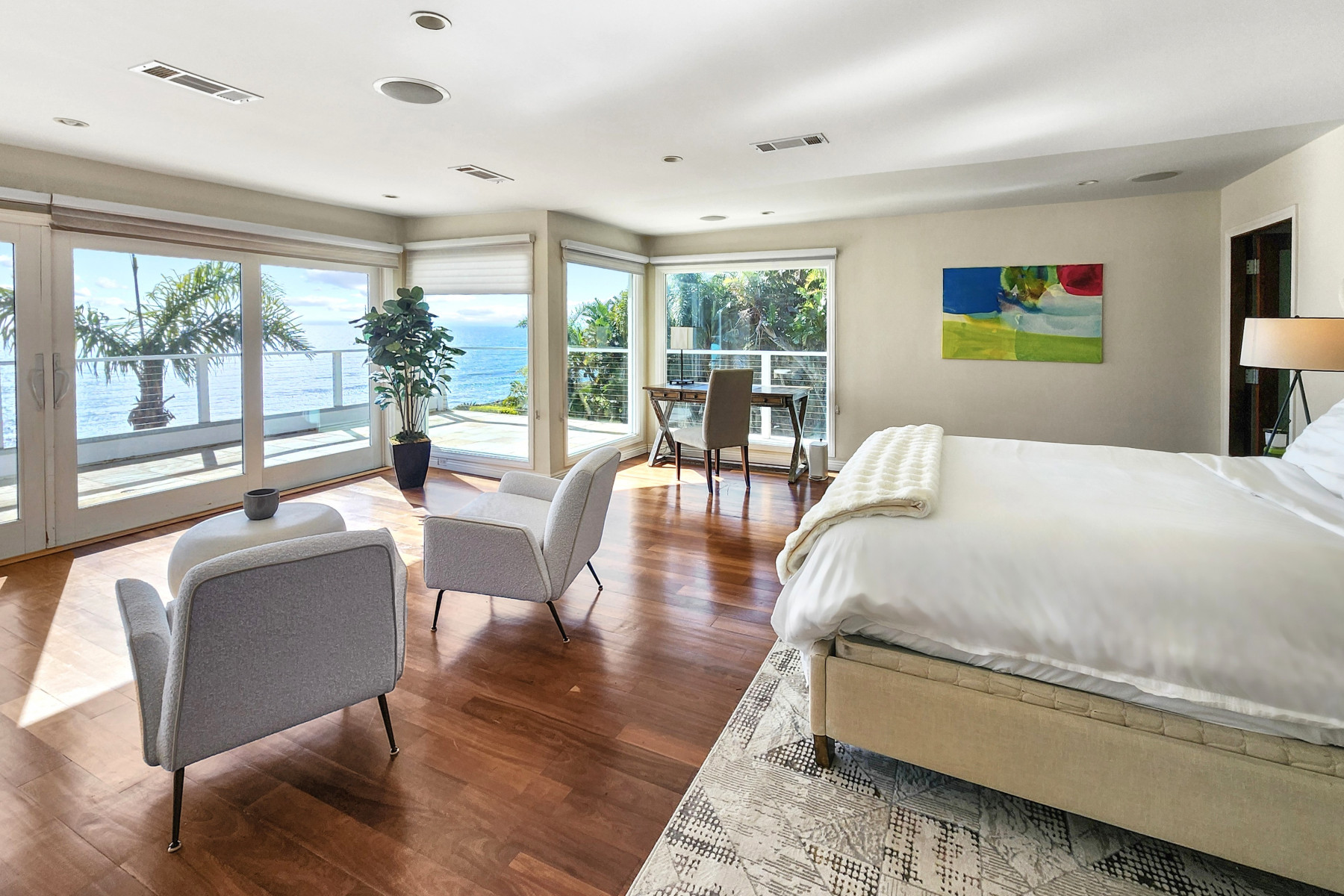
Current Grand House and Villa materials describe private bedrooms with en-suite bathrooms. The houses share the broader coastal setting, while the offered suite’s layout and outlook can differ. Request current information for the specific room rather than assume every room has the same ocean view, access, or amenities. A private bedroom is a concrete accommodation feature; confidentiality in therapy, records handling, visitors, and shared spaces involves additional policies that should be discussed independently.
The residential property information describes gardens, a pool, a jacuzzi, and direct beach access. Ask how residents reach those areas, what supervision applies, and whether accessibility or treatment restrictions affect use. Chef-prepared meals and nutrition input are also advertised, making it useful to discuss allergies and dietary requirements before arrival. Photographs show aspects of the environment, but they cannot establish the current room allocation, unrestricted recreational access, or the clinical suitability of that setting for an individual.
Length of stay and daily expectations
Avalon’s current residential page emphasizes assessment-based pacing instead of assigning everyone an identical thirty-, sixty-, or ninety-day course. Recovery.com separately describes stays of thirty days or longer. Treat that directory description as a general planning reference, not a minimum the provider has confirmed for every program. Ask how the initial duration is chosen, when progress is reviewed, and who participates in decisions about extension, a change of care level, or discharge.
Request a sample schedule for the intended house and clarify how it changes during early stabilization. Practical questions include waking and meal times, private appointments, group expectations, quiet periods, exercise, device use, and outside commitments. If work or family responsibilities cannot be paused entirely, discuss them before admission so the team can explain what is feasible. The financial agreement should also show how an extension is priced and whether a room or service could change during a longer stay.
Family participation, consent, and coordination
Family and couples work appear within Avalon’s treatment options. Establish who may participate, whether sessions are in person or remote, and how the resident’s consent guides communication. A relative may need practical updates without receiving every detail of individual therapy. Agreeing on those boundaries early can make communication clearer for the patient, family, and existing clinicians. Ask whether family appointments have a separate charge and whether they continue after the residential phase.
If admission follows treatment elsewhere, discuss how records and medication information will be transferred and reviewed. Identify the person who coordinates with outside professionals and how questions are handled after hours. The same clarity is useful when returning home: an existing clinician should know what information will be provided and when. Administrative support for employers or other organizations should be requested explicitly, with consent, and should not be interpreted as a guarantee of a particular insurance, employment, or legal outcome.
Fees and insurance questions
Recovery.com displayed an estimated US$70,000–100,000 per month for Avalon Malibu when checked on October 20, 2026. This remains a third-party reference; no current numerical Avalon tariff was verified in the reviewed official material. The estimate should not be assumed to cover every house, suite, clinical need, or length of stay. Obtain a current quote naming the proposed residence and specifying accommodation, meals, detox if needed, professional care, medications, testing, outside treatment, transportation, and aftercare arrangements.
Avalon provides an insurance review process, but eligibility and financial responsibility depend on the specific policy and proposed service. Ask for confirmation of network status, authorization requirements, deductibles, coinsurance, exclusions, and any separately billed professionals. A benefits check does not settle every eventual claim or establish that the entire stay is covered. Written terms should explain the deposit, payment schedule, cancellation, early departure, extensions, and refunds, allowing a meaningful comparison with another provider’s quote for the same clinical stage.
Aftercare and preparing to leave residence
Avalon’s aftercare page describes a discharge plan with goals, referrals to community professionals and groups, continuing education, and recovery support. Ask which follow-up appointments will be booked before departure and who takes responsibility for medication continuity. Distinguish the center’s planning and alumni contact from ongoing treatment delivered by another professional. The existence of aftercare support does not establish that future psychotherapy, medical appointments, or housing are included indefinitely in the residential fee.
For someone returning to another state or country, discuss the practical limits of remote contact and arrange suitable local follow-up. The plan should identify the next clinician, relevant records, appointment dates, and the role of supportive relatives or peers. Avalon’s two-house model, private suites, and psychiatric involvement provide concrete points for comparison, while the assessment and written agreement determine the individual offer. Use those details to evaluate fit without assuming that an oceanfront setting or a higher price predicts the eventual treatment outcome.
Sources and further comparison
Source review: October 20, 2026. Avalon Villa substance use residence; Grand House mental health residence; Current residential treatment and clinical oversight; Detox service description; Admissions and getting started; Insurance information; Aftercare planning; California DHCS public facility register; Recovery.com third-party fee reference. Provider statements describe the advertised service; they do not establish an individual admission decision, current availability, or treatment outcome. Price evidence is identified separately from the provider’s own fee policy.
For a broader comparison, explore treatment options in the United States and read questions to ask a treatment center. Use the answers from the actual receiving team to compare the clinical plan, practical arrangements, and written financial terms.
Conditions
Levels of care
Settings
Amenities
Treatment approach
Psychiatric oversight, individualized psychotherapy and groups, selected CBT/DBT, EMDR, Gestalt, family or couples work, creative and wellness activities, and community follow-up planning
Fees & admissions
USD 70,000–100,000 / month
Recovery.com estimates USD 70,000–100,000 per month, checked October 20, 2026. No current official numerical tariff verified. Confirm the house, suite, duration, detox, professional care, medication, testing, outside services, transport and aftercare; insurance terms require individual verification.
Confirm the current program, duration, accommodation and included services directly with the center.
Assessment must identify Grand House or The Villa, primary clinical needs, appropriate detox setting if needed, medical and psychiatric coverage, room, insurance and itemized financial terms.