Care at Beachside Rehab — West Palm Beach
Beachside Rehab’s West Palm Beach campus
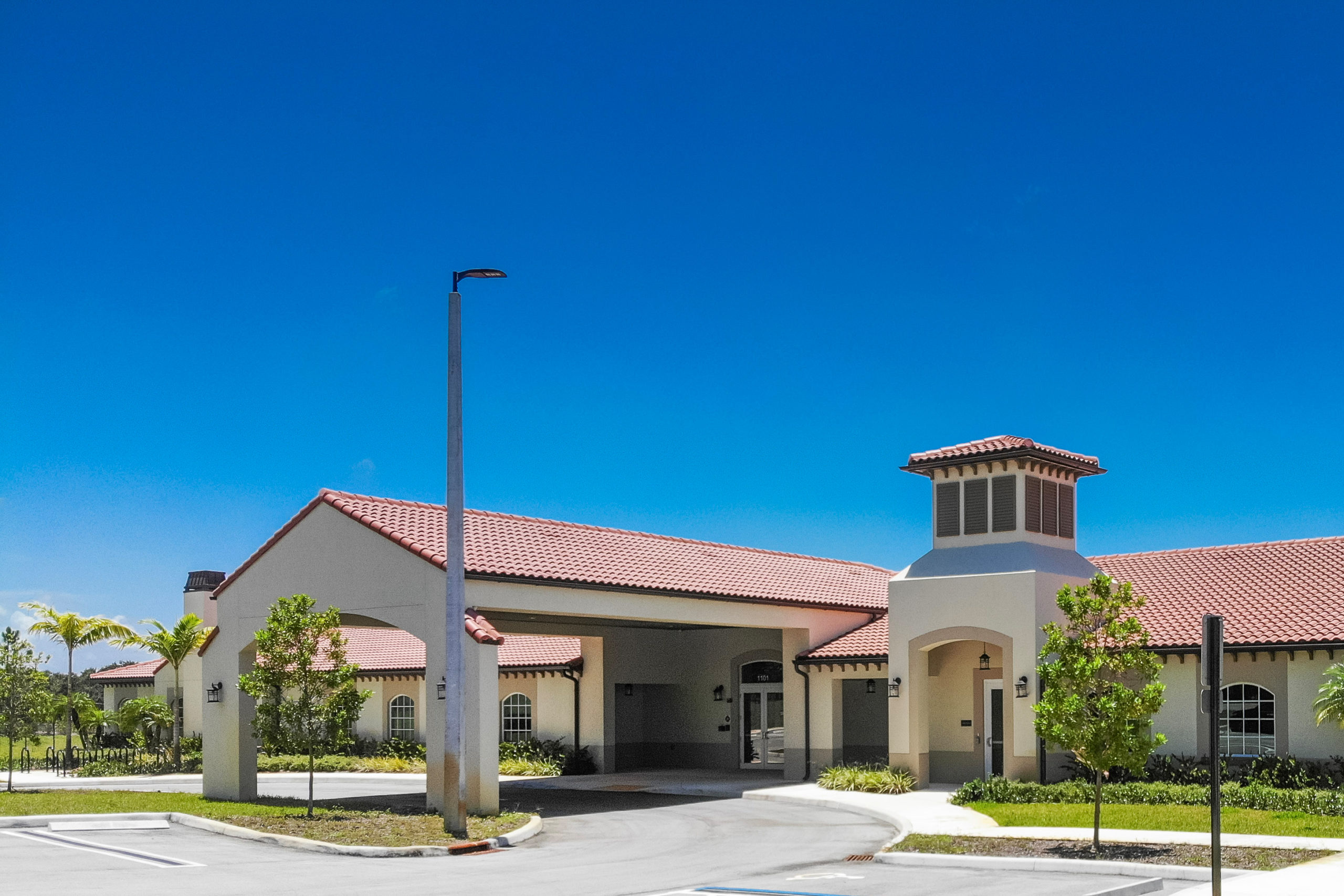
Beachside Rehab’s residential treatment location is 1101 54th Street, West Palm Beach, Florida. The provider describes a five-acre campus with a maximum of thirty-four residential clients, offering mental health, substance use, and co-occurring treatment. This is a community program with an individual care plan, rather than a residence reserved for one person. Its current website presents the West Palm Beach campus separately from the outpatient address on Hutchinson Island, an important distinction when comparing accommodation and treatment arrangements.
Some wording on the provider’s wider website still refers to Hutchinson Island or an oceanside setting while other sections describe the West Palm Beach campus. Use the actual address and room in the admission agreement to settle the location. A beach-related brand name, excursion, or photograph does not establish direct beach access from every residence. Ask which building receives the person, which services are delivered there, and whether any part of the proposed program involves transportation to another property.
Mental health and addiction treatment
Beachside’s dedicated mental health page describes care for anxiety, depression, trauma, grief, bipolar difficulties, and other emotional or behavioral concerns. Substance use treatment and dual-diagnosis care are also advertised. A person seeking help for mental health alone should ask about that specific pathway, including the assessment, group composition, and clinicians who will lead treatment. A list of conditions on a website is not a promise that every presentation, severity, or combination of medical needs can be accepted.
The provider uses inpatient and residential terminology for its live-in program, while its main introduction explicitly distinguishes the setting from a hospital. This profile therefore treats it as residential care, without presenting it as an acute psychiatric hospital. Establish whether the person is ready for the proposed environment, what support is available at night, and which situations require a different level of medical care. The suitability decision should come from the receiving clinical team before accommodation and travel plans are finalized.
Medical detox and psychiatric care
Beachside advertises a medical detox program in West Palm Beach and describes assessment on arrival to identify physical health, substance use, and treatment needs. Its clinical material also describes psychiatric assessment, medication management, and medical support during the residential stage. Ask what is provided by staff physically present, what is scheduled, and what is available through an on-call arrangement. General descriptions of around-the-clock care should be translated into the actual resources for the person’s proposed admission.
Withdrawal support should be discussed with the medical team using the current medication list, substance-use history, previous withdrawal experiences, and relevant health records. The assessment determines whether detox is needed and where it should occur; it should not be assumed solely because a person is entering addiction treatment. Ask how the next residential stage is arranged, whether a room is reserved, and how charges change between stages. Medication decisions and changes require the treating clinician’s direction and should not be inferred from general website explanations.
Therapy structure and individual attention
The official counseling page describes individual appointments, groups, trauma work including EMDR, and relapse-prevention work. It also states that its group schedule runs seven days a week for at least five hours a day and distinguishes meetings with a doctor, therapist, and case worker. Treat this as the published program description and confirm the current timetable for the intended admission. It does not establish that five hours are private psychotherapy or that every resident follows an identical schedule from the first day.
Ask for the expected number and duration of individual therapy appointments, the size and purpose of groups, and the way the schedule changes during early stabilization. The care plan should explain how psychiatric review, trauma work, family participation, and practical case management connect to the reasons for admission. If an approach is especially important to the person, clarify its availability and the clinician responsible. An advertised menu of therapies is most useful when it becomes a specific, agreed weekly plan.
Private accommodation and the campus environment
The current photo-gallery page describes private suites on the five-acre campus. Confirm the assigned bedroom, occupancy, bathroom, accessibility, and any upgrade charge, because the exact room offer determines the experience. A private sleeping space is compatible with shared meals, groups, recreation, and other communal areas. The thirty-four-client maximum is an advertised program limit rather than a report of current vacancies or evidence that a particular suite will be available on the preferred date.
The gallery identifies a meditation labyrinth, fitness trail, and pickleball and basketball facilities. The residential program also describes a pool, a recovery garden, and chef-prepared meals. These are practical features to discuss alongside allergies, dietary needs, mobility, and the treatment timetable. Ask which amenities are available during each care phase, whether participation is supervised, and what alternatives exist when an activity is unsuitable. The quality of a room or leisure facility does not establish the amount of professional treatment provided.
Creative work, movement, and daily arrangements
Beachside’s holistic-treatment information lists art, music, equine work, psychodrama, and faith-related options among possible activities. Its counseling page describes creative media such as painting, drawing, sculpting, and mosaics. Ask how these options are selected, which are part of the quoted program, and whether a particular activity takes place off site. A listing of equine or beach activities should not be interpreted as unrestricted access, daily scheduling, or a guarantee that every participant is clinically ready to take part.
Before arrival, clarify the policies that affect ordinary life: phone and computer access, work contact, quiet periods, visiting, laundry, smoking, and leaving the grounds. If outside responsibilities cannot be paused entirely, ask how they can be managed within treatment. The sample daily schedule on the provider’s website is illustrative; a personal program may differ. Request a clear explanation of the first few days and the balance between structured appointments, meals, recreation, and private time during the later residential phase. Identify an admissions contact who can resolve practical questions before travel and confirm the agreed arrival arrangements.
Duration, fees, and insurance
The residential program discusses stays of thirty to ninety days, while the current secondary fee listing uses thirty days. The actual recommendation should identify the initial period and the review points for extending, changing level of care, or preparing to leave. Recovery.com displayed an estimated US$26,000–40,000 for thirty days when checked on October 20, 2026. This is an attributed third-party program estimate, not an official Beachside tariff or a calendar-month price covering every room and clinical situation.
Beachside’s official rates page invites individual inquiries about private-pay rates and payment plans. It lists major private insurers, including Aetna, Blue Cross Blue Shield, Cigna, and Humana, without establishing every policy’s network status or final benefit. Obtain a quote separating detox if needed, residential care, room, professional services, medications, testing, transport, and later treatment. Confirm insurer authorization, deductibles, coinsurance, exclusions, and the written terms for deposits, extensions, cancellation, early departure, and refunds before relying on an estimated total.
Family involvement and preparation for discharge
Family therapy appears within Beachside’s residential services and its later-care descriptions. Ask how relatives or other trusted supporters can participate, whether meetings are remote or in person, and what consent is needed. An adult resident’s treatment information should be shared according to the agreed permissions, while practical matters such as travel and discharge can have their own communication plan. Clarify whether family appointments or educational services have additional fees and who will coordinate them with the resident’s therapist.
Aftercare information describes continuing therapy, groups, relapse-prevention planning, and possible support with a more structured living arrangement. These are different services and should be specified individually. Ask which appointments are booked before departure, who provides psychiatric follow-up, and whether housing or treatment is supplied by another organization. A general commitment to aftercare does not establish that future professional appointments, accommodation, or transport are included indefinitely in the residential charge. Written arrangements make those responsibilities easier to compare.
Outpatient treatment and comparing the next step
The provider advertises partial hospitalization and intensive outpatient care. Its published PHP description involves six or more treatment hours per day on five to seven days a week, while overnight accommodation is a separate consideration. The website footer identifies the outpatient location as 4005 North Highway A1A, Hutchinson Island, even though the outpatient page title refers to West Palm Beach. Confirm the actual receiving address, schedule, and any travel or housing requirements for the specific next-stage offer.
For a person returning home elsewhere, ask the team to coordinate the discharge summary, medication information, and appointments with suitable local professionals. Remote contact and alumni support should be distinguished from ongoing clinical treatment. Beachside’s combination of private suites, a shared campus, clinical and creative work, and separate outpatient services offers concrete comparison points. Evaluate the proposed care and practical arrangements together, using the current written offer to settle the details that a website description cannot determine for an individual patient.
Sources and further comparison
Source review: October 20, 2026. Beachside campus overview and current addresses; Residential program and clinical services; Medical detox information; Mental health program; Counseling and group schedule; Suites and campus gallery; Creative and complementary program options; Official rates and payment policy; Aftercare descriptions; Outpatient programs and schedule; Recovery.com third-party fee reference. Provider statements describe the advertised service; they do not establish an individual admission decision, current availability, or treatment outcome. Price evidence is identified separately from the provider’s own fee policy.
For a broader comparison, explore treatment options in the United States and read questions to ask a treatment center. Use the answers from the actual receiving team to compare the clinical plan, practical arrangements, and written financial terms.
Conditions
Levels of care
Settings
Amenities
Treatment approach
Psychiatric assessment, medication review, individual counseling and groups, CBT-informed relapse work, trauma/EMDR, family involvement and selected art, music, movement or experiential activities
Fees & admissions
USD 26,000–40,000 / program
Recovery.com estimates USD 26,000–40,000 for 30 days, checked October 20, 2026. This is a third-party program estimate, not an official tariff or calendar-month price. Obtain a current quote for the room, detox if needed, professional care, medication, tests, transport and later treatment, plus exact insurance terms.
Confirm the current program, duration, accommodation and included services directly with the center.
Clinical assessment must establish care level, detox needs, actual medical and psychiatric resources, room, weekly schedule, duration, itemized costs and the location of any later outpatient service.