
Care at The Guest House
The Guest House provides residential treatment for adults at a 52-acre estate in Silver Springs, near Ocala, Florida. Its clinical emphasis is trauma and the ways difficult experiences may interact with substance use, emotional distress, relationships and other patterns that interfere with daily life. The provider also offers on-site detoxification and continuing support after residential care.
The residential program description combines individual and group therapy with experiential, creative and body-focused approaches. The property includes cottages, shared community spaces and outdoor areas used within the program. The setting may appeal to someone seeking time away from everyday pressures, but suitability depends on the person’s assessment and the care the team can provide.
Who the program is designed to serve
The current FAQ identifies adults with unresolved trauma, including people who have previously attended therapy, rehabilitation or other treatment. It describes experience with professionals, performers, healthcare workers, military-connected individuals and other people facing demanding circumstances. These examples help explain the program’s focus; they do not establish that every person in a listed group needs residential care.
The Guest House uses the phrase trauma resolution to describe its organizing approach. Prospective residents should translate that description into concrete details: the assessment, proposed methods, pace of treatment and way progress is reviewed. The phrase alone cannot predict an outcome or establish that every symptom has the same underlying cause.
A person with both trauma-related symptoms and substance use needs can ask how the team coordinates those concerns. Someone seeking help primarily for depression, anxiety or another condition should clarify the proposed pathway and the relevant clinical expertise. Previous diagnoses, medication history and experiences of earlier treatment can help the team understand what requires immediate attention and what can be explored over time.
Beginning with the appropriate medical support
The detox program describes an on-site service with medical and nursing staff available around the clock, assessment of symptoms and substance history, medication management and access to specialty or emergency care. It identifies private rooms during detox. The published average stay is five to ten days, with the actual duration determined by the person’s needs.
That description should be followed by a clinical discussion of the individual situation. Disclose recent substance use, prescribed medications, prior withdrawal complications, physical health concerns and any recent psychiatric crisis. Ask what the detox unit can manage directly and when outside hospital assessment would be necessary. Do not change prescribed medication or attempt an unsupervised withdrawal to fit a planned arrival date.
The provider describes moving into residential work once a patient is sufficiently stable. Before admission, clarify whether the plan includes both stages, how readiness is determined and what the financial agreement covers. An average detox duration should not become an automatic transfer date or an estimate of the entire treatment commitment.
Individual and group work within the trauma program
The published residential menu includes individual psychotherapy, group work, family therapy, EMDR, psychodrama, somatic approaches, neurofeedback and selected expressive or experiential activities. These methods have different purposes. An individualized program should explain which are relevant to the resident, how they fit together and which will be considered later rather than started immediately.
The balance of individual and group contact matters for someone who finds sharing difficult or has had an overwhelming group experience in the past. Ask for a current example timetable and discuss participation needs with the clinical team. A private appointment can address concerns that are not appropriate to explore in a group, while carefully facilitated group work can provide opportunities for practice and feedback.
A resident should understand how preparation, more focused processing and integration are paced. If the person becomes more distressed, the team needs a clear way to review and adjust the work. Progress should be discussed in relation to the individual’s goals and functioning, rather than assumed from the intensity or emotional impact of a session.
Psychodrama: using action and perspective in therapy
The Guest House’s psychodrama page describes role-play, reenactment and role reversal as ways of exploring experiences and relationships. It particularly discusses group use, while acknowledging that individual work may be appropriate early in treatment. The purpose described is to create material for reflection and new perspectives under a therapist’s guidance.
For someone considering this method, ask how scenes are chosen, how participation is negotiated and how the therapist supports the resident afterward. A person does not need to regard a dramatic or emotional session as the measure of progress. The important detail is how the exercise connects with the treatment plan and what is learned or practiced beyond the session.
Because the method may involve other residents, clarify confidentiality and the option to discuss sensitive material privately. Personal boundaries and readiness should remain part of the clinical conversation. If a resident has concerns about role-play, the team can explain other ways to address the same treatment goal.
Somatic methods, EMDR and the evidence question
The somatic therapy description discusses attention to physical experience and methods involving movement, stretching or other body-focused work. It places those services within the wider program. Ask which specific intervention is proposed, who provides it and how it is adapted for pain, mobility limitations or discomfort with touch. The exact method is more informative than a broad label.
The provider also has a dedicated EMDR page. For independent clinical context, the VA National Center for PTSD describes EMDR as an individual therapy that involves processing a trauma memory while attending to a repeated movement or sound. That explanation concerns the treatment method; it does not establish the outcome or schedule at a particular private facility.
When comparing a broad menu of clinical and complementary services, ask how the clinician distinguishes their roles and the evidence relevant to the intended goal. A list containing several methods does not mean they are interchangeable. Obtain a clear explanation of the proposed core treatment, the optional additions and the criteria for changing the plan.
The estate and everyday living
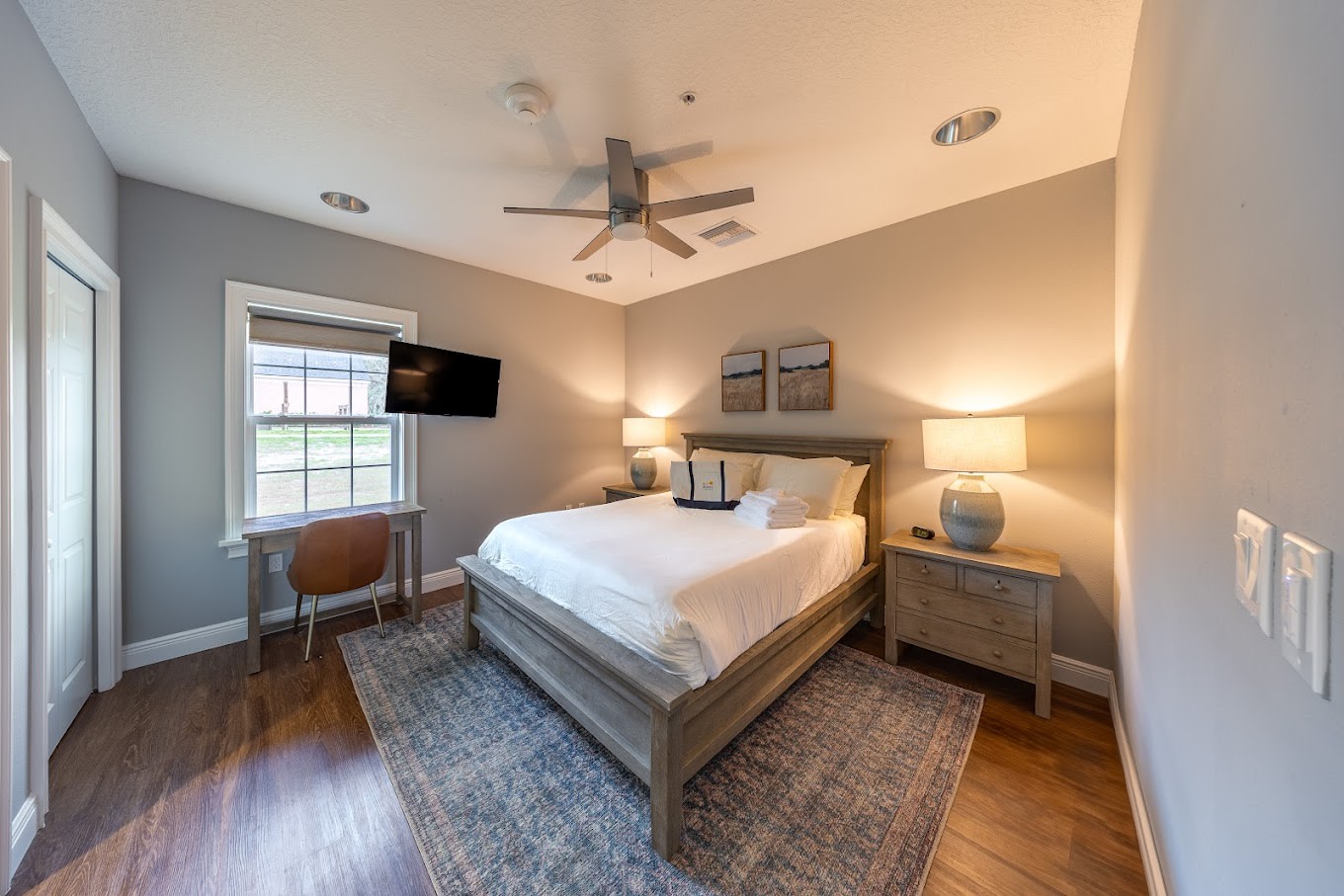
The residential information describes shared and private room options, chef-prepared meals, housekeeping, outdoor spaces and on-site therapy horses. The current FAQ also identifies facilities such as a gym, trails and a community center. These features support life on the property, but the assigned room and access to activities should be confirmed for the admission.
Discuss bedroom and bathroom sharing, accessibility, dietary requirements and sleep needs before arrival. A person requiring a private bedroom should obtain a clear arrangement rather than infer it from photographs of the estate. Private detox accommodation and the subsequent residential room may be different arrangements.
Outdoor and animal-assisted activities should fit the resident’s physical health, comfort and treatment goals. Ask about alternatives when an activity is unsuitable or weather affects the schedule. The presence of a facility does not mean every resident will use it, nor does it explain whether a particular session is recreation or facilitated therapy.
Duration, readiness and realistic milestones
The residential page publishes a minimum stay of 30 days and states a preference for 90 days, while other passages describe flexibility around individual needs. Treat those as program parameters to discuss, not a universal clinical recommendation. Confirm the initial planned duration, review points and arrangements if the team recommends a change.
For a resident with previous treatment experience, the useful comparison is what the new plan will do differently and how that will be evaluated. Discuss goals that can be observed in daily life, such as participation, coping with distress, communication or preparing for the return home. A longer stay creates more time, but duration alone does not explain the quality or suitability of the care.
Practical planning should account for work, dependents, travel and funding without turning the proposed departure date into the only treatment goal. Ask how decisions are made if the person needs a different level of support. The resident should understand the reason for the recommendation and the available next steps.
Family involvement and communication
Family therapy is included in the provider’s residential treatment menu. Confirm how it is organized for the individual resident, which relationships are relevant and whether remote participation is possible. Work with a relative or partner should have an agreed purpose, such as preparing for the return home or addressing a particular communication pattern.
Discuss consent, information sharing and the boundaries between family support and the resident’s own treatment. The reviewed pages do not establish a universal family-session frequency or a complete current visiting and device policy. Those practical details should be obtained directly, especially before relatives book travel or the resident commits to essential work contact.
Fees and the full admission agreement
A dependable current package price was not established from the official sources reviewed. Request a written estimate for the planned level of care, duration and room category. It should identify whether detoxification, residential treatment, medication, tests, outside consultations, transport and any additional services are included.
If using insurance, obtain verification for the specific policy and recommended program, with the authorization requirements and patient responsibility clearly explained. An agreement should also address extensions and early discharge. A general statement about accepting insurance is not enough to establish what will be covered for this admission.
Alumni support and the transition home
The alumni program describes groups, remote sessions, events, recovery-oriented activities, volunteer opportunities and connections with peers. It also identifies referrals for services such as ongoing therapy or sober living. This provides several ways to remain connected after the residential stay, subject to the actual arrangements and availability.
The residential information also describes day/night and outpatient support options. Clarify the current service, location, clinical intensity and cost if one is recommended, rather than assume every step is included in the residential fee. A person returning to another region needs named local providers and a way to transfer relevant records.
Before discharge, establish who will continue psychotherapy and medication care, when appointments begin and how the resident can seek more support if needed. Alumni connection can complement that plan, but it has a different role from scheduled clinical treatment. The decision to attend The Guest House should consider the whole pathway, from assessment and room arrangements to a realistic continuation of care.
Official Guest House program pages and VA National Center for PTSD information reviewed October 20, 2026. Provider descriptions of trauma-focused methods are not treated as guarantees of benefit or as a substitute for individual clinical assessment.
Conditions
Levels of care
Settings
Amenities
Treatment approach
Trauma-focused individual and group work, psychodrama, somatic therapy, EMDR, and expressive approaches
Fees & admissions
Confirm current pricing
No current universal residential tariff verified. Confirm program duration, assigned room, detox, family services, follow-up, and insurance authorization in a written quotation.
Confirm the current program, duration, accommodation and included services directly with the center.
Clarify medical support, treatment pacing and the plan after discharge.