About Priory Hospital Roehampton
Priory Hospital Roehampton: mental health and addiction care in London
Priory Hospital Roehampton is a private hospital on Priory Lane in southwest London, with inpatient, day, outpatient, and online treatment pathways. Its adult services address mental health conditions and addiction, while separate services support children and adolescents. The hospital occupies a Grade II listed building with private inpatient bedrooms and a multidisciplinary clinical team. For someone comparing residential options, the defining feature is the range of hospital and nonresidential pathways available through the Roehampton team. The appropriate service depends on assessment, and a named program should be confirmed before interpreting its duration, cost, or therapy schedule.
This profile focuses on adult care. The official hospital page lists depression, anxiety, stress, obsessive-compulsive disorder, and post-traumatic stress disorder among the mental health conditions treated. Addiction services cover alcohol, drugs, and some behavioral problems, including gambling. The hospital also advertises a private outpatient eating disorder service for adults, including support for anorexia and bulimia. That service should not be confused with an inpatient eating disorder admission: each pathway has its own clinical criteria, staffing, and arrangements for medical monitoring.
A hospital team with individual clinical responsibility
Roehampton describes a team of consultant psychiatrists, clinical and counseling psychologists, therapists, occupational therapists, mental health nurses, and dietitians. Inpatients are assigned a primary nurse and remain under a consultant psychiatrist who reviews them regularly. The campus FAQ states that junior medical staff are on the premises 24 hours a day. This provides a more specific picture than a general claim of round-the-clock support: the roles of the assigned nurse, consultant, and on-site medical staff are different and should be explained during admission.
The published mental health pathway includes an individualized plan and weekly individual therapy, with relevant group work available. Frequency and content can vary with the program and stage of care, so that description should not be treated as the exact schedule for every ward or specialist pathway. A person transferring from another clinician should discuss how records, medication history, and current goals will be shared. The hospital can then assess whether inpatient treatment, a structured day program, or outpatient appointments offer the appropriate intensity of support.
Transform 28: the main inpatient addiction program
Roehampton lists Transform 28 among its addiction options. This is Priory’s 28-day inpatient program, combining medically assisted detox when needed with psychological treatment and a year of aftercare. Priory describes the program as 12-step informed, using group therapy, individual sessions, and activities such as mindfulness, yoga, and art therapy. The Roehampton page also mentions equine therapy for people completing an inpatient addiction program. Activities should be matched to the individual plan and current timetable rather than assumed to occur at a fixed frequency.
The program begins with withdrawal management when the assessment indicates it. Priory describes detox lasting up to ten days within this pathway, depending on clinical needs. Therapy can begin during detox once the person is physically able and the consultant considers it appropriate. The sequence therefore does not always involve a completely separate detox period followed by the same number of therapy days for everyone. Someone with a complicated medication history or previous difficult withdrawal should have that history reviewed before assuming the standard program can meet all their needs.
As discharge approaches, the team develops a plan that may include day care or outpatient therapy. The included year of aftercare provides weekly support groups, relapse prevention guidance, and contact with the recovery community. It does not mean a year of inpatient care or unlimited individual psychotherapy. The provider sometimes describes the combined inpatient and aftercare offer as a thirteen-month program; understanding the different levels of contact within that period helps patients and families plan realistically for the return home.
Other addiction pathways at Roehampton
The hospital’s current service page names Foundations 16, which combines inpatient detox and day care; Reset 7/10, a medically assisted detox option; Anchor 1:1, flexible outpatient addiction therapy; and Elevate 12, a twelve-week online program. These offer different amounts of residential support and contact with clinicians. A shorter detox admission should not be presented as equivalent to the full Transform 28 program. Equally, an online or outpatient service requires a home situation and clinical presentation compatible with treatment outside a continuously staffed hospital.
A free addiction assessment provides an opportunity to discuss the substance or behavior involved, previous attempts at change, current responsibilities, and what support is available at home. Priory’s family information advises an initial consultant review where prescription drug addiction is involved. The eventual recommendation should specify the program, the location of each component, and how the transition between inpatient and day or outpatient care will work. This is particularly relevant for someone traveling from outside London who may be unable to attend repeated daytime appointments after discharge.
Psychological therapies and the specialist trauma pathway
The Roehampton team advertises cognitive behavioral and dialectical behavior therapies alongside trauma-focused, relationship, and mind-and-body approaches. The practical value lies in how a therapist selects and combines them for a particular goal. Some programs focus on coping skills and daily functioning; others involve more intensive work on traumatic experiences or relationship patterns. An available therapy is not necessarily included in every inpatient package, and a specialist group may require a separate assessment and start date. Patients should ask which pathway is being proposed and why.
The Roehampton trauma-informed pathway is described in more detail than the general therapy menu. It consists of eight full treatment days over eight weeks, with the same group starting and finishing together. The published day combines work on understanding trauma and its effects with art psychotherapy and dance movement therapy. Eight individual therapy sessions are also offered alongside the group program. This is an eight-week scheduled pathway, not evidence that every residential trauma admission lasts eight weeks or includes identical sessions.
The group is intended for people whose difficulties may include PTSD, complex PTSD, strong emotional reactions, or relationship problems associated with traumatic experiences. A clinician assesses suitability before entry, and accepted participants are assigned a keyworker. The closed-group format means timing and continuity matter: joining partway through may not be possible. The program’s emphasis on stabilization, understanding symptoms, and carefully paced work also makes it useful to discuss previous therapy experiences and any concerns about group participation before committing to the course.
DBT-informed treatment over 26 weeks
Roehampton publishes a separate 26-week DBT-informed pathway. It includes a pre-group assessment, weekly group skills sessions lasting two and a half hours, and regular individual therapy. The curriculum covers mindfulness, interpersonal effectiveness, emotion regulation, and distress tolerance. In practical terms, these areas address noticing reactions, communicating needs, handling strong feelings, and responding to difficult situations without relying on harmful or impulsive behavior. The provider presents the pathway as relevant to a range of emotional and interpersonal difficulties.
The published description calls this a DBT-informed program. It does not establish that every element of a comprehensive DBT service, such as a particular telephone-coaching arrangement, is included. Someone referred for a specific DBT model should compare the proposed course with the referring clinician’s recommendation. Roehampton also advertises a different radically open DBT program for overcontrol; that is a separate approach and should not be substituted simply because the names are similar. Assessment helps clarify which intervention matches the person’s needs and readiness to participate.
Rooms, visiting, and practical access
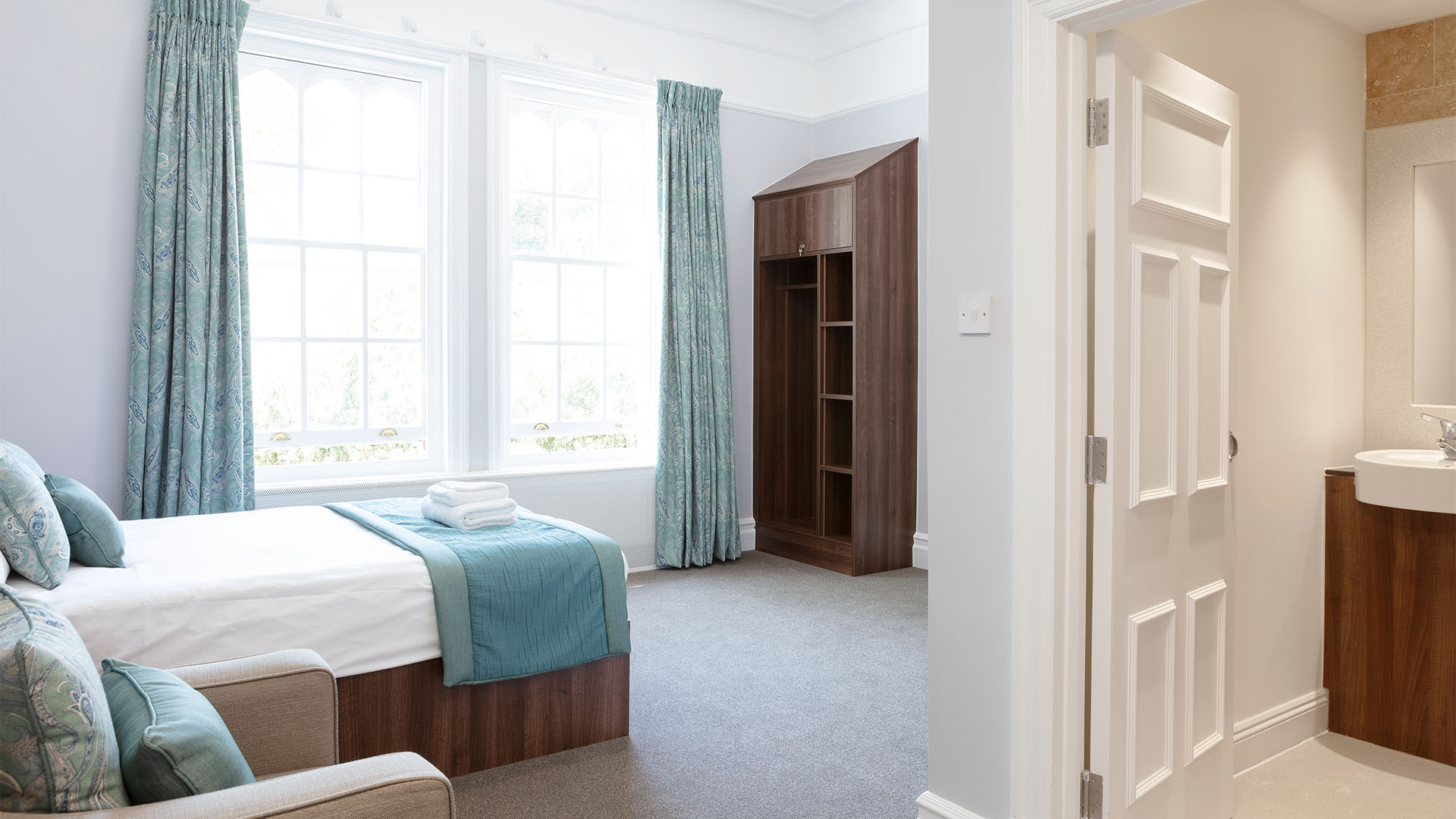
The hospital states that inpatient patients have their own en-suite bedroom, with a television, a small safe, and a nurse call button. Housekeeping is provided, and meals are served at scheduled times. These rooms sit within a working hospital rather than a private residence reserved for one person. The assigned ward influences visiting arrangements and the daily routine. If quiet space, accessibility, sensory needs, or a particular room feature is important, discuss it with the ward before admission rather than relying only on general photographs.
Family visits are encouraged, with ward-specific hours on weekdays and weekends. The provider prefers visits toward the end of the day where possible so they do not interrupt treatment. Children can visit with an appropriate adult. The hospital is at Priory Lane, Roehampton, London SW15 5JJ; Barnes railway station is described as approximately a twelve- to fifteen-minute walk away. The transport connection may help relatives attend, but mobility needs and the practical demands of repeated day-program attendance should shape an individual’s travel plan.
Separate services for children and adolescents
Roehampton’s young people’s services have different age boundaries from the adult programs described above. The hospital page lists outpatient care for ages four to seventeen and day and inpatient options for ages twelve to seventeen. Richmond Court and Kingston Court are identified as the adolescent inpatient wards, with age-appropriate treatment and educational support through an on-site school during term time. These services require their own assessment and family arrangements. The existence of young people’s mental health care does not establish that the adult addiction packages are available to minors.
The provider also lists private autism assessments and a short program addressing emotionally based school avoidance. These are distinct services with different purposes and should not be treated as interchangeable forms of inpatient care. A parent seeking support should identify the child’s age, presenting concern, educational situation, and current clinicians when contacting the team. The relevant service can then explain its referral criteria and how family communication, education, and any transition back to community treatment are coordinated.
Published prices, insurance, and follow-up
Priory currently advertises Transform 28 from GBP21,813 for the 28-day inpatient addiction package. This is a provider-published program starting price, not a universal Roehampton daily rate or a quote for every mental health admission. The separate trauma pathway advertises GBP632 per treatment day, while the full 26-week DBT course is listed at GBP8,995. These prices refer to different services and cannot be compared as though they purchase the same level of care. Confirm the selected campus, program, consultant arrangements, medication charges, and total inclusions in a written quotation.
The funding guidance describes self-payment and private medical insurance for private treatment. Insurance approval depends on the policy and the particular service; an insurer’s name on the hospital website does not establish coverage for an individual admission. Priory explicitly distinguishes its private services from separately commissioned publicly funded services. Its family support information describes continued support after addiction treatment, but the type and frequency should be confirmed for the chosen package. Arrange any ongoing psychiatric reviews, prescriptions, and additional therapy before the initial program ends.
Information checked October 20, 2026 using Priory’s official Roehampton, program, therapy, funding, and family support pages. Published starting prices and schedules may change and remain subject to assessment, availability, and written confirmation.
Destinations
Conditions
Levels of care
Amenities
Program approach
Consultant-led psychiatric care, CBT, DBT-informed and trauma pathways; 12-step-informed addiction treatment
Fees & admissions
From GBP 21,813 / program
Official Priory Transform 28 starting price for 28 days of inpatient addiction treatment, including detox when indicated and 12 months of aftercare. Roehampton lists this program; confirm campus availability and all charges in writing. Other mental health, trauma, DBT, detox, and outpatient services have separate fees.
Confirm the current program, duration, accommodation and included services directly with the center.
Confirm the adult unit, care pathway, expected stay and follow-up.