About Alpharus Health — Caseyville
Residential substance-use treatment in Caseyville
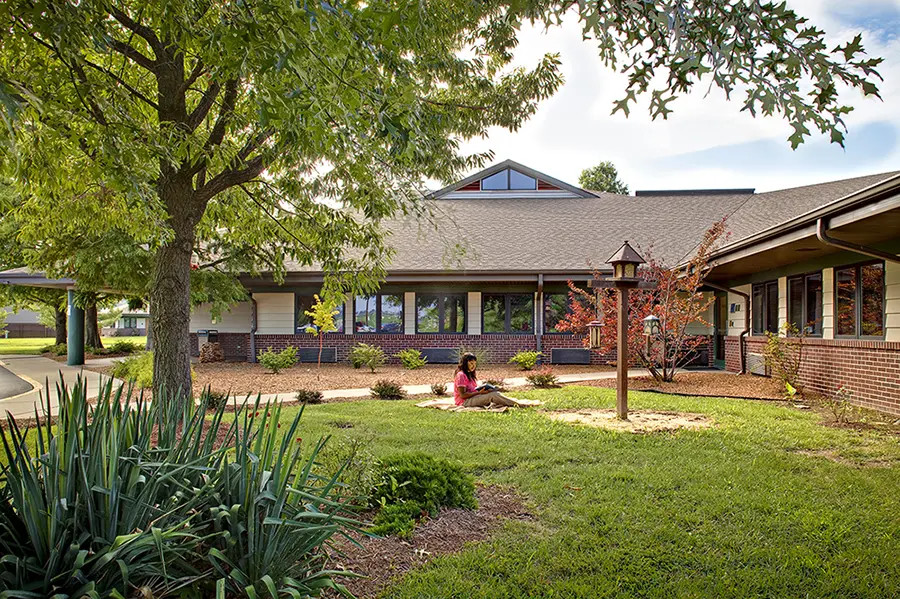
Alpharus Health identifies its Caseyville program at 600 West Lincoln Avenue, Caseyville, Illinois 62232. The current location page lists residential treatment, residential withdrawal management, medication-assisted recovery, therapy, and support groups. It also advertises virtual services. The location-specific admissions number is 618-226-4348. Ask for Caseyville to be named on the clinical recommendation and financial agreement, particularly if a central care advocate discusses more than one program within the wider organization.
The provider now uses the Alpharus Health name, while the earlier Gateway Foundation name still appears in some directory addresses and references. That difference should not be mistaken for evidence that the Caseyville service is a different physical campus. At the same time, an earlier directory description should be checked against the current location page before using its telephone, fee, or program details. The most useful confirmation is the current provider, receiving address, clinical level, and date of the proposed admission.
What the residential setting does and does not establish
The provider’s residential overview describes living onsite with structured treatment, clinical support, individual and group work, and peer connection. Although the Caseyville page uses inpatient language to describe the residential environment, that wording does not establish a hospital-level admission. Ask what medical and psychiatric resources are available at this location, who is physically present overnight, and which needs require a different setting or outside evaluation.
The wider residential page mentions people age 17 and older, while the exact-campus secondary profile describes adult care. Anyone considering admission for a 17-year-old should therefore obtain explicit Caseyville age eligibility and guardian-participation requirements before proceeding. Do not assume that every age group accepted somewhere in a network is offered the same program at every site. Ask how residents are grouped, how the clinical schedule is adapted, and which staff have responsibility for the proposed admission.
Withdrawal management and medical assessment
The withdrawal-management page describes continuous medical support, monitoring, and medication when clinically indicated. The Caseyville page specifically includes residential withdrawal management among its services. Ask whether that is the recommended starting point, what assessment is needed, and how care moves into the residential program. Clarify the receiving unit, staff coverage, clinical review, and any separate authorization or charge for each stage rather than assuming one undifferentiated package.
Provide the assessment team with a current medication list, recent substance use, earlier withdrawal experiences, medical conditions, and relevant psychiatric history. Ask which records are required and whether the team needs to speak with an existing clinician, with consent. The offer should explain the resources available for the actual person and the response if their needs exceed them. A short description of detox on a website cannot determine an individual timetable or establish that every medical complication can be managed onsite.
If a transfer from a hospital or another treatment facility is planned, clarify who confirms acceptance, who sends records, and who arranges transportation. Ask how medications, follow-up appointments, and unresolved medical questions will be handed over. A residential room should not be assumed to remain available indefinitely while another phase of care changes. Written responsibilities can help the person and anyone assisting them understand which team to contact when timing, clinical needs, or the proposed level changes.
Medication-assisted recovery and ongoing prescribing
Alpharus lists medication-assisted recovery among Caseyville’s services. Ask how a clinician reviews an existing prescription, what options can be considered onsite, who prescribes, and how medication routines are supported during the stay. These questions are especially relevant when a person already receives medication from an outside clinician or expects to return to that clinician after discharge. A general statement that medication is available does not establish the same choice, schedule, or prescribing arrangement for every resident.
Request a clear plan for continuity after residential care. Identify the clinician who will provide follow-up, whether an appointment is confirmed, how records are transferred with consent, and what happens if there is a delay. The treating team should explain any proposed change in relation to the person’s circumstances. A directory should not turn a program’s recovery philosophy into a universal medication rule or imply that all clients require the same course or duration of prescribing.
Therapy and co-occurring mental-health needs
The exact-campus Recovery.com description names cognitive behavioral therapy, dialectical behavior approaches, motivational interviewing, family work, mindfulness, and 12-Step facilitation. These are secondary program descriptions rather than a guaranteed individual timetable. Ask which approaches are relevant to the proposed plan, how often individual appointments occur, and which clinicians deliver them. A sample week can distinguish professional therapy, peer support, practical activities, recreation, and personal time.
The Caseyville page describes substance-use treatment with support for co-occurring mental-health needs. It also says Illinois residents can access additional mental-health services virtually and at nearby Alpharus locations. That does not establish an independent acute psychiatric service inside the Caseyville residence. If mental-health treatment is the main reason for seeking care, ask which exact program and location are being offered and whether a substance-use treatment need is required for the proposed residential admission.
For co-occurring concerns, ask how the team coordinates psychiatric review, therapy, medication, and discharge planning. Someone with previous treatment experience can describe what helped, what was difficult, and what support was missing afterward. The co-occurring conditions guide can help structure those comparisons. The practical question is how the current plan responds to the individual, rather than whether a broad list of diagnoses or therapies appears in a program description.
Shared rooms and the daily environment
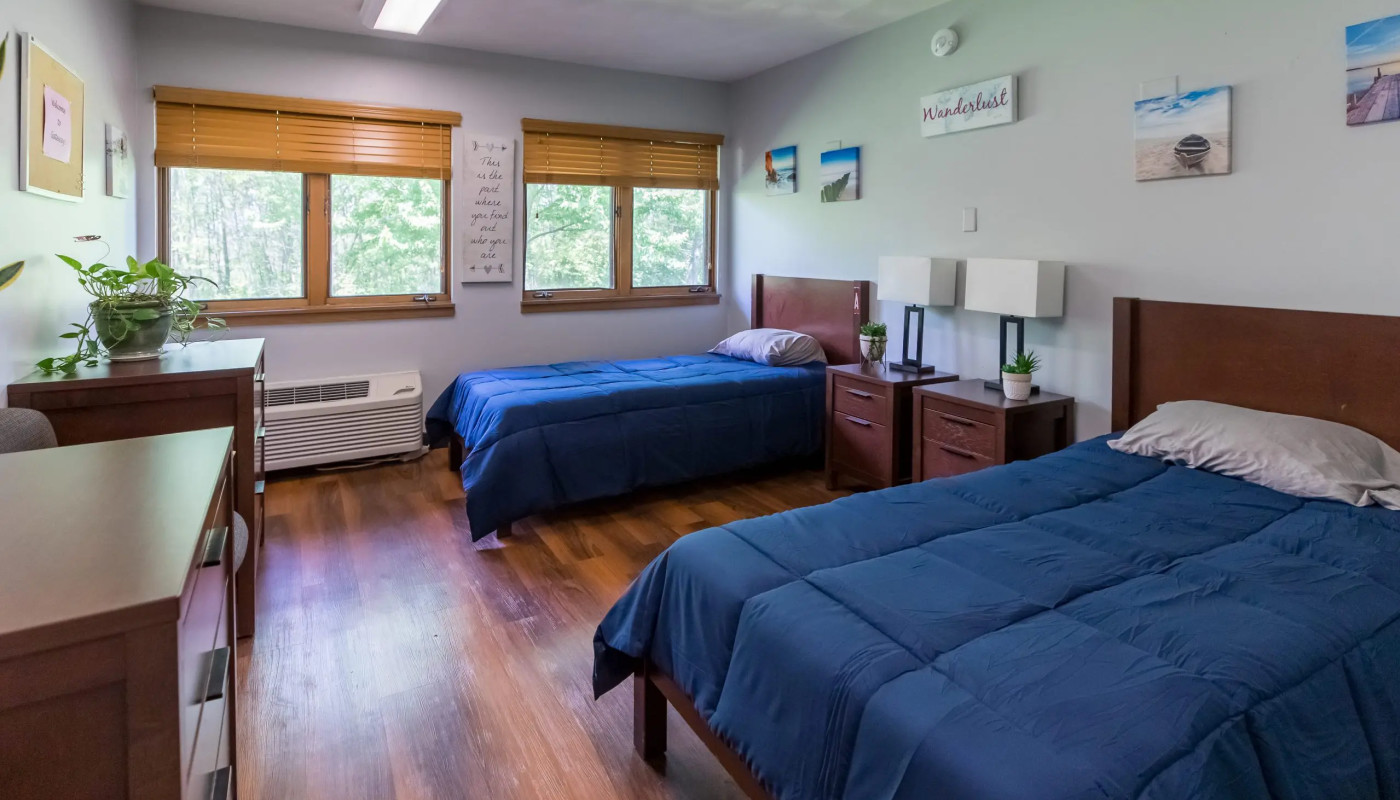
The secondary Caseyville profile describes a 44-bed campus with shared bedrooms and bathrooms. That capacity is a directory description, not an independently verified current census or a staff-to-resident ratio. It does not support a private-bedroom promise. Ask about the actual room offered, bathroom occupancy, grouping, storage, quiet hours, and the process for raising an accommodation concern. If sharing is a significant issue, discuss it before making a financial commitment rather than assuming a private upgrade will be possible.
The primary location page identifies a fitness center, basketball and sand-volleyball facilities, patio, and outdoor space. Ask which activities are currently scheduled, whether participation is optional, and how alternatives are arranged for someone with mobility, sensory, or other practical needs. An amenity list does not establish unrestricted access or an exercise requirement. Describe relevant limitations during assessment so the team can explain what the actual environment and program can accommodate.
Daily arrangements also include meals, dietary requests, laundry, permitted belongings, phones, visitors, and access to private conversations. Ask for the written policies applicable to the proposed residential phase. The location page’s published contact hours should not be interpreted as a description of overnight residential staffing. Obtain the correct number for a resident or support person to use after enrollment, and clarify how routine questions and urgent concerns are directed to the responsible team.
Family participation and practical support
Ask how family or other trusted people can participate in the treatment plan and how that differs from ordinary visiting. Clarify available appointments, educational opportunities, remote formats, and separate charges. The resident’s preferences and consent should shape who is involved and what information is shared. Some people rely on a friend or another support person; others may need boundaries around relationships that are unsafe or unhelpful. The program should explain how it responds to those circumstances.
A useful support discussion can focus on the practical period after discharge: where the person will live, who can assist with transportation, how follow-up appointments fit with work, and what communication is welcome. Ask how the plan changes if a support person cannot take time off or travel. Family involvement should not be treated as a guarantee of a particular outcome or as an obligation to resolve every relationship during one residential stay.
Virtual services and care at other locations
The Caseyville page advertises virtual care, but that is distinct from confirming an onsite outpatient schedule at West Lincoln Avenue. Ask what remote service is proposed, who delivers it, which Illinois residents are eligible, and whether it is appropriate before or after residential treatment. Confirm appointment frequency, technology requirements, privacy arrangements, and the process for reaching the team if a session cannot proceed. The actual clinical and financial offer should identify the remote service clearly.
If follow-up is instead proposed at a nearby Alpharus location, request its address, clinician, schedule, and transport arrangements. The provider’s residential overview describes helping coordinate transport through several possible resources, but that does not establish that every journey is supplied without charge. Ask who is responsible for booking, what assistance is available, and what costs remain payable. A convenient network option still needs a confirmed handoff and a workable plan for getting there.
Fees need a defined period and a current quotation
The Recovery.com page checked October 20, 2026 shows USD 25,000 in its price label without a fee period. The current listing does not specify a daily, monthly, or defined program basis for that amount. That information does not establish a monthly or 30-day tariff, even if another part of the listing describes a typical program length. No current official numeric price was verified in this review. A new client should obtain a written quotation for the actual level, dates, room, and services being proposed.
The admissions page describes working with a care advocate to assess needs, review options, and verify insurance. Ask for an explanation of the exact plan’s benefits, authorized service, location, and potential remaining charges. The quote should address withdrawal management, residential treatment, medication, testing, professional appointments, transport, outside care, and later virtual or outpatient services. Review deposits, payment timing, extensions, transfers, early departure, and refunds before relying on a broad statement that major insurers are accepted.
Making the admission and discharge plans concrete
Before arrival, confirm the receiving address, clinical acceptance, arrival window, room arrangement, packing instructions, and contact for delays. Ask what information must be supplied in advance and whether an accompanying person can attend part of the intake. These details are especially useful when a referral comes from another provider or when relatives are coordinating travel. A telephone inquiry, an insurance check, and a confirmed admission are separate steps that should be understood clearly.
Compare Caseyville with other residential programs, outpatient options, and United States treatment listings using the assessed need, exact service, clinical coverage, shared-room arrangement, complete quote, and continuing-care plan. Before discharge, identify which appointments, prescriptions, housing, and transport arrangements are confirmed and who is responsible for any remaining gap. Those concrete details are more useful than an undated amount or a network-wide promise alone.
Destinations
Conditions
Levels of care
Program approach
Individual/group therapy, medication-assisted recovery, peer support, behavioral and motivational approaches, family participation and continuing-care planning
Fees & admissions
Confirm current pricing
Recovery.com displays USD 25,000 without specifying a billing period, checked October 20, 2026. A separately stated program length does not establish a monthly or 30-day tariff. No official numeric fee was verified. Request a quote defining the clinical level, dates, room, withdrawal management, medication, transport and continuing care.
Confirm the current program, duration, accommodation and included services directly with the center.
Current Caseyville contact and clinical assessment, medical/psychiatric and prescription history, withdrawal needs, shared-room arrangement, insurance and quote. Network mentions age 17+; obtain explicit Caseyville eligibility/guardian requirements for 17-year-olds. Confirm remote versus nearby-site mental-health services.