Care at AMFM Mental Health Treatment — Carlsbad (Hoover Street)
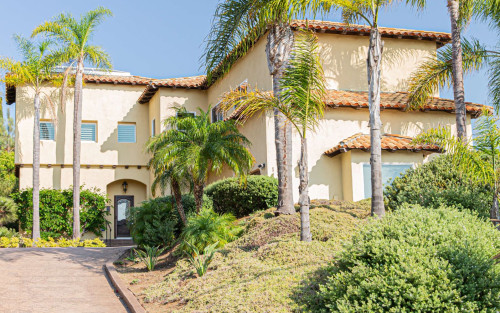
AMFM Mental Health Treatment’s Hoover Street residence in Carlsbad is a small residential program for adult men and male-identifying clients who need structured mental health care. The current official location page identifies the address as 1155 Hoover Street, Carlsbad, California 92008, with space for six residents. This profile concerns that house. AMFM also operates a separate Carlsbad residence on Goldenbush Drive for women and female-identifying clients, so an admission to “AMFM Carlsbad” should specify the actual property and program.
The Hoover Street program combines individual therapy, daily clinical groups, psychiatric appointments and practical support in a residential setting. Its official description names depression, anxiety, bipolar disorder, trauma-related difficulties, psychosis and other complex mental health presentations. A diagnosis on the website does not establish that the residence can safely accommodate every level of illness. The admissions assessment needs to determine the appropriate setting, current risk, physical health needs and whether a different service is required before a residential stay.
Who the Hoover Street program is designed to support
AMFM describes this location as a mental health residence rather than an addiction-focused retreat. The conditions listed include panic attacks, post-traumatic stress, personality disorders, schizophrenia, schizoaffective disorder, self-harm, suicidal thoughts, social isolation and difficult life transitions. The breadth of that list reflects the range of referrals the organization considers. It should not be read as an assurance that a small house provides the same emergency facilities, medical equipment or observation arrangements as an acute psychiatric hospital.
The fit assessment is particularly relevant when someone has recently been hospitalized, needs assistance with daily activities or is taking several psychiatric medications. Families can use the initial conversation to explain recent changes in sleep, behavior, functioning and medication, as well as previous treatment that helped or proved difficult. AMFM’s network admissions process says its clinical assessment covers mental health history, current symptoms and other issues before the team recommends a starting level of care and treatment plan.
The six-person, male-identifying environment may appeal to someone who finds a large institutional setting overwhelming but still needs substantial daily structure. Shared living also involves negotiating routines, social contact and another person’s use of the bedroom. The assessment should consider that practical fit alongside the clinical diagnosis. Someone requiring a female-identifying Carlsbad house should discuss Goldenbush directly instead of assuming a room at Hoover Street can be reassigned to that program.
Individual therapy, psychiatry and daily clinical groups
The current Hoover Street page describes two individual therapy sessions each week, a weekly appointment with a psychiatrist and a weekly meeting with a case manager. It also advertises at least three clinical groups daily. These are separate kinds of contact: a case-management appointment addresses coordination and practical needs, while psychiatric review addresses assessment and medication. The schedule is more informative than a general promise of intensive care because it helps a prospective resident understand how individual appointments and group work are balanced.
Cognitive behavioral therapy and dialectical behavior therapy are prominent in AMFM’s approach. The campus page also lists acceptance and commitment therapy, interpersonal therapy, mindfulness-based cognitive therapy, solution-focused brief therapy, behavioral activation, psychodynamic therapy and eye movement desensitization and reprocessing. These methods should be selected around the person’s formulation and readiness. Their presence in a service menu does not mean that each resident receives every modality or that trauma processing starts immediately after arrival.
Transcranial magnetic stimulation appears in the provider’s therapy menu as well. A prospective patient interested in it should obtain a specific explanation of assessment, clinical eligibility, where sessions take place and whether the cost is included. The public menu does not establish that treatment equipment is located inside the Hoover Street residence. Similarly, the existence of several professional roles across AMFM’s team should not be converted into a promise that a psychiatrist is physically present in the house at all times.
Group programming extends beyond discussion-based psychotherapy. The location describes somatic work, breathing practices, yoga, art, narrative activities and gardening, with weekend material addressing adverse childhood experiences. This gives residents several ways to participate in the therapeutic day, including work involving movement, expression and reflection. The clinical team can explain how these activities connect to individual goals and how participation changes if a resident is physically limited, highly anxious in groups or finding the initial routine difficult.
The daily routine and opportunities outside the house
The published sample schedule places breakfast in the early morning, clinical groups through much of the morning and early afternoon, and additional time for walks, fitness, recreation and rest later in the day. Dinner is listed around 6 p.m., with a consistent evening wind-down and bedtime. It is an illustration of the expected rhythm rather than a contract for every day. Appointments, individual needs and the week’s activities can change how a resident’s time is organized.
Hoover Street advertises three weekly fitness groups, three weekly somatic or yoga sessions, daily opportunities for walks or hikes and a weekly experiential outing. Equine activity is also mentioned, although the word used for its frequency is ambiguous; an exact timetable should therefore be confirmed rather than assumed. These opportunities add variety to the residential week. They are not substitutes for the individual therapy, psychiatric assessment or other clinical work that determines whether the program is appropriate.
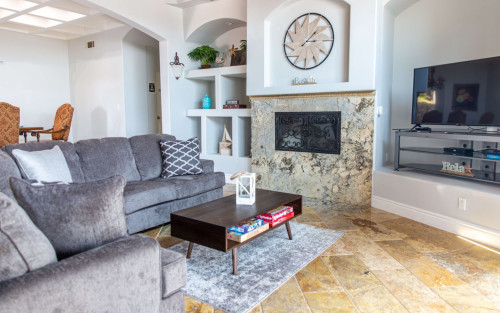
The setting offers ocean views, common living spaces, an in-home movie theater and a meditation area. These features can make an extended stay more comfortable, particularly when a person needs predictable opportunities to rest between appointments. A prospective resident should still discuss mobility, sensory needs and access to specific spaces. Photographs and amenity descriptions do not by themselves establish wheelchair access or whether every bedroom has the same layout, view or proximity to shared facilities.
Shared bedrooms, meals and household arrangements
The official Hoover Street page explicitly describes double-occupancy bedrooms for its clients. A private bedroom should not be promised for this listing. The house’s small census and spacious rooms do not change the distinction between a private residential property and a bedroom shared with another resident. Roommate arrangements, bathroom use, sleeping preferences and any clinically justified accommodations are useful subjects for the preadmission conversation.
Meals are organized with a head chef and two sous chefs described in the location information. AMFM lists vegetarian, vegan, gluten-free, diabetic and kosher dietary arrangements when needs are communicated in advance. That does not establish that every request can be met without further planning. Food allergies, medically necessary diets and difficulties around eating should be disclosed before arrival so the team can clarify both kitchen arrangements and any additional clinical support required.
A Saturday group meal outing is included in the sample description, while most eating takes place within the residential routine. Meals, common areas and scheduled activities create regular contact with fellow residents. Someone accustomed to a completely private program should therefore understand that this is a small shared treatment community. The setting’s value lies in its clinical structure and manageable scale, not an assurance of sole occupancy or uninterrupted privacy.
Phones, work access and family contact
AMFM’s Hoover Street rules restrict personal phones and computers unless their use is approved before admission or justified by a clinical need. Approved access is described as supervised. The house provides landline calls to supportive contacts in designated nonprogram periods, with ten-minute calls specified on the location page. This is a material consideration for residents who manage a business, care for dependents or expect to remain continuously available by email.
Family visits are advertised for Sundays from 11 a.m. to 3 p.m., and virtual visits may be possible. An advertised visiting window does not override consent, clinical recommendations or individual circumstances. The admissions team can clarify who may visit, whether advance booking is required and how family contact fits into the treatment plan. For a resident traveling from outside California, agreeing these arrangements early can prevent relatives from making unsuitable travel plans.
The broader AMFM service includes family therapy and education, but attendance and the most useful form of involvement should be decided around the resident’s needs. Family support may involve understanding symptoms, improving communication and preparing for discharge. It should also respect the resident’s privacy and the realities of their relationships. A visit, a family education session and a formal therapy appointment are different services, so it helps to establish which are actually included in the proposed course.
Length of stay and planning the next level of care
The current official location page describes a typical residential course of 30 to 90 days. That is broader than the 30-to-60-day range appearing in the secondary listing. The appropriate duration depends on assessment, progress and practical funding arrangements; neither range guarantees a fixed discharge date or a particular result. Changes in medication, living circumstances and readiness for a less intensive schedule can all be relevant topics in the team’s review.
AMFM’s organization-wide aftercare description says case managers submit a formal aftercare request during the first week of admission. It covers the anticipated discharge date, diagnosis, level of care, housing and insurance circumstances. The team considers Mission Connection, AMFM’s outpatient service, where it is suitable, and researches alternatives when it is not. This is a planning process rather than a promise that one particular outpatient provider will accept every resident.
The continuing-care curriculum described by AMFM addresses partial hospitalization, intensive outpatient treatment and standard outpatient care, along with practical matters such as returning to work, building a support network and managing relevant paperwork. Mission Connection offers in-person and virtual options through the wider organization. These are subsequent or separate services; they should not be presented as daytime programs operating inside the six-person Hoover Street house. Location, eligibility, scheduling and payment need to be confirmed for the actual referral.
Fees, insurance and making an informed comparison
Recovery.com displays a USD 54,000 estimate alongside a 30-to-60-day program description for its AMFM Carlsbad listing. This is third-party pricing information, not a published AMFM campus tariff, and the page does not justify converting it into a guaranteed monthly price or assigning it to every possible stay length. The previous USD 27,000-to-54,000 monthly calculation should not be treated as a current quote. An itemized estimate should specify the selected residence, number of days and covered services.
AMFM’s official cost information discusses broad cost ranges and the effect of insurance, location and level of care. Its admissions team offers benefits verification and discussion of out-of-pocket costs. Those statements do not establish coverage under a particular policy or approval for a particular length of stay. Confirm deductibles, authorization requirements, psychiatric and outside-service billing, medication costs and what happens financially if treatment is extended or transferred.
The current official contact number is +1 866 478 4383. When enquiring, specify Hoover Street, the male-identifying Carlsbad residence, and ask for the proposed care plan and room arrangements in writing. For a wider comparison of settings, the United States treatment directory can help identify alternatives with different populations, care levels and accommodation. Comparing those details with the resident’s actual needs is more useful than relying on the word “residential” alone.
Sources and verification
Reviewed October 20, 2026. Primary sources: AMFM Hoover Street location; separate Goldenbush Drive location; admissions process; aftercare planning; family psychoeducation; and official cost information. Secondary source used only for the attributed price and its displayed duration: Recovery.com AMFM Carlsbad listing. The current official page controls the campus, population, shared-room and 30-to-90-day descriptions.
Conditions
Levels of care
Settings
Treatment approach
Two individual therapy sessions weekly, weekly psychiatry and case-management appointments, at least three daily clinical groups, CBT, DBT, individually selected trauma and other therapies, somatic work, yoga, art, movement, family support and early aftercare planning
Fees & admissions
Confirm current pricing
Recovery.com displays USD 54,000 beside a thirty-to-sixty-day range, checked October 20, 2026. This is not an official tariff or a verified price-to-duration mapping. Remove the prior USD 27,000–54,000 monthly calculation. The current official campus describes thirty to ninety days. Request a residence-specific quote and individual benefits authorization; general AMFM cost ranges do not establish the Hoover Street tariff.
Confirm the current program, duration, accommodation and included services directly with the center.
Confirm clinical fit, current staffing, exact room, medication and TMS needs, total length and discharge plan.