
Care at Ascend Recovery Center — Albuquerque
Ascend Recovery Center in Albuquerque
Ascend Recovery Center operates an Albuquerque campus that brings medical detox, residential treatment, day treatment, and outpatient services into one building. Its current official pages identify the location as 883 and 881 Lead Avenue SE, with residential care at 883 Lead Avenue SE. The eighteen-bed live-in program serves adults who need structure and support while addressing substance use or mental health concerns. The ability to continue with one organization through several levels of care is a defining feature of this location, rather than a promise that every person must complete every stage.
The provider’s residential program description specifies clinically driven stays of up to thirty days. The team reassesses progress during that period, and some people may move to a lower level sooner. A longer overall treatment journey can include day treatment and outpatient care without representing a longer residential admission. Recovery.com’s broader twenty-one-to-sixty-day reference should therefore not be treated as the current official length of this exact live-in phase.
Assessment and the appropriate starting point
The official admissions process combines an initial conversation, benefit verification, clinical review, and scheduling. Its assessment includes a biopsychosocial history, depression and anxiety screens, suicide-risk screening, and tools used to identify the appropriate level of care. Nutrition and pain are also assessed. These are components of a clinical decision rather than a checklist through which a caller can diagnose themselves. The starting point can be detox, residential care, or an outpatient service, depending on the findings.
Ascend says that a mental health condition can be the primary reason for admission, rather than something considered only alongside addiction. Its mental health page describes residential support, integrated dual-diagnosis treatment, psychiatric assessment, and medication management. Published areas include anxiety, depression, trauma, and bipolar disorder. Someone with a complex psychiatric history should still obtain a clear assessment of what this campus can manage, what requires another service, and how existing clinicians will be involved with consent.
The program describes culturally responsive care for adults across age groups and specifically discusses serving Native American communities. That statement should lead to a conversation about the individual’s language, cultural practices, relationships, and preferences. It does not establish that every clinician has a particular cultural background or that every traditional practice is included. The most useful plan identifies what the resident needs, who will help provide it, and whether outside community or family support can be incorporated appropriately.
Medical detox and medication limits
Ascend’s detox page describes licensed practical nurses on site twenty-four hours a day and a medical provider assessing new detox clients within hours of arrival. The published approach uses alcohol- and opioid-withdrawal assessment scales, clinical observation, and medication when appropriate. Its typical planning range is five to seven days, adjusted around stabilization. That timetable is not a guarantee of an individual’s withdrawal course or a reason to alter medication or substance use without a clinician’s guidance.
The same around-the-clock LPN nursing arrangement is described for residential care. It is more specific than a general statement that support is always available, but it does not mean that a physician or psychiatrist is physically present at all hours. The reviewed service is medical detox and residential treatment, rather than an established hospital admission. Prospective residents should understand how medical reviews are scheduled, how concerning symptoms are escalated, and which hospital or other service would receive a transfer when higher-intensity care is needed.
The current provider homepage identifies Suboxone, Vivitrol, and Sublocade among its medication options. It explicitly says methadone is not in its formulary and that people are referred to an appropriate licensed opioid treatment program when that is the right fit. These are prescribing and coordination decisions for the clinical team, not interchangeable packages a person selects from a menu. Anyone already receiving treatment should confirm continuation, dispensing, appointments, and payment arrangements before moving between services.
Therapy, family work, and the weekly routine
The official therapy overview includes cognitive behavioral therapy, dialectical behavior therapy, EMDR, narrative therapy, family work, groups, and twelve-step facilitation. Ascend says EMDR-trained therapists are available and that the plan is selected from the initial assessment. Residents should ask which therapies are proposed for them and at what point. A trauma-informed environment can shape the whole program, while a particular trauma-processing method may require separate preparation and a decision about readiness.
The provider makes a useful distinction between clinical sessions and complementary activities. Yoga, breathwork, mindfulness, and sound-based wellness activities are described as supporting the treatment environment rather than counting as billable clinical therapy hours. This matters when comparing an extensive activity timetable with another center’s psychotherapy schedule. Request a representative week showing individual appointments, therapeutic groups, medical reviews, recreation, meals, and rest. A long list of available methods does not establish how much of each a resident will receive.
Family sessions are described within the residential program when the necessary releases are in place. The team can also involve relatives in the initial process, but a relative making the first call does not replace the patient’s participation or consent. Discuss the purpose of family work, whether it can be remote, and what information can be shared. If family relationships are strained, the clinician should help establish boundaries and a format that supports the resident rather than simply assuming that every relative will participate.
Case management addresses practical demands that can continue during treatment. The residential page lists help coordinating work-leave paperwork, short-term disability matters, legal or court communication with appropriate releases, insurance applications, and benefits such as SNAP. These services can organize information and referrals; they are not guarantees of eligibility, legal outcomes, or employer approval. Providing the case manager with relevant deadlines early can make the transition into treatment less disruptive and help build a realistic plan for returning to ordinary responsibilities.
The building, rooms, and contact rules
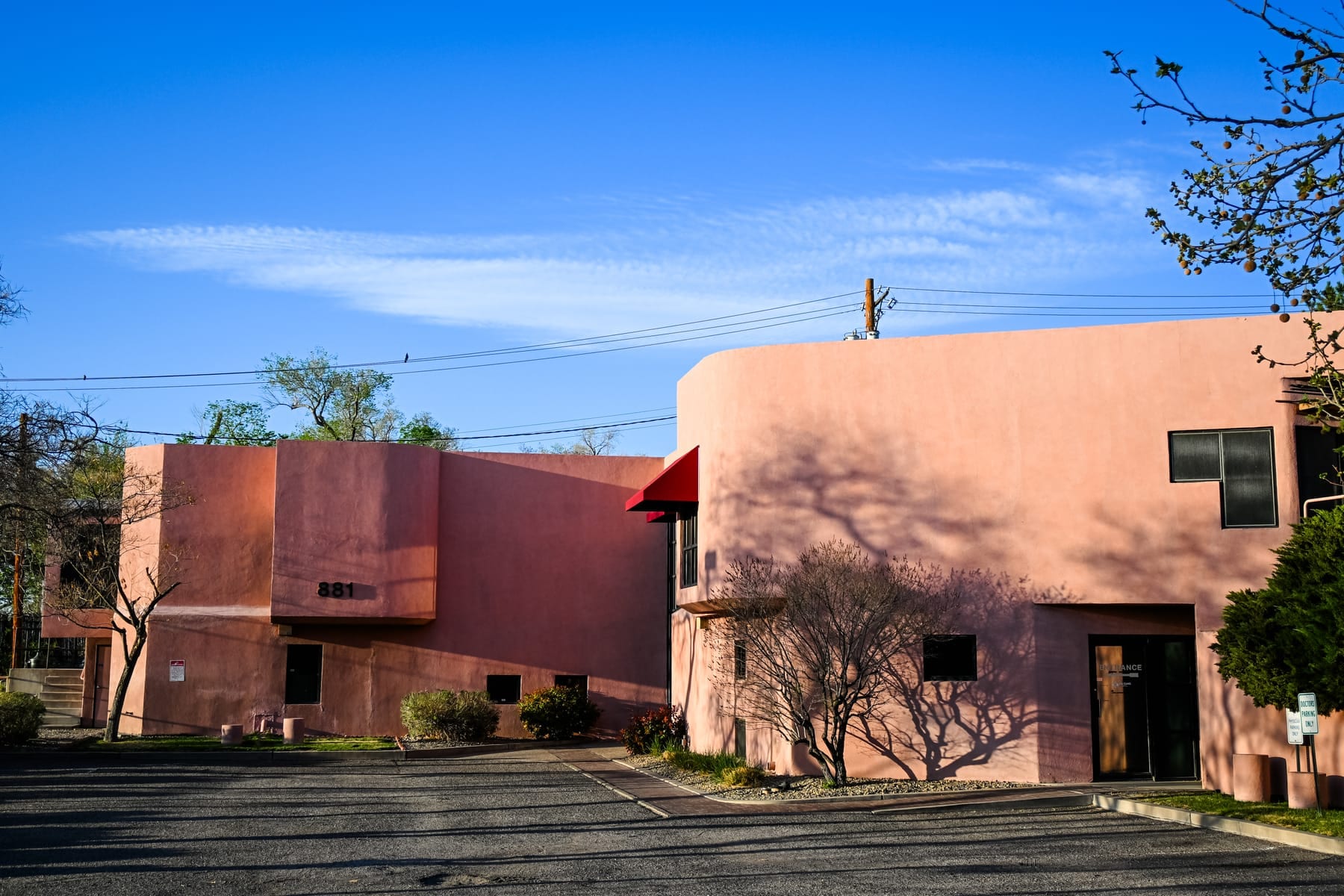
Ascend presents the campus as a compact urban treatment building rather than a remote resort. Official photographs identify a reception area, dining and community room, group lounge, kitchen, resident bathrooms, and both private and shared bedroom configurations. The existence of a photographed private or en-suite room does not establish that it will be assigned to every resident. Confirm the actual room and bathroom, building access, stairs or mobility arrangements, personal storage, and any needs that affect sleeping or participating comfortably.
The current admissions page gives a specific initial phone restriction for detox and residential admissions: five days without ordinary phone access, followed by access on day six with approved contacts. The same page says detox residents remain on site during stabilization unless a medical emergency requires leaving, and smoking or vaping is confined to designated outdoor breaks. Discuss essential family contact, accessibility devices, and any exceptions before arrival. These policies make this a structured treatment stay, with a different daily rhythm from a hotel or wellness holiday.
Fees and the distinction between treatment phases
Recovery.com’s Albuquerque listing, checked October 20, 2026, estimates USD 15,000–25,000 for thirty days of residential care. It separately lists USD 5,000 for a seven-day detox episode. These are attributed third-party estimates, not official tariffs, and the smaller detox figure should not become the advertised starting price for the residential program. Nor does either figure establish that detox and residential care are bundled together. Obtain a quote for the actual sequence recommended after assessment.
The primary website describes insurance and Medicaid participation and says benefits are checked during admission. Coverage still depends on the exact plan, service, clinical authorization, network arrangement, and personal cost sharing. An insurer named on the website is not proof that every phase or medication will be paid for. Request a breakdown of detox, residential accommodation, outpatient sessions, prescriptions, tests, outside consultations, and transport, including what changes if the clinical team recommends a longer overall course or a different level of care.
Step-down care without changing the treatment organization
Ascend calls its PHP service Day Treatment, reflecting the terminology used in New Mexico. The published schedule runs Monday through Saturday, with full weekday clinical days from 9:00 a.m. to 3:15 p.m. and a shorter Saturday session. Clients return to accommodation outside the program after the day’s treatment. Remaining with the same team can support continuity, but housing, commuting, medication access, and support during evenings still need to be arranged. Day treatment should not be mistaken for continued overnight nursing supervision.
The website describes IOP as three or five days per week, with approximately three clinical hours per day. Its therapy FAQ specifies weekly individual therapy in Day Treatment, and individual therapy every two weeks in IOP with weekly check-ins between those sessions. Those outpatient frequencies should not be transferred to the residential program as a guaranteed personal schedule. Lighter standard outpatient and eligible virtual options are also described, allowing the care plan to change as the person resumes responsibilities outside the treatment building.
Recovery.com additionally describes an alumni app and meetings every other Sunday. These are secondary details to confirm for current participation, and they complement rather than replace ongoing clinical appointments. Before completing a phase of treatment, establish the next schedule, the professional responsible for prescriptions, any required authorization, and who to contact if difficulties increase. An internal handover can be helpful, but it still needs a definite date and a plan for the hours when structured treatment is not running.
The current official admissions number is 505-537-5721. Ascend describes same-day or next-day arrangements when appropriate, subject to clinical review and availability; those statements are not guarantees of a bed or emergency response. Readers comparing treatment programs in the United States can use this profile to assess the whole Albuquerque pathway: the eighteen-bed residential environment, actual nursing provision, medication boundaries, distinct program prices, and the practical demands of returning home while continuing care.
Conditions
Levels of care
Amenities
Treatment approach
Clinical assessment, twenty-four-hour LPN nursing in detox and residential, medical and psychiatric review, CBT, DBT, EMDR, narrative and group therapy, family sessions with consent, twelve-step facilitation, case management and step-down planning. Wellness activities are separate from billable clinical therapy hours
Fees & admissions
USD 15,000–25,000 / program
Recovery.com estimated USD 15,000–25,000 for thirty days of residential treatment, checked October 20, 2026. Its separate USD 5,000 estimate is for seven days of detox, not the residential starting price or a bundled episode. These are third-party references rather than official tariffs. Confirm each phase, room, medication, tests, external appointments, transport, insurance authorization and personal cost sharing.
Confirm the current program, duration, accommodation and included services directly with the center.
Confirm the assessed starting level, detox and medication continuity including any external methadone coordination, medical staffing and transfer arrangements, assigned room, five-day phone restriction, written fee for each phase, insurance benefits, and housing/transport for Day Treatment or outpatient step-down.