Care at Austen Riggs Center — Stockbridge
Adult residential treatment in an open setting
The Austen Riggs Center provides adult residential psychiatric treatment in Stockbridge, Massachusetts. Its program is organized around intensive psychodynamic psychotherapy, participation in a therapeutic community, and an open, voluntary setting. Patients begin with six weeks of evaluation and treatment at the Inn, the main residence, before deciding with the team what should follow. The model is intended for adults who can make use of that combination of freedom, responsibility, and sustained clinical work. It is different in structure from a short assessment visit or a program defined primarily by a sequence of skills classes.
The current program overview identifies complex psychiatric concerns, often involving more than one diagnosis or a history of previous treatment. Its published areas of care include mood, anxiety, personality, psychotic, and trauma-related disorders. The emphasis is on understanding the person’s difficulties in the context of their life and relationships, while addressing symptoms and functioning. That approach does not make every presentation suitable for Riggs. Admission needs to consider the person’s current needs and ability to participate in an unlocked residential community.
Freedom and responsibility are part of the treatment model
The campus description explains that the setting is open and does not use locked doors or a behavioral privilege system to organize treatment. Patients are expected to take an active role in their care and community life. Everyday interactions can reveal patterns that are then considered in therapy: withdrawing from others, seeking help, managing conflict, or attempting to repair a relationship. The program therefore treats life between appointments as clinically relevant rather than simply time spent waiting for the next session.
This degree of openness requires a careful assessment of fit. The center’s admission FAQ states that it treats adults eighteen and older and does not have an adolescent program. A family or clinician can begin an inquiry, but the prospective patient’s participation matters. The person should understand the program’s expectations and be able to discuss concerns about living in this setting. An open campus is a defined treatment approach, not evidence that clinical supervision or the need for support is absent.
The initial six weeks include active treatment
The six-week evaluation and treatment period brings together psychotherapy, psychological testing, psychiatric and medical review, family work when appropriate, activities, and observation within the community. Treatment begins during this period; it is not deferred until a final report is produced. The six weeks form a complete initial clinical process. Continuing for several more months is one possible recommendation, but it is not the only outcome or an automatic requirement attached to admission.
Psychological testing contributes information about thinking, personality, emotional regulation, and other aspects of the clinical picture. Medical and medication review provides another perspective. Community participation and activities show how the person functions in settings that differ from an interview or therapy room. These sources of information are considered together rather than assuming that one score or symptom explains everything. The resulting formulation should help the patient and team understand what appears to be maintaining the difficulties and what kind of care may be useful next.
Psychotherapy with an ongoing clinician
Austen Riggs describes individual psychotherapy four times each week with the same psychiatrist or psychologist as a central element of treatment. The continuity allows a sustained examination of personal history, relationships, and recurring emotional patterns. It also gives the patient a consistent place to discuss experiences from the community. The current cost page notes that interim coverage during holidays or therapist absences may involve two sessions weekly. The usual schedule is therefore important to understand, but it should not be presented as an unconditional promise of four appointments in every calendar week.
Psychodynamic work is concerned with understanding patterns and meanings as well as managing immediate symptoms. A patient’s reactions in relationships, including the therapeutic relationship, may become material for discussion. This kind of treatment asks for active participation over time. A person considering Riggs can discuss what they found helpful or unhelpful in previous therapy and how this approach would differ in practice. The program should not be assumed to provide the same experience as a manualized short course simply because both involve individual appointments.
The Inn and its nursing-supported community
The Inn Residential Program is the entry setting for at least the first six weeks and accommodates up to forty-five patients. The provider describes nursing availability around the clock and twice-daily Inn groups. Nurses support communication, medication-related learning, and the use of words to express distress. The groups provide opportunities to become known to others, consider relationship patterns, and use peer support. These contacts complement individual psychotherapy rather than replacing it.
The Inn also has more intensive arrangements that can be considered when an already-admitted patient temporarily needs additional support. Program Assessment Status is described as a period for reviewing the appropriate level of care, while an intensive Inn option addresses difficulties in treatment engagement or a period of crisis. These are internal clinical decisions, not alternative packages selected solely for their price. The team should explain how changing needs are reviewed and when a different setting may be necessary.
Activities and roles beyond being a patient
Activities are available from the beginning of treatment and are intended to give people opportunities to participate as capable adults. Creative work, shared responsibilities, and community involvement can reveal strengths as well as difficulties. A person may discover that they approach a task or disagreement in a familiar way, providing something concrete to explore in therapy. The activities should not be understood only as recreation or as evidence that a resident must already be confident and independent before joining the program.
Riggs recommends focusing on treatment during the initial six weeks rather than trying to maintain a full work or school schedule alongside it. Its FAQ explains that study or employment may become part of later transitional work. That distinction matters for adults arranging leave from a job or college. The open setting does not mean that an unrestricted outside schedule will be compatible with the intended clinical process. Practical commitments should be discussed early so that the initial period can be used as planned.
Rooms and the Stockbridge campus
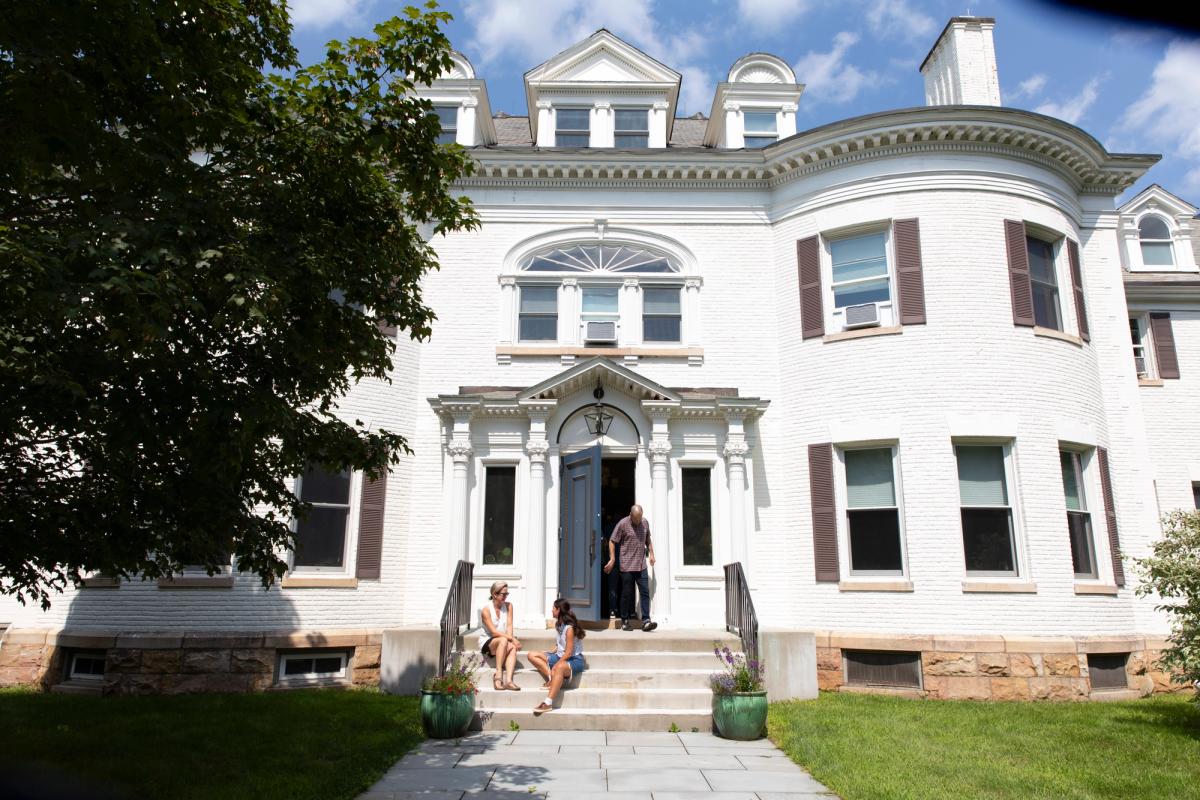
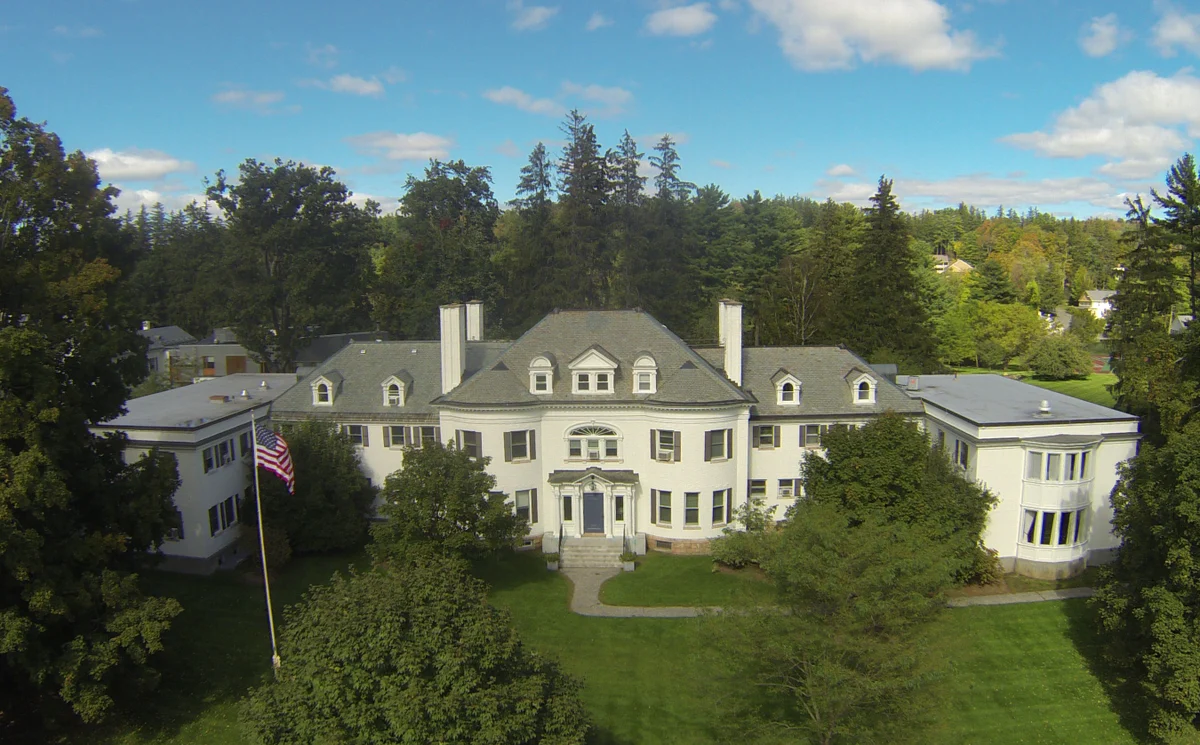
The Inn is a three-story residence with mostly single bedrooms. Some have private bathrooms, while others use shared bathrooms. The wording matters: the provider does not promise the same private-room and bathroom arrangement for every admission. Shared spaces include a dining room with buffet-style meals, a library, a gym, and common areas where patients can spend time together or speak with nursing staff. The actual room and any accessibility needs should be confirmed before arrival.
The campus lies on Main Street in Stockbridge, within the Berkshire region of western Massachusetts. The provider describes a setting more like a small college campus than a conventional hospital building. That physical environment is connected to its open-community approach, but it does not remove the structure of treatment. Residents still have clinical appointments and opportunities for group participation. Travel and arrival arrangements should be coordinated with admissions, particularly when family members or referring professionals plan to attend an initial consultation.
Family work and the clinical case conference
Family meetings may be included when clinically appropriate. They can help place the person’s difficulties in a broader relational and developmental context and clarify how relatives can support the treatment. This is not a requirement that family members adopt one explanation or take responsibility for providing clinical care. The patient and team should agree on participation and information sharing. For someone with limited family involvement, other relevant supports and existing clinicians can be considered in planning the next stage.
At the end of the six-week period, the multidisciplinary team meets in a clinical case conference. The provider says the patient is invited to attend and contribute their own account. The discussion brings together psychotherapy, testing, psychiatric review, nursing observations, and activities. Recommendations may include returning to outpatient treatment, moving to a different specialist setting, or continuing at Riggs. The value of the process lies in a clearer and more usable plan, rather than a guarantee that the team will recommend one particular destination.
The initial cost and later daily rates
The official cost page, checked October 20, 2026, gives US$97,000 for the six-week evaluation and treatment period, including a US$2,500 admission consultation fee. It describes a refundable US$60,000 payment on the day of admission that is applied toward treatment. The rate schedule effective July 1, 2026 lists US$2,250 per day for the initial period. The daily figure should be read together with the six-week commitment and consultation charge, rather than converted into a stand-alone monthly offer.
If treatment continues, the published Inn Residential Program rate is US$1,525 per day. Other transitional and step-down programs have different rates and service levels; they are not simply cheaper versions of the initial evaluation. The provider currently reports a median stay of approximately five months while stating that there is no fixed duration beyond the initial commitment. Continued treatment depends on the person’s use of the program and clinical appropriateness. The next phase and its price should be agreed explicitly.
The initial package includes core psychotherapy, psychiatric and medical services, psychological testing, community and activities participation, room and board, and family work when indicated. Medication, outside medical or dental care, certain outside tests, and personal expenses are separately billed. These exclusions remain relevant even though the rate sheet describes its daily fees as all-inclusive. The actual financial agreement should identify any anticipated additional services and how the account will be maintained during treatment.
Private payment and the transition beyond Riggs
Residential care is private pay, with no in-network insurance participation and no Medicare or Medicaid reimbursement eligibility stated for this program. Possible out-of-network reimbursement is separate from the obligation to keep the treatment account current. Riggs works with an outside insurance-advocacy service and describes limited need-based financial assistance, potentially up to thirty-five percent, subject to review. Neither reimbursement nor assistance should be assumed before it is confirmed for the individual arrangement.
The admissions number is +1 800-517-4447. A useful conversation can address suitability for the open setting, the initial six-week process, room arrangements, payment, and possible next steps. If a patient continues into a different Riggs program, the provider emphasizes continuity with the core clinical team; if they leave, the formulation should inform care elsewhere. Readers exploring alternatives can compare treatment providers in the United States, keeping the intensive psychodynamic model, community expectations, and initial commitment central to the decision.
Conditions
Levels of care
Settings
Amenities
Treatment approach
Intensive psychodynamic psychotherapy, usually four sessions weekly with the same psychiatrist or psychologist, psychiatric/medication review, psychological testing, therapeutic community and twice-daily Inn groups, activities, family work and multidisciplinary formulation
Fees & admissions
USD 2,250 / day
Official rates effective July 1, 2026, checked October 20, 2026: initial six-week care is USD 2,250/day plus a USD 2,500 admission consultation, totaling USD 97,000. The cost page describes a refundable USD 60,000 payment on admission applied toward treatment. Subsequent Inn care is USD 1,525/day; lower-intensity programs have different rates. Medication, outside medical/dental care, specified outside tests and personal expenses are extra. Residential treatment is private pay; reimbursement and limited financial assistance require individual confirmation.
Confirm the current program, duration, accommodation and included services directly with the center.
Discuss suitability for an open voluntary adult setting, current records and the initial six-week commitment. Confirm room and bathroom arrangements, the consultation and admission payment, extra costs, any financial assistance and the options following the case conference.