
Care at Bayside Marin — San Rafael
Bayside Marin’s residential and outpatient locations
Bayside Marin is an adult substance use and co-occurring treatment provider in San Rafael, California. Residential care takes place in hillside homes, while the widely published address at 718 Fourth Street is the outpatient and administrative location. The family workshop also meets at that downtown office. An applicant should therefore ask for the actual receiving residence and arrival instructions rather than assume the office address identifies an overnight treatment building. The provider’s current official admissions number is 844-642-1075.
The California Department of Health Care Services register lists Bayside Marin II under number 210030AP at 134 Bayview Drive, with additional properties and a combined residential capacity of fifty-four. The reviewed record identifies residential and detox services with incidental medical services and expiration July 31, 2027. Capacity is spread across the listed locations, not concentrated in one house. A separate nonresidential record, 210030GP, identifies 718 Fourth Street and shows expiration October 31, 2027.
Who the program is designed to treat
The official residential program focuses on adults with substance use disorders and co-occurring concerns. The clinical information describes integrated work on addiction and associated mental health needs, rather than a general guarantee of admission for every primary psychiatric condition without substance use. An assessment should explain whether the proposed track fits the person’s current presentation. Ask about medical stability, medications, previous treatment, accessibility, and any concerns that might require a different level of care or another provider.
Before accepting an offer, identify the clinical lead and the people responsible for medical, psychiatric, and psychological care. Ask how those roles work together and when the initial plan is reviewed. A list of conditions can help frame an inquiry, but it does not specify the severity the residence can manage. People comparing programs should obtain a clear explanation of the proposed services, the limits of the setting, and what would happen if needs changed during the stay.
Detox in a residential home setting
Bayside’s detox page explicitly describes a non-hospital residential environment with care available around the clock. It also advertises a seven-day detox-only option, followed where appropriate by residential or intensive outpatient treatment. The seven-day description is a program option, not a prediction that everyone will complete withdrawal care in that period. Ask whether it is suitable for the particular admission and how the team decides which next stage is appropriate.
An accurate history of substance use, prescriptions, prior withdrawal care, and relevant health conditions helps the team explain the receiving setting and medical plan. Discuss who monitors the person overnight, which assessments are included, and how outside medical support is arranged. Detox, residential treatment, and outpatient care may have different authorizations and prices. The written agreement should make those transitions and charges understandable, including responsibility for medication, laboratory work, outside consultations, transportation, and any care that the residence cannot provide.
Therapy and the current five-phase model
The current Bayside treatment-model page describes five phases: motivation for change, awareness, building support, anticipating relapse risks, and preparing a discharge plan. Residents complete written work that is reviewed with staff and discussed with peers. This is a description of the provider’s approach, not independent evidence that its model produces better outcomes than other programs. Ask how the phase work is adapted to the individual’s learning preferences, concentration, language needs, and current clinical condition.
The residential page lists individual psychotherapy, cognitive and dialectical behavioral approaches, motivational interviewing, trauma-informed work, group treatment, and education. The linked residential brochure illustrates two individual psychotherapy appointments weekly, but the actual schedule should be confirmed for the proposed track. Ask about session length, the clinician providing each service, and the balance between private and group work. A therapy menu and a daily timetable answer different questions; both are useful when evaluating the program’s intensity.
Rooms, property size, and daily environment
Bayside’s published materials describe Canyonside and Mountainside residences, and Recovery.com identifies both single and double bedrooms. A private room is therefore an option to verify, not a universal entitlement. Older official location material and the linked brochure describe thirty places, whereas the reviewed state record lists fifty-four across multiple addresses. That difference makes the assigned house, its current occupancy, room configuration, and available facilities more useful than a single headline capacity figure.
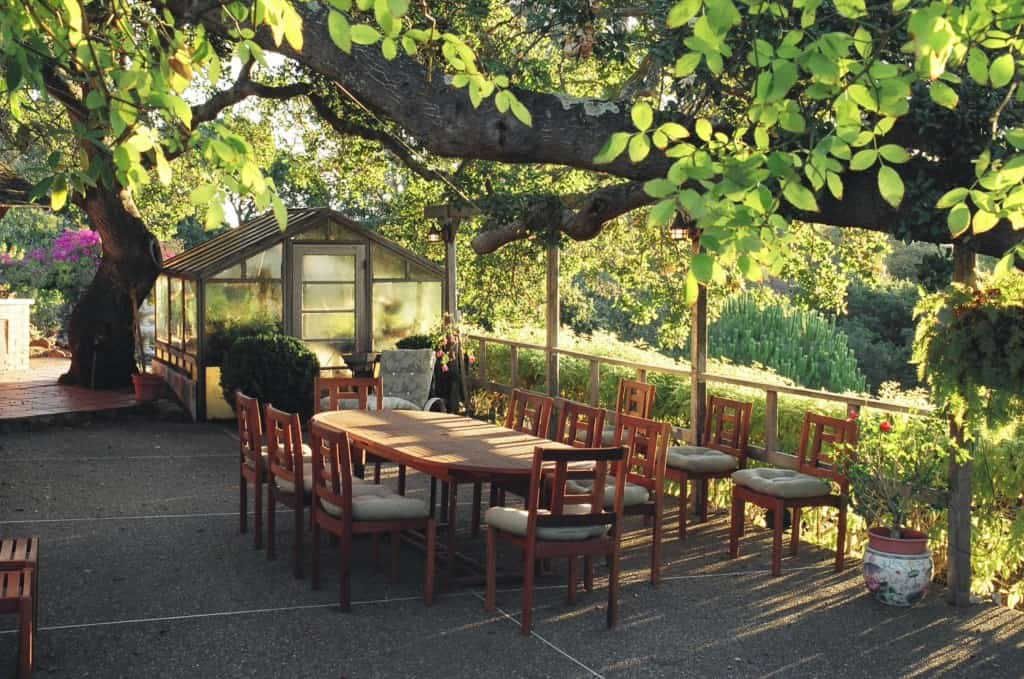
The provider advertises hillside views, communal spaces, chef-prepared food, and wellness amenities. Ask which facilities belong to the assigned property and whether appointments or activities require travel between locations. Discuss mobility, stairs, dietary requirements, quiet space, and the bathroom arrangement before arrival. Photos of one house or a shared leisure area do not show what every resident receives. The accommodation agreement should identify the room offered, any private-room supplement, and what happens if a room change becomes necessary.
A structured day with clinical and wellness activities
Bayside combines therapy and education with activities such as meditation, yoga, acupuncture, and massage in its published program. These services should be distinguished from psychotherapy, psychiatric review, and withdrawal management when comparing schedules. Ask which are part of the basic program, which are optional, and whether suitability or availability affects participation. A full day of organized activities does not mean every hour is direct clinical treatment or that every listed activity is provided daily.
Request the current schedule for the intended residence, including individual appointments, groups, meals, rest, recreation, and outside meetings. Clarify phone and laptop rules, work expectations, visiting arrangements, and how the team adjusts the schedule during early stabilization. If maintaining essential contact with family or an employer matters, discuss that before admission. The daily structure should be practical for the person’s circumstances while leaving the treating team able to respond to changing clinical needs.
The two-day family workshop
The official family FAQ describes a Friday-and-Saturday workshop at the Fourth Street outpatient office. Relatives attend the first day and a half, with clients joining on Saturday afternoon. Registration involves the client’s permission, preparation, and agreement to attend the full program. The page welcomes parents, spouses, grandparents, and siblings aged twelve or older. That age reference concerns family participation; it does not establish that the adult residential program admits twelve-year-old patients.
Ask about current workshop dates, space, costs, remote alternatives, and any travel or lodging needed by relatives. Establish how the workshop differs from individual family therapy and which participants the clinical team recommends. The patient’s consent should make information-sharing expectations clear. A family member who cannot attend the whole workshop can ask about other appropriate forms of involvement. The published format provides a useful planning outline, while the actual invitation and schedule determine what is available during a particular stay.
Fees and insurance arrangements
Recovery.com displayed an estimated US$60,000–63,000 for thirty days at Bayside Marin when checked on October 20, 2026. This is a third-party program reference, not a current official tariff or a standing monthly rate. The official payment page offers an individualized cost and benefits review. Request a quote naming the residence, room, care level, dates, detox if needed, clinical appointments, medications, tests, transportation, family services, and continuing-care arrangements. Ask which potential charges are outside the quoted amount.
Bayside’s official insurance page lists several networks, including Anthem, Cigna, Aetna, Blue Cross Blue Shield, Kaiser Permanente, and TriWest VA Community Care Network. It separately says Medicare, Medicaid, Medi-Cal, and TRICARE are not accepted. TriWest’s VA community-care listing should not be treated as TRICARE acceptance. Coverage and authorization still depend on the actual policy and service. Confirm deductibles, coinsurance, deposits, exclusions, separate professional billing, and personal responsibility if an insurer declines part of the proposed stay.
Outpatient care and returning to the community
The organization advertises partial hospitalization and intensive outpatient programs as separate care stages. The certified Fourth Street office is distinct from the residential homes, even if a person progresses through the organization’s services. Ask where appointments occur, how many days and hours are expected, and where the person will live. If supportive housing is proposed, establish its operator, rules, transportation, cost, and relationship to treatment. Housing and outpatient clinical services should each have clear responsibilities.
For someone returning to work or home outside Marin County, discuss whether local follow-up would be more practical than continuing in the same area. The transition plan should identify the receiving clinician, appointment timing, medication responsibilities, and consent for record transfer. Ask how changes in insurance, travel, or housing affect the plan. A transition is more concrete when the first appointments and practical arrangements are specified, rather than left as a general recommendation to obtain support after discharge.
Aftercare and making a useful comparison
Bayside’s aftercare page describes an individualized plan, follow-up telephone contact, and a weekly staff-facilitated alumni group at the outpatient location. Its treatment-model page also describes preparing an initial three-month schedule of recovery activities. Confirm which activities are available remotely and which require attendance in San Rafael. Continuing access to resources or an alumni group is different from an unlimited package of therapy, medical visits, or accommodation, so identify the included and separately funded elements.
Bayside’s small-house arrangement, mixed room options, phase work, and family workshop offer concrete points for comparison. The important next step is to connect them to the proposed house, clinical plan, and financial agreement. Ask how progress will be reviewed, what could trigger a transfer, and how care continues after the residential phase. Current address-specific information and a clear schedule are more useful than assuming that every program feature, capacity figure, or photograph applies equally to every Bayside residence.
Sources and further comparison
Source review: October 20, 2026. Official residential program; Official location description; Current five-phase treatment model; Residential detox and detox-only option; Family workshop format and location; Insurance and payment policy; Aftercare program; Provider-linked residential brochure; California DHCS public facility register; Recovery.com room and 30-day fee reference. Provider statements describe the advertised service; they do not establish an individual admission decision, current availability, or treatment outcome. Price evidence is identified separately from the provider’s own fee policy.
For a broader comparison, explore treatment options in the United States and read questions to ask a treatment center. Use the answers from the actual receiving team to compare the clinical plan, practical arrangements, and written financial terms.
Conditions
Levels of care
Settings
Amenities
Treatment approach
Individual and group psychotherapy, CBT/DBT, motivational interviewing, trauma-informed work, five-phase assignments, family education, wellness activities and planned community follow-up
Fees & admissions
USD 60,000–63,000 / program
Recovery.com estimates USD 60,000–63,000 for 30 days, checked October 20, 2026. No official numerical tariff verified; obtain an exact-house and room quote. Official policy excludes Medicare, Medicaid, Medi-Cal and TRICARE; TriWest VA CCN listing is separate from TRICARE. Confirm benefits, clinical stages, extras and aftercare.
Confirm the current program, duration, accommodation and included services directly with the center.
Confirm adult substance-use/co-occurring fit, appropriate detox setting, receiving house, room and accessibility, clinical timetable, insurance authorization, itemized quote and separate outpatient/housing arrangements.