Care at Betty Ford Center — Rancho Mirage
The Rancho Mirage treatment campus
Betty Ford Center is the Hazelden Betty Ford Foundation’s addiction treatment campus at 39407 Vista Del Sol in Rancho Mirage, California. The official location page describes medical withdrawal support, residential treatment, outpatient services, integrated care for co-occurring mental health conditions, and programs for relatives. The center was co-founded by Betty Ford in 1982 and is now part of a nonprofit national organization. Its history provides context, but the relevant comparison is the current program, clinical assessment, assigned accommodation, and transition plan for the person entering care.
This is a treatment campus in the Coachella Valley, rather than a private vacation residence. People participate in a structured therapeutic community with clinical appointments, groups, educational sessions, and everyday routines. The presence of a nationally known name does not make every program suitable for every applicant. An initial conversation should establish which Rancho Mirage service is proposed, whether medical stabilization is needed first, and which mental health needs can be addressed within that placement. Services at other Hazelden Betty Ford locations should be considered separately.
Verified hospital classification and medical care
California’s official licensed healthcare facility dataset, with data dated October 16, 2026, lists The Betty Ford Center at this address as an open Chemical Dependency Recovery Hospital. It records active license 250000049 through September 6, 2027, and a licensed capacity of 100. This is a specific hospital category for chemical dependency care; it should not be interpreted as a general emergency hospital with every medical specialty. Licensed capacity also does not describe vacancies or the number of people in a particular treatment group.
The campus describes detox delivered by medical staff who monitor withdrawal symptoms and cravings. An assessment should account for the substances involved, physical health, current prescriptions, and previous complications. Someone with a complex medical condition should arrange a direct discussion about the center’s capabilities and transfer arrangements. The applicable question is whether the proposed service can safely meet that person’s needs. The classification confirms a regulated type of facility, while the admission decision still depends on the clinical circumstances and the resources available at the time.
How the residential treatment model works
Hazelden Betty Ford’s residential treatment model brings together medical, psychiatric, addiction, mental health, family, nutrition, fitness, and spiritual perspectives. It describes private counseling alongside professional-led process groups, educational work, and a shared daily routine. This is not a schedule made up entirely of individual psychotherapy. A useful plan identifies the lead clinician, the purpose of each treatment component, how often individual appointments occur, and how the team reviews progress. For someone returning after previous treatment, it should also explain what will be different this time.
The network lists cognitive behavioral therapy, dialectical behavior therapy, acceptance and commitment therapy, motivational approaches, and Twelve Step Facilitation among the methods available within individualized care. These are distinct tools rather than interchangeable labels. Work on behavior and thought patterns may support a specific relapse problem, while emotional regulation skills may address difficulty tolerating distress. Values-based work can help connect recovery goals with everyday decisions. Ask which methods the Rancho Mirage team recommends for the actual case and how they will be practiced, rather than expecting every listed technique in one stay.
Group participation is a significant part of the setting. A person may discuss patterns with peers, receive feedback, and try new ways of communicating while living within a common schedule. Private sessions offer a different space for sensitive history, individual goals, or difficulties that are harder to raise in a group. The balance matters for people with anxiety, communication needs, trauma histories, or previous negative experiences in communal treatment. Those needs should be discussed before arrival so that expectations about participation and individualized support are realistic.
Co-occurring mental health and opioid treatment
The foundation’s mental health service information describes assessment, individual therapy, family or couples work, groups, and medication coordination. Its standalone California mental health service is listed as statewide telehealth, while the Rancho Mirage campus describes mental health care integrated with addiction treatment. Those are different arrangements. Someone seeking help principally for depression, anxiety, trauma, or another psychiatric concern should confirm whether the recommendation is residential addiction treatment with co-occurring care, an outpatient mental health service, or a referral to a different level of support.
For opioid use disorder, the foundation describes Comprehensive Opioid Response with Twelve Steps, or COR-12. This approach combines medication, therapeutic work, recovery support, and follow-up. Its public explanation discusses buprenorphine with naloxone and extended-release naltrexone as options subject to clinical assessment. The choice is individualized; a reader should not infer that one medication suits everyone or that medication must end when a residential stay ends. Ask the prescribing team how an existing treatment will be managed and how continuing prescriptions will be coordinated after discharge.
Outpatient care and the length of treatment
The network’s outpatient model includes partial hospitalization or day treatment, intensive outpatient care, and less intensive outpatient services. It describes PHP at approximately 25 to 30 hours weekly and IOP at about three hours on four days each week. Those figures explain the general model; the exact Rancho Mirage schedule, group availability, and living arrangement need confirmation. Outpatient care can be an initial placement or a later stage after residential treatment. It still requires a practical plan for attendance, support between sessions, and any necessary accommodation.
Residential and outpatient duration are described in terms of clinical progress and goals, rather than a universal 28-day or one-month package. That distinction affects leave from work, travel bookings, family responsibilities, and cost. Ask what milestones will be used to review the treatment stage and when the next decision will be made. A flexible itinerary may be helpful, but extensions should still have a clinical purpose and an understood financial basis. Discharge planning should include the next provider, appointment arrangements, ongoing medication review, and support that remains accessible from home.
Support for relatives and children
The foundation’s family services are broader than visiting a resident. They include educational workshops followed by group coaching, virtual support groups, individual or family coaching, and a Children’s Program for ages seven to twelve. The aim is to help relatives understand addiction, communicate, and take care of their own needs. Family coaching can occur without the patient present. Many educational and support offerings are available without charge, but registration, eligibility, schedules, and any separately billed therapy should be checked for the service being considered.
A May 2025 program announcement described stronger coordination between family services, mental health teams, and recovery services, including a Rancho Mirage day-treatment pilot. That announcement explains the direction of the program, but it is not a promise that every patient receives an identical family package. Ask how the relevant family members will be invited, what information can be shared with consent, and how family sessions connect with the patient’s goals. Education and support for a child should also be distinguished from the child’s own assessment or clinical treatment.
Accommodation and the campus redevelopment
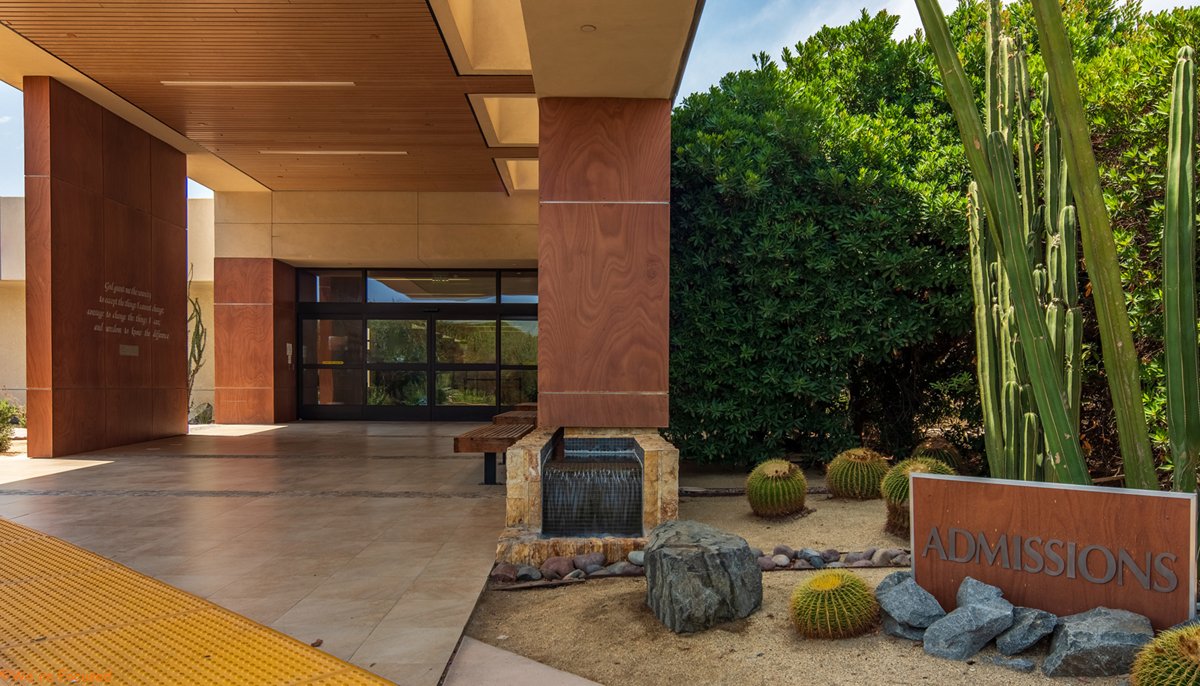
The center announced a new phase of campus redevelopment on September 29, 2026. Plans include a new 60-bed residential pavilion and dining hall, with completion anticipated in the third quarter of 2027, followed by renovation of existing residential halls. These are future works, not completed amenities available for a current booking. If images show new buildings or upgraded spaces, establish whether they are photographs of operational facilities or architectural renderings. Ask how any construction may affect the assigned unit and access around the campus.
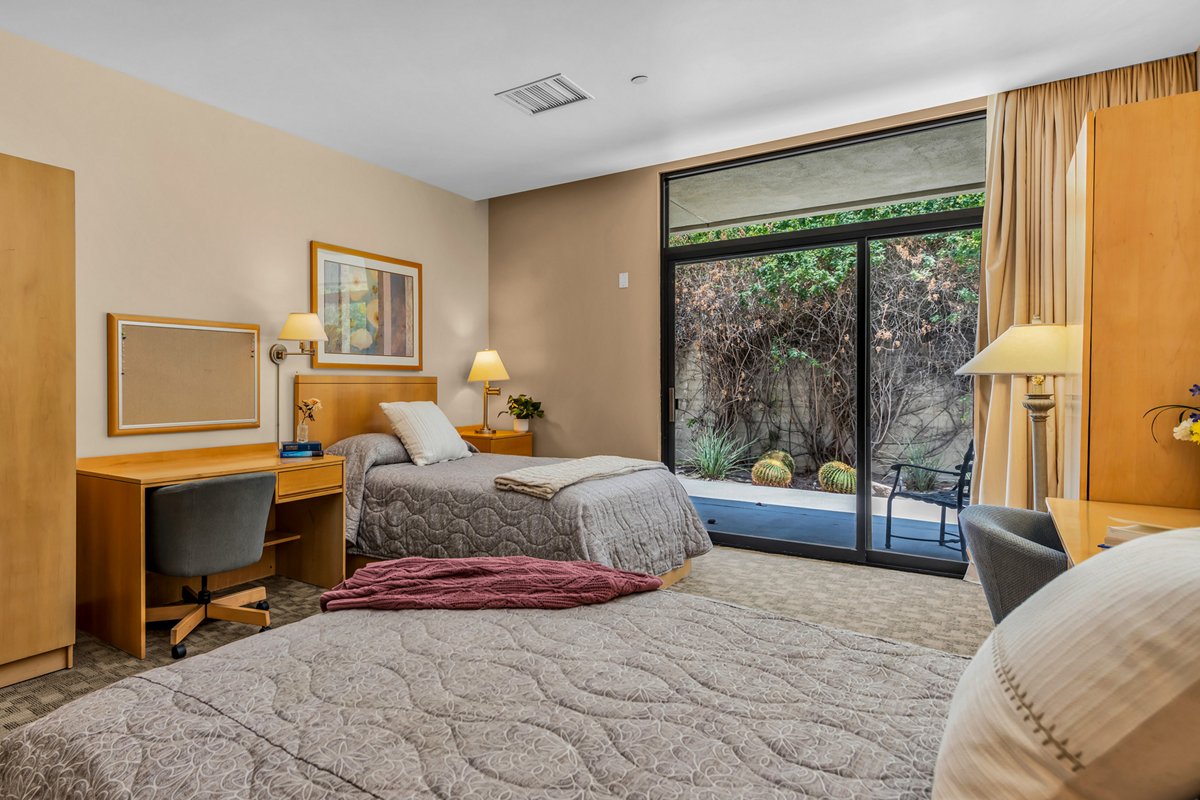
A current private room allocation and room-specific tariff were not established from the reviewed program pages. Request the actual bedroom and bathroom arrangements, accessibility details, and any supplement in writing. The location’s visiting guidance lists Sunday visiting and restricts personal phone use to the patient’s room outside programming, subject to staff arrangements. Reconfirm the timetable before relatives travel. The center distinguishes trained service animals from pets and emotional support animals; people needing an accommodation should discuss their circumstances directly instead of assuming that an animal can accompany a residential stay.
Insurance, fees, and admission planning
The official insurance information lists participating insurers by treatment state and says the organization does not accept Medicare or Medicaid. A national insurance brand appearing on a list does not establish coverage under an individual plan. Verify the exact service, provider network, authorization, deductible, coinsurance, and any excluded costs. No current all-inclusive private-pay month price was verified for this profile, so older directory estimates should not be treated as a quote. A written estimate should identify the proposed care stage and how charges change if the duration changes.
The admissions process includes an initial conversation, assessment, financial guidance, and scheduling once a suitable service is identified. It describes internal financing and an external payment-plan partner, which should be assessed using the actual terms offered. Financial case managers can also discuss whether any patient assistance is available; eligibility is not automatic. For travel, the campus asks for confirmation and itinerary information before arrival. Coordinate that only after the clinical placement and payment arrangements have been clarified. Relatives attending a workshop or visit should arrange their own lodging and transport; a patient’s accommodation does not establish overnight accommodation for family members.
Betty Ford Center may suit someone seeking a medically supported addiction treatment campus with integrated mental health work, a substantial peer program, and organized family resources. Its specialized hospital registration, current programs, and future building plans should each be understood accurately. Compare the proposed arrangement with other options in the United States treatment directory, focusing on fit rather than reputation alone. The information here was checked on October 20, 2026; the final admission plan should confirm the current room, clinical schedule, care boundaries, and personal costs.
Conditions
Levels of care
Settings
Treatment approach
Integrated addiction and co-occurring mental health care; individual counseling, process groups, CBT, DBT, ACT, motivational approaches, Twelve Step Facilitation, opioid medication options through COR-12, and family services according to assessment
Fees & admissions
Confirm current pricing
No defined current all-inclusive provider tariff verified. Clear older third-party $45,000 monthly estimate. Obtain service-specific costs, room terms, insurance authorization and patient share; financing or financial assistance is subject to eligibility.
Confirm the current program, duration, accommodation and included services directly with the center.
Clinical assessment, care-level recommendation, insurance verification, and financial guidance before scheduling. Confirm exact program, room allocation, medical needs, and travel details. Official insurance page excludes Medicare and Medicaid.